 Housekeeper
Mould Removal in Cubitt Town
We start Cubitt Town mould removal with an assessment of the visible material and its access. We agree and prepare the working position, then physically remove visible mould from suitable accessible hard surfaces. We review the work before handing the room back.
Plan your enquiry
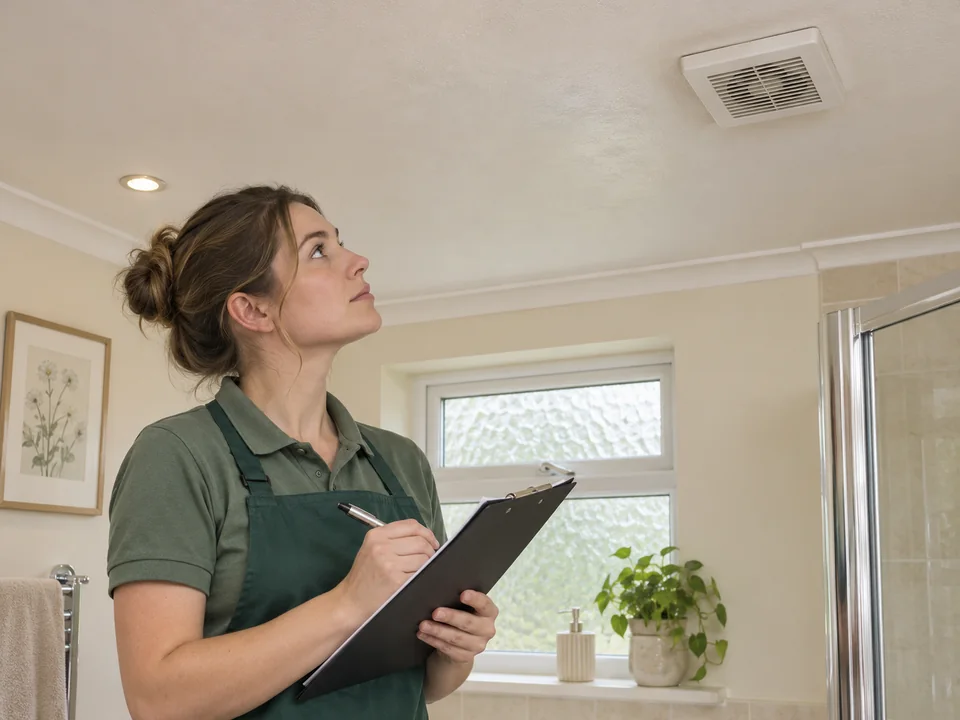
Can I enquire for a home near Island Gardens?
Yes. Give the full E14 postcode and the entrance serving the home.
Can you assess both ends of a window frame?
We can assess each visible position and discuss which accessible sections to clean.
Inspect the affected side of the frame or return
Tower Hamlets' Island Gardens conservation area appraisal describes parts of Cubitt Town around Manchester Road and Saunders Ness Road in its account of the area. If you use either road as a nearby reference, give us the exact address, full E14 postcode and entrance serving the home. Include the floor or courtyard if the affected room cannot be reached directly from the first entrance. A person at the main gate may still need to lead us to the door you want us to use.
We check where the visible growth is on the exposed frame, nearby return or sill. In a recessed opening, the room-facing hard part can be reached normally while a narrow strip or adjoining seal lies beyond the working position. We inspect each material and agree what can be prepared and cleaned with surrounding fittings in place. A loose or concealed edge stays separate from the compatible area included. After physically removing visible mould where suitable, we show the treated face against the actual frame or return and identify any section that remained outside the work.
We inspect the real position inside the room, as a view from across it may leave out a fitting that blocks ordinary reach. A patch by a window or cupboard can appear continuous while one part sits on a hard face and another continues onto a fragile edge. We agree preparation for the compatible exposed part only. During review we identify the treatment boundary and show the difference between the surface that was cleaned and any part still concealed.
If access to a home is managed by somebody else, tell us who has a key and who will be inside to show the room. A building manager may know the entry system yet have little information about the position by the window. A resident can identify the mark but may need somebody else to approve the cleaning. Knowing both people from the start helps us relocate the correct surface and speak to the decision-maker after assessment.
- Use the full postcode and entrance for the home.
- Identify the fixed feature closest to the mark.
- Name the resident or contact who can show us the room.
| Enquiry point | Detail to give us |
|---|---|
| Arrival | Address, door and floor or courtyard. |
| Affected position | Exact side of the fixture or opening. |
| Contact | Access and approval arrangements. |
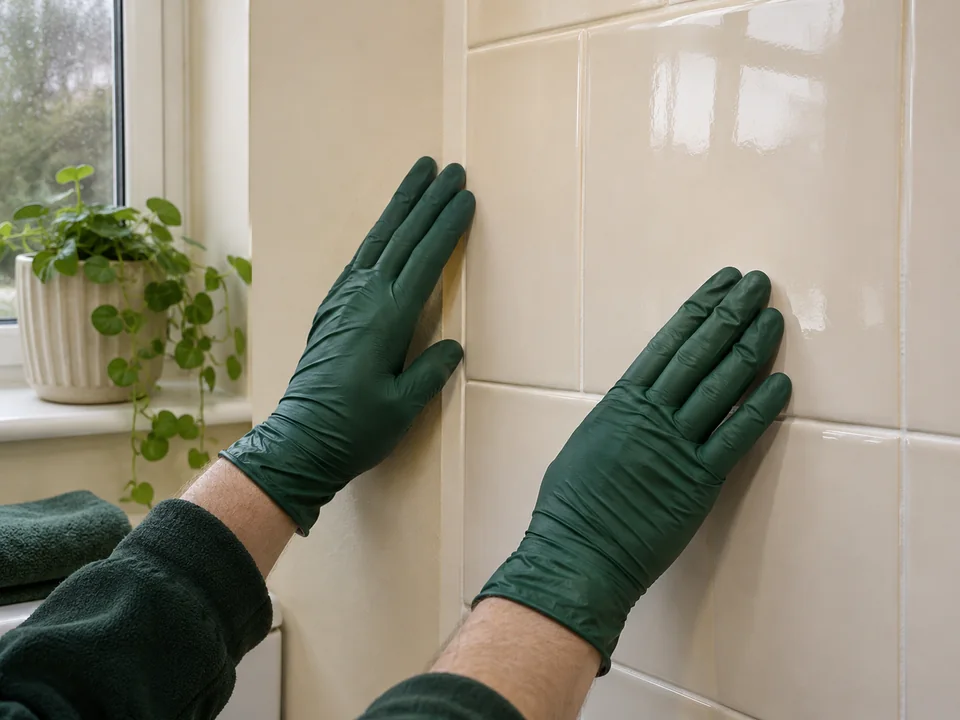
Find out how the visible finishes differ
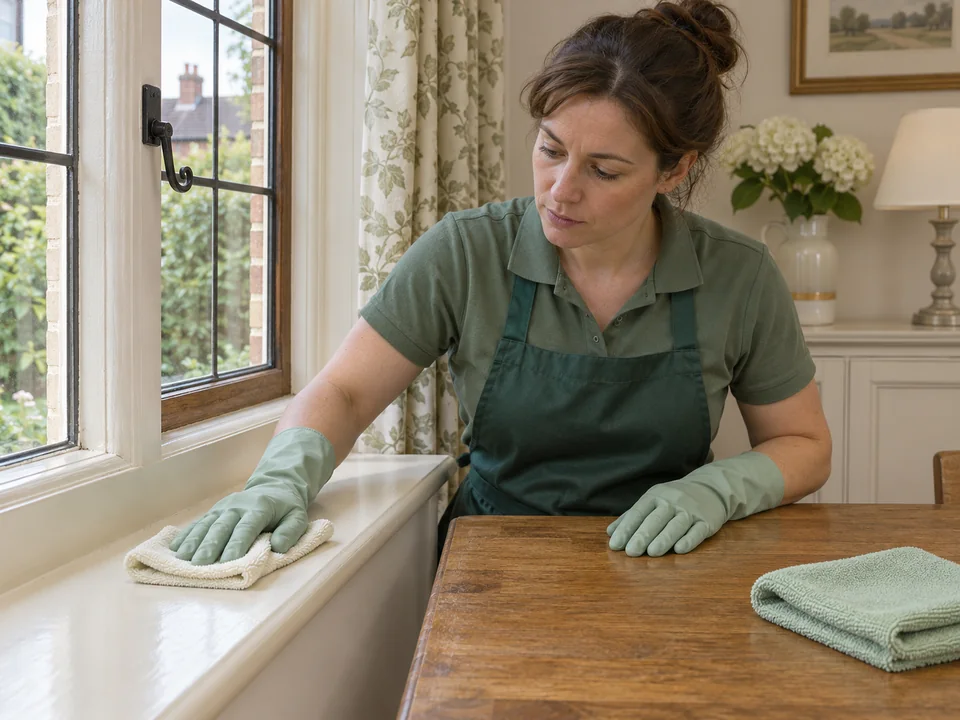
We begin with the surface directly in view and look at the condition of each material. In a room where the affected area crosses from a hard frame to a painted reveal, we identify that transition. We check how much of the rigid surface is reachable and where it meets a different or visibly damaged part. The visible condition and working position guide our agreement on where to clean.
When a mark runs down one side of a recessed opening, ask the resident to show the angle from which it is visible. The lower section may be in reach from the room while a fixed fitting obscures the top edge. We consider where we can safely stand and which portion can be reached. We explain the available area without assuming that a hidden part of the same feature can be included.
A different assessment is needed for a surface beside a cabinet or removable contents. Tell us which item can usually be moved and which piece is fixed to the property. When we can see a hard area on the near side, we assess that part. If the continuation lies behind a fitted section, we explain the limit and tell you what the person responsible may need to look at separately.
We use the most recent visible condition. If a mark looked small in a photograph and now appears along two ends of the frame, describe both ends when you show us the room. The material and available approach can differ from one end to the other. We agree the sections individually and check the details with the person who can approve the work if the assessment goes beyond what was initially described.
If two materials appear the same colour, the join can still be important. We look at it closely from the available approach and confirm whether one section is part of the rigid frame while the other is an adjoining finish. A shadow in a photograph can disguise that boundary.
| Part of the room | What we assess |
|---|---|
| Frame beside reveal | The change of material and condition. |
| Recessed opening | What remains within working reach. |
| Side of a cabinet | Where a fixed piece obscures the continuation. |
Agree preparation for the reachable portions
After the assessment we agree the specific exposed surfaces and the position needed to work. Where furniture is close to a recessed frame, we check whether the available space gives us room to reach it. Ask the resident to identify what can be moved and where it can go. The room approach also needs to stay clear, especially if it shares a narrow route with another room people need to use.
Check whether any fitting has to remain open or closed at the affected surface. A door can reveal a marked edge when it is held open, then block the usual route out of the room. We discuss how long the position can be available and whether another person needs the door. If we cannot use the approach initially described, we review the visible working boundary before proceeding.
Where the agreed work covers two parts of the home, confirm whether both can be made ready at once. You may want us to start in a room that is already clear while you finish preparing another one. We can agree the order once we understand which access is available. If a newly exposed area becomes visible while the room is prepared, we inspect it before discussing whether it is suitable to clean.
- Clear the agreed room approach.
- Tell us which fittings need to stay in position.
- Confirm when both working areas can be made available.
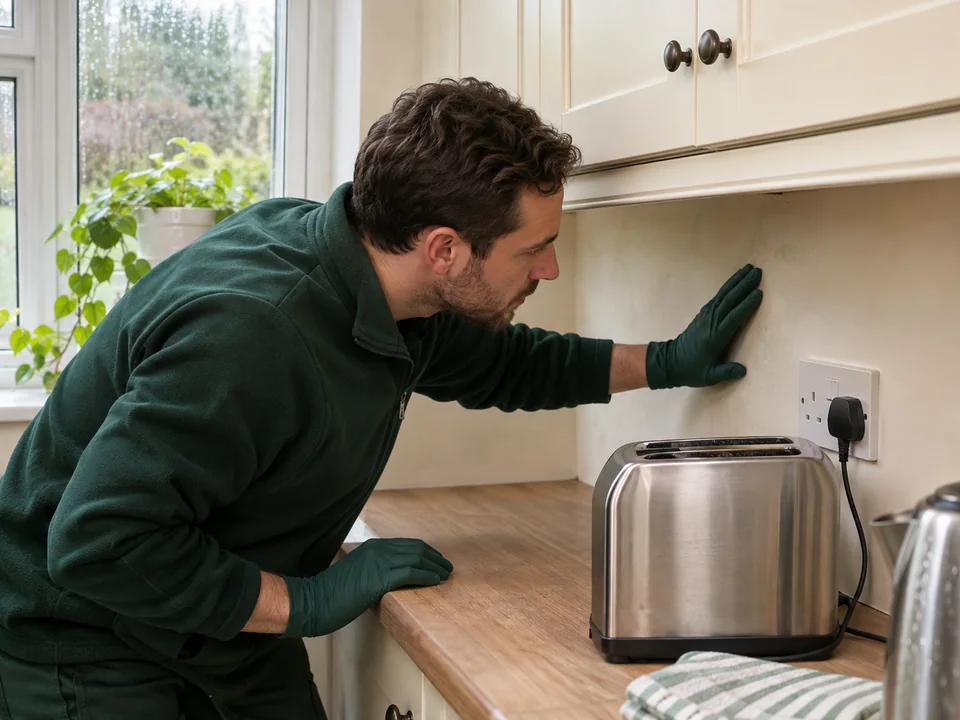
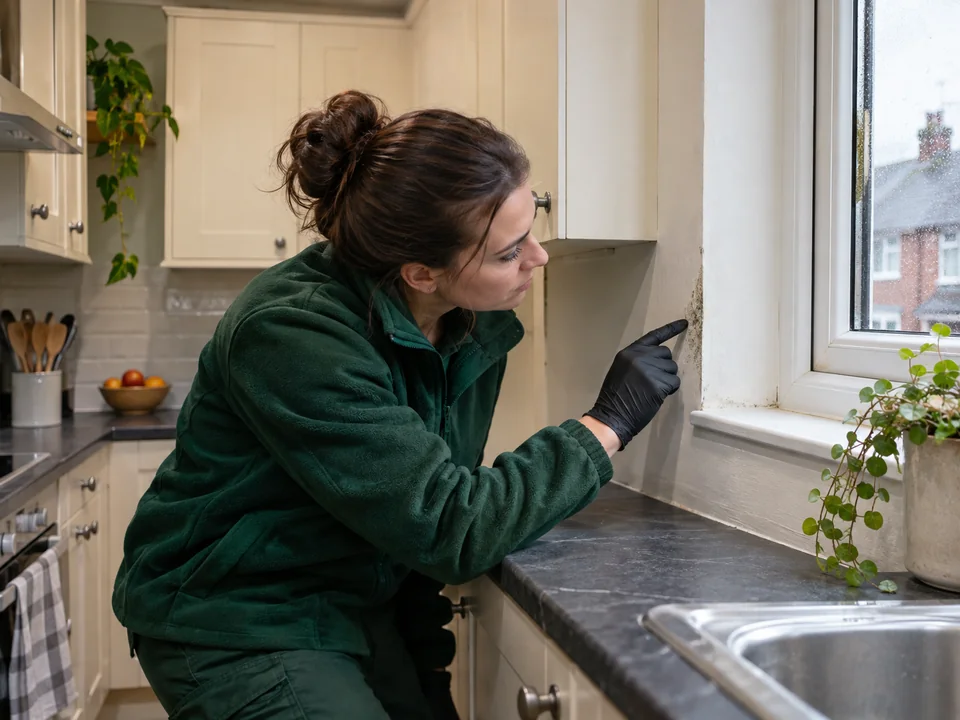
Clean visible mould where the hard surface is suitable and accessible
We physically remove visible mould from the suitable accessible hard surfaces agreed with you. Our work follows the exposed section we assessed and prepared. A length of frame inside a room can form an agreed surface, with the damaged return next to it considered separately. If the available reach stops partway along a continuation, we stop at the agreed edge and identify the point beyond it.
We use the nearest permanent feature to show where we worked. If someone described a mark by the lower hinge, we can use the same point to identify the cleaned length and tell them where it reaches. If a similar hard surface is visible on the opposite side of the opening, it only forms part of the cleaning when that position has been considered and agreed. This keeps the review tied to the treatment actually carried out.
At the end we go back over the agreed area and explain any adjacent visible issue. This can be a deterioration in another material or an edge still outside practical reach. We describe the relative positions rather than calling the room or opening finished as a whole. The distinction helps the resident find the same place later and pass a clear location to somebody responsible for the building.
| Review | What we show |
|---|---|
| Agreed area | Where visible mould was physically removed. |
| Working boundary | The point where the agreed section ended. |
| Neighbouring area | A remaining condition for separate attention. |
Explain the result before the building or room is closed again
At handover we show the cleaned face from the working position and use the nearest fixed fitting to describe where the work ended. If an adjoining area remains behind a panel or out of ordinary reach, we identify that position rather than including it under the same result. This gives the resident or property contact a clear reference even when they review the room later or another person is handling a separate building matter.
Where there is already a building report, mention which surface or opening it concerns. We describe the exposed condition and cleaning completed on the day and identify any visible point beside it that remains separate. Questions about concealed damage or a possible source of moisture can be passed to the relevant property contact. The agreed room reference lets them locate the area without assuming that the cleaning addressed the building itself.
An appointment can end with the resident closing the door, or with the keys being returned to somebody else. Decide whether the person receiving them needs to see the room first. If access returns to a concierge at a particular time, tell us which person can let us out and who should get the result. Aligning those two steps keeps the room available until the agreed review is complete.
For an enquiry in Cubitt Town, give the full property address and identify the affected room and the visible finish. Tell us what restricts access and who can show us the current extent. If you also want ordinary cleaning, share those tasks as a separate list with the timing you need. We can discuss how the appointments fit around each other and who needs to be present for mould assessment and handover.
Where an absent owner asks for the result, confirm whether the resident can also review it with us. The owner may need the name of the finish and the resident may want to see the specific edge. We use the same references in both conversations.
- Name the person receiving the result.
- Refer to the same surface in any building report.
- Tell us who expects the keys and when.
Questions about arranging mould removal
What if the courtyard entrance has a different name from my block?
Provide both names, the complete address and the door we can actually use.
Can I send images from before I returned the furniture?
Yes. Give the date and tell us what now sits in front of the affected area.
Will you consider the edge up against a fixed recess?
We check the visible exposed hard area and explain where the fitting limits reach.
Can a door be kept open during the assessment?
Show us the position you use to see the mark and tell us whether it can remain open while we work.
Can my agent approve work without being at the flat?
Tell us who can show us the visible area and give us the agent's contact for approval.
Will the cleaned section be easy to identify later?
We describe it by the room and the nearest fixed feature and explain where our work ended.
Other Cleaning Services in Cubitt Town
Tell us about the Cubitt Town property, Discuss a separate housekeeping visit
Discuss your mould removal enquiry
Mould Removal Prices in Cubitt Town
Tell us which rooms are affected, the approximate size of the visible patch and what surface it is on.
Get a Quote