 Housekeeper
Office Cleaning in London
Plan cleaning for a workplace that needs a consistent routine and clear access arrangements. Describe the occupied desks, shared rooms, kitchen and washrooms before agreeing a visit schedule.

Can a London office be cleaned before staff arrive? Ask about suitable hours and explain who opens up, how the alarm works and when rooms become occupied.
Can our office use its own supplies? Tell us what you stock and where it is kept. Agree consumables and any additional equipment before the visit.
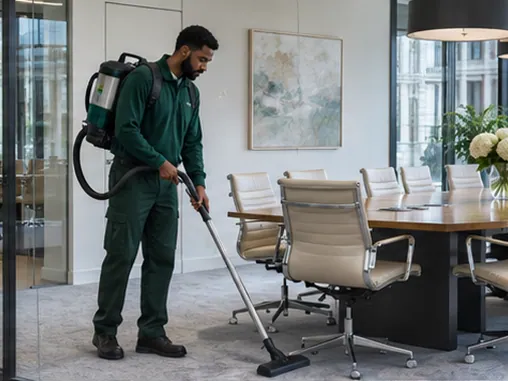
Build the list around how people work
A small office with shared desks can have different cleaning requirements from a meeting venue with visitors throughout the day. Identify the areas staff can clear at the end of each day and which rooms need different access. If a space is used by multiple occupiers, distinguish your rooms from the building’s common areas.
List desks, meeting rooms, kitchen or tea points, washrooms and the reception route. Tell us which areas are used every day and which are rarely occupied. A regular schedule can allocate more attention to the entrance on wet days and to meeting rooms after a busy period.
Agree a clear-desk policy and exclusions
Make sure staff know what should be put away before a desk is wiped. A surface covered in papers, electronics or personal belongings cannot be treated like a clear table. Explain what may be moved and what should stay untouched. Identify worktops for shared equipment and give any manufacturer instructions for screens or devices.
Set boundaries for locked cabinets, meeting materials and restricted rooms. If cleaning is arranged after hours, confirm who will provide access and where cleaners may enter. Appoint an office contact who can authorise changes, especially when the team works in a multi-tenant building.
Workplace cleaning plan
| Space | Likely recurring tasks | What the office should confirm |
|---|---|---|
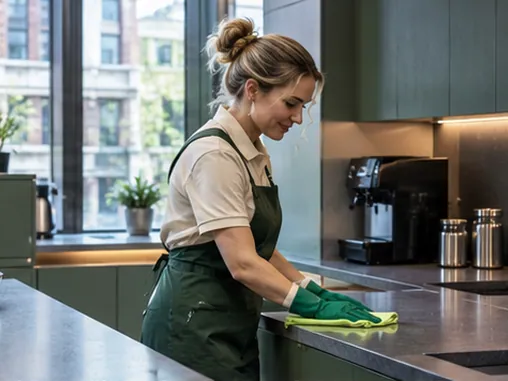
| Desks | Wipe agreed clear surfaces and vacuum accessible floors | Items to leave and restricted equipment |
| Meeting rooms | Tables, touchpoints and floor care | Evening meetings or room bookings |
| Kitchen | Sink, counters, shared tables and waste | Dishwashing and appliance work if required |
| Washrooms | Fittings, touchpoints and floors | Responsibility for replenishment |
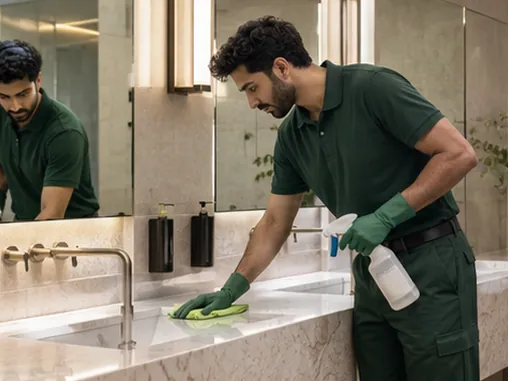
Separate kitchens and washrooms from desk areas
Agree tasks for sinks, splashbacks, shared tables and appliance exteriors. If the fridge needs an internal clean, set a date when staff can remove their food. Decide who handles dishes and whether supplies are restocked or just reported. Include waste separation arrangements and the building’s collection points.
List washrooms, cubicles and basins. Describe heavy use, sensitive finishes and how paper products or soaps are replenished. If the building separates cleaning from consumable supply, agree who is responsible for each so stock shortages are dealt with promptly.
Design access and timing together
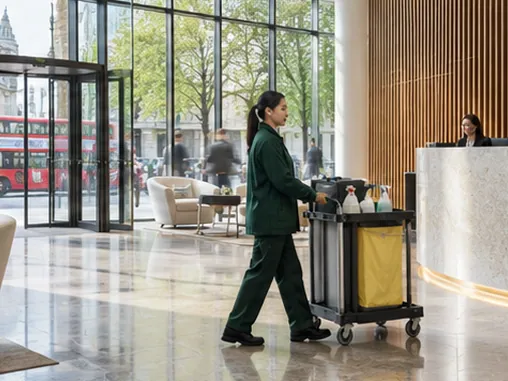
Give the floor level, lift information, weekday opening hours and any site induction requirements. Tell us about reception sign-in, electronic key fobs and alarms. Use the confirmed channel to arrange security details. Check if a loading bay or service entrance is needed for equipment.
Give an example of a typical week and note days with larger meetings or events. If the premises will be in use during a visit, agree how to manage wet floors and noisy equipment. A room-by-room order can reduce disruption while keeping washrooms and kitchen areas available as needed.
Scheduling decisions
| Factor | Example | What to discuss |
|---|---|---|
| Staff hours | Early start or late working on selected days | Quiet periods and accessibility |
| Security | Reception, fob or alarm | Named authoriser and agreed entry procedure |
| Equipment | Stored on site or brought to each visit | Cupboard location and access |
| Event use | Meeting room booked for an evening | Change route or add an agreed visit |

Review the schedule as the workplace changes
An office may grow, sublet a room or bring more staff in on the same days. Set a clear point of contact for changes and keep a record of recurring tasks. Discuss specialist work such as carpet extraction or maintenance for stone and other hard floors when the daily routine is insufficient.
Request a quote that identifies visit frequency, cleaning tasks, supplies and any separate work. State where equipment can be stored and how it should be kept secure. Ask how time changes and additional work will be agreed before they are added to the routine.
Make the first site visit count
- Walk the route staff use. Start at reception and visit a typical desk area, a meeting room, kitchen and washroom. Note doors that need passes, spaces with different tenants and places where bags or equipment may be set down.
- Mark which tasks happen each visit. A kitchen sink or toilet might need frequent attention while a low-use meeting room can follow a different rhythm. Identify which parts of the premises are someone else’s responsibility and how shared areas are treated.
- Agree how a concern gets reported. Name the person responsible for changes and explain how site issues should be recorded. A message about a loose fitting or a depleted supply needs to reach the right office contact before the next visit.
A hybrid workplace with busy midweek days
If most staff arrive on the same days, plan cleaning around those peaks. A kitchen may need more attention after a group lunch and the meeting rooms may be unavailable until a late call finishes. List heavy-use days and which rooms can be accessed. A predictable after-hours routine can work once the last person leaves, provided the site has an agreed way to admit the cleaner and activate security again.
Explain which desks will be clear and give staff a simple way to identify what should remain undisturbed. Ask what happens to a booking where a particular room is occupied unexpectedly. For a regular arrangement, distinguish a change that can be managed within the visit from a different time that needs to be confirmed in advance. Keep the office and building manager informed of any new access decision.
Around a hybrid work week
- Peak days · Note staff and meetings
- Clear desks · Confirm accessible areas
- Out of hours · Agree access and lock-up
Break down kitchen and washroom responsibilities
Some workplaces stock their own paper supplies and cleaning products. Others need to discuss what comes with the visit. Decide who checks stock, who replenishes it and how it is recorded. If a cleaning store contains several products, provide instructions for the surfaces they are intended to be used on. Agree how keys or codes for shared stores can be managed.
For a communal kitchen, decide what happens to the dishes and which appliances count as part of regular cleaning. A fridge interior or deep clean is best planned around a day when staff can remove food. In a shared building, ask who is responsible for emptying office bins at the central waste collection point and whether recyclables need to be handled in a particular way.
Who does what in shared facilities
- Kitchen · Agree dishes and fridge
- Washrooms · Assign refilling
- Waste · Identify the right collection point
Review the requirements for an event space
A room used by several groups may need a check between bookings and a larger clean at the end of the day. Give occupancy and opening hours, and specify any time the space must be ready. Ask about drinking glasses, desks, room set-up or other tasks to distinguish them from ordinary cleaning. Provide a change contact when the event organiser is different from the occupier.
Get a space ready for an event
- Share the event calendar
- Agree room reset and cleaning
- Give the contact for changes
Have a clear sign-off for an ongoing contract
Keep a brief list of rooms, agreed tasks and working hours with the quote. Decide how any changes to frequency or supplies will be authorised. A contact for the premises can review the first visits and confirm which expectations need adjusting. When specialist floor or textile maintenance is due, keep it separate in the plan so it can be done without affecting the routine for the rest of the office.
Regular site review
- Confirm shifts and agreed task list
- Record changes and supplies
- Separate periodic specialist work
Document restricted areas and emergency contacts
A receptionist or building manager can explain which doors must stay locked and what to do if a room cannot be opened. Provide a contact for out-of-hours problems through the confirmed booking channel. Give details of any permitted cleaning store, where staff leave reusable equipment and which rooms have hazardous or restricted material that belongs with an authorised person. Keep the document short enough to be followed on site and use separate instructions for alarms or system credentials.
Controlled site access
- Identify restricted rooms
- Name an out-of-hours contact
- Keep alarm instructions separate
Office Cleaning FAQs
Can we request cleaning daily?
Tell us the desired frequency and site opening hours. Confirm staffing and access before the schedule is set.
Can the team empty mixed recycling?
Provide the building’s waste instructions and identify the collection points. Ask how unusual materials are handled.
Can desks be cleaned during the working day?
Agree which desks will be clear and when. Let staff know which rooms need access during the visit.
Who provides products?
Discuss the products and equipment that are available on site and what, if anything, should be supplied as part of the quote.
Discuss your office cleaning visit
Related services and information: Carpet and Upholstery Cleaning, Hard Floor Cleaning.
Housekeeper London customer feedback
What our customers say
Our office is cleaned three evenings a week. Desks, meeting rooms, kitchen and toilets are consistently well maintained. Communication has been good whenever we've needed to adjust the schedule.
Office Cleaning
We changed cleaning providers earlier this year and have been pleased with the improvement. The shared kitchen and washrooms are much better maintained now.
Office Cleaning