 Housekeeper
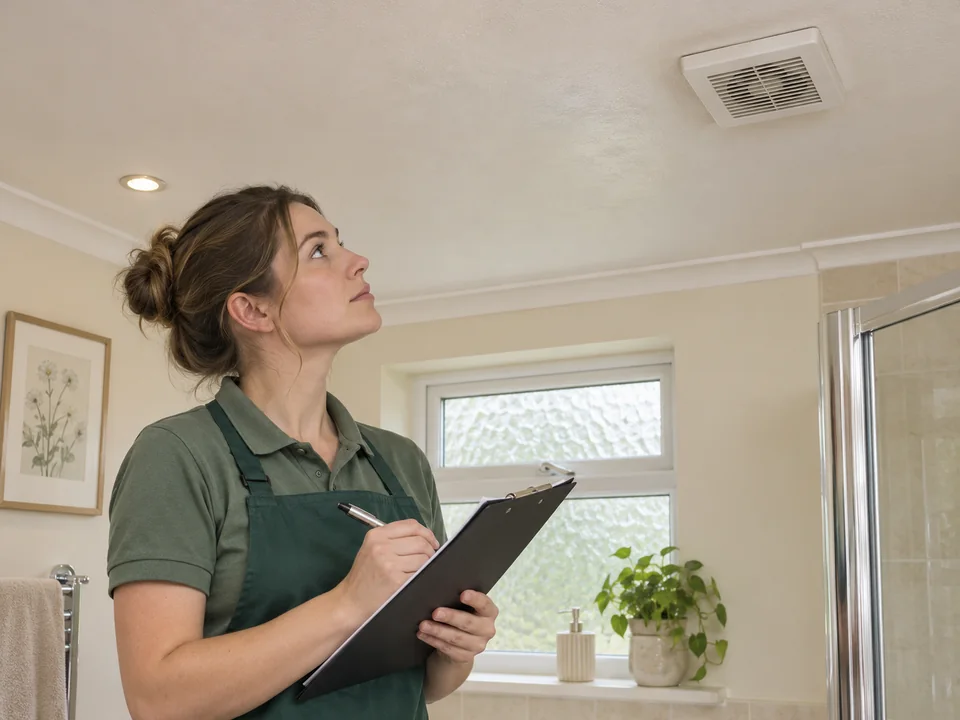
Mould Removal in Canary Wharf
We plan a Canary Wharf mould removal enquiry around the flat and the parts of the building the resident can give us access to. Tell us what is visible inside, where the materials change and what management already knows about the issue. We can discuss assessment, preparation and cleaning of suitable exposed surfaces, and identify matters to refer back to the building contact.
What access details help at a Canary Wharf apartment?
Give the full E14 address, block name, reception or service entrance, floor and the contact who can admit a visitor.
Can I enquire about marks against a balcony door?
Yes. Identify the inside surfaces affected and mention any issue with the door, glazing or external area already reported to management.
One enquiry for the visible areas inside the flat
We begin with the affected places within your home. Tell us which room is involved and how far the marks extend. A strip beside a glazed door is a different enquiry from a section of ceiling or a wall behind storage. If more than one surface is involved, give the type and visible condition of each. We use those details to discuss whether the areas can be assessed at the same visit. If one location is accessible and another depends on building permission, identify them separately so we can consider what can be done without assuming access to every part.
For a property near Canary Wharf or Wood Wharf, identify the building and apartment rather than relying on the name of the nearby station or estate. Tower Hamlets' planning records identify Wood Wharf as a mixed-use development in E14. Your actual route into the residential building will depend on the address. Tell us which reception, block door or service entrance should be used, who manages it and whether the resident or another person needs to meet us. An entrance used for an office or retail unit in the wider development may not lead to the flat.
Tell us which floor the affected rooms are on and what the building contact has agreed about access. If there are lift restrictions, a sign-in process or a separate route from reception, give the relevant details during the enquiry. We need the practical information about arriving and reaching the working area. Ask the building contact which details can be shared and how. If the resident is not the person who manages access, confirm what the access contact can do and who can discuss the visible condition or agree the proposed work once the room can be assessed.
If the building contact needs to schedule the route before the appointment, let us know when it is available and who can confirm the booking. A lift reserved for another activity might change the times that can be considered. If there is a difference between visitor and service access, ask which one applies to the visit you are discussing. We can then check the arrival details without relying on a resident to settle an unfamiliar procedure when someone is already at the building.
- Give the full address, building and floor together.
- Identify the authorised entrance rather than a neighbouring unit.
- List the person who can open the building and the person who can agree work.
How we assess internal finishes beside glazing and fixed fixtures
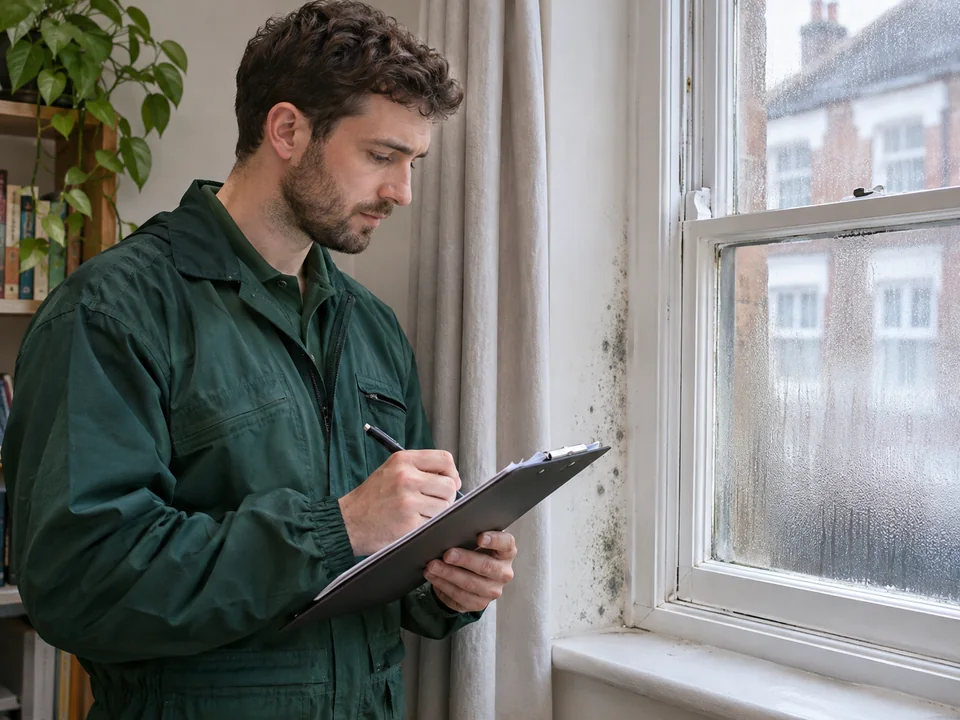
We look at the visible affected area and check where it touches another finish. Around a glazed door, the marks may appear on paint beside the frame, on hard trim, or on a floor-edge material. We ask what is visible from inside the flat and whether the surface appears intact. Tell us if there are nearby curtains, built-in panels or other materials that need separate consideration. We assess the exposed reachable area and distinguish it from an external face, an inaccessible gap or a part of the building that cannot be viewed without further permission.
Describe the surface condition as part of the enquiry. If you notice that paint is lifting, a panel is swollen or a join has changed shape, give that information separately from the visible marks. A photograph showing where the material changes can help us discuss what may be suitable for surface cleaning. It cannot establish the condition behind the finish. We explain where another property inspection or material assessment may be needed before a decision can be made. Leave fixed panels, seals and fittings undisturbed while you gather an account of what can safely be seen.
If the affected place is on a wall or ceiling near a fixed ventilation fitting or service panel, identify that location without opening covers. Tell us if it is a different part of the room from the other places listed. We use a room view to establish where people can stand and whether the area is blocked by another fixture. A hard exposed surface may be suitable for agreed work even though an adjacent section needs separate assessment. Ask us to record which part of the visible area is under discussion and which part has not yet been viewed.
For a window with a deep reveal, a photo from the room may show the face nearest the frame but miss the lower edge of the wall. When it is safe, take a second wider view including the sill or floor and describe which part is marked. We use the views to discuss the visible boundaries and avoid counting an edge behind the frame as a surface that has already been assessed.
| Reported position | What we assess inside the flat | What to discuss with the property contact |
|---|---|---|
| Painted reveal beside glazed door | Visible material and accessible boundary | Any question about an external face or glazing defect |
| Floor edge near fixed frame | Where the marks end and finish condition | Damage or uncertainty below the visible edge |
| Ceiling beside a service panel | Safe approach and the visible area | Whether the panel or concealed area needs assessment |
| Textile beside hard trim | Separate description of the item and hard surface | Handling or further assessment of the textile |
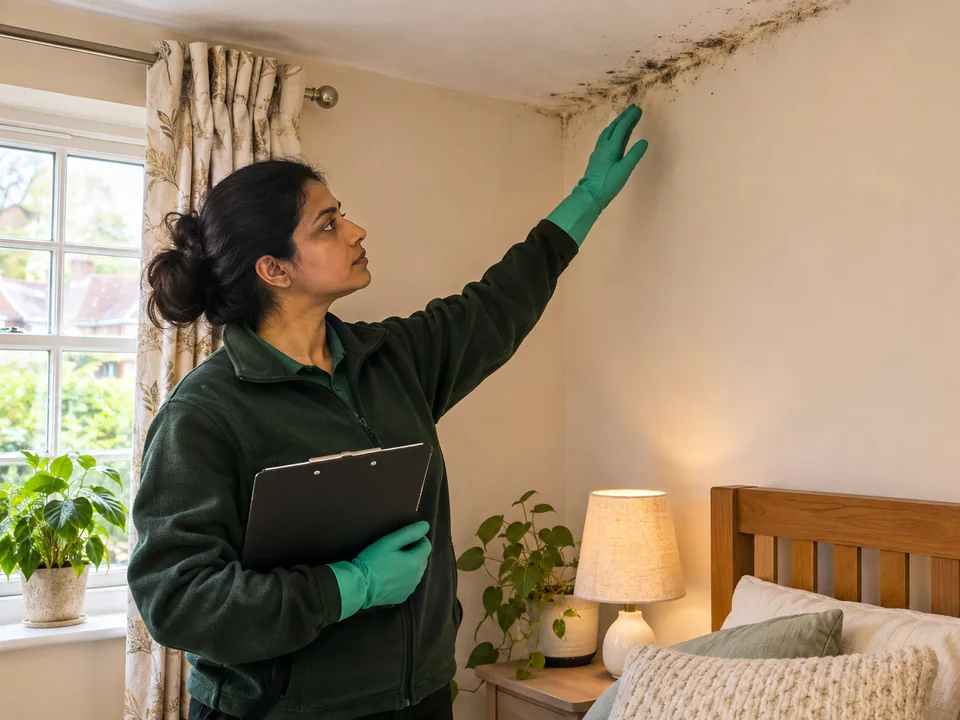
Where the service ends and building management takes over
We include what you know about the history when discussing assessment. If you have reported condensation, staining or possible water entry to management, give the date, the affected room and any reply. A reference from a building team may identify an issue in a different flat or part of the service system. Label information by its source and location. Tell us what you observed yourself and which details came from someone else. We keep the visible condition separate from assumptions about what caused it. If the source is unresolved, an appropriate property specialist may need to look at it.
Where the enquiry involves a boundary between the inside and outside of the flat, explain which face the marks are on. A report about a wall beside a balcony door is not authority to reach or work on the external face of a building. We discuss the accessible internal finish and leave issues concerning the external fabric, concealed areas or fixtures with the responsible contact unless another arrangement is specifically agreed. If more than one party needs to investigate, keep the appointment details and references separate so the role of each is clear.
If work or inspection is already scheduled, tell us which part of the property it concerns and how it affects access. If someone inspected a window but did not enter the room where you see changes, note the difference. When the building team has not yet decided how to proceed, a surface visit may need to be discussed once more information is available. We confirm what can be considered based on the visible area, the reported history and whether the person arranging the visit is able to answer questions about the work.
If several people are involved, ask them to use the same room and surface names. The building management record may identify a window by position, while the resident calls it the kitchen or living-room window. Give both references where they are known. That helps us discuss a relevant observation without confusing it with an issue elsewhere. Where an earlier report was only about a common area, state that distinction before asking how it affects the enquiry.
- Keep management references with room and date details.
- Separate visible internal work from external or concealed issues.
- Tell us how a separate inspection affects access to the flat.
| Information received | How to record it | Next point to confirm |
|---|---|---|
| Resident sees new marks | Room, exact position and date | Can the area be assessed from inside? |
| Building has an open report | Reference, location and stage | Who can update the resident or arrange further access? |
| A repair was reported complete | Date and area mentioned | Is more information needed on material condition or drying? |
Prepare the agreed working area and check it at handover
Before we carry out agreed work, we confirm access to the affected room and the immediate working area. We discuss what should be cleared, which nearby items need protection and what must stay in place. This can matter in a compact apartment where a work surface or passage used to reach the patch also needs to remain available to the resident. If the route or visible condition differs from the description, we discuss it before proceeding so that the agreed surfaces and any limits remain clear.
We remove visible mould from the suitable accessible hard surfaces that are agreed for the visit. If a nearby finish, fixed item or concealed section needs a different decision, we discuss that part separately. We keep the work to the locations agreed with you. At the final review, we identify the surfaces addressed and any that remained outside the arrangement. A resident can share the relevant points with a landlord or building contact if another assessment or repair is still required. Record who receives that information while discussing the appointment.
Ask which locations are included in a quote and how access restrictions or a change in the visible area would be handled. We price according to the proposed work and conditions for the address. If another cleaning enquiry also concerns the flat, separate the tasks and state which rooms can be arranged independently. Give any reception times, need to sign out or key return arrangement when discussing a slot. The aim is to agree a visit that fits the practical conditions at the building and leaves you with a clear record of what was considered.
At handover, consider the practical details of passing on the outcome. The person managing access may not be the person authorised to receive further information about the flat. Agree the recipient when arranging the visit. If we have considered two areas and only one was included, ask us to identify them separately in the final discussion. That way, the next building or cleaning enquiry begins with a record of which surface was addressed and which question is still open.
- Confirm where the immediate working area begins and ends.
- Review the surfaces addressed with the authorised contact.
- Record any separate matters to raise with building management.
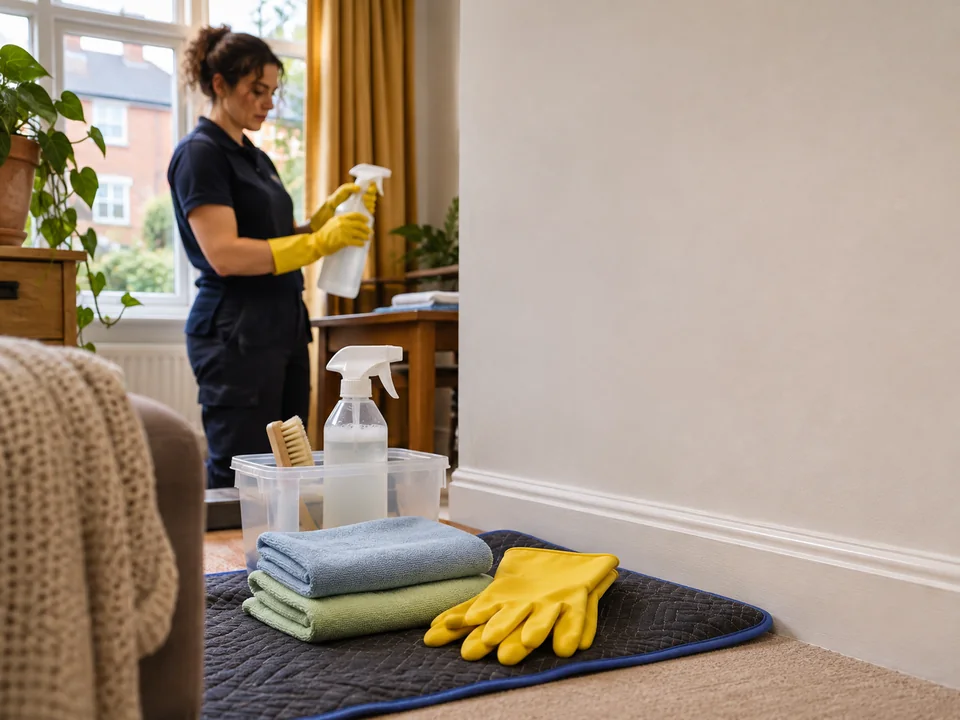
| Visit step | What we confirm |
|---|---|
| Before cleaning | The room, working access and items to protect or leave |
| Agreed surface work | Visible mould removal from included suitable hard surfaces |
| Final review | Areas addressed, exclusions and the contact for other decisions |
Questions about arranging mould removal
Our service reception differs from the lobby in the postal address. Which details are needed?
Give the full postal address and name the authorised entrance separately. Include the floor, flat number and contact who can direct a visitor to the room.
The white trim and painted wall are both marked. Should I include a photo of the whole door?
Yes. A room view showing the join helps us identify which visible finishes are involved before discussing their suitability for separate work.
Does your quote include the outside of a balcony door?
Only the areas specifically agreed are included. Identify the inside surface and tell us if the external face or building fabric needs separate attention.
The affected ceiling is beside a service hatch. Will you open it?
A visit for visible surface work does not assume access to concealed areas. Tell us who controls access and whether another property assessment is planned.
What should I send if concierge staff are managing access but the landlord agrees the quote?
Give both contacts and their roles. Keep the entrance details distinct from the room information and decisions about the proposed work.
Can I share the cleaning outcome with the building team?
Yes. Agree who will collect the final information and pass on the locations covered and any limits or matters needing further review.
Other Cleaning Services in Canary Wharf
Regular housekeeping in Canary Wharf, End of tenancy cleaning in Canary Wharf