 Housekeeper
Mould Removal in Bow
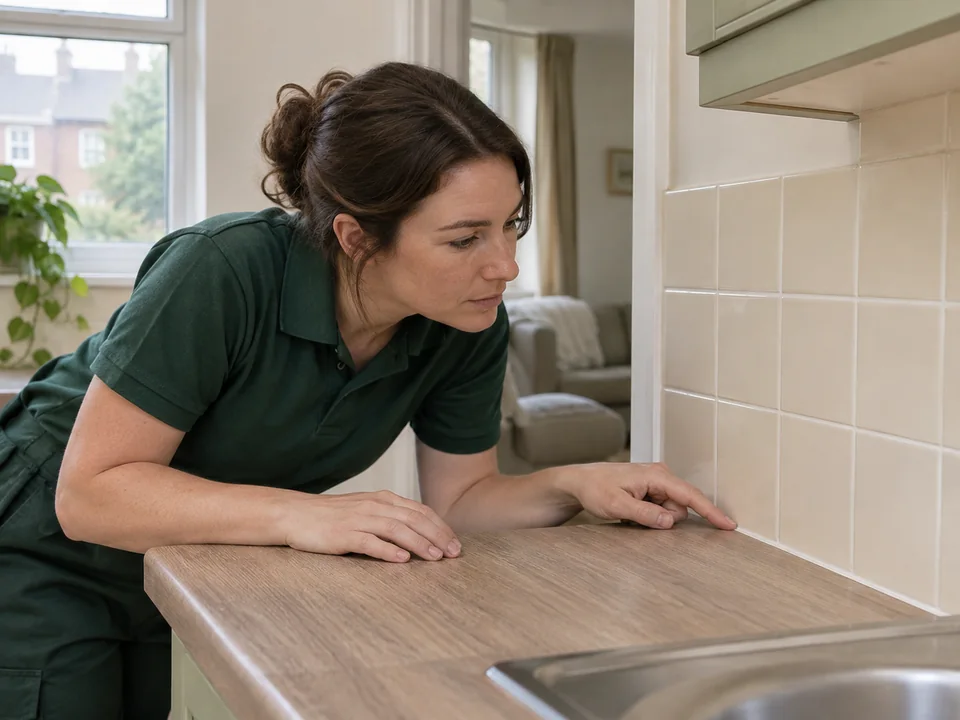
Tell us what you can see around the kitchen window, shower or sink in your Bow home. We look at how the affected surfaces meet, agree which exposed areas can be cleaned and review them with you at the end.
Can I enquire about a flat in E3?
Send the full postcode, block and floor. Tell us which kitchen or bathroom surface shows the marks.
What if my block has a courtyard entrance?
Give the number or name visitors should follow and the route to your door.
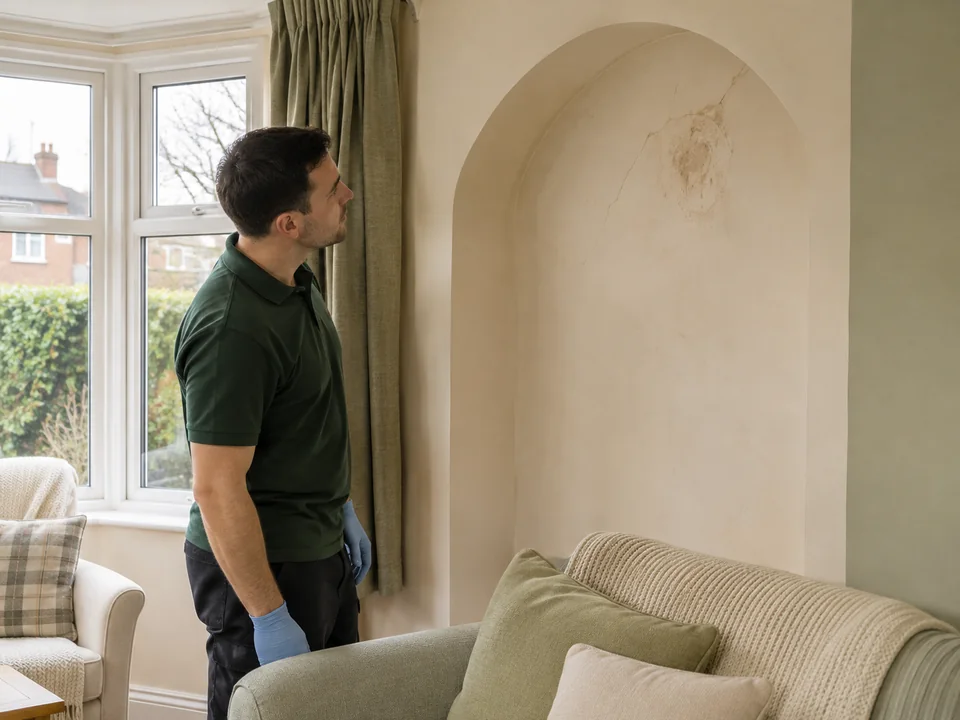
Assess each exposed material on either side of the join
In a bathroom or kitchen, mould can appear in a line that runs across several finishes. It may start on a tile beside a sink and continue into an edge against the worktop. It may also be visible on more than one side of a shower frame. When you call about a Bow address, describe where the mark starts, which materials you can identify and where the affected surface disappears behind something. We use the detail to discuss the visit before making decisions about the exposed faces we can see.
Tower Hamlets’ Fairfield Road conservation appraisal records terraces alongside the former Bryant and May complex and other historic buildings. If you are in a converted property around Bow Road or a development reached via a courtyard, give the full postal address and describe how you normally guide a first-time visitor. The route may involve two door labels or a staircase beyond a communal entrance. Let us know which floor the dwelling occupies and what to do if a different person needs to open the door.
We inspect the bathroom and kitchen as distinct working areas. In the bathroom, a narrow mould line can reach from the glazed tile to the seal beside a fixed screen. In the kitchen, an apparently similar line can meet paint or a fitted cupboard and have a different reach. We assess the condition and exposed boundaries independently, then prepare and clean the suitable hard face included in each room. At handover we show which side of each join was treated and identify the part that remained out of reach or unsuitable.
We assess the surface with the fittings in their current position. A screen or cupboard changed since the original observation can hide part of the patch or expose a new piece of material. We check whether the newly visible area is firm and suited to cleaning, then agree how far the work can extend. If a coating is lifting where the newer finish meets the old, we leave it in place and consider a compatible exposed hard surface separately. The review describes the cleaned edge and any other part needing its own decision.
| Location | What to describe |
|---|---|
| Shower | Screen frame, wall tile or upper tray edge |
| Kitchen | Window sill, splashback or sink upstand |
| Entrance | Door label, floor and route from the courtyard |
Prepare the room without moving fitted parts
We talk through which loose items can go away before the visit. Cleaning the exposed surround of a kitchen sink is easier to discuss if the washing-up rack and food containers have somewhere else to sit. If baskets, bath toys or toiletries are near the patch, move the loose items you are happy to handle. Tell us about anything large or wired in that occupies the approach, especially where a tall kitchen unit or washing machine reduces room at a corner.
If the work area sits behind a fixed screen, we review how the entrance into that space affects access. A sliding door can leave one part of a ledge clear while still obscuring the narrow upright at the opposite side. You do not need to take anything off. Tell us what can open from the usual position and which face remains hidden when it is open. In a small kitchen, also explain if an inward-opening door and a bank of cupboards leave only a short section of floor clear.
We agree a time or order that takes account of how the rooms are used. In a home with one bathroom, the household may need to use it before the kitchen is ready. If the kitchen is shared with others, confirm who is happy to put away their belongings and whether any surfaces must stay available during the appointment. Let the person meeting us know which rooms were discussed and how to contact you if the available space changes.
- Put small items away from the face being assessed.
- Leave fitted panels and heavy appliances in place.
- Confirm who can open each room and discuss the work.
We check the condition before agreeing any cleaning
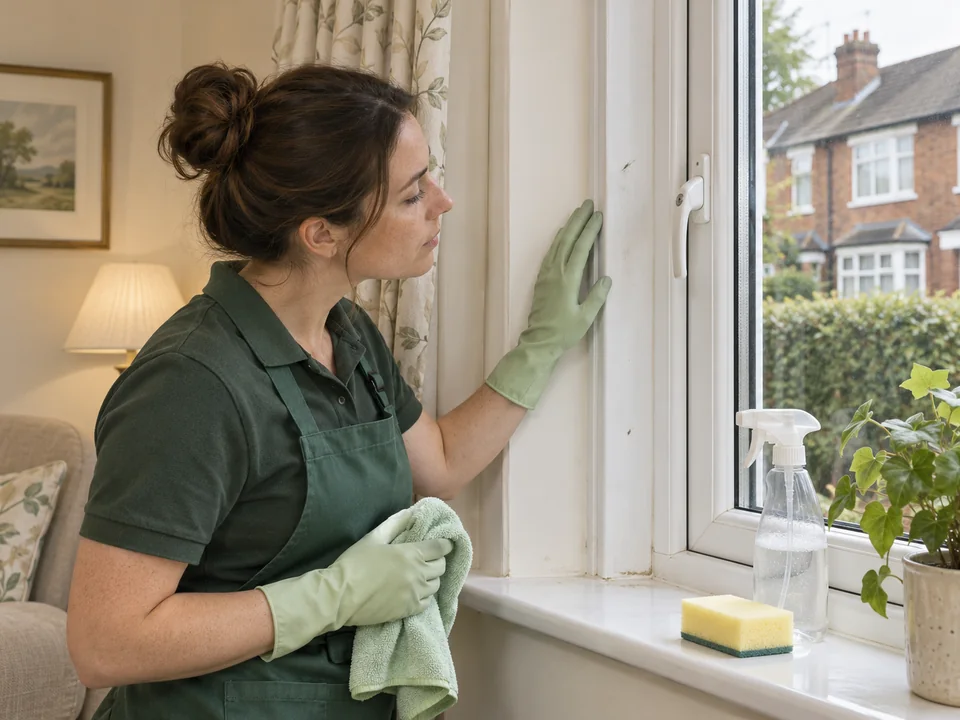
We look at the exposed surface and the edge where its condition changes. Take a hard kitchen sill that meets painted plaster. The sill may be in good condition while the paint underneath has bubbled or split. We can assess those faces separately and explain the part we might clean. If the affected part is soft or visibly damaged, we discuss leaving it alone and point out which stable surrounding areas are still accessible for assessment.
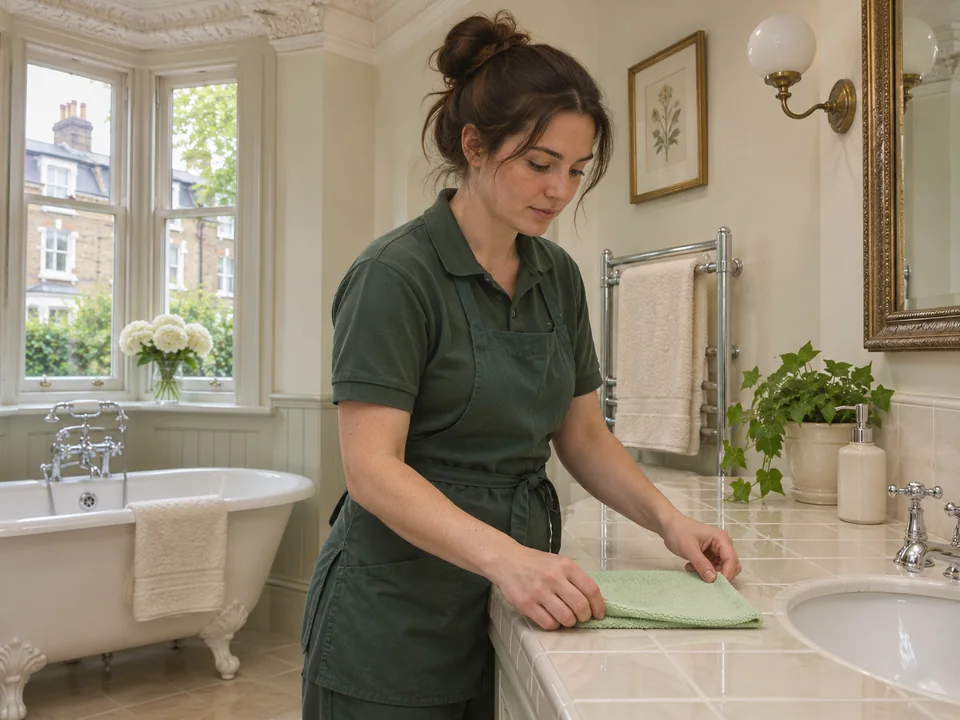
Near a bath, an apparently continuous dark mark may sit across the ceramic face, a seal and the back of a screen. We look at what is visible from the accessible side, checking which part of the mark is on a hard surface. A visibly deteriorated seal can need a separate conversation about what the finished area is likely to look like. If you have recently had a leak or know the same place has been cleaned before, mention what changed and how long the issue has been visible.
Under a sink, we look at the part we can reach if the cupboard can be opened normally. Tell us if you have seen water under the fitting or if a pipe blocks a view of the verge. If the board has swollen, the cleaning conversation differs from one about a firm exposed tile. We will explain the limits of the visible assessment before work. Plumbing and investigation of hidden spaces should be discussed with the person responsible for the property.
| Surface condition | What we discuss |
|---|---|
| Stable accessible tile | Which face is suitable for cleaning |
| Bubbled paint or swollen board | The visible damage and where work can stop |
| Obscured part of a join | Which exposed section we can assess |
Clean the hard faces that you approve
We remove visible mould on suitable reachable hard surfaces where those faces form part of the agreed visit. We work through the surfaces room by room and keep track of where they meet another finish. In a kitchen that can mean an agreed section of splashback and a wipeable sill with a separate edge. In a bathroom the work may be centred on tiles and an accessible hard surround. If the same corner includes more than one surface, we discuss each part rather than assuming the whole corner is suitable.
When we find marks elsewhere in the prepared area, we ask before extending the work. Tell us who can make that decision and whether they will be on site. For a rental booking, a resident can show where the patch is while a property contact confirms changes to the visit. Where the new area is inside a recess or on a visibly different material, we also review its condition before discussing whether there is a suitable hard face that we can reach.
If a surface has been stained for a long time, set expectations during the assessment. Removing visible mould on a suitable face can still leave a difference in appearance within an aged edge or behind a worn finish. Explain if you want the affected tile reviewed alongside neighbouring tiles that are already stained. We can show you where the agreed cleaning ends so you know which part to consider when reviewing the result with us.
One reason to review the work by surface is that a change can be clear up close but hard to recognise from the doorway. At a shower, the wall face on one side of a fixed panel can be exposed while the opposite edge is recessed. In a kitchen, the lip of a rigid wipeable sill can be independent of the surface below the trim. We explain where each area fits within the work agreed, and we can check those details with you before leaving the room.
- Confirm the hard faces that can be included.
- Let us know how to contact the person approving changes.
- Show us where a previous stain or repair meets the current mark.

Review the bathroom and kitchen separately
Come back to the surfaces with us after the work. For two rooms, we review them individually, explaining what we could reach and any finishes we left alone. If a line remains below a join, we can say where it is in relation to the cleaned faces. If an affected part is beyond the reach of a fixed enclosure, we identify the barrier so you can describe it accurately. Arrange a handover contact if you cannot attend.
Persistent damp or a patch that keeps returning is something to discuss with the appropriate property contact. Tell them which opening, fitting or join you noticed and whether anything changed after a previous visit. We can describe the work carried out on the visible surfaces, as well as what we could see at their edge. If more investigation is needed, an exact location is easier to act on than a general report about the kitchen or bathroom.
The quote reflects the individual rooms, exposed materials, extent of the growth and ordinary access to its surfaces. An accessible tile strip and an area behind a fixed screen do not carry the same agreement. We explain the preparation and visible surface work included, then identify what remains separate. If suitable areas in two rooms are treated, we review them independently so the result can be compared with the agreed work for each.
- Agree who can review both rooms.
- Ask where a fixed item prevented access.
- Pass the exact location of a recurring mark to the property contact.
| Final review | Detail to confirm |
|---|---|
| Kitchen | Which faces and edges we reached |
| Bathroom | Any visible staining or damage left at the edge |
| Contact | Who needs to know about the result |
Questions about arranging mould removal
Can you assess the back edge of a kitchen sink?
Yes, where we can see and reach it. Tell us if the tap, sill or worktop fittings obstruct part of the affected face.
Do I need to remove a fixed shower screen for you?
Leave it in place. Tell us which way it opens and which sections of the hard surfaces you can see around it.
Can I enquire once a plumber has looked at the sink?
Yes. Tell us what work was done and which exposed surface you still want us to assess for cleaning.
What should I tell you if an E3 flat sits beyond two gates?
Give the full postal address and describe each visitor gate in order. Confirm who will meet us or grant entry.
Can you review a mark below an extractor grille?
Describe the visible wall or finish beside the grille and any obstacle in front of it. We can discuss the exposed hard area during assessment.
How do you confirm what was cleaned if I have both rooms booked?
We go through the agreed surfaces room by room and point out what we worked on and what was left visible.
Other Cleaning Services in Bow
Discuss your mould removal enquiry
Mould Removal Prices in Bow
Tell us which rooms are affected, the approximate size of the visible patch and what surface it is on.
Get a Quote