 Housekeeper
Mould Removal in Ruislip
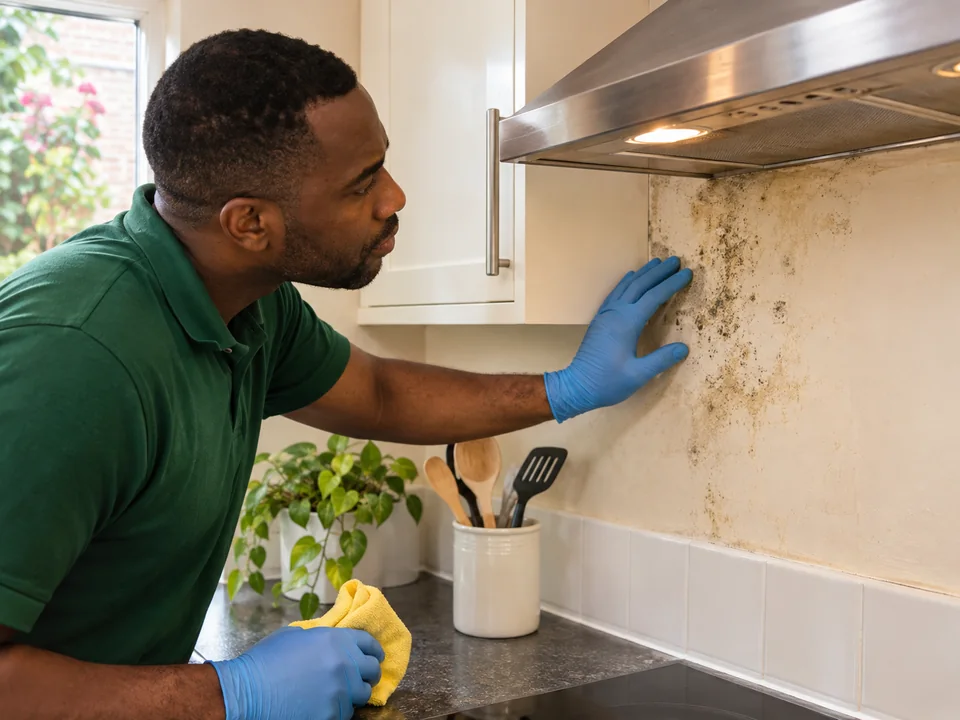
A garden room, garage conversion or lower utility area can contain several very different finishes. If you have noticed visible mould in your Ruislip home, tell us which part is affected and how you normally enter the room. We assess accessible hard faces, agree what we can deal with and physically remove visible mould from the suitable areas.
Do you cover homes near Ruislip High Street?
Send your full HA4 postcode and building number so we can check the address.
Can I ask about an attached garden room?
Yes. Tell us what the affected face is made from and which entrance gives access.
Inspect the finishes retained in a converted room
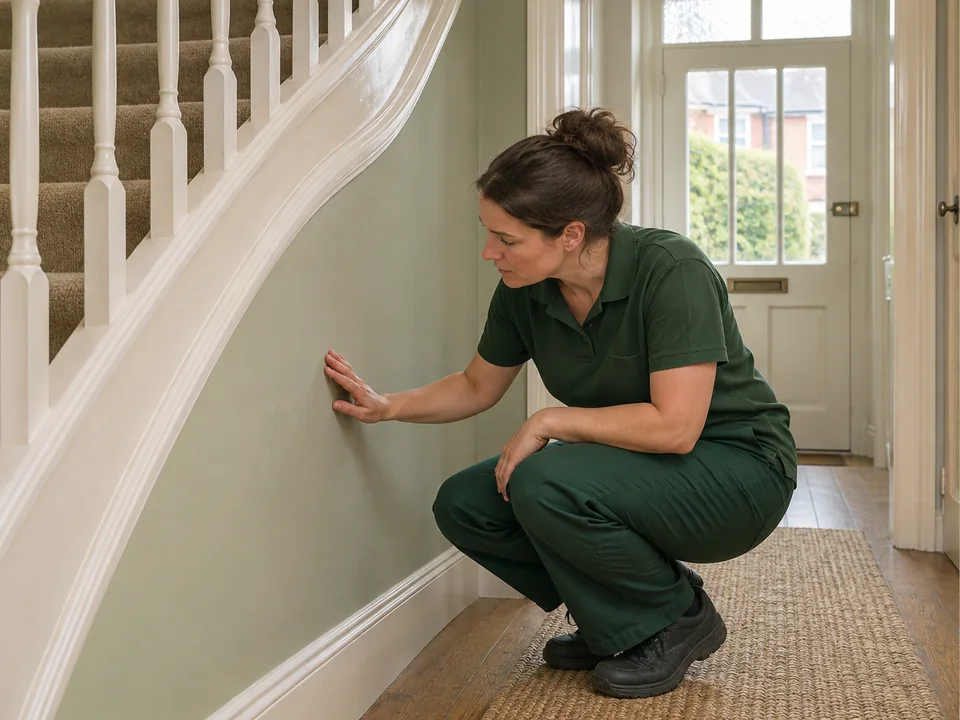
A room adapted for another use often has a mixture of new and retained surfaces. In an old garage that is now a hobby room, there can be painted blockwork at one end, attached storage at the other and a finished board between them. Tell us where you saw the mould and distinguish that area from neighbouring marks that are a different colour or sit on a different finish. Give us a broad view from the normal entrance and a closer view of the spot when practical. We can discuss a possible visit with the right area in mind before seeing the actual condition on site.
Hillingdon Council lists entrances to Ruislip's Manor Farm from the High Street, Bury Street, Pinn Way and St Martin's Approach. A local landmark of that kind helps describe the general area, but use the full address and your own entrance instructions for a home enquiry. If the room is reached through the house or through a side gate, tell us which route is open to visitors. Let us know if it is only accessible via someone else's part of the building or if the normal way through changes at different times of day.
Along the wall of a converted room, we look for the point where the existing surface meets a newer lining. If the mark crosses that edge, we check the material and available reach on both sides. A firm hard face in the open can be suitable even when the continuation behind stored items cannot be reached. We agree the exposed section and prepare the available space, then remove visible mould from the suitable faces in the agreement. At handover, we show where the work stopped by reference to a seam or counter edge that stays visible when the room is put back in use.
If a workbench or counter runs across the room, use its position to mark where the problem is. Report a patch at the left-hand end from the doorway separately from one seen beyond the far corner. This is particularly helpful if someone else will show us in and has not previously seen the room in daylight. You can give them the same reference point you provided on the enquiry.
- Use the current room name and show us the working entrance.
- Identify whether the mark is on a fixed finish or a stored item.
- Tell us which fixtures have been added since the room changed use.
| Room position | Detail to send |
|---|---|
| Hard wall beside a bench | View of the area and the normal standing position |
| Former garage opening | Current door, steps and route through |
| Panel beside shelving | Where the panel ends and shelving begins |
Check the approach before setting up
An attached room may have a perfectly good outside door, but you may use an internal route because a step, gate or stored equipment blocks the other way. Explain both routes if the difference matters. We check how far we can get into the space and how the floor sits against the wall at the patch. Tell us about a sudden change in level or a loose covering between the door and the inspection position. If another resident needs that route for part of the appointment, agree when we can use it and how they will reach the rest of the house.
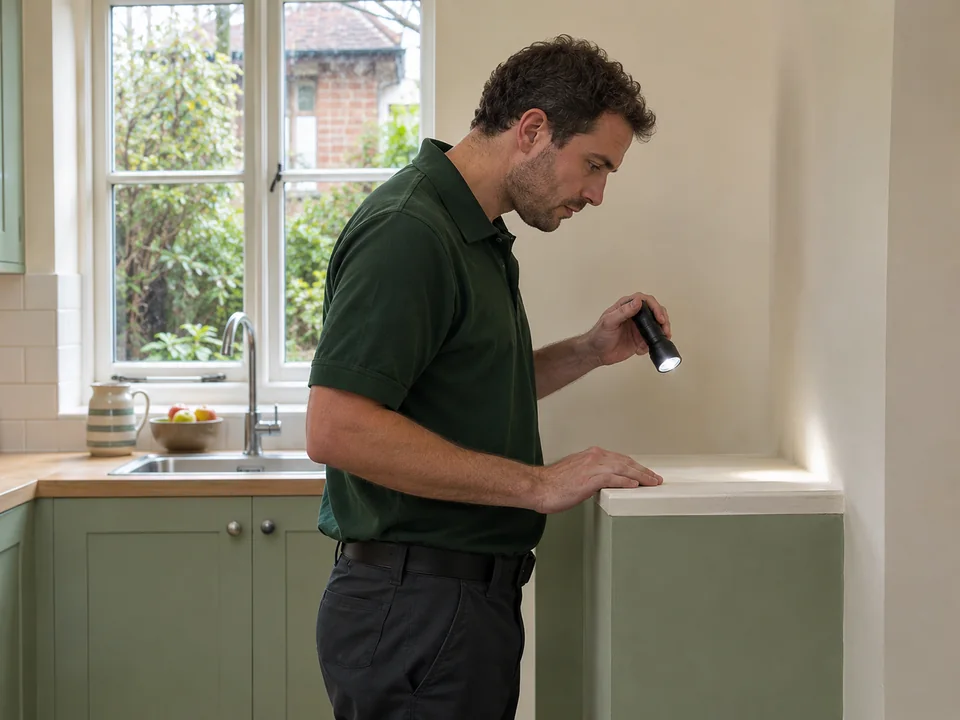
Move loose belongings only where it is safe to provide an ordinary approach and you can avoid disturbing the affected material. In a room with a fitted bench or cabinet, indicate which parts are fixed. A hard face behind a unit may be visible along one edge even if there is no suitable access to most of it. We look at the exposed portion without dismantling the fixture. If there is a removable shelf as part of everyday use, mention it and tell us what change that normally makes to the approach.
Where a workbench runs along the wall, we check the opening beneath and alongside it before agreeing what can be done. One section may allow a clear approach while the face behind the bench remains blocked. We prepare the part with a workable position and clean the suitable exposed hard surface. Before leaving, we look at the endpoint with you, particularly if it is close to a bracket or shelf. If a strip remains inaccessible, we explain which fixed item determines that limit.
A gate going through a drive or past a vehicle may be the most straightforward approach. Let us know if it needs to be opened by a named resident or if the way changes once someone has parked. We will still check access inside before agreeing the work. A good arrival route and a usable position next to the actual surface are different practical requirements.
- Point out a shallow step or low beam on the way in.
- Say how the room can stay clear while we work.
- Identify fixed equipment in front of the affected face.
| What affects access | What to agree |
|---|---|
| Vehicle across the side gate | Alternate approach or a clear gate at the appointment time |
| Work equipment against the wall | Ordinary clearance and stable working position |
| Different floor levels | Approach from the side with suitable standing space |
Inspect the finish and clean the exposed part we agree
A material described as painted board may turn out to have a bare cut edge, a harder painted face and a section that is lifting. We look at those parts on site before agreeing where to work. If the mark is beside trim, we check the exposed trim and its junction with the surface. One face may be suitable for the visit while a neighbouring damaged face needs its own attention. Show us where an old repair or fitted channel changes the finish. The agreement can refer to the hard face and an identifiable part of the fit-out, such as the start of the rail beside a side door.
Once the suitable exposed hard surfaces and available working area are agreed, we set up as discussed and physically remove visible mould from those faces. If the mark continues behind a permanently fitted piece, we explain where the accessible work ends. We stop and speak to you if the surface shows a different condition where we need to work. When only part of the original request can be addressed, we describe that part clearly before continuing. This helps you know which face has been included and where you may need a separate review of the material or access.
A repeated set of panels can make a patch seem as if it belongs to the same finish over a longer run than it does. We look for the actual joints before we start. If two panels differ or part has been replaced, we can assess the face on each side. We do the same for a trim crossing a painted surface where the visible patch meets that boundary. If the second face turns into a corner you cannot see easily from the doorway, show us another normal position from which it is visible.
Where a shelf ends before the affected face, the exposed strip can have enough space for assessment even if the space beyond is limited. We will distinguish the clear strip from the area behind the unit when agreeing the work. Mark the location on a picture if you need to share it with a second contact.
- Walk us to the exact face rather than the general wall.
- Tell us if part has been coated or replaced previously.
- Agree which contact can make a decision during the work.
See each result before using the room again
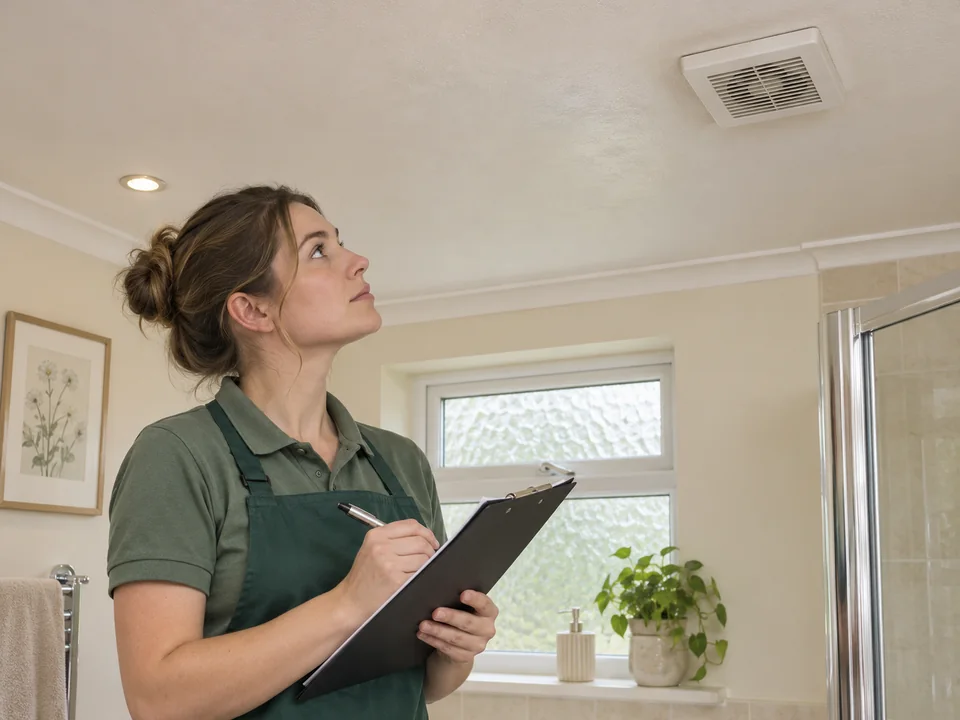
We complete the visit by reviewing the surfaces included in the agreement. We identify the work we carried out and point out anything visible that remains, including staining or damaged finish. If we came to a boundary where the face was covered or its condition was unsuitable, we use a fixture or nearby edge to show you where. Ask us to point to the suitable area again if a second person will be using the room or passing the information to the owner. They can then make a separate enquiry about an outstanding property concern using the exact location.
If new moisture or marking appears later, make a dated note with the name of the room and the face. Give a corresponding wide view so you can distinguish a change near the side door from a different mark on the far wall. If the house has recently been adapted, tell the person responsible which surfaces were retained and what was added if you know. We can reassess a visible patch after separate property work when that changes the finish or exposes an area we could not initially see.
We review the result from the ordinary approach to the room as well as the position used to work. A shallow strip beside a shelf can be visible from one angle but covered when viewed head on. We show the suitable hard face that has been cleaned and point out any adjacent mark that falls outside the exposed area. This is especially useful if the room will go back to being a workshop or store and its loose contents will be moved back afterwards.
| After the visit | What to record |
|---|---|
| Area addressed | Hard face and stopping point |
| Obstructed or damaged part | Nearby fixture and reason the part was left |
| Fresh visible change | Date, surface and room position |
Questions about arranging mould removal
Can I show a patch in a converted garage?
Yes. Explain how you use the room now and tell us what the marked surface looks like.
Can you enter a garden room through a side gate?
We can discuss that route when you provide the full address. Mention steps or anything that blocks access.
What if an attached shelf hides the middle of the mark?
We assess the exposed face and explain where the fitted shelf prevents us reaching the area.
Can you work before my equipment is disconnected?
Tell us what is connected and where it sits. We assess the available position with your usual working setup in mind.
Do you treat any painted panel as a suitable surface?
We check the actual finish, condition and reach of each exposed panel before agreeing the work.
Can my property contact review the stopping point with you?
Yes. Tell us who will be there to see the relevant surface during the handover.
Other Cleaning Services in Ruislip
Mould removal and access assessment, Discuss regular housekeeping separately
Discuss your mould removal enquiry
Mould Removal Prices in Ruislip
Tell us which rooms are affected, the approximate size of the visible patch and what surface it is on.
Get a Quote