 Housekeeper
Mould Removal in Harrow
We assess visible mould on the exposed surfaces in your Harrow property, agree what can be cleaned and review the work when we finish. Tell us about the particular room or landing and how a visitor can reach it.
Can I enquire for HA1 or HA2?
Yes, send the full address, the affected room and its level.
What if the mark is beside an inside stair?
Say whether it is on the landing side or visible only from the steps so we can discuss access.
Inspect the affected surface from its working level
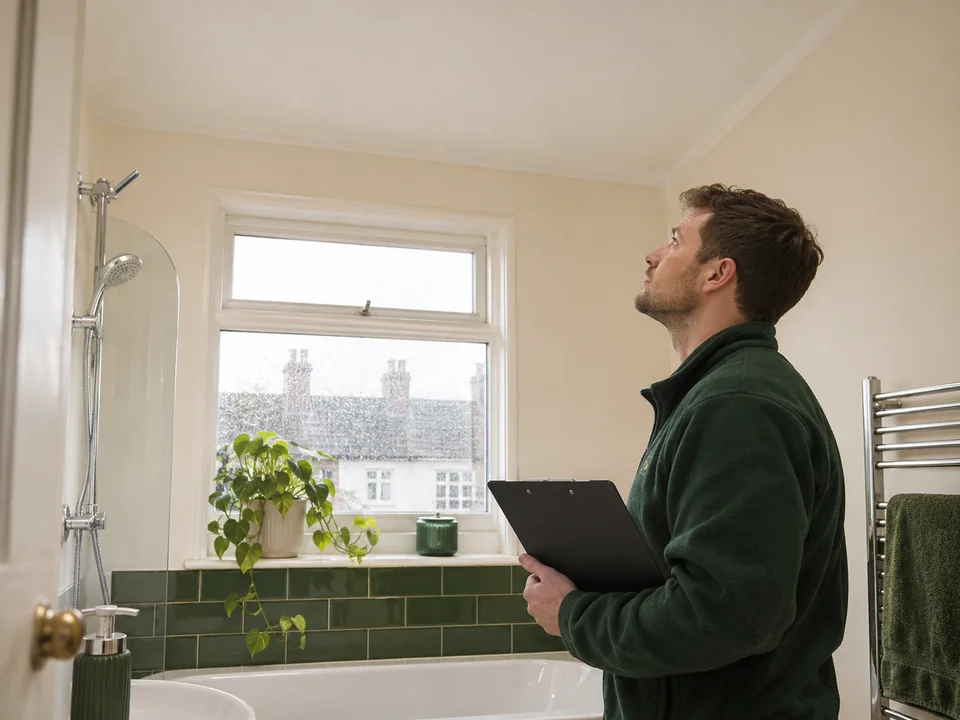
We check which side of the affected surface can be approached in ordinary use. In a room beside a stair, the growth may be visible from another level but only one face may be reachable from stable flooring. We assess the material and clearance at the actual working position, then agree which compatible hard area can be prepared. If the patch continues into a recess or onto a fragile finish, we identify that point before cleaning. At handover we use the same stair, opening or fitting to show exactly what was treated and what remains outside reach.
Harrow’s Roxeth Hill appraisal describes the pronounced slope on that side of Harrow on the Hill and differentiates the small terraces lower down from larger villas and cottages further up. The street name alone does not tell us how to reach the dwelling in your enquiry. If the front door is above street level or a separate flat has its own path below it, provide the correct door and approach. Mention stairs or a gate so we can discuss a suitable arrival there.
We assess each visible part at the level from which it could be cleaned. A patch beside the landing can cross from a firm glazed surface into painted trim or a high edge. We check the condition on either side, keeping fixed items in place. Where suitable, we agree the preparation and physically remove visible mould from the accessible hard face included. During review we show the lower or reachable section we treated and identify the part that was left because another material or working height affected the agreement.
We inspect a second room independently, as a suitable hard face in one does not make a higher or concealed surface elsewhere suitable. We confirm the ordinary working position, prepare the compatible part agreed and review the treatment in its own room. This keeps the result at a lower edge distinct from an inaccessible part on another level.
| Location | What helps us discuss access |
|---|---|
| Landing window | Which side of the landing and where the mark starts |
| Lower entrance | Door label, steps and who can open it |
| Second room | Its level and the material you can see |

Organise the approach from a stable part of the floor
We discuss what the household can clear safely before the assessment. Shoes, small baskets and other loose items can be moved off an agreed hard landing. If a large console or fitted cabinet is part of the approach, leave it where it is and say how close it sits to the marked section. Tell us if people use the hall at particular times or if access to a bedroom or outside door depends on passing through the area whilst we are there.
We consider whether the landing or room offers safe reach from a stable position. A visible opening at the turn of a stair may be easy to point to but difficult to stand beside. The handrail or a fixed half-height wall may also limit access to the far side. You do not need to set anything up to compensate. Tell us what is in place and we check the approach when we arrive before we agree any work on that surface.
If a resident needs the stair or landing to remain free, agree the order of the visit in advance. There may be a second affected room on the same level we can look at first, or a ground-floor area we can consider separately. Make sure the person meeting us knows what has been agreed. In a home where someone who holds a key is coming from elsewhere, tell us when they can show us the actual working area and when they need to leave.
- Explain whether access is from the steps or a level landing.
- Move only the loose items you can handle safely.
- Confirm the time the household can make each area available.
Look from the accessible side before committing to the work
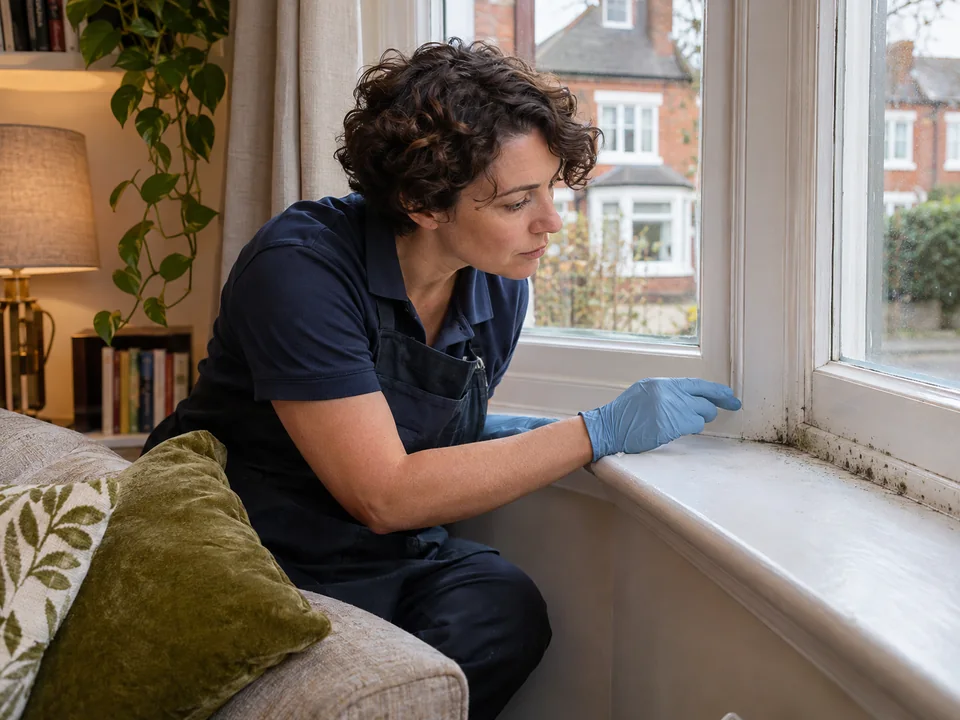
We assess the visible finish and the view available from the agreed approach. On a low landing, an exposed hard sill can have marks along its edge and a cracked wall finish just below. At a taller opening, we may only be able to see a part of the strip, even if it appears continuous from another level. We discuss which areas are stable and within safe reach. A mark on the far side of a fixture may need a different approach.
For a tiled room below a stair, we look at the condition of the tiles at any angled ceiling and around fixtures. If a solid tile runs into an unstable painted board, we explain the two materials separately. Tell us if you have seen flaking or if part of the material has changed after a roof, window or plumbing issue was looked at. We assess the exposed faces on the day. An investigation behind a lining or within a frame requires a suitable property professional.
We make the assessment boundary clear even where a large patch is visible. An accessible part of a landing surround can be considered while a strip around the far end stays beyond the approach we have. When a finish is physically worn or soft to the eye, we explain how this affects the decision. We can also check whether the mark lies on a more suitable hard surface beside it, such as a stable rigid trim that can be reached.
A stair landing can also change direction at a point where the window surround is wider than the space below. If you describe a patch around the entire inside edge, say which edge can be seen without leaning across the stairwell. We may suggest looking at an accessible side from the landing first, then discussing the rest of the frame. A view from the other side of a fixed glass panel can help identify the location but still leave the affected face beyond reach. We keep that distinction clear when discussing the work and showing the surface to you afterwards.
| Visible condition | What we can establish |
|---|---|
| Hard face next to a level area | Whether it is suitable and reachable |
| Line above the stair turn | Whether the approach affects safe reach |
| Damaged adjacent finish | The edge we need to leave undisturbed |
Carry out surface cleaning where the approach is suitable
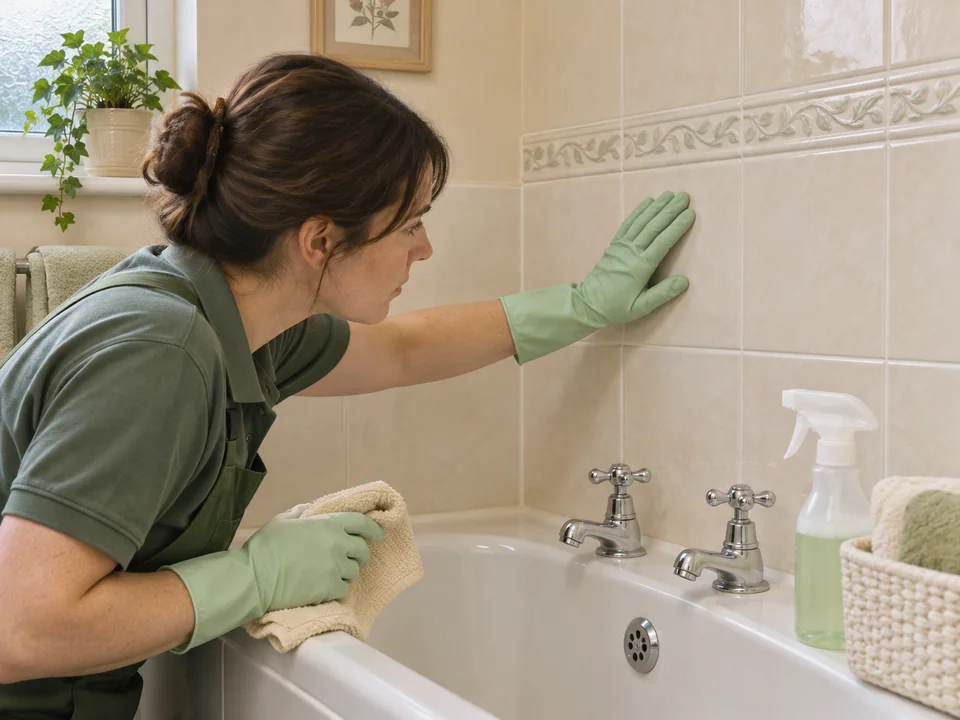
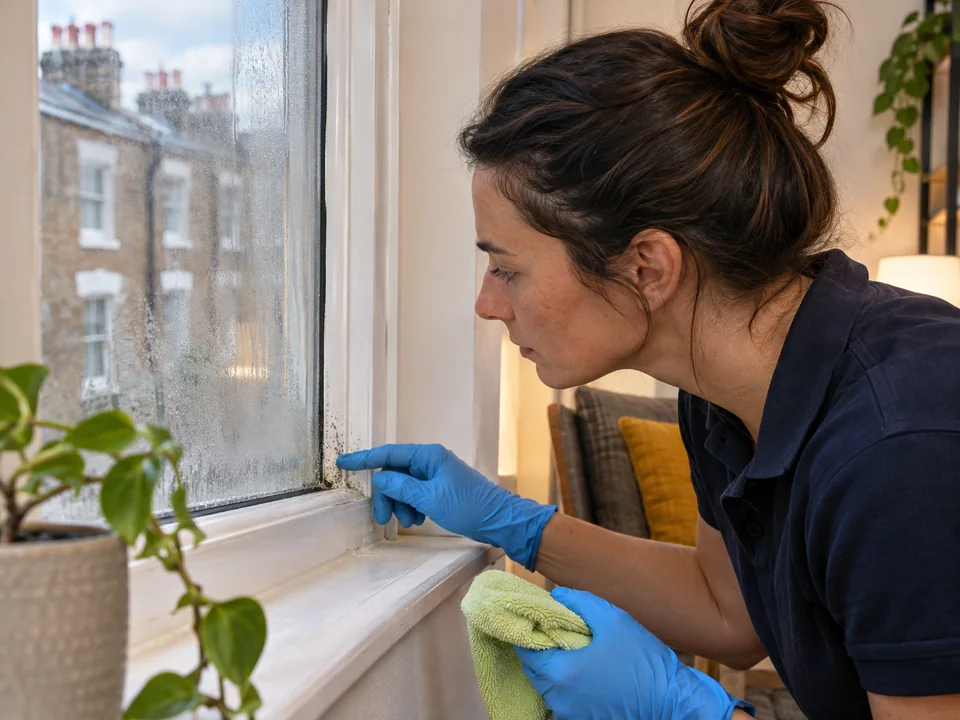
Once we agree the work, we remove visible mould from the suitable accessible hard faces. Around a landing surround, that could be the inner part of an exposed face we can reach from the floor rather than a return closer to the stair opening. In a cloakroom, the work may include a selected part of the tile face beside the basin. We use the location and extent confirmed during assessment to guide exactly where we clean.
If preparations reveal a second hard face beside the affected area, we check whether it fits the original request. There may be a separate section behind a loose item that can be put away, or marks near a trim of a different material. We tell you what we can see and who should decide whether it is included. If a resident opened the property but an off-site owner authorised the work, agree how we can get a decision before extending it.
We also explain where a patch is visible on one side of a fixed join but no longer visible from the working position past it. On the stair side of a landing rail, the part you can see from below might not be reachable from above. We work within the access agreed and avoid taking fixed parts apart. If the property contact wants to review the area from another approach, we can identify where that need arose.
- Agree the faces we can reach from the available position.
- Tell us who approves any additional exposed area.
- Ask where a restriction changes what can be cleaned.
Walk through the result using the same room and level names
At handover, we review the hard surfaces cleaned and identify limits we encountered. If the assessment showed a window ledge was suitable only up to a particular corner, we show which side was addressed. Where a dark line remains in an adjoining worn finish, we describe its position. Use the original room or level names, particularly if the same building has more than one hallway or a landing common to several residents. Keep the nearest door or stair turn in your description.
If a patch returns on a tall window or beside a stair, give the property contact its visible location and which floor gives the best view. Say where the area meets the rail, wall or trim and when you noticed it. We can pass on what we observed within the work area. If a separate inspection or a different means of access is needed, it helps to know which side of the affected face to approach and where we were able to stand.
An individual quote takes account of the affected finishes and the working space. Give us the full postcode, how many visible surfaces need reviewing and which rooms can be opened. Tell us about the position of the landing or stair and whether other residents need to get through. We can discuss the cleaning work that is practical for the available access and agree who can check the result with us afterwards.
- Arrange the handover contact ahead of the appointment.
- Ask which side of the landing was accessible.
- Describe any returning mark by level and nearest fixed feature.
| Final review | What we identify |
|---|---|
| Cleaned face | Room or landing and the reachable hard area |
| Access boundary | Which step, opening or fitting restricted work |
| Follow-up detail | Visible condition and the place it was seen |
Questions about arranging mould removal
Can I enquire about a window beside the stairs?
Yes, say which side is marked and whether the face can be reached from a level floor. We assess the available approach.
Should I set up something to reach a high window before you come?
Leave the area as it is and describe the surface and its height. We check the practical reach before agreeing work.
Can you assess a tiled cloakroom and a landing sill?
Yes, describe both areas. We look at the condition and accessibility of each exposed hard face before agreeing cleaning.
What if the flat is at a different level from street number signage?
Send the full address and tell us which entrance, stair or path reaches the dwelling. Include the name at the bell where helpful.
Will you remove a rail or fitting to reach mould?
Leave fixed fittings in place. We discuss what is visible and accessible with the rail or fitting installed.
Can a main-house resident open a separately let flat for the visit?
Check that they have permission and agree who holds the key, who can open the affected rooms and who will receive the review.
Other Cleaning Services in Harrow
Regular housekeeping in Harrow, End of tenancy cleaning in Harrow
Discuss your mould removal enquiry
Mould Removal Prices in Harrow
Tell us which rooms are affected, the approximate size of the visible patch and what surface it is on.
Get a Quote