 Housekeeper
Mould Removal in Uxbridge
For an Uxbridge mould removal enquiry, we record the affected room, the visible finish and how we can enter. We assess the accessible surface, confirm the limits of work and prepare the immediate area. We physically remove visible mould from suitable hard surfaces agreed for the visit, then explain what we cleaned and any follow-up the property still needs.
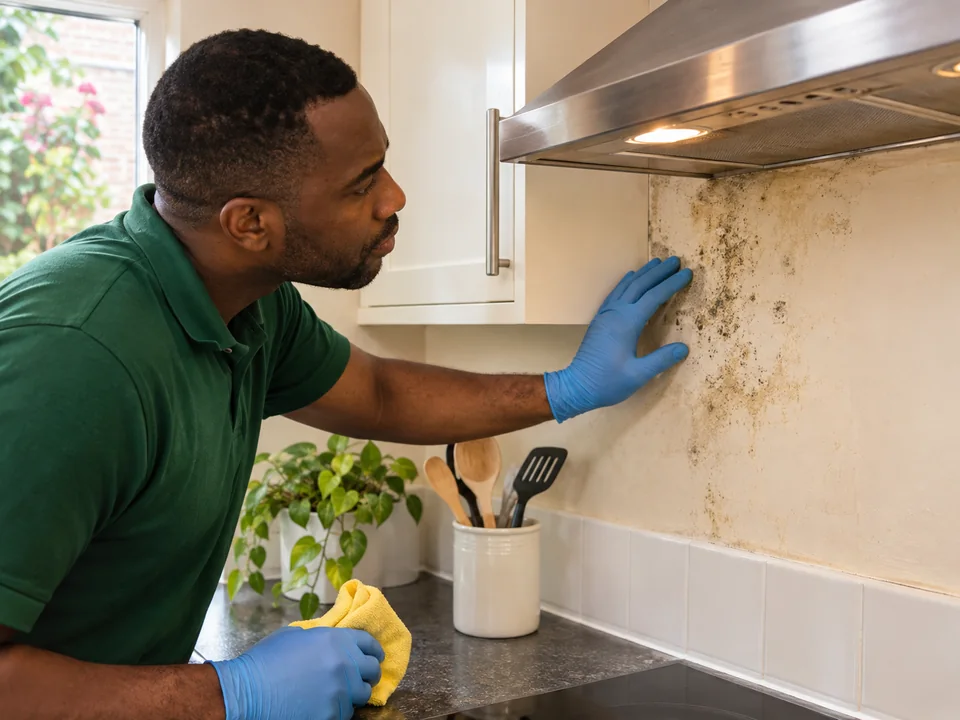
What do you need for a UB8 town-centre address?
We take the full postcode and the actual visitor entrance, including the route to a separate flat door.
Can we discuss marks on more than one finish?
Yes. We assess each accessible finish and agree the work separately if needed.
We take the enquiry from a room description to a visit plan
We ask about the affected room, approximate visible area and what kind of finish the marks are on. If the marks extend from one finish to another, describe each part. Give the position relative to a room feature we can identify on arrival, such as a cupboard edge or a window. We use those details to discuss whether the surface needs assessing in person before the work can be priced. If the quote needs to cover several rooms, label each surface so it can be discussed clearly.
Photographs taken from safe positions can help us identify which finish is involved. We find a wide shot helpful when it shows the position in the room, particularly if two close views could refer to different walls. Give the date and any relevant changes if an earlier photo is the only view you have. We can work with your description when a photograph is impractical. If an area is partly concealed, we record what is visible and discuss any separate access decision.
If different people will open the property, approve work and receive the outcome, tell us their respective roles. We confirm what is being arranged and make sure the person who will see the work can identify the surfaces they have asked us to consider. This is helpful where a building contact takes care of common routes and a resident is responsible for access to their room.
- We label each area and finish before discussing a quote.
- We ask which parts are visible and reachable.
- We confirm who can open the rooms and approve work.
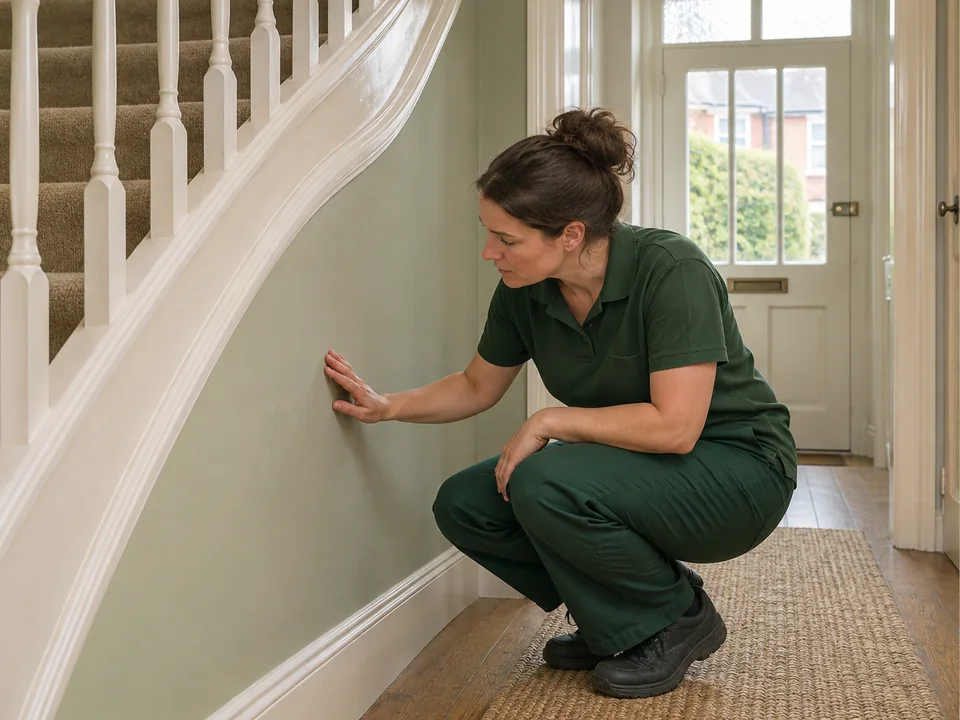
| Enquiry detail | How we use it |
|---|---|
| Room and position | Identify the surface and its working location |
| Approximate measurements | Show the extent of what is presently visible |
| Photographs if available | Identify finishes and visible obstructions |
| Contact roles | Arrange access, approval and handover with the right people |
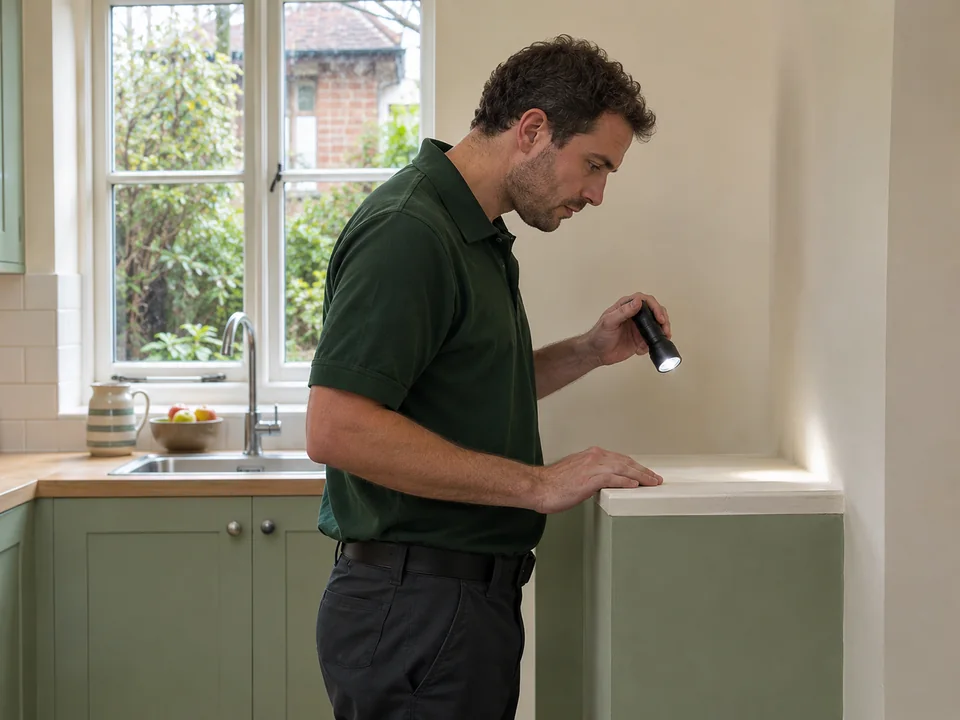
Agree a route when the address faces Windsor Street or the High Street
Hillingdon Council's townscape study identifies a historic town-centre core around the High Street and Windsor Street and a further stretch towards Belmont Road and Harefield Road. When you enquire from that part of Uxbridge, give the full address and explain how visitors find your entrance. A named property can face a principal street while a different route serves some of its rooms. If you expect to meet at a secondary door or a shared entrance, give the landmark or door label that will help us find it.
We check how to reach the affected room after arrival. Let us know whether there is a step, a lift or another locked door on the way. If the area is high above a staircase, describe its position and tell the office whether there is somewhere level beneath it. For an occupied home, give the times when the route and room can be made available. We use that information to discuss what can be assessed and how to prepare the position before agreeing work.
Where a building has different approaches for different visitors, confirm which route the property contact will arrange for us. Give them the details before the visit if they will be responsible for opening the door. If access changes, tell us what is now available and which part of the old route no longer applies. We check that the arrival plan still fits the areas we have discussed.
- We distinguish the named address from the entrance actually in use.
- We check how to reach the floor and the working position.
- We discuss any change to the agreed arrival route.
Check the visible surface and agree what is suitable
At the property we assess the visible accessible areas described in the enquiry. We consider the finish, its condition and any neighbouring material affected by the same patch. A sound hard face and a loose adjacent covering can need two different decisions. We identify the relevant surfaces and discuss whether any part needs a further assessment before agreeing to clean it. If the affected area is higher or wider than described, we discuss the difference before starting work.
We ask about any known water entry, repairs or changes to the room that affect the visible condition. We use confirmed observations to make sense of the reported area. A property contact may need to investigate a continuing moisture or building problem separately from the visible clean. If a mark appears on material that has changed in shape or condition, we explain which aspects require another assessment and keep them separate from any suitable area that has already been agreed.
Before work proceeds, we check the outline of the quote with the person who can agree it. Confirm what might happen if a concealed area becomes visible or if another room cannot be made available. This is particularly useful when several people are coordinating different appointments. Only the assessed and agreed accessible surfaces are included in the work described for the visit.
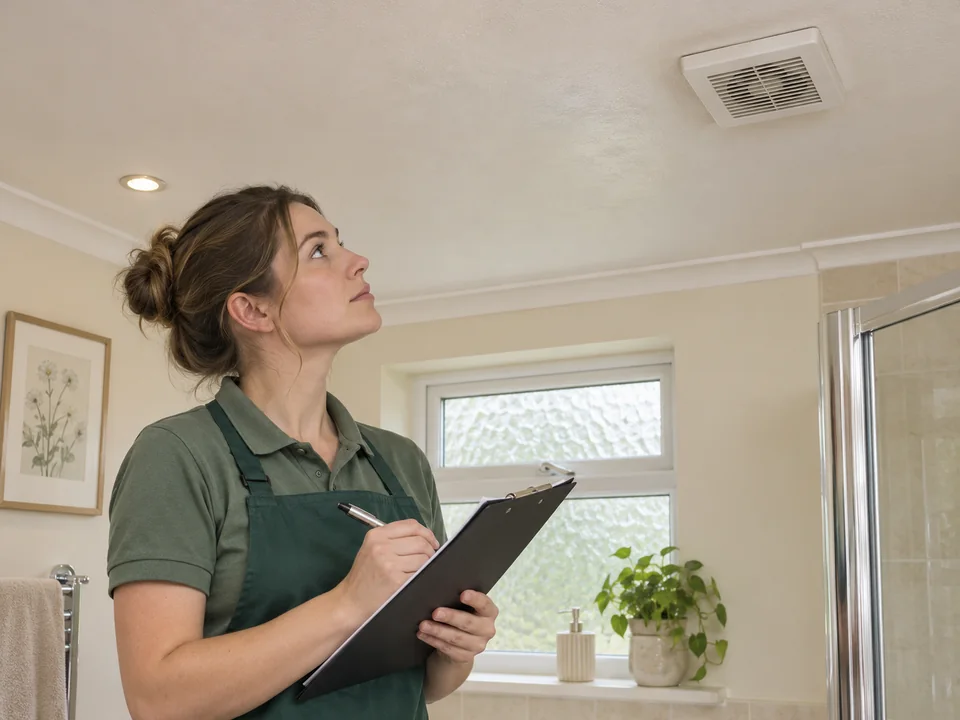
| Observation | What we assess | Decision |
|---|---|---|
| Marks on an accessible hard surface | Condition, extent and where the material changes | Which area can be included for physical removal |
| Loose or damaged adjoining finish | Extent of the change and what can be viewed | What needs a separate assessment |
| Marks high above a landing | Visible amount and safe working position | Whether the area can be reached for the agreed work |
| Known repair near the area | Timing and what is already confirmed | Which questions remain for the responsible person |
Prepare the agreed position and remove visible mould
When the surfaces are agreed, we prepare the immediate working area. We confirm what can stay in place, who needs to use a route through the room and whether any item affects how we reach the surface. We explain where the work will take place. If a resident will use another part of the house during the visit, agree that arrangement in advance so we can discuss the working position without interrupting any necessary access.
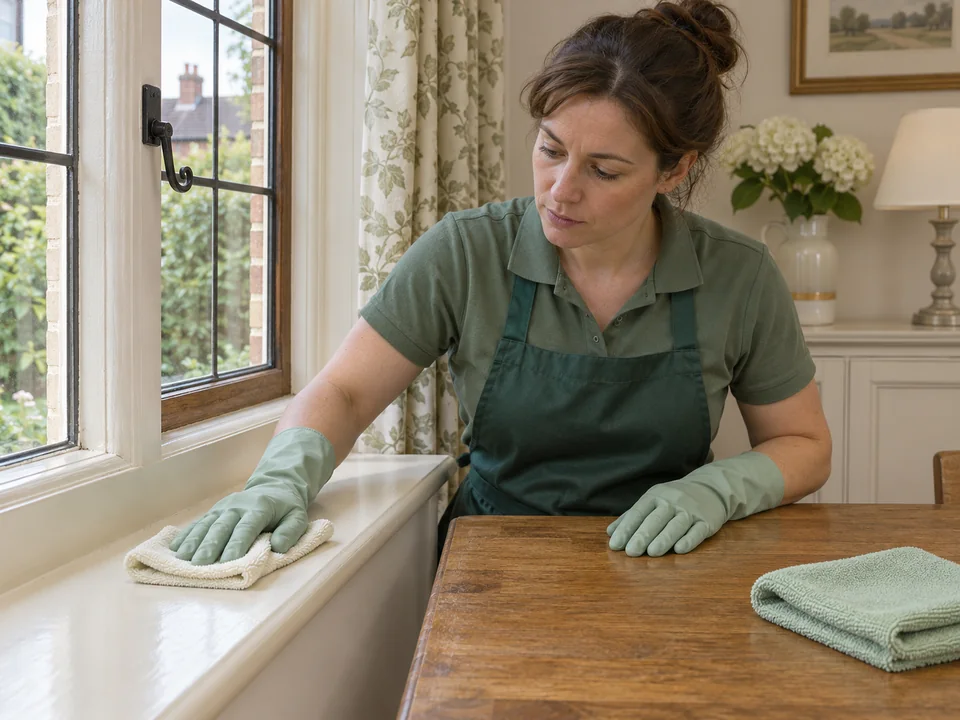
We physically remove visible mould from the suitable accessible hard surfaces included in the agreement. We work within the agreed boundaries around edges and fittings and review what we can see as the visit progresses. If a surface appears unsuitable or it cannot be reached, we identify the area and explain what requires further discussion. An unexpected area can be reviewed with the person who can authorise changes before it is considered for additional work.
If a room has several finishes in one corner, we keep the list of included areas clear. A suitable hard trim can be cleaned separately from a finish beside it that needs a property decision. The customer can identify both surfaces against the original description and see which one was cleaned. At the end we review the same outline to make sure the limits and outcome are understood.
- We establish the working boundary before preparation.
- We physically remove visible mould from the agreed suitable hard surfaces.
- We review the outcome against the area's agreed limits.
Review the work and agree who handles the next step
At handover we explain which areas we attended to and highlight anything still requiring an assessment. A visitor who opens the property may have a different role from the agent who arranged the work. Tell us who needs the outcome so the information can be shared with the right contact. If you keep a room record, retain its description and a note of any outstanding question alongside the summary of the agreed work.
If the building contact is still investigating a separate matter, clarify which part of the property it covers. We can explain what was visible during our visit and which areas we cleaned. The person responsible for the property can then consider those details with any separate assessment or repair plan. If the condition later changes, the same room and surface labels help put the report in context.
Use the booking page to gather the Uxbridge address, rooms, finish details and known changes before calling. If another cleaning visit such as oven cleaning is being planned at the same time, give its timing and item list separately. We can discuss the different arrangements and what needs to be available for each visit.
| Step | What is communicated |
|---|---|
| Review | The surfaces cleaned and the limits agreed |
| Property question | What remains for a separate assessment or decision |
| Handover contact | Who should receive the outcome |
| Other cleaning | Which rooms or items form a separate request |
How we handle changes after an initial discussion
If a mark has become more visible or a room now needs to stay in use, tell us before the agreed visit. We consider the change and ask whether it affects access, the work to be priced or the person who needs to authorise it. If you are updating an existing record, give the most recent description and the location so that the new information can be understood alongside what was discussed earlier.
Where a surface is newly exposed after unrelated work, we check it in its current condition before confirming if it can be considered. An original agreement for a face that was accessible at the time does not cover an area that could not be seen. We can discuss what additional visit or assessment might be appropriate and explain how the new work would be described if it is agreed.
When preparation and access are divided between an occupier and a building contact, we check which parts of the arrangement each person is responsible for. One may be able to make the working area clear, while the other can approve access from a shared entrance. We give the visit an agreed location and identify any changes that should come back through the person who arranged it. That way we can consider the accessible surface within the actual terms of the visit.
At the close of the work, tell us if the record is needed for another person to consider a separate assessment. We explain which part was agreed and cleaned and how to identify any area that remains outstanding. A concise record using the original room label is useful if the affected finish is being considered by someone who has yet to see it. Agree who should receive the outcome before leaving the visit arrangements.
If more than one change has been reported, we review each one against the original agreement and decide which details affect access or the work itself.
Questions about arranging mould removal
Do you need a separate door description for a flat above the Uxbridge High Street?
Yes. Give the complete address and describe how to find the entrance visitors actually use. Say who will be there to open it.
How do you handle a section that spans an accessible wall and loose material?
We assess each part in its own condition and agree which suitable hard surfaces can be cleaned. The changed material may need a separate decision.
Can you agree work for a high area from a photograph alone?
A photograph helps us understand the location. We discuss the working height, access and finish before confirming whether an assessment or cleaning is appropriate.
What if the occupier and the person paying for the visit give different room names?
Give us both names and a common reference point, such as a window or doorway. We check which surface is included before work starts.
How do you document anything outside the agreed clean?
At handover we identify the area, why it was outside the agreed work and whether it needs any other assessment or access arrangements.
Can I report a new mark when I call to confirm the visit?
Yes. Give the room, finish and approximate size and say what can be reached. We can discuss whether it needs to be seen separately before it is included.