 Housekeeper
Mould Removal in Northwood
If you have noticed patches on a window lining, a conservatory frame or a glazed bathroom wall in Northwood, we can discuss a visit for the affected hard surfaces. Tell us which room you want us to concentrate on and what is in front of the area. We inspect the finish in person and explain which visible patches we can physically remove before cleaning.
Can I enquire from near Green Lane?
Yes. Include the full HA6 postcode, house number and the entrance you use.
What if the affected room opens onto a garden?
Tell us which door is normally used and if there is a step or raised threshold.
Start with the frame, the glass and the lining
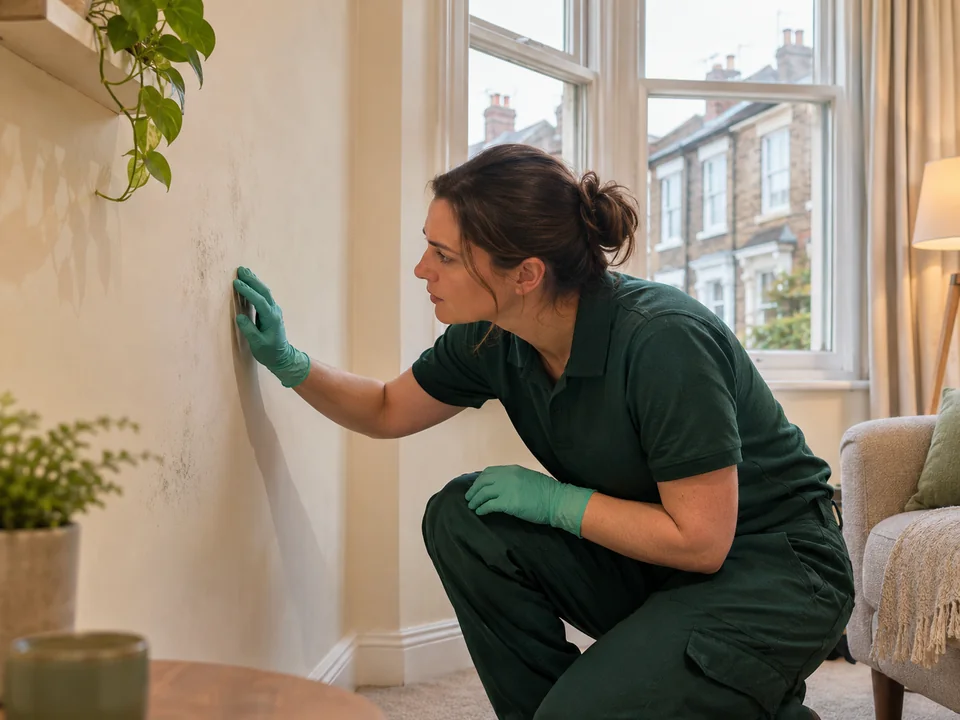
A wide window can look like a single job from across the room. Standing beside it, we might find glass, a finished sill, a soft gasket and an adjoining wall lining within the space of a hand. We look at each part before agreeing the work, since the border between two materials matters as much as where the visible patch begins. One face may be clear and sound while the return is swollen, soft or concealed by a cover strip. We can usually describe the agreed area more precisely by naming the component and the edge where we will stop.
Hillingdon's Green Lane conservation area appraisal describes an architectural mix around Northwood town centre, with sash windows and leaded lights among features recorded there. That gives a good reason to tell us what is actually fitted in your HA6 home. A new insert in an older opening may have different surfaces from the frame you can see outside. Send the location of the patch, an image of the whole opening and a closer picture if it is easy to take. Let us know if a blind, shutter, insect screen or deep window seat takes up the space beside it.
If you are trying to decide which part to flag first, start with the face you can see from the normal standing position. A patch under an openable pane is a different proposition from one between panes or behind a wooden liner. We can discuss the exposed surface from your description, then check its material, condition and reach at the door. Leave the fittings in their usual position for the picture if moving them would disturb the patch or conceal where it joins the surrounding finish.
- Distinguish the sill from the wall immediately below it.
- Show the frame and handle in one wide view.
- Tell us if the opening is fixed or ordinarily opens.
| Where you see the marks | What we check |
|---|---|
| Lower glazing bead | Whether the visible face is intact and reachable |
| Sill return | Where the sill material meets the adjoining wall |
| Window seat | Whether it obstructs standing access |
Prepare the frame without disturbing the room
Some garden-facing rooms are used as an everyday entrance, while others only open onto the garden in good weather. Tell us where people will be coming through around the time of the visit. We can agree an approach that gives us a stable place to work and leaves your ordinary route usable where possible. Please point out a narrow gate, porch step or floor transition if that is part of the way in. Those practical details help us discuss a visit that fits how the house is being used, particularly when the subject is a corner you cannot see until you stand beside the patio doors.
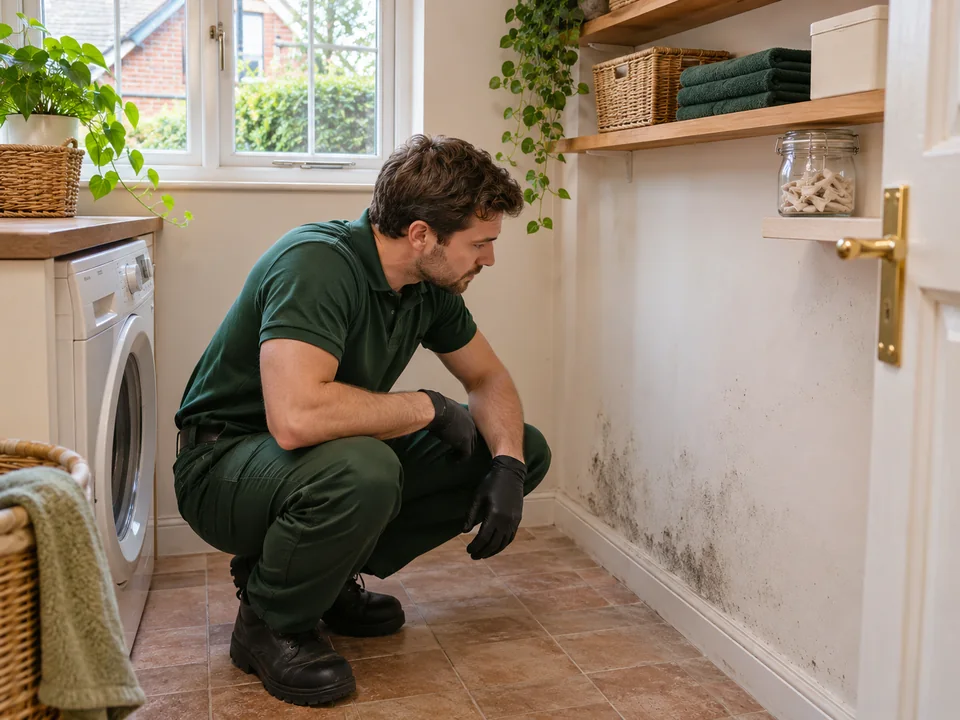
For an openable panel, we check the face you can reach from inside the room before deciding how much of the frame is suitable for cleaning. We look at what is newly exposed when the panel moves and distinguish the hard face from the strip around it. Preparation gives us space to work without leaning over loose objects or moving fitted parts. If visible mould extends from the suitable face into a narrow channel we cannot reach, we clean to the agreed boundary. The final check identifies that channel and gives you a clear view of the surface that was cleaned.
In a room shared with pets, young children or anyone working from home, agree where they can go while we deal with the surface. Our assessment starts with the route and usable standing area as well as the finish. If a second door opens directly across the corner, tell us whether it can stay shut for the visit and whether any other access has to remain available. We can then review your priorities without making assumptions about doors, cupboards or belongings.
When a row of windows has several affected faces, we work along it in the order that gives a clear approach to each panel. We check how the material and reach change from one opening to the next. A broad fixed frame may be suitable from end to end while an openable panel needs its hinge side assessed separately. We agree the hard sections to clean, prepare each working position and remove visible mould from the surfaces in scope. At review we use the panel joins to show what was cleaned and whether a mark continued into a covered channel.
- Let us know if this is the only garden access.
- Leave clear space for a normal approach to the opening.
- Point out a threshold or loose floor covering along the route.
How we work on agreed visible patches
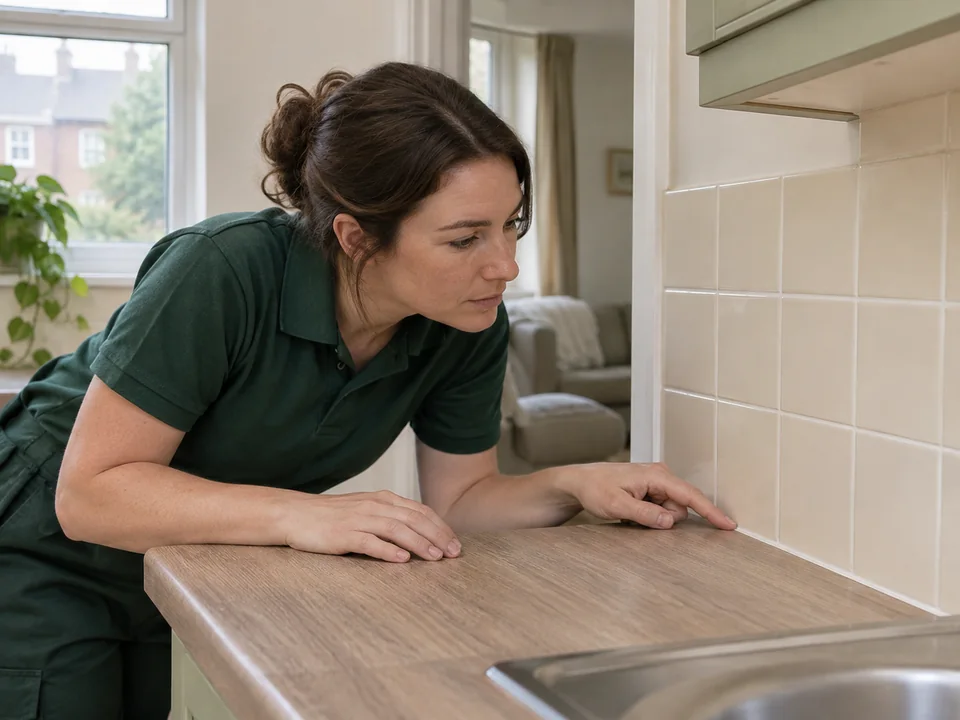
Once we have seen the area, we explain which accessible hard faces are suitable for work. If you have shown us two windows and a stretch of tiled wall, we identify the exact faces before starting. That might mean the room-facing section of a sound frame and the exposed face of the tile. Joints, gaskets, coatings and detached edges get their own check. We do not use the general name of the material as the sole basis for a decision. We look at how it is fixed, whether it is handling normal contact and how its condition changes around the affected area.
We prepare the immediate working position as agreed and physically remove visible mould on the suitable exposed hard surfaces. Where you can see a patch run across a change of materials, we work to the boundary we discussed. If a marked line turns a corner behind a fixed trim, lifting that trim is a different job. We pause if the surface or access turns out to be different from what we saw during the initial review. We then explain what we have found and agree what is still suitable before continuing, rather than assuming the strip of material can be treated like the rest of the face.
An openable leaf can reveal a second, smaller surface that was out of sight when you took the first photograph. Ask us to include it in the assessment if the window or door already opens safely in normal use. We look at that inner edge separately and factor in how the leaf can be kept in a normal working position. For a high transom or a fixed panel beyond a deep ledge, give us the height and depth when you enquire. That makes it easier to identify a limit to access before you plan the visit around that particular spot.
- Check the area list with us before the work starts.
- Point out finishes that have been coated recently.
- Tell us if fittings move, stick or are already loose.
| Surface situation | Visit decision |
|---|---|
| Sound glazed face | Review the exposed patches for cleaning |
| Loose inner trim | Agree a stopping point on the adjoining face |
| Deep sill below a high section | Review the position and reach before agreeing work |
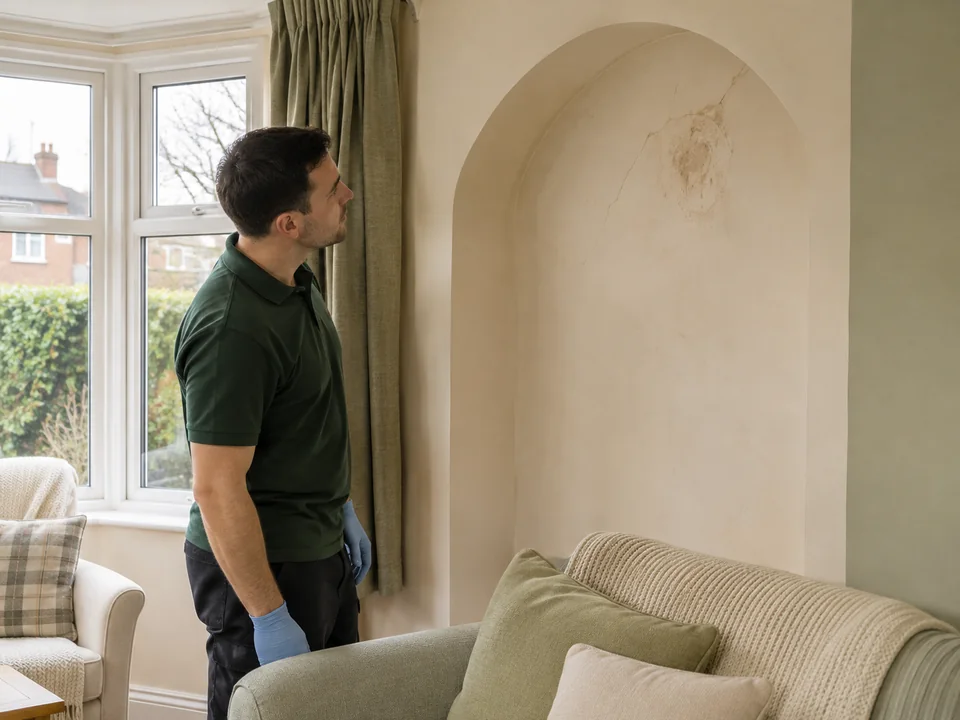
See the result against each face you asked us to assess
We look back at the faces we agreed to work on and explain the result room by room. Good daylight can make it easier to check the same edge from the same position used at the beginning. A change in surface colour can still be visible after a patch has been dealt with. We show you where that remains, where an adjacent surface was outside the agreed work and what would require a separate practical follow-up. If you arranged the visit for another owner or resident, nominate someone who can review what was addressed and relay those specific observations.
Tell us about any recent glazing, decorating or other property work if you think it may affect what happens next. It gives us a more accurate picture of how the affected surface was finished and whose number you should have for a separate conversation. If you see fresh moisture, a recurring mark or damage in the same position afterwards, record the place and the date. A picture of the entire opening helps keep that report tied to a particular sill, return or joint. A landlord, building manager or suitable trade can then consider the issue on its own merits.
For an enquiry covering more than one room, it is easy to lose track of smaller details. Set out the priority in advance and tell us if someone will take over the handover while you are out. We can refer to the names you use for the rooms and describe the agreed boundaries with a nearby fitting as a reference. That supports a clearer discussion of what we were able to clean, including when a narrow face had to be left because of its condition or because it could only be reached after removing part of the opening.
At handover for a garden-facing room, we compare the same panel in the positions used at assessment. A hard frame can be clear along its open face while a narrow edge by the hinge remains outside reach. We show the areas worked on and identify any visible continuation by its location on the panel. If another opening seems similar, we can inspect it separately. Differences in how it opens or what the lining is made of can change which faces are suitable.
| Point to record at handover | Why it helps |
|---|---|
| Room and opening | Identifies the area in a home with several similar windows |
| Edge we could reach | Makes it clear which visible strip was assessed |
| Other action discussed | Distinguishes the next enquiry from the surface visit |
Questions about arranging mould removal
Does a sash window need a different enquiry from a modern frame?
Please mention the type if you know it. We look at the individual finish, available reach and condition before agreeing to clean.
Do you open a jammed garden door to get to the frame?
Tell us if it is jammed. We assess the face we can reach with the door in its current position.
Can you check both sides of a room divider?
Show us both sides from their normal entrances and identify the affected faces in advance.
What if the window seat lifts?
Tell us how it opens and what lies beneath. We assess the exposed hard faces we can reach once normal access is confirmed.
Can I ask about just one end of a long tiled wall?
Yes. Tell us where that area starts and ends, and point out any change in surface along the way.
Will you discuss marks still visible after cleaning?
Yes. We review the areas worked on and point out any visible marking or damaged finish that remains.
Other Cleaning Services in Northwood
Mould removal and visit preparation, Arrange a separate one-off clean
Discuss your mould removal enquiry
Mould Removal Prices in Northwood
Tell us which rooms are affected, the approximate size of the visible patch and what surface it is on.
Get a Quote