 Housekeeper
Mould Removal in Blackwall
We assess visible mould in Blackwall homes and discuss cleaning based on the finish and the access available. Once the work is agreed, we prepare the area and physically remove visible mould from suitable accessible hard surfaces. We use a final review to explain which sections we cleaned and where a building issue still needs attention.
Plan your enquiry
Can I enquire for a flat near Blackwall Basin?
Yes. Give the full E14 postcode, building name and exact residential entrance.
My concierge has the keys. Can you work with that arrangement?
Tell us when reception can release them and who can approve the work inside.
Inspect the room and identify the affected part of the fitting
Tower Hamlets identifies Blackwall Basin and Poplar Dock as separate sites in its borough inventory. If a building has a waterside address, the name of the nearest basin can help describe the area, but we still need the door that serves your home. Tell us the full building name, number and postcode. If a reception covers several buildings, tell us which one the visitor needs and whether the resident, reception or another contact can take us from the entrance to the flat.
We inspect the exposed faces from the working side of the affected room. Two flats can have similar frames but different access around a fixed window, corner or unit. We check what can be reached without moving the fitting, then inspect the condition of the hard face and adjacent paint, trim or seal. If the mark runs beyond a change in material or into a concealed section, we describe that edge separately before preparation. The working boundary follows the actual surface available rather than the whole frame as seen from elsewhere.
We identify the surface by its position in the room, such as the lower window frame beside the worktop or a return next to a utility cupboard. We check whether the visible mark is concentrated on one firm hard face or crosses onto another finish. Some compatible exposed material may be suitable even when a nearby coated edge must be left untouched. We agree the preparation and remove visible mould from the included suitable surfaces. At the review we show where the work stopped so a resident or property contact can identify any separate section.
- Give building, flat and entry information together.
- Say who can bring us from reception to the apartment.
- Show us the location of the mark within the room.
| Address information | Why we ask for it |
|---|---|
| Building and full postcode | To identify the correct property in E14. |
| Floor and wing | To locate the residential door. |
| Appointment contact | To resolve an entry or visitor-pass issue. |
Check the frame, the adjoining finish and the available reach
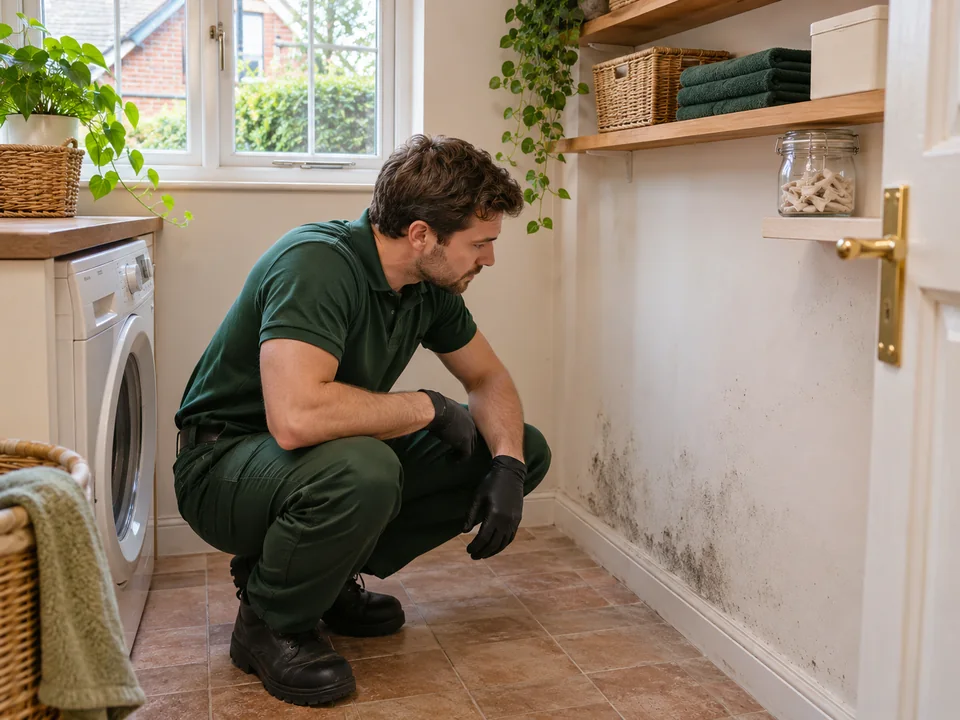
We check each visible part as a surface in its own right. A mark on a sturdy window frame can run up to a painted reveal or end along a fitted track. We look at where those materials change and which parts are visible without moving permanent fittings. When someone sends a photograph of the whole window, we use the assessment to establish whether it shows one suitable section or several different conditions that need separate decisions.
In a utility area we can examine the face of a hard surface and any adjoining position that is visible from the doorway or aisle. We do not infer the condition behind an appliance from the condition of the strip alongside it. If the full mark seems to continue into a blocked space, we show the responsible person how far we can see. They can use that explanation to decide who should take a further look if the concealed area concerns them.
We also take into account changes since the first enquiry. For instance, a resident may notice a second mark at the other end of a run of glazing after taking the first photographs. Show us each position before we agree the work. We can then explain how the surface, its condition and the available working position affect what we can include. The visit begins with the conditions we find on the day, which may be different from the initial description.
If bay or corner glazing has more than one face, orient the photographs with something fixed that can be recognised in person. A view towards a balcony door and a view back towards an internal wall can show two different sections that otherwise look alike. We match the pictures to the room before discussing what to clean. If we see that one surface continues behind a fitted screen, it matters where that screen actually ends.
| Surface position | What we need to establish |
|---|---|
| Frame beside glazing | Where the frame meets a different finish. |
| Utility cupboard edge | How far the mark can be seen without removing fittings. |
| Second affected window | Whether it offers the same access and surface condition. |
Prepare the accessible area in the order the flat allows
After the assessment we agree the visible surfaces that can be cleaned, then work through the practical arrangements for reaching them. Tell us which items are personal belongings and which ones cannot be moved under the arrangement for the flat. We ask for a clear standing position and a route to it. If that position is in the narrow space between a window and a dining table, we discuss what you can move and confirm what will remain within reach.
Some flats have a long run of windows with different uses along it. One section may have a desk, another a low radiator and another a tall, fixed blind. We check the approach to each agreed area before starting. Where part of the room needs to stay available for work or daily use, we discuss which position can be prepared first and whether the next can remain clear when needed. If conditions change, we confirm what remains available before undertaking work there.
For an occupied apartment, establish where the person meeting us will be while the agreed sections are cleaned. If the same corridor connects the affected room and a bedroom, agree how people can keep the working position clear. Where a property representative meets us and then leaves, ask them to name a reachable decision-maker. Should we see a different finish once a movable item is out of the way, we can discuss whether that area belongs in the visit before any work begins on it.
Tell us if the only free place to put the contents of the working area is another room on the list. We can agree an order that keeps each approach clear when we need it. For example, a resident may be able to move things away from a window after the utility cupboard is reviewed. Consider who can do that rearrangement while the appointment is underway or whether it needs to be completed before we arrive.
- Identify fixed fittings and any items that need to stay in place.
- Confirm where the approach to each agreed patch can be kept clear.
- Provide a contact for decisions while we work.
Carry out physical cleaning where the finish is suitable
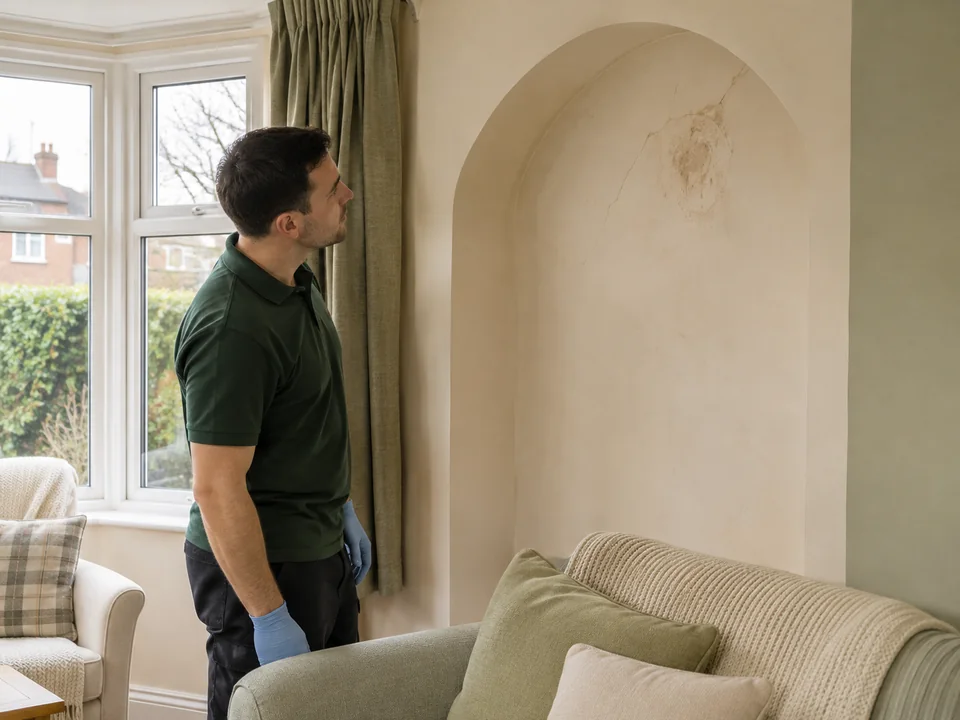
We physically remove visible mould from the agreed accessible hard surfaces. The work follows the boundaries identified during assessment. If an accessible window-frame section meets a damaged painted corner, we work on the agreed frame section and explain the different condition at the corner. We make these distinctions while we can point to the surfaces concerned. That is more informative than describing an entire room as if it had received the same work throughout.
An area extending from one surface onto another can look like a single patch in the photographs. On the visit the difference can be clear, for instance when a flat, sound finish meets a loose trim or a part we cannot reach safely. We stop at the agreed boundary and explain what we have found. Where a surface is unsuitable or stays concealed, we identify it for the person responsible and record it as outside the cleaning discussed that day.
Once the agreed areas have been cleaned, we look over each from the available position. We can describe the original margin of a patch and distinguish any remaining visible damage to the surrounding finish. We also check whether an adjoining part remained inaccessible. When access depends on furniture or fixtures that need someone else's permission, we identify that fact in the handover so the resident knows why the visit ended at a particular point.
| Point of review | What we communicate |
|---|---|
| Cleaned finish | The identified section where work took place. |
| Adjoining condition | Any remaining mark or visibly damaged finish nearby. |
| Concealed position | Where the accessible work ended. |
Show the treated face and any excluded edge at handover
We explain the result in terms of the exact window, panel or unit that was assessed. On a long run of glazing, one frame can be treated while the next return remains outside the work because of fragile material or ordinary reach. We show the cleaned area and describe the adjoining section separately. If the person responsible for the property reviews later, the resident can point to the same edge rather than treating an entire elevation as cleaned. Any suspected moisture or material problem stays a separate decision.
If a section of the frame is clean but the reveal has a visibly altered finish, we explain that distinction in the handover. Mention any existing report to building management so the person dealing with the next step can connect it to the correct position. We make observations about what could be seen without opening the structure. A recurring area or a concern about water entering through the building fabric belongs with the person responsible for investigating the property.
Use the booking route to give us the full postcode and the most helpful description of the apartment entrance, then tell us what the visible area looks like and who can show it to us. We can discuss how to approach the assessment and who needs to approve the work. When the visit is part of a wider handover or cleaning appointment, agree the timing and responsibilities separately so that everyone knows which surfaces are included and who will get the result.
We can talk through the result location by location when the same room contains several marks. Saying that the inner section of a frame was cleaned while a different finish beside the latch stayed outside the work is more precise than saying the window was attended to. That detail is useful if the person paying for the visit cannot see it in person and needs to ask the resident about the same position later.
- Agree who will receive the result and where to return keys.
- Keep the room name consistent with any building report.
- Mention any appointment that affects when we can access the area.
Questions about arranging mould removal
Can security register the visit without a resident present?
Tell us the building procedure and name the contact who can give access to the flat and approve the work.
Does a hard frame and its painted surround count as one surface?
We consider the frame and the adjoining painted area separately when we see the material and condition of each.
What should I show if the utility cupboard is partly blocked?
Photograph the visible edge and explain what is blocking access. We can discuss what is safe and practical to reach.
Can you report the finish behind a fixed blind?
We explain the visible boundary from the available position. A part concealed by a fitting cannot be assessed by looking at the surface beside it.
Can my letting agent receive the details?
Yes. Confirm the agent's role when arranging the visit and tell us who can meet us inside the flat.
What if the patch has spread since I took the photograph?
Tell us when the original image was taken and point out the current extent before we agree the cleaning.
Other Cleaning Services in Blackwall
Discuss your mould removal enquiry
Mould Removal Prices in Blackwall
Tell us which rooms are affected, the approximate size of the visible patch and what surface it is on.
Get a Quote