 Housekeeper
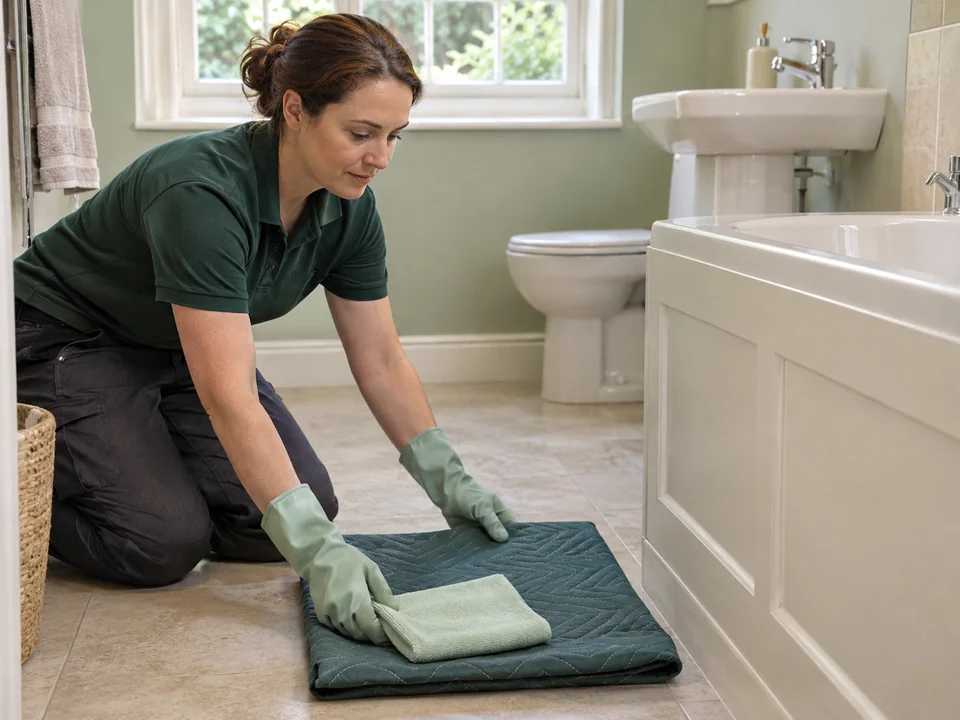
Mould Removal in Dulwich
From a marked window recess to an affected shower surround, we start with the exposed surfaces in your Dulwich home. Tell us what you can see so we can discuss access, cleaning and the result you can review with us.
Can I enquire about an SE21 address?
Send the full postcode and house or flat number, plus the room and the material you can see.
What if an original fitting sits near the mark?
Leave it in place and tell us how much of the affected face is exposed.
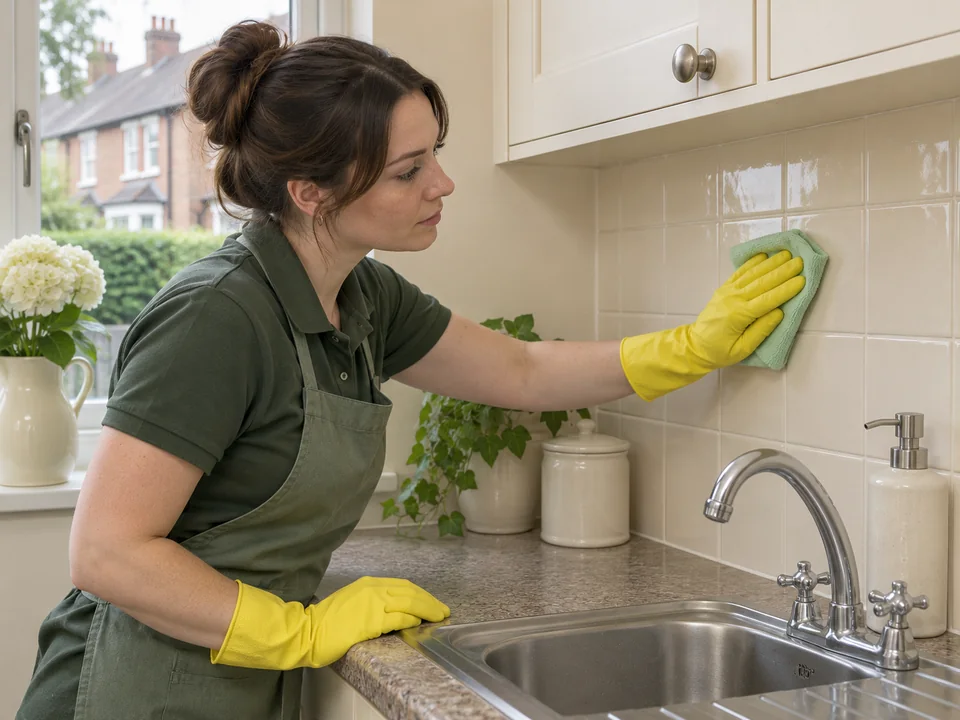
Inspect the exposed patch around the window or shower
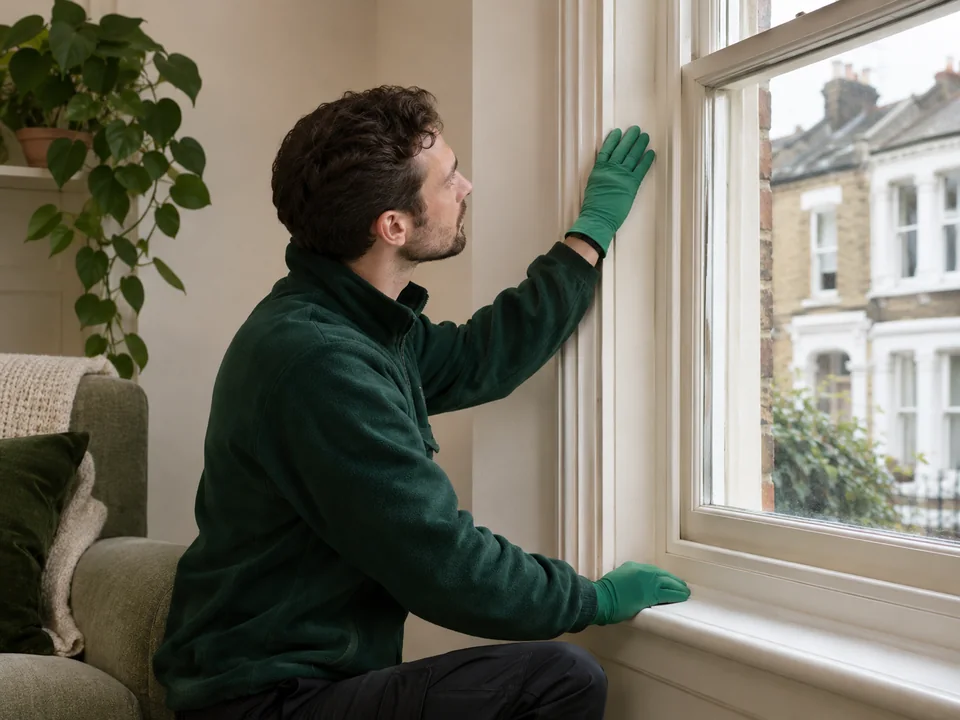
We locate the visible growth beside the fitting and look at where it changes material or becomes concealed. In a window recess, the firm sill can be available even while growth continues under a shutter or onto a fragile painted return. Around a shower, the equivalent change may be between glazed tile and sealant. We inspect each visible surface for condition and reach, then agree which compatible area can be prepared and cleaned. At the review we show the treated hard face and identify the point where another material or limited access kept the next section outside the work.
Southwark Council's Dulwich Village appraisal identifies College Road, Dulwich Common and Dulwich Village among the places where many of the conservation area's listed buildings are found. Give us the actual postal address and the entrance that leads to your room. Near a larger frontage, a gate shared by several parts of a property may be separate from the door you want us to use. A dwelling in a divided building may have a name as well as a number. Include which name we should look for and who will be available.
If you have care instructions for a surface near the patch, include them with the enquiry. A specialist-made window, cabinet or wall finish may have directions the resident normally follows. You may not know exactly what is under the finish, particularly if you have just moved in. In that case, describe what the exposed area looks like and whether the appearance changes at its edge. We can check what is visible before we assess if the affected part is suitable for the work.
We check the patch from the position in which it can be reached with the fittings left in normal use. A ledge may look exposed in a photograph but the nearest shutter or fixed piece can conceal the adjoining strip. We agree the working boundary in the room and prepare the suitable hard surfaces included. After physically removing visible mould where appropriate, we show the exposed area cleaned and identify any part behind the fitting separately.
| Enquiry detail | Example |
|---|---|
| Arrival | Named gate and door on the same property |
| Affected location | Inside edge of a bedroom window recess |
| Finish | Hard ledge meeting painted trim with care instructions |
Agree what can be made accessible
We discuss how much room we have to stand and work before the appointment. A low built-in seat can narrow access to the sill above it, and a cupboard at the end of a bath can obscure the tile face closest to the corner. Put away loose items you are comfortable handling, and tell us about anything that should remain in place. Send a plain description of the gap that will be available so we can distinguish an exposed face from one hidden at the back of a fitting.
We work around shutters and other installed window fittings without forcing them or removing them. Where the room-facing part of a sill is within normal reach, we assess the material and confirm which section can be cleaned. A patch that extends behind the shutter or across a fragile coating is considered separately. We explain the work boundary before preparing the included face and refer to the same ledge or fitting at handover to show the result.
If another person will open the house, give them the same list of surfaces you discussed with us. A householder staying elsewhere during works may have asked for a window bay, while the person with the key knows only about a bathroom. Agree which rooms will be free, who can answer questions about existing damage and whether someone needs to approve a change before we start. This keeps work tied to the area you want reviewed.
We also talk through how residents will move around the room during the appointment. A box room adjoining a study may need to stay open for someone to pass through. A bathroom close to a back stair may be used by people entering the house separately. Let us know if the route cannot be left clear at a particular time or if there is an alternative way around. We can discuss whether to review that room before the others and confirm the order with the person there.
- Move loose objects you are happy to put away.
- Identify fixed fittings we should work around.
- Tell the key holder exactly which rooms should be opened.
Assess the finish and the edge of the mark
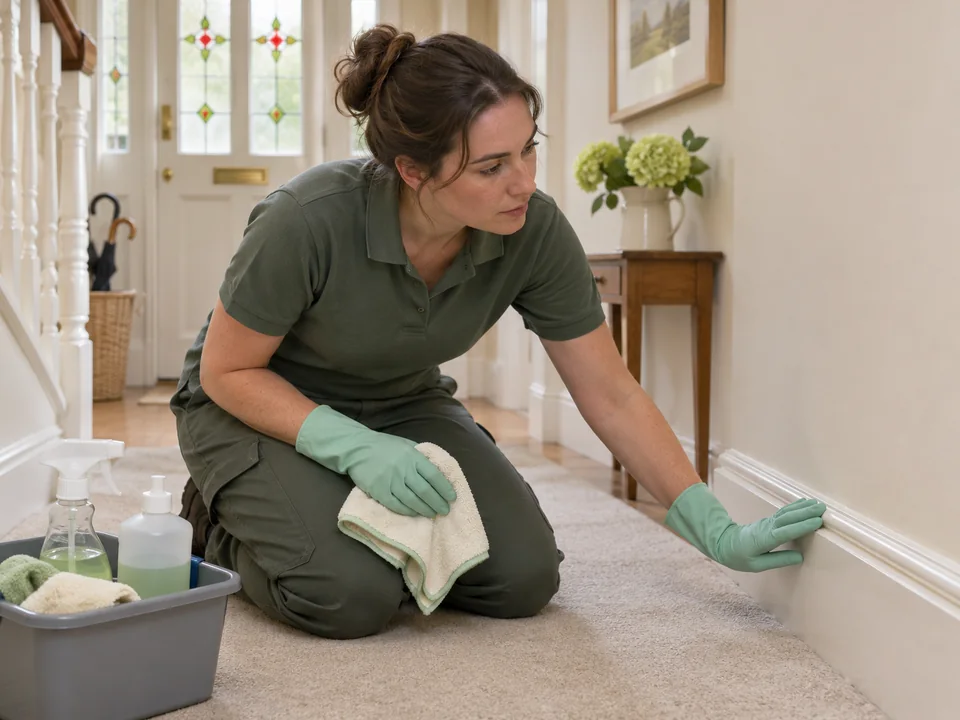
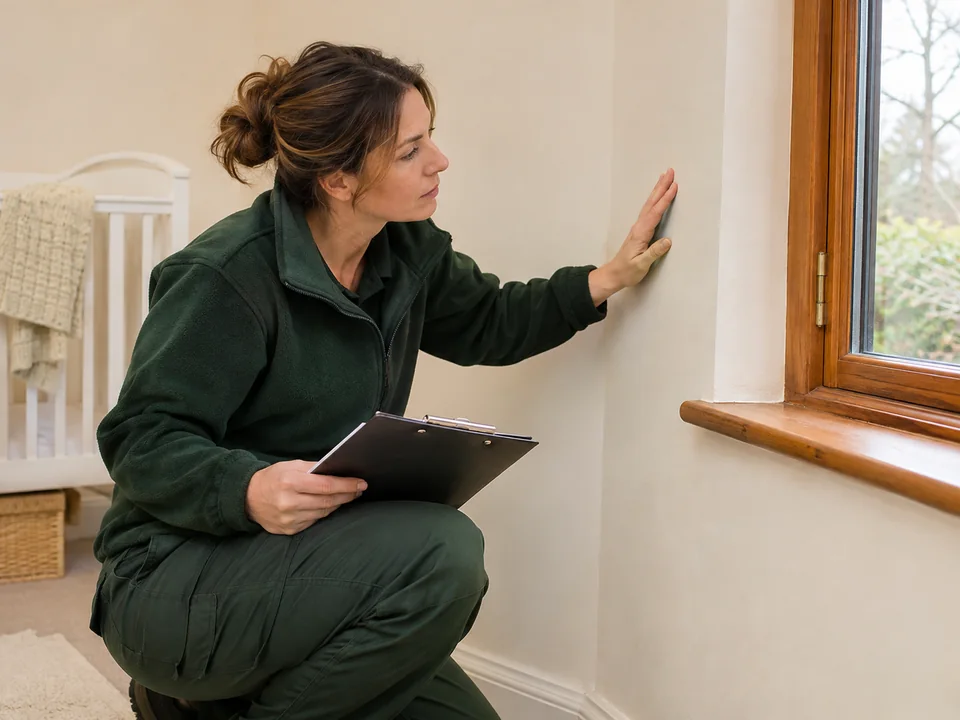
We inspect the exposed area and assess the condition of the material at the mark and around it. A rigid wipeable window surround may be suitable on one visible face while the painted return beside it has opened along a joint. In a shower, surface marks on firm tiles can meet staining within the adjoining edge. We discuss which area we can clean and where the condition of an adjacent finish prevents us working any closer.
Tell us if you have noticed the same mark after a period when the room was unused. Also explain if previous work changed the material you can see, such as a repaired sill next to an older surround. We compare your description with what is exposed during the visit, including any change in the texture of the finish or the direction of the patch. This informs the decision about cleaning the visible surface. Investigating a damp area inside the structure is a separate job for an appropriate property professional.
When materials meet, we explain where a later review should focus. A glazed face can offer a clear cleaning boundary at the seal, while a continuous painted finish around a bay may need to be considered in smaller sections. Show us if there are signs of lifting, previous damage or a coating you know to be delicate. We talk through any concern about the finish so that the work we agree is based on its present condition.
| Visible condition | Question for assessment |
|---|---|
| Firm hard face | Can it be reached without shifting a fitting? |
| Worn painted edge | How close can we work to the affected area? |
| Joint or fixed trim | Does the visible mark continue into a concealed area? |
Clean each suitable accessible surface agreed
We remove visible mould on agreed accessible hard surfaces once they have been assessed as suitable. In a recess with several materials, we keep the work to the face or edge you have approved. A stable exposed tile and a neighbouring painted board may each require their own decision. If you originally requested the whole corner, we make the boundaries clear so that the actual cleaning can be reviewed against the surfaces we discussed.
Occasionally when a room is cleared, a different surface is easier to see. For example, a second edge may appear at the side of a window box when loose items have been moved. We check the newly visible face and ask before adding it. If there is damage or a restricted approach, we explain why the cleaning may stop at a particular point. If the person admitting us cannot change the booking, tell us who can and how they want to be contacted.
A mark can be visible within an old finish even after surface work. We discuss this before cleaning and identify parts that may look different at the end. For a hard surround, the exposed area may be distinct from a joint that is aged, split or darkened. While cleaning, we retain a clear line between those materials. This makes it easier to show the exact part we worked on and which area may need separate attention.
- Agree which faces count as part of the cleaning.
- Check who can approve newly exposed areas.
- Ask us to discuss any existing stain at a join.
Review the result and record the right location
We check the agreed surfaces with you and explain how far we could work on each. If a tile face was clear but a portion of the frame remained behind a fixed panel, we show the distinction. If the finish already showed staining or damage, we point out where it is still visible. Handover is also a chance to confirm which areas were assessed only. If you will not attend, arrange a suitable contact in advance so they can ask about the specific surfaces that matter to you.
If a mark reappears, give the property contact its position relative to the nearest fixed feature and describe whether it is in the same place as before. A bathroom ledge beside a particular tap or an inside sill below one shutter is easier to identify than a note about a room as a whole. We can explain our observations of the exposed finish to the person agreed for the handover, so they can take the precise location into any separate investigation.
To ask for a quote, include the full address, the likely number of affected surfaces and what you know about access. An open run of hard tile can involve different preparation from a tight reveal with existing timber fittings close by. Tell us when a room needs to be available again and whether another person must unlock the main entrance. The quote reflects the actual areas that can be assessed for cleaning and the practical arrangements for the visit.
- Arrange for someone to review the result.
- Ask about any portion behind a fitting.
- Give the property contact a precise location if the mark returns.
| At handover | What to review |
|---|---|
| Agreed work | The exact faces or strips cleaned |
| Fitting or finish | Where access or condition limited work |
| Follow-up | Who receives details of any marks remaining |
Questions about arranging mould removal
What if I have surface care instructions from an estate manager?
Share them when you enquire. We consider the directions and the exposed condition before agreeing which areas are suitable for cleaning.
Do you need to take off shutters to see a mark?
Leave the shutters fitted. Tell us what is visible with them opened normally and whether they restrict the approach to either side.
Can you assess a hard ledge in a room that will stay furnished?
Yes, if there is a suitable exposed face we can approach. Describe what sits beside the ledge and how much space is available.
Can I give you a building name instead of a flat number?
Please include both where possible. Add the complete postcode and tell us which door leads to your dwelling.
How do you deal with a mark next to a delicate finish?
We consider both surfaces and explain which area is suitable for cleaning. Tell us if you have instructions for the adjoining finish.
Can you tell my property manager which edge remained stained?
Yes, if you agree that contact beforehand. We can explain the condition and position we observed during the visit.
Other Cleaning Services in Dulwich
Regular housekeeping in Dulwich, End of tenancy cleaning in Dulwich
Discuss your mould removal enquiry
Mould Removal Prices in Dulwich
Tell us which rooms are affected, the approximate size of the visible patch and what surface it is on.
Get a Quote