 Housekeeper
A routine for the home you live in
Regular Housekeeping in Dulwich
Give us a list that reflects how your Dulwich home is used, from the entrance on a muddy afternoon to the kitchen at the busiest time of day. We can discuss how a weekly or fortnightly appointment would fit, and which less-used rooms can go into a rotation.

Can I say which side of Dulwich Park I live near?
Yes, if it helps explain the approach. Include your own street, full postcode and the house or flat entrance.
Should I ask about taking care of a spare room less often?
Yes. Keep the most important room tasks on a fixed list, and tell us when you want the spare room included.
Establish how to reach the home from the right side of Dulwich
Southwark Council places Dulwich Park on College Road in SE21 and lists approaches from College Road, Dulwich Common and Court Lane, among others. If you live near the park, say which road is relevant before describing the turn to your property. Giving only a park or village reference can lead someone to the opposite side. For a house behind a driveway or hedge, give the number or sign visible from the pavement. If your flat is entered from a side path or the upper end of a shared entrance, tell us where to turn and which bell or door label to use.
Before making a regular arrangement, decide how you will provide access when you are out. Agree privately who is responsible for handing over a key or allowing visitors through a shared door. If the best entrance has steps or an unusual turn, mention this in the enquiry and say whether the household keeps cleaning equipment inside. Indicate anything a visitor needs to know about your front gate and whether an animal is likely to use it. Keep the door description separate from sensitive details. The first visit is a good opportunity to check the directions will still work for the following appointment.
Set a useful order for a family or a quiet household
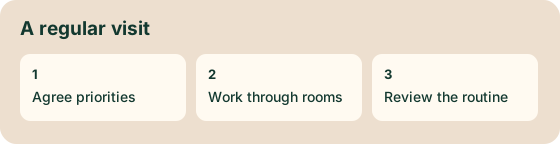
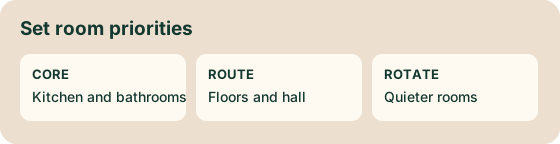
We can discuss the kitchen, bathrooms and main floors as recurring essentials, then give quieter rooms a less frequent turn. If your home fills up after school or around meals, pick chores that affect those parts of the day. A usable sink and main worktop may matter more than dusting the spare room each time. If only one person uses the home during weekdays, perhaps floors, one bathroom and weekly kitchen wiping are enough. Give two priorities that help you recognise the appointment has achieved what you wanted without checking a long inventory at the door.
Tell us if you can show the housekeeper the rooms at the start, or leave a note identifying them from the entrance. Two rooms can look the same when both doors are closed. Define which is the family bathroom and whether the rear sitting room stays in use. The first visit can establish a baseline rather than committing the same list permanently. Afterward, identify what would make the next appointment more useful and whether the same time fits. For a home with rooms on different floors, it may be worth changing the order before asking for a longer visit.
Decide whether the work follows the kitchen or the whole family area
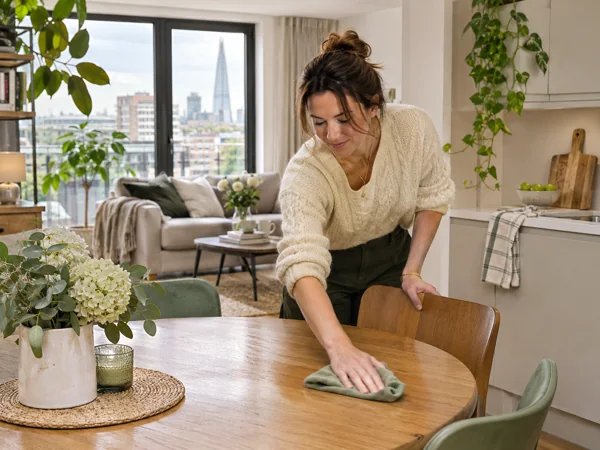
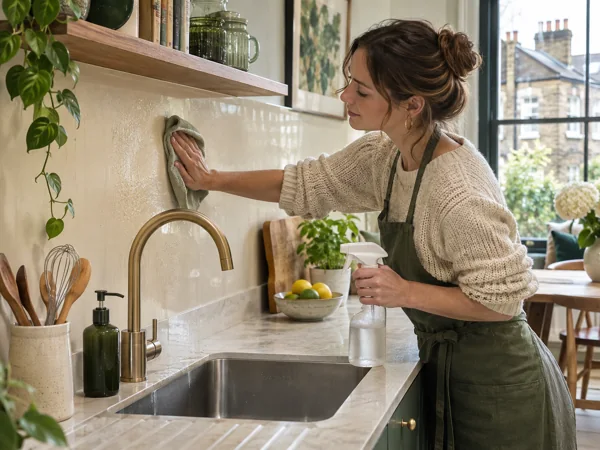
For an ordinary kitchen visit, agree the reachable worktops, hob exterior, splashback, sink, taps and suitable floor. If the kitchen continues into a dining or homework area, decide if cleaning includes the table, floor around seating and the route to another door. Explain which parts you can clear. If a countertop is shared by food and paperwork for work or school, say which portion can be reached first. Tell us when you need the kitchen or the dining area again if people will use it before the appointment ends.
If different parts of the kitchen have different materials, keep instructions near them. A wooden section by the sink may benefit from the product you already use while the rest is cleaned in the ordinary manner agreed. Mention items that are too heavy to move or must stay plugged in. Ask separately if you want to empty a cupboard or have an appliance interior assessed. Tell us if the inside of one oven, fridge or fitted cupboard needs separate time. That lets us consider it while protecting the surfaces that matter every week.
Make the SE21 route precise
| Local point | Add this household detail | Confirm ahead |
|---|---|---|
| College Road approach | Turn and house sign | Which gate to use |
| Path from Court Lane | Entrance that leads to the home | Who will meet the housekeeper |
| Flat or converted house | Bell label and level | Where equipment stays |
Plan around bathrooms that get different levels of use
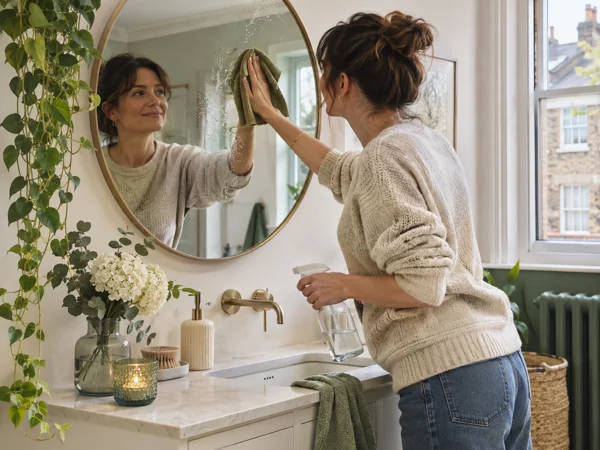
Tell us which bathroom everyone uses and the times it is free. A house may have a downstairs WC that quickly gets marked and a larger bathroom that only needs a full clean occasionally. A normal agreed list can include visible wash surfaces, WC, mirror, accessible shower or bath areas and suitable flooring. Where a young child or another person needs uninterrupted bathroom use for a short period, ask us to start somewhere else. Name the room rather than leaving it as the upstairs or downstairs one if there are two similar doors.
You can leave a fresh mat or towel if changing it is on the list. Make clear where the used one goes. Ask the household to move small personal items if you would like the entire shelf or basin area reached. Identify a different treatment for a finish that must not use the ordinary bathroom product. If the shower has persistent deposits or staining rather than ordinary splashes, describe where and how much of the room is affected. We can then discuss a job that needs extra time as something separate and keep the routine manageable.
Meet Housekeepers Covering Dulwich
Tell us your postcode and preferred frequency so the office can check who covers your address.
Get a QuoteFit linen, dusting and floor work to the way each room is used
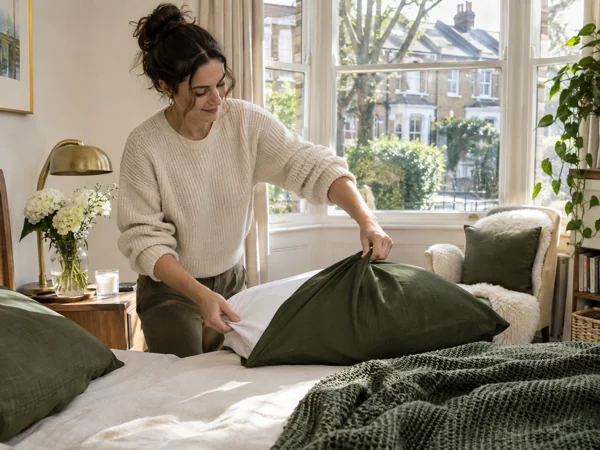
A main bedroom may need reachable surfaces and ordinary floor care each time, while a spare room used for storage only needs a clean route to the window. Identify what can be moved, and say where the housekeeper should work around private papers, bedside items and cables. Agree bedding work before the visit. Put a full set on the relevant bed so the room can be put back in order without searching cupboards. Ask how you should leave used linen and give any instruction about a blanket or mattress cover that remains unchanged.
For family or reception rooms, identify the walking route that collects most grit or crumbs. If furniture is fixed or too heavy to move, state what part of the floor can safely be accessed. Clear ornaments or delicate items yourself rather than asking the housekeeper to identify what is fragile. If the same room is used for visitors and for schoolwork, agree an order that keeps the desk or homework area available. Ask about separate textile work by identifying a particular rug or chair and describing the material, rather than adding a whole-room instruction.
Agree domestic priorities by spell of use
| Busy area | Routine attention | Possible rotating task |
|---|---|---|
| Entrance from the garden | Mat, floor and visible tracks | Lesser-used upper landing |
| Family kitchen and table | Preparation area and reachable floor | Shelves when clear |
| Daily washroom | Basin, shower and WC | Guest bathroom when needed |
Choose priorities for garden grit, runners and hard flooring
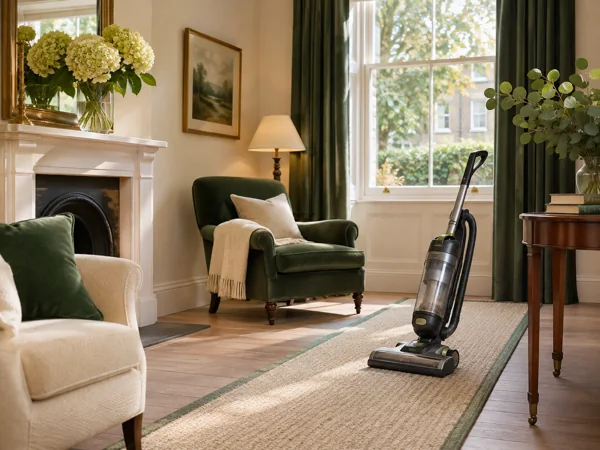
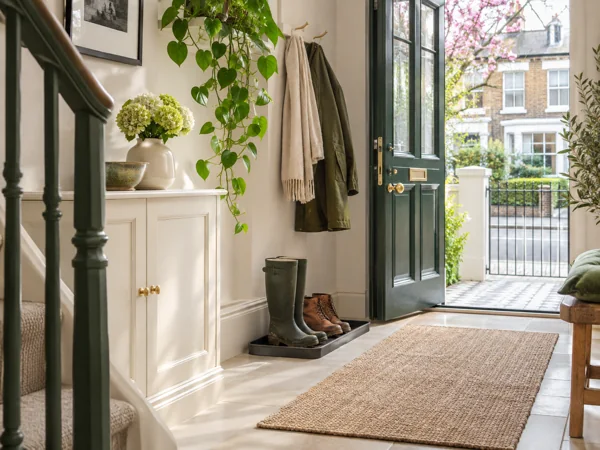
If an entrance opens from a garden, or if people come back from a walk and cross the hallway to another room, follow that route when making your list. It might involve lifting a mat, vacuuming the open stretch and returning the mat once the floor is ready. Identify what happens to shoes and bags during the work. For a larger home with multiple stairs, say which runner and landing should be included rather than assuming all levels are worked through. A change from tile to boards may require different equipment and a separate note.
Tell us which product you use for a specialist floor or a finish that is not normally wet cleaned. Point out a strip with new sealant or a loose edge before the visit. A rug with tassels needs its own instructions when deciding whether to include ordinary vacuuming. If a pet will stay in a particular room, let us know which gate or door must remain closed. Explain where bowls or bedding belong and whether the housekeeper should leave them alone or clean the reachable floor around them.
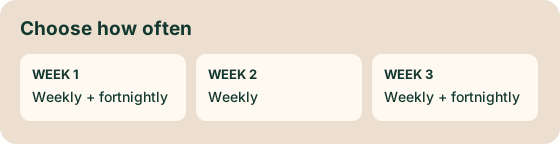
Choose a weekly or fortnightly list before fixing the day
A weekly plan can be useful for rooms with steady traffic and people occupying them most days. A fortnightly plan may work if you already handle some daily tasks yourself and want help getting through the rest at a reliable interval. Explain which jobs are intended to repeat every time, then decide what can move. The downstairs WC might be a permanent priority, while the guest room and a section of shelves alternate. When children are away or a room is taken over by visitors, an existing plan can be adjusted if you tell us what has changed.
Give the usual day and another option. A home with a school collection or work call at the same time may need a different starting room without changing its date. If you wish to ask for a preferred housekeeper, give the complete frequency and timing when discussing availability. Let the office know in advance if you need to skip an appointment or make a change during a holiday. Check that any new person helping with entry has the correct date and any agreed access arrangement. Do not presume a changed instruction automatically continues after the regular plan resumes.

Leave the right supplies and give separate requests their own detail
Set out the equipment where the housekeeper can reach it on the agreed route. If the vacuum needs charging or there is a preferred attachment for a rug, show us where to find it. Label products for the kitchen, bathroom or specialist finishes by use. Explain what you do not have if the work needs a tool that is not usually present. If you want items put back in a particular place afterwards, name the cupboard or shelf. An ordinary visit should not depend on opening storage you have not made available.
When raising occasional work, identify the exact item and what you want assessed. A mark on one dining chair is different from a full set of dining chairs, and two oven cavities present a different request from one. Tell us the material, extent and timing as far as you can. Ask how to handle the separate job before choosing the long list of tasks for the visit. Once you have discussed what fits, confirm the home postcode, the day that works for the household, the ordinary room order and any arrangements that apply to only one appointment.
Describe separate household jobs
| Work | What to name | Regular job to protect |
|---|---|---|
| Guest bed change | Room, set and linen basket | Usual floor and surfaces |
| Carpet or rug treatment | Material and affected stretch | Ordinary vacuuming elsewhere |
| Oven chamber | Model, cavity and fittings | Cooking surfaces and sink |
Quotes for Dulwich homes
From £23 per hour. Confirm the rate and visit length for your address when you request a quote.
Get a QuoteRelated cleaning services
- Spring cleaning · Ask about a one-off visit for rooms that need additional time.
- Oven cleaning · List the oven cavities and removable parts when requesting appliance cleaning.
- Carpet and upholstery cleaning · Tell us the material and which areas or pieces you want treated.
- End of tenancy cleaning in Dulwich
Local references · Southwark Council · Dulwich Park
Dulwich housekeeping questions
Can I make the entrance from the garden part of the visit?
Yes. Identify which private door and floor are included, and say what should happen to shoes, mats and any pet belongings.
Do I need to specify an entrance near Dulwich Park?
Include the complete residential postcode and door. If the park helps as a reference, explain which side of it leads towards your home.
Can a spare room be done before a guest arrives without staying on the list?
Yes. Tell the office which visit date and what work you want in the room, and agree how it affects the usual list.
What should I do if we use the family space for schoolwork?
Tell us when the kitchen or dining space needs to remain free and which room could be cleaned first instead.
Can I say the stairs should be done but leave a room at the top closed?
Yes. Identify where the stair and landing work stops and which door should stay closed.
Should I give details for a dining chair with a fabric mark?
Yes. Identify the chair, condition and textile label if known. Ask about it separately from regular floor and surface work.