 Housekeeper
Mould Removal in Streatham
A mark in a Streatham bay window can sit on several different faces. We review the exposed finish and access, agree where we can remove visible mould and show exactly which areas were cleaned.
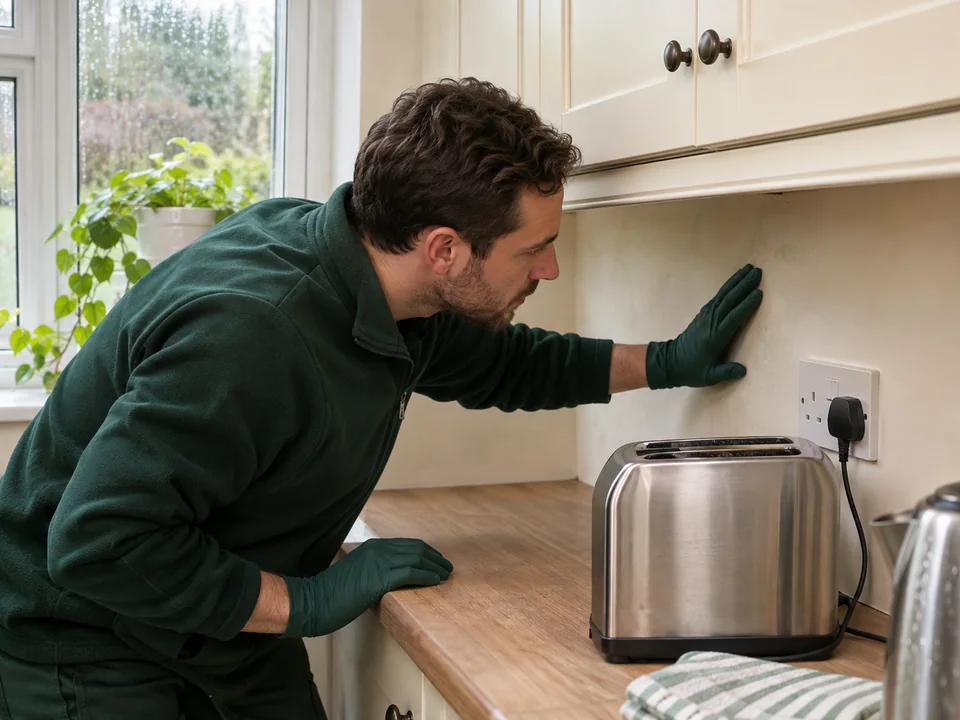
Can I enquire about an SW16 property?
Yes, send the full postcode, door and room where you see the mark.
Can you consider a bay with several window sections?
Tell us which section is affected and what furniture or fitted items are in front of it.
Inspect the hard faces around each angle of the bay
We check a bay one panel at a time, starting at the exposed sill and looking at the bead, frame and lower face separately. Where the visible mark turns a corner, the reach and the type of surface can change together. We trace the line to that angle before deciding what can be cleaned. Once we agree the suitable hard faces, we prepare space in front of the panes and remove visible mould from the accessible sections. At review we go back around the bay in the same order and show the edge of each cleaned area.
Lambeth Council identifies the common, the Rookery and Park Hall within the Streatham Common conservation area, alongside buildings that reflect the area’s nineteenth-century development. For a property around the common or on a road off Streatham High Road, give the full postal address and the way into the dwelling. Do not assume the entrance is visible from the bay in a photo. Explain which steps or front door reach your flat if the original house has been divided, and name the contact who will grant access.
If the mark is partly below the ledge, identify what forms the upright face. Some bays have panelling, a boxed window seat or a fitted radiator cover under the opening. A head-on photo can show the glass without revealing where the mark lies in relation to those pieces. Send what you can see from the room, rather than moving a seat or reaching over fixed furniture. We ask what is exposed and how it can be approached with those parts in place. If the paint has already cracked around the edge of a window seat, mention that beside the photograph so we can see which area you mean before the appointment.
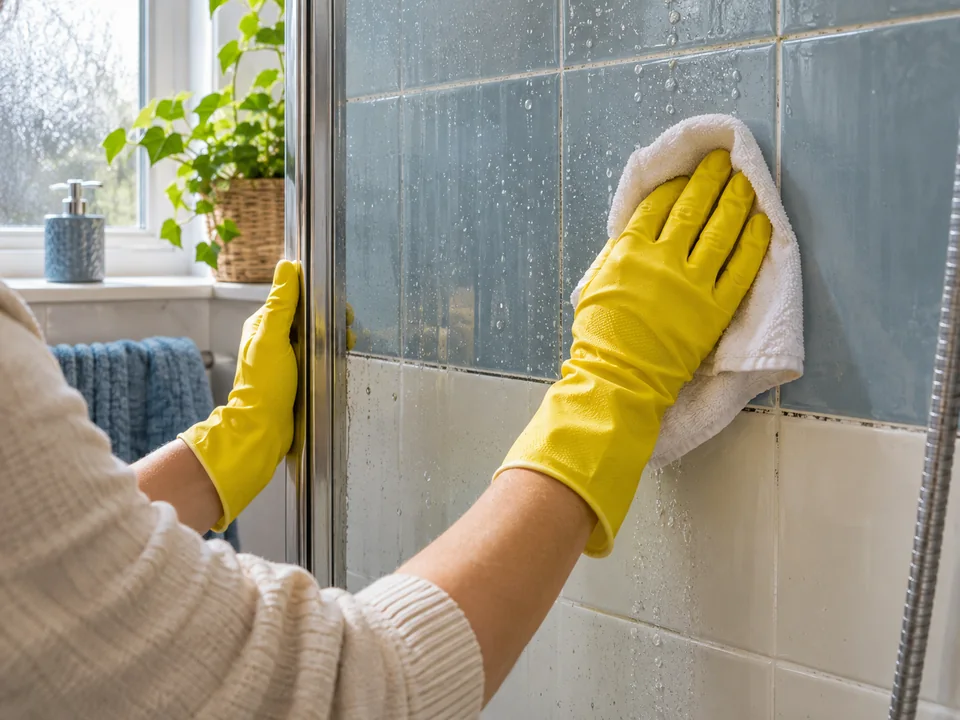
If you also want a separate surface assessed, describe it independently. A mould mark along the outside of a shower screen has a different relationship to its surroundings from a set of spots below a window pole. Tell us which room should be free first and who knows the affected face. If the second room is past someone’s private door, arrange access rather than relying on the person who opens the front entrance.
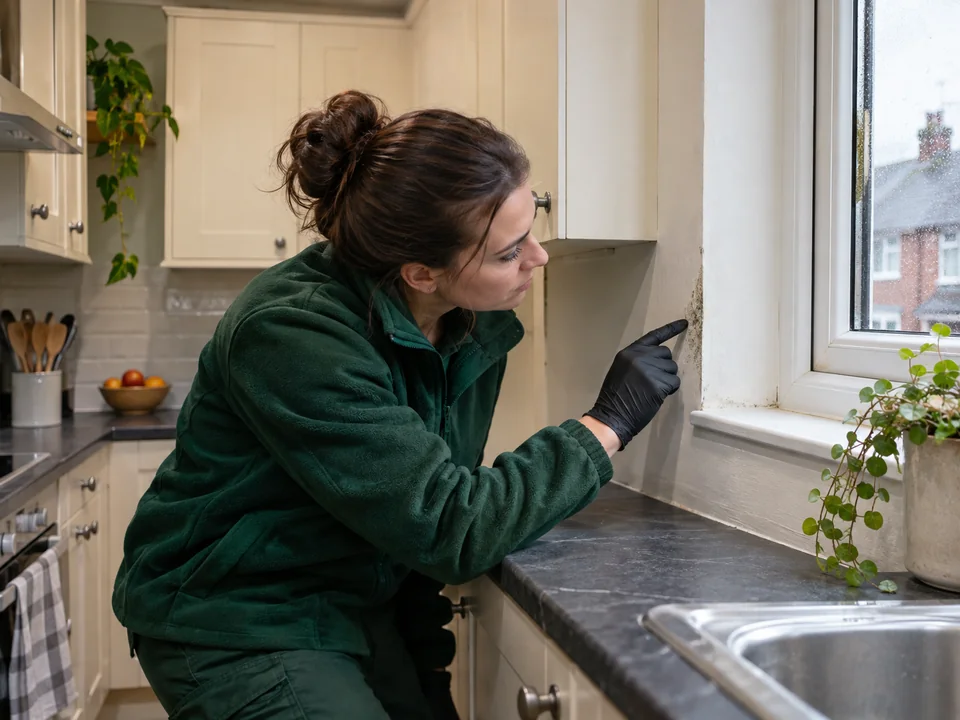
| Window reference | How to describe it |
|---|---|
| Sash or panel | Location as seen from inside and nearest handle |
| Hard ledge | The edge nearest the glass or inside rim |
| Adjacent finish | Fixed bench, shutter, covering or painted return |
Prepare the accessible space in front of the window
We discuss the work area around the bay before arriving. A plant pot, lamp or loose cushion can be set aside if the resident is comfortable moving it. Let us know if the area includes wired equipment, a heavy seat or a fitted cupboard. Tell us whether you use the floor space along the whole bay or just at one end. We can consider what can be reached with that room arrangement and discuss a second surface if one side remains inaccessible.
For a bay with separate shutters or blinds, explain how they usually open and what they cover from inside. A panel folded back against the plaster can show the glazing while hiding an affected part of the return. We check the places we can see with the fitting in a normal position. If the household needs a certain panel to stay in place during the visit, mention that during preparation and show us the room as it will be on the day.
With a deep bay, we check the space around its side panels before starting work. A shutter can leave one hard face exposed while covering the corner next to it. We inspect the positions we can see, agree which ones are suitable and prepare enough space to clean those sections. The work stays within the reachable area. If a visible line continues out of reach behind a fitting, we identify the change in angle or the adjoining panel when we review the result.
- Set aside loose objects from the agreed area.
- Tell us how shutters or blinds normally sit.
- Agree who will open the affected room and keep the approach clear.
Check the glazing, finish and bay angles separately
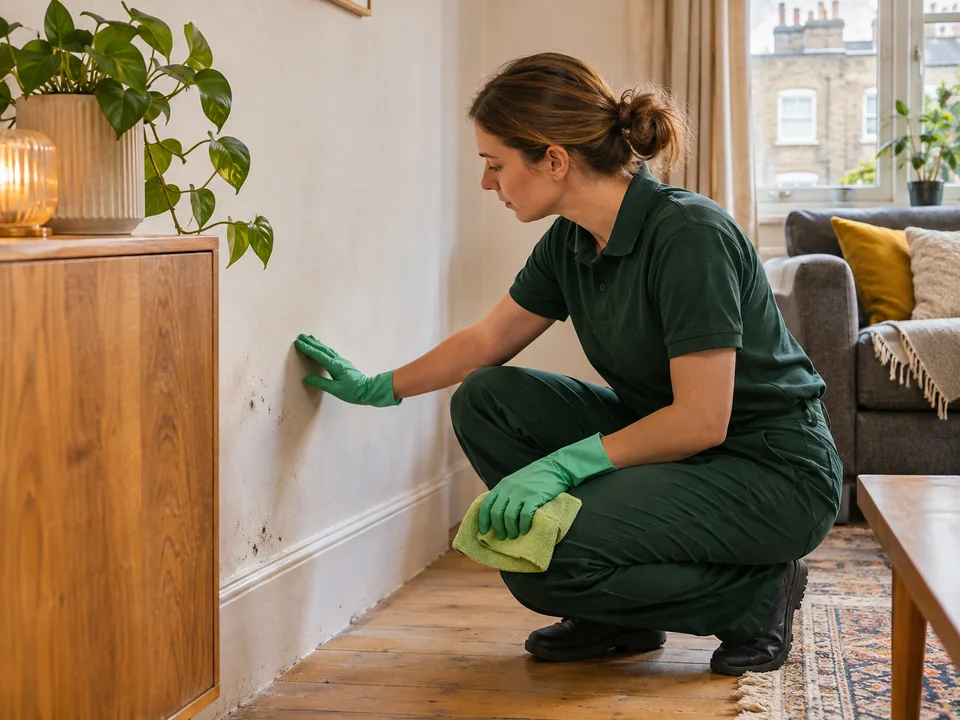
At the appointment we examine the visible surface and what it touches. The inner ledge may be one hard material while a small angled return or trim has its own finish. We check which parts are firm and which look cracked, flaking or otherwise unsuitable. A mark can be light across one surface and dark within an adjoining line. We discuss what is suitable based on the condition and how much of the material can be reached.
Where an opening curves into a bay or has several angles, we check whether a cleanable hard face continues around the corner. A paint line can follow it while the exposed surface changes. If a fitted bench leaves space along one side, we look at the area from that accessible position. A dark area directly behind the bench or end panel is a separate question of access. If you are unsure which part of a frame the marks cover, point us to the view from which you first noticed them.
Tell us if a similar mark has repeatedly appeared at a particular panel or if there has been work on the window. For example, the lower trim may be a newer piece that sits beside older material. We can explain where the apparent change lies and whether the hard finish is suitable for surface cleaning. For moisture or damage that seems to extend behind a lining or frame, a property professional needs to evaluate what is not exposed.
A bay can have a raised bead that divides the glass and the frame. If the patch sits along that bead, show us which side faces the room and whether the frame itself is marked. We check the condition of the edge before agreeing any work. The lower corner may be fully exposed while the adjoining opening catches on a blind or bracket. Tell us whether you normally leave the sash fixed, and let us know if you have noticed the material lifting when you use it. That helps us make a decision about accessing the face without stressing the fitting.
| Visible part | Assessment point |
|---|---|
| Firm ledge | Whether we can reach its exposed face |
| Trim on the bay angle | Where it changes finish or shows wear |
| Fixed window seat | Which part of the marked area still has a clear approach |
Remove visible mould on the hard faces included
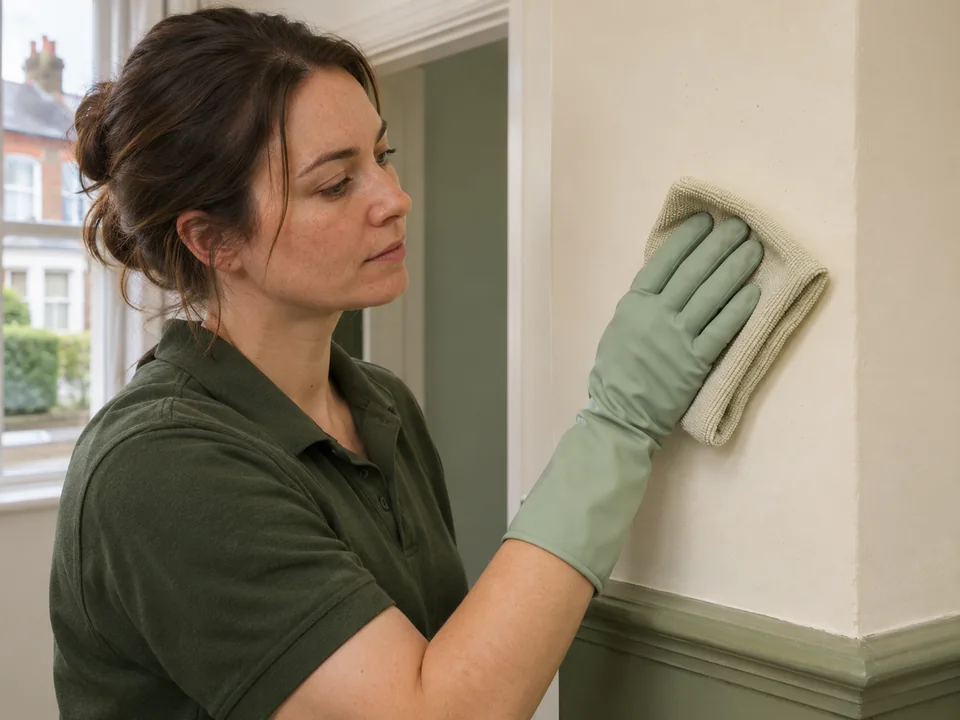
We remove visible mould from the suitable accessible hard surfaces agreed with you. In a window bay that may be the front face of the hard sill and a short rigid edge at one side. We do not assume the whole surround belongs to the job, particularly where panel sections are different or part of the area disappears behind a fitting. We identify the pieces we have agreed and work up to the accessible end of each.
If you move loose objects and another face becomes clear, we ask whether to include it after checking its condition. A ledge might show another small area below an object that was in front of it, or the exposed strip might change into a damaged finish. For a let home, tell us if somebody other than the resident needs to approve additional work. We can show how the extra area relates to the original one before anyone decides.
We keep the visible finish in mind when explaining the end result. A hard wipeable surface can be suitable while staining remains within the seam below the glass or around an aged joint. Ask us to note which actual face was cleaned if the whole bay has been described in one photograph. A useful handover identifies each section and the condition of any edge that still shows marks.
- Confirm each part of the bay included for cleaning.
- Tell us who can consider changes on the day.
- Ask about discolouration at a join or behind a fixed part.
Review each panel using clear reference points
At the end, we show which agreed areas we have cleaned and identify any boundary we reached. A description that includes the central window handle or opening edge tells someone exactly what area we mean. If the adjoining trim was unsuitable or remained blocked, we explain its position separately. For another area of the home, we do the same using the nearest fitting and the room name. Agree who receives the review if you will not be on site. Keep the panel reference available for that conversation.
If the mark later returns, give the property contact the viewpoint and physically identifiable spot. It can be useful to say that it is the lower right join when the bay is viewed from inside, rather than report a mark underneath the window. We can confirm what we saw on the exposed surface and the areas we worked on. Any inspection of an opening or lining needs to be arranged with whoever handles the building.
At the final check we use the joints between panes to locate each cleaned part of the bay. We show the ledge, the side return or the lower hard face that was included. If an adjoining strip remains outside the work, we use the nearest corner to show precisely where it begins.
- Use the viewpoint you agreed at booking.
- Review each affected area separately.
- Pass an exact window position to the property contact if the concern returns.
| At the review | What we identify |
|---|---|
| Cleaned section | The agreed face and nearest window feature |
| Visible remaining mark | Location and condition where work was limited |
| Separate concern | Where a property contact can look for it |
Questions about arranging mould removal
Can you look at two sides of a Streatham bay window?
Yes, describe both from inside the room. We will assess each exposed surface and agree which sides are accessible for cleaning.
Should I detach the blind or shutters?
Leave them fitted. Tell us how they normally open and which surfaces they cover in each position.
What if the mark is on the top edge of a fixed seat?
Tell us what the surface is made of and identify the affected edge. We can assess the exposed area while the seat remains in place.
Can you check a hard window ledge and bathroom tiles at one visit?
Include the rooms in the enquiry. We discuss access to both and assess the conditions separately.
What if the same area was repainted after the mark first appeared?
Tell us when it was repainted and what the surface looks like now. We base our cleaning decision on the condition we can see.
How do you describe a mark you cannot reach below the window?
We point to its position using the nearest part of the opening or fitted item and explain where access stopped.
Other Cleaning Services in Streatham
Regular housekeeping in Streatham, End of tenancy cleaning in Streatham
Discuss your mould removal enquiry
Mould Removal Prices in Streatham
Tell us which rooms are affected, the approximate size of the visible patch and what surface it is on.
Get a Quote