 Housekeeper
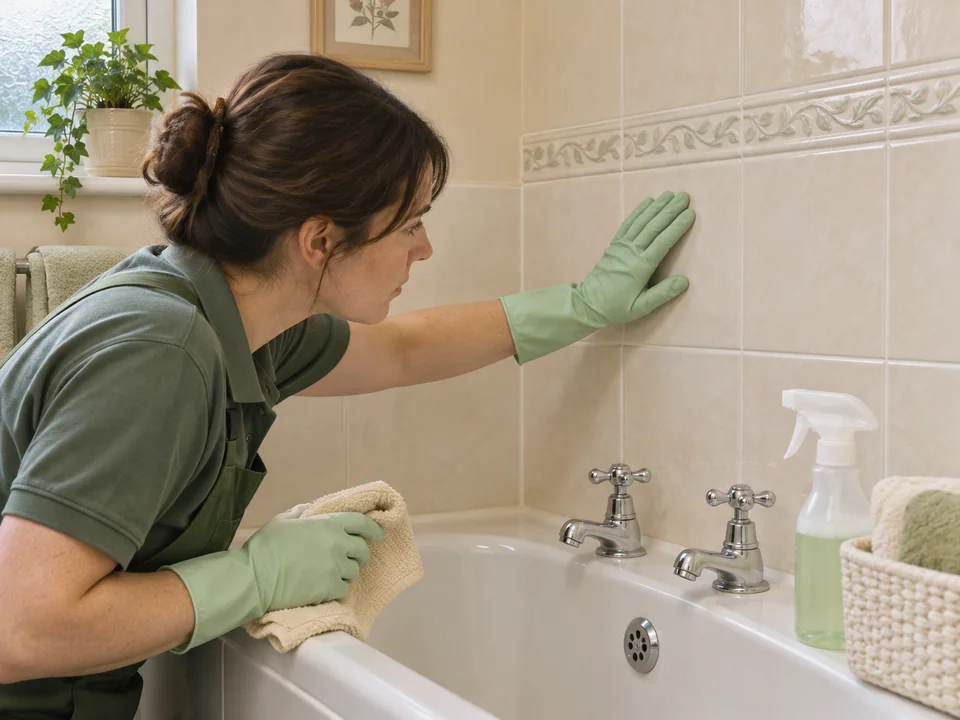
Mould Removal in City of London
We take mould removal enquiries in the City of London by checking the residential address, access and visible finish. We distinguish a suitable hard kitchen or bathroom surface from damaged or concealed material. After agreeing which surfaces are included, we prepare the area and physically remove visible mould from those accessible hard faces. We review the result and explain any next step that belongs to the property contact.
Do you need the block name for a City flat?
Yes. Give the full address, block, level and entrance approved for visitors.
What if the affected surface continues behind a kitchen unit?
We assess the accessible part and discuss how the concealed area could be considered separately.
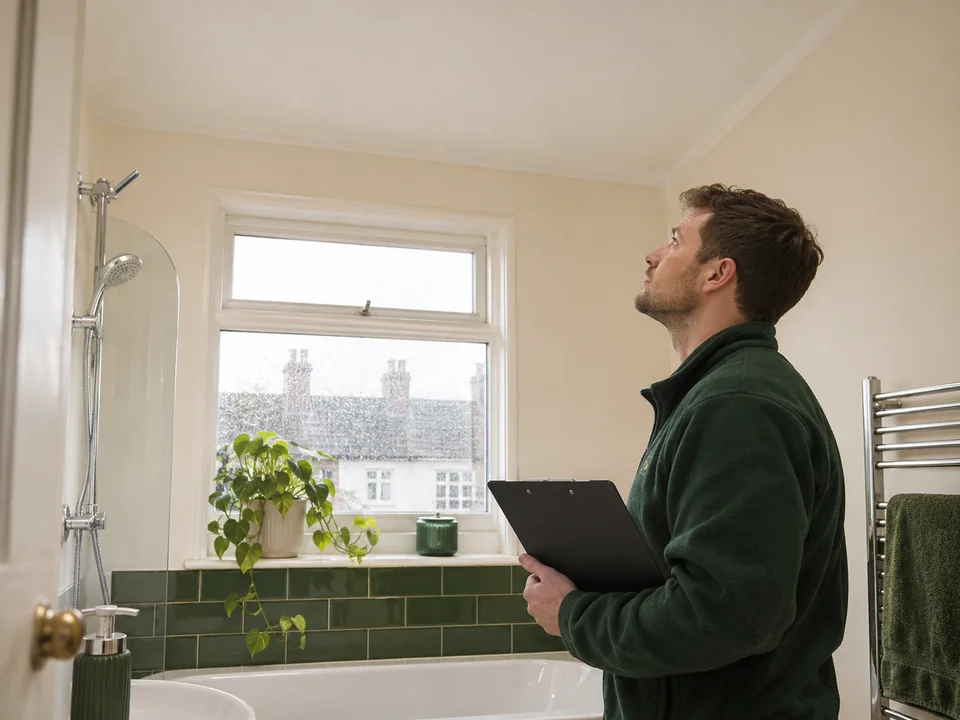
We identify the correct residential entrance and level
The City of London Corporation's Barbican resident information distinguishes visitors to podium-level entrances from visitors to the towers. Golden Lane's estate information also describes outside areas on different levels. If the route to your flat involves more than one approach, tell us which entrance you are arranging for the visit. We ask for the complete postal address, block and level. The relevant property or estate contact can confirm any arrangements that apply to your building.
We check how to reach the actual room once inside. Tell us if you need someone to meet us after a lift or at a second door. If a room is accessed through another part of the flat, explain which route can be made available. A doorway to one part does not necessarily give entry to every position in the property. We confirm access before assuming we can assess the exact surface you described.
If a building manager is arranging access, we ask which resident or representative can show the affected surface and who can approve the work. We confirm how to contact the right person during the visit if the situation changes. If details of the visible mould are recorded by the occupier, pass on the relevant room and surface names so the visitor and manager are discussing the same area.
- We confirm the full flat address and the visitor approach.
- We identify the route from the block entrance to the affected room.
- We check who can make each part of the route available.
| Stage | Details we confirm |
|---|---|
| Arrival | Full postcode, block and approved visitor entrance |
| Inside the block | Level, lift or stair and any separate door |
| Inside the flat | Room and working position |
| Authority | Who can confirm access, work and handover |
Record the part of the kitchen that can be viewed
For a kitchen enquiry we ask which surfaces and fittings are involved. Tell us if the mould can be seen on a hard face by a sink or window or if it appears to reach behind a unit. We record each affected material separately. If a cabinet can open normally, tell us what is visible at its edge or interior. A position behind an appliance or fixed panel may need separate access before it can be assessed.
Give an approximate visible size, and share a view of the room and the fitting if you can obtain one safely. We use a wider image or description to distinguish between similar units. A close image can help identify the extent on one face. If you have only seen one side of a fitting, explain which side it is and where the view stops. We discuss what can be assessed from the available position and which part may require another decision.
If a fitting has been changed recently, tell us when and what has been documented. We review this alongside the visible position. An assessment of the accessible finish suits a different purpose from investigating a recurrent problem behind the fitting. If a building or estate contact is already looking into it, we check who should receive the findings from the surface review and what to raise separately.
- We identify the fitting, finish and visible boundary.
- We check what can be reached without disturbing another item.
- We keep any repair or concealed-material question separate.

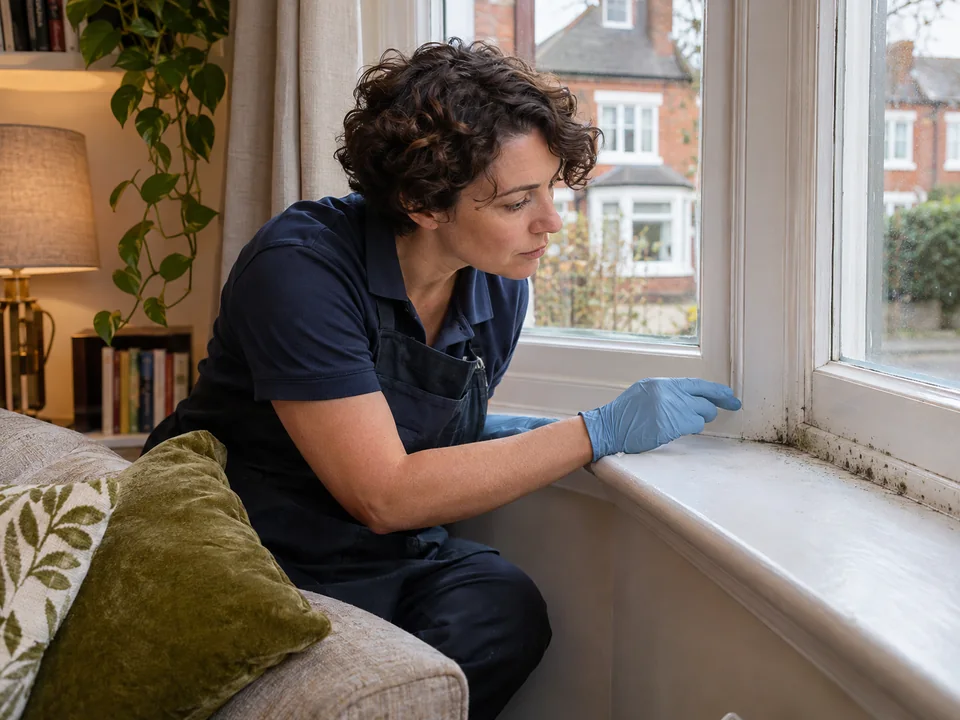
Assess suitable hard faces around bathroom fittings and windows
In a bathroom we locate each visible patch in relation to the fitting. An accessible tiled face and the finish at the joint beside it can be different materials, so we look at their condition separately. We confirm which suitable hard surfaces can be considered for cleaning. If material is loose or the position cannot be accessed from a practical working area, we explain what needs another assessment before including it.
A window opening can involve several surfaces at one location. We distinguish the visible hard face from the wall or another finish to its side. Once access is available, we assess where the area begins and ends and agree where the work can stop. If what can be seen differs from the first description, we check the proposed work with the person who can authorise it before preparing the area.
We also ask about known changes close to the window or bathroom fitting. Give any confirmed repair details and say what is currently visible. We can distinguish the suitable accessible surfaces from an adjoining material that still needs a decision. Where an underlying property question remains, we explain which part concerns the person managing the building.
| Visible area | What we assess | Decision |
|---|---|---|
| Accessible tile face | Extent and condition of the hard finish | Agree the surface included for cleaning |
| Bathroom joint or changed covering | Where the material changes and what can be seen | Confirm whether another assessment is needed |
| Window-side face | Reach and neighbouring finishes | Agree which visible hard part can be included |
| Area concealed by a fitting | Extent of what is visible | Discuss further access before considering the hidden section |
Prepare the immediate area and remove visible mould
When we have agreed the suitable hard surfaces, we prepare around the immediate working position. We check which items can stay in place, where we can reach the affected face and how other people will use the room. If a single kitchen or bathroom must be available during a particular period, tell us before agreeing the appointment. We can discuss how that affects the access needed for preparation and the work.
We physically remove visible mould from the suitable accessible hard surfaces we agreed to clean. We follow the agreed boundary around fittings and changes in material. If we find a different visible condition or an area that cannot be reached, we identify the restriction and discuss whether a separate decision is required. At the end we check the visible result and distinguish the treated faces from the areas outside the agreed work.
If a second room is included, we repeat the preparation and access checks for its surfaces. The fixtures and use of the room can differ from the first. We confirm where work will take place and review the actual areas cleaned before handing the rooms back. If an unresolved material or building matter is likely to affect future use, we explain it with reference to the particular location.
When the kitchen is shared, tell us when the surface can be reached and who knows what is normally stored next to the affected position. We discuss which items should remain where they are and what information would help us agree a working position. If there is a separate affected face nearby, we confirm whether it is part of the request and consider its material. This keeps preparation focused on the work that has been assessed.
For a room approached from a common corridor, we check how the visitor can move from the agreed entry point to the private space. If a building contact has given permission for entry to the block, confirm that the resident can open the property as well. We agree how to reach the individual room rather than assuming that every door in the route will be open. That matters when someone else has responsibility for unlocking a particular part of the building.
If an affected section is still under review by someone who manages the property, we identify how it relates to the work already agreed. Give us the material and position of the surface under review and the details of the person dealing with it. We explain which other positions can be cleaned independently and which depend on the outcome of that discussion. At handover we retain the distinction between the surfaces cleaned and the area awaiting another assessment.
When a repair has already been reported, tell us whether the arrangement means a fitting or room will be temporarily unavailable. We can check how it affects the work while discussing the timing. If a finished surface will only become visible later, we identify the part currently available for assessment. We then confirm how the remaining area could be considered when a suitable position is in place.
For a visit that has to fit around occupation or another job in the same room, we check the timing before we start preparing. Tell us what needs to remain available, how to reach the surface and who can confirm any change. Those details help us keep each part of the work tied to the actual room and finish included in the quote.
- We prepare around the specific fitting or surface agreed.
- We physically remove visible mould from the suitable accessible hard faces included.
- We review the result and explain which areas remain separate.
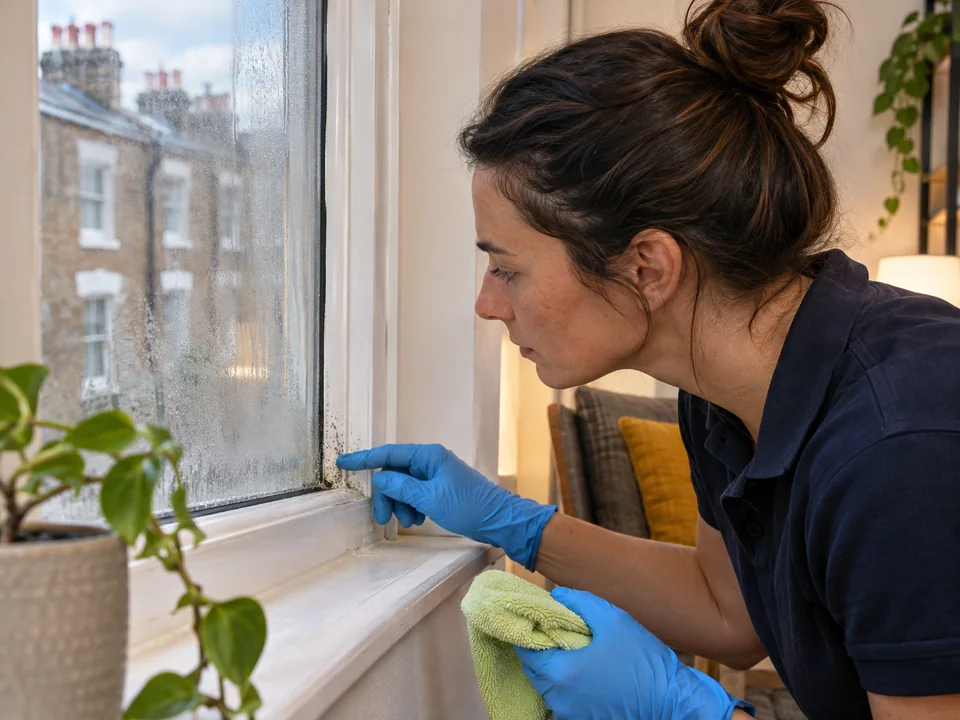
Review what was cleaned and what needs to be raised separately
At handover we review each visible area cleaned and identify any issue that fell outside the agreed work. If the person who arranged the visit was elsewhere, tell us who should receive the outcome. We describe the location using the same room and fitting names used when arranging the work. Someone with responsibility for the building can then locate the relevant material if they need to arrange another assessment.
Where the enquiry also relates to a suspected leak or other moisture issue, we explain what was observed on the accessible surfaces and what work was completed. Any outstanding question about the building should stay with the responsible contact. Keep any earlier report with the room description so dates and positions remain clear. If the arrangement changes, identify who will take the next decision and what still needs to be viewed.
Use our booking page to prepare your full City address, room list, property contact and access notes before ringing. If another service such as spring cleaning is also needed, describe its tasks and timing separately. We can then discuss whether the visit for the affected hard surfaces needs to take place in a particular order around the other arrangements.
| At handover | What we go through |
|---|---|
| Visible surfaces | Which agreed areas received the clean |
| Different finishes and access | Which areas were excluded and why |
| Property matters | What needs a separate decision or assessment |
| People involved | Who should receive the outcome and retain the room notes |
Questions about arranging mould removal
Should I explain which level serves the entrance to my City flat?
Yes. Give the complete address and describe the entrance level and route to the property. Confirm who can open each part.
Can you assess a surface in a resident's flat if a manager is making the booking?
Yes, if the necessary access and permission are agreed. Tell us who can show the room and who can approve the proposed work.
How do you approach two different finishes inside a kitchen window opening?
We assess the reachable faces individually and agree which suitable hard surfaces will be cleaned. Anything concealed or unsuitable is discussed separately.
Can I discuss a bathroom clean while an estate contact considers a leak?
Yes. We review what can be seen and discuss which suitable surface work can be considered. The leak question stays with the responsible property contact.
How do you hand over if someone different from the resident has opened the door?
Tell us who needs the outcome. We review which surfaces were cleaned and identify anything else by its room and position.
Can we agree just one of two separate kitchen areas?
Yes. We look at the available surfaces and agree the area to be included. We identify any second area separately if it needs another decision.
Other Cleaning Services in City of London
Discuss your mould removal enquiry
Mould Removal Prices in City of London
Tell us which rooms are affected, the approximate size of the visible patch and what surface it is on.
Get a Quote