 Housekeeper
Mould Removal in Borough
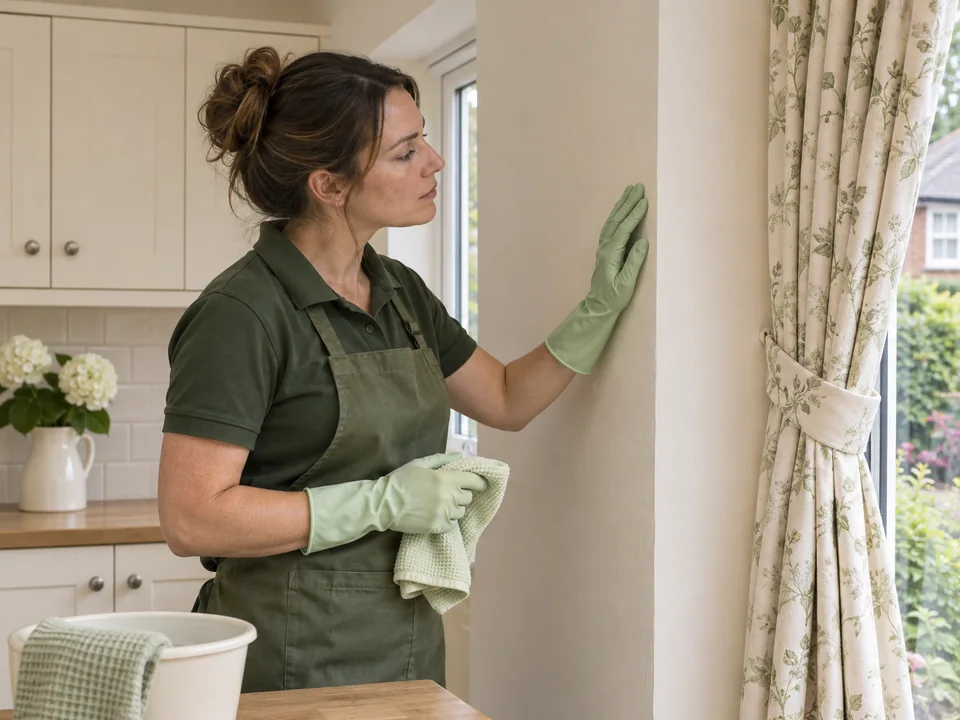
We take a Borough mould removal enquiry by identifying the affected room, the finish and the route into the property. We review accessible walls and ceilings and explain which visible surfaces are suitable. Once agreed, we prepare the immediate position and physically remove visible mould from suitable accessible hard surfaces, then go through the result and any separate questions at handover.
Plan your enquiry
Can I give a yard entrance for a Borough High Street address?
Yes. Give the full address and tell us which entrance visitors actually use.
How do you consider a ceiling above steps?
We check the visible finish, height and available working position before agreeing the surface.
Take the original observation through to an agreed area
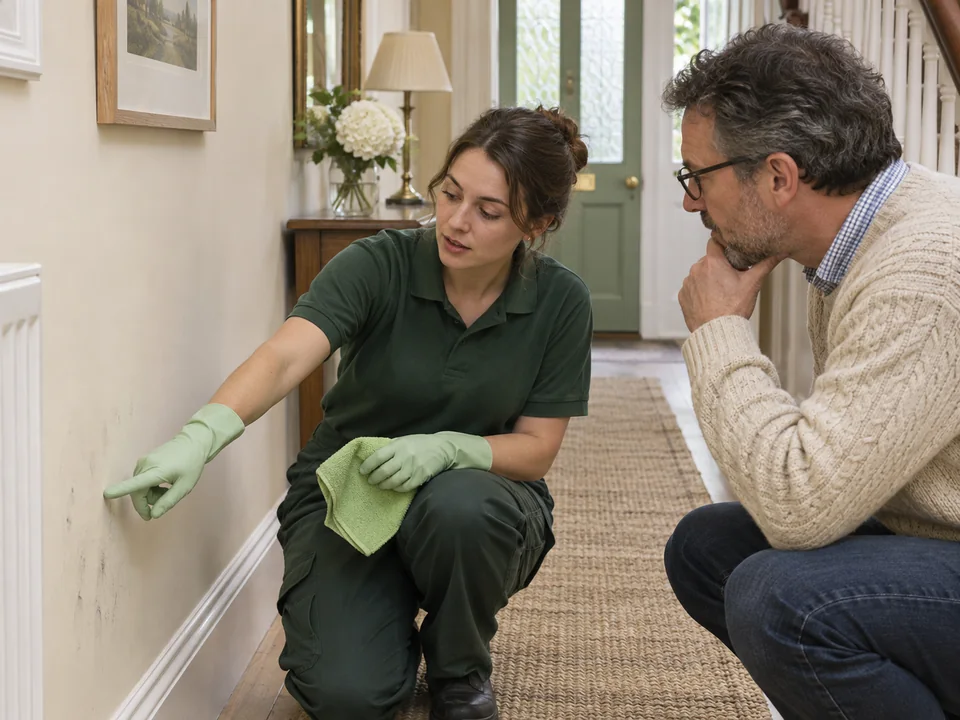
We begin by asking about each affected location. Tell us the room, how much of the finish appears to be affected and where the visible mould sits. It helps to identify whether an area is on the wall, at the ceiling edge or within the surround of a fitting. We use the description to consider whether a visit is needed before cleaning can be agreed. If the mark continues behind an item that cannot be moved in the ordinary use of the room, tell us how much is visible and leave that separate access question for discussion.
If you have suitable photographs, we ask you to give a wide view before any close image. A wide view makes it easier to identify the affected finish and its relation to the entrance, fittings or a second surface. A description still works if you cannot take a photograph safely. Give any known history and say whether the visible appearance has changed. We record the material you can see and who can provide more information before we consider the work.
We then check who will provide access and approve the visit. If different people have responsibilities for the property and the affected finish, tell us which role each person can fulfil. For a request involving a shared space as well as a private one, we establish what permission is available for both while discussing whether both areas can be seen during the same visit.
- We request a room label, visible extent and finish where known.
- We discuss what may need to be viewed before quoting.
- We identify who can provide access and confirm work.
| Information we take | How we use it |
|---|---|
| Room, floor and position | Identify the relevant finish |
| Visible size and condition | Decide what can be assessed and where |
| Separate access questions | Work out what is currently reachable |
| People and permissions | Confirm who can show and authorise the area |
We confirm the practical route around Borough High Street
Southwark Council's conservation appraisal traces Borough High Street from London Bridge to St George the Martyr and records a number of yards off the street. If you are arranging a visit where the frontage is on one route and your entrance is elsewhere, give us both. We record the property address, full postcode and how to reach the door that will be opened. Explain if a visitor should enter through an arch or shared area before reaching the property itself, and who will meet us there.
We check the route inside the property to see what access is needed for the affected surface. If the doorway is reached at one level but a room is approached by another staircase, tell us the location and any change in level. A mark may be visible from a stair without being easily reached. We ask where there is a suitable position to view it and confirm who can open any locked door on the route. Access to the building and suitability of the working position are considered separately.
When someone who has not seen the original marks will provide access, give them the label we have used for the room. A picture that shows the whole opening or a note of the position can be useful. We confirm which party can approve work if a relevant difference becomes visible at the visit. This matters when the person who opens up is a resident but the work is arranged by an owner or agent.
- We record the arrival route with the full address.
- We check the available position in the affected room.
- We make sure access and approval responsibilities are clear.
Assess the visible condition of walls and ceiling finishes
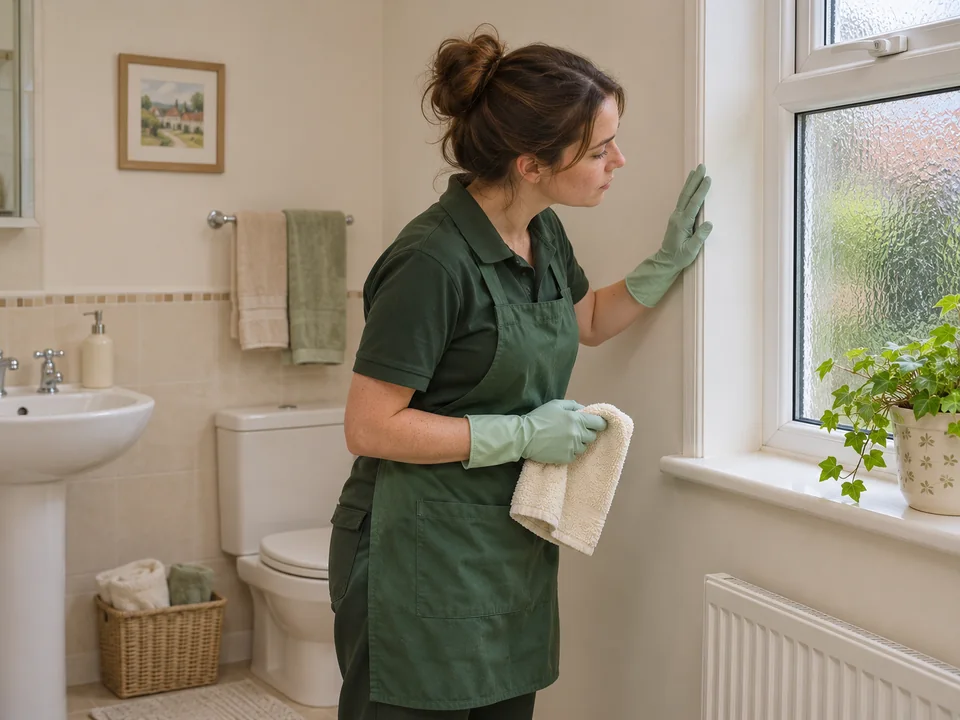
At assessment, we review where the affected area starts and where it meets a different finish. We look at what is accessible and which material appears sound. A cleanable hard surface near an altered covering can require a separate decision about the covering. We go through which surfaces can be considered for cleaning and what needs to be assessed by someone responsible for that finish. A quote should identify the actual work, including where an adjoining position will remain outside it.
If the room has a history of repair, we ask what changed and when the visible area was first seen. A confirmed repair can provide context for the room without answering whether another part of the property needs attention. We check the present condition of what can be seen and explain which questions are outside the agreed clean. If a section is concealed, damaged or still associated with an unresolved property matter, we discuss how it should be reviewed separately.
We explain the limits if the available working position does not allow us to see the whole surface. For a ceiling, for instance, the view from a level area may only show one edge. We review that visible part before making any decision. If access arrangements change ahead of the visit, tell the office the area that can now be reached and who will make it available.
| Position | Assessment | Decision |
|---|---|---|
| Sound visible hard face | Extent, condition and working position | Agree the surfaces that can be cleaned |
| Changed finish beside the visible area | Visible difference and accessibility | Review for separate assessment |
| Surface over a stair | Reach and the position below it | Agree whether access is suitable |
| Concealed wall or ceiling | Where the visible area ends | Identify further access or property matters |
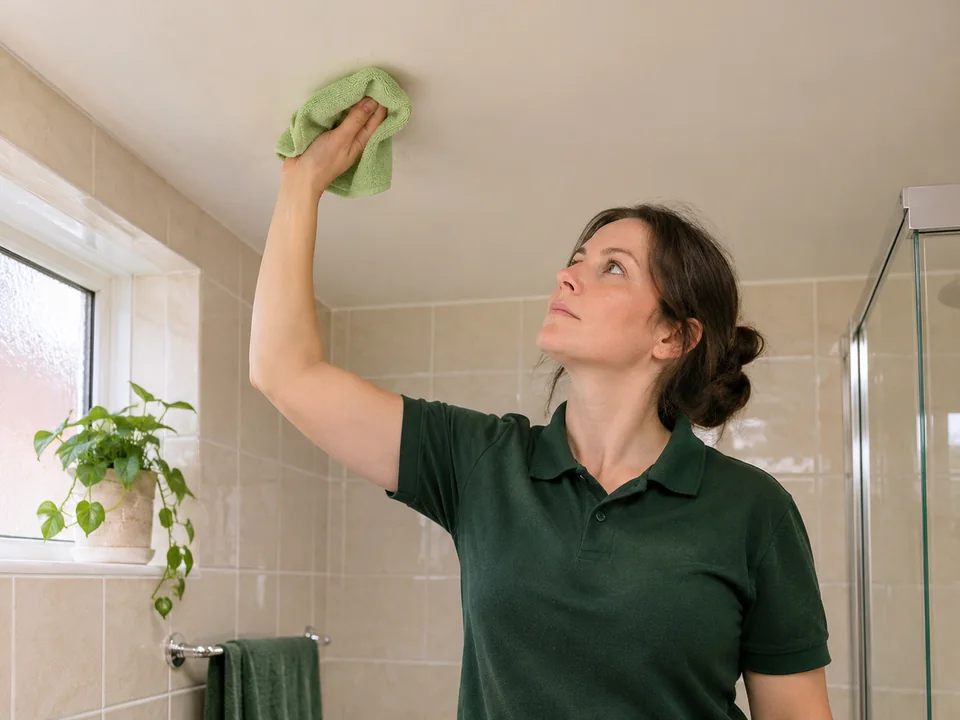
Prepare the room and remove visible mould from suitable surfaces
After agreeing the suitable surfaces, we prepare the immediate working area and identify what can remain in place. We check where the work will take place and confirm access around nearby fittings or belongings. If another person uses the room or route, agree when it can be made available. Preparation is specific to the surface and the working position, so we check what can be reached before beginning.
We physically remove visible mould from the suitable accessible hard surfaces included in the agreement. We work within the areas described to the customer and review any new or different condition separately. For example, if the marks extend onto a finish that is visibly changed, we explain where the suitable surface ends and discuss what remains for a separate decision.
We inspect the visible result after cleaning and compare it against the agreed surface list. If another visit has been arranged for the same property, tell us which rooms or items it covers and whether it affects access. We can explain where the agreed work ends so a resident or property contact can organise the rest without treating all tasks in the room as one booking.
- We prepare only after confirming the surfaces and access.
- We clean suitable accessible hard faces included in the agreement.
- We review the result and identify any separate area.
Hand over the room with the work and limitations clear
During handover we identify which areas were cleaned and whether another decision is still needed. If an agent or owner is receiving the outcome, use the same room labels you supplied when discussing the visit. We report the visible areas and explain any limit related to access or material condition. The person responsible for the property can then use that description when discussing an inspection, a repair or another appointment.
If you need another type of clean as well, provide its expected work separately. End-of-tenancy cleaning may need to be coordinated with the date when the affected room can be opened or emptied. We can discuss how the access arrangements fit together while keeping the work lists distinct. Use the booking page to collect the room, postcode, timing and known changes before contacting us.
If more information is needed after the initial report, we confirm which part of the property it concerns and who would need to provide it. A dated description of what could be seen can be useful where follow-up changes hands. At the review we relate the completed work to the actual room and finish so it can be identified by the person who will arrange the next step.
| Handover item | What we communicate |
|---|---|
| Areas cleaned | The surfaces included and their room positions |
| Limits | Any surface excluded for space, reach or condition |
| Other assessments | Questions still for the property contact |
| Next steps | Who needs the outcome and what they should consider |
If the access or condition changes before we arrive
Tell us if the access route or affected finish has changed since you first made contact. If a room that was locked can now be opened, say who can provide access and which areas can be seen. We review what has changed before deciding whether the proposed work can be maintained or whether another item needs to be considered in its own right. We make sure any changes to the original enquiry are agreed with the appropriate contact.
Where another person has been asked to review the building, give the date they expect to attend and explain if they need the surface to remain available until then. We discuss the order of the proposed work and what parts are suitable for cleaning. If it is important to keep a record of the original condition, confirm which views or notes are available and who will retain them. That makes a later discussion about an affected area easier to relate to the work already agreed.
If the timing of a second appointment changes, we check whether that means the affected room can still be reached by the agreed route. A previously clear working position can become limited while the space is in use. We record any change that affects preparation. At handover we explain clearly whether all agreed hard faces were cleaned and, if an area could no longer be included, what needs a further arrangement.
Sometimes a room description has been passed between residents, a concierge and an owner. We go back to the visible position and confirm the names used for the surfaces involved. This helps the person who receives the review to locate a surface even when they could not attend in person.
If further work is discussed, we use the same identifiers to make clear which area is new.
Questions about arranging mould removal
How do you find a property door behind the Borough High Street frontage?
We use the full address plus a description of the yard or route. Tell us who will make the entrance available.
Can the proposed clean include a lower part if the ceiling above it is difficult to reach?
We consider both positions separately and agree only the suitable accessible surfaces. We explain what would be needed before the other area can be considered.
Do you use a previous room record from a managing agent?
Yes, as background. Give its date and the current room information, so we can check which finish it describes.
How do you handle a mark that appears to extend behind a fixed panel?
We assess the visible, accessible part and discuss what further access or assessment the concealed area would require.
What do you explain if the visit covers only one side of the doorway?
We identify the surface agreed and cleaned and distinguish it from anything on the other side that needs a separate decision.
Can I request a visit after the occupier has already left?
You can enquire if a responsible person can provide access. Give the full address, room details and who can authorise the work.