 Housekeeper
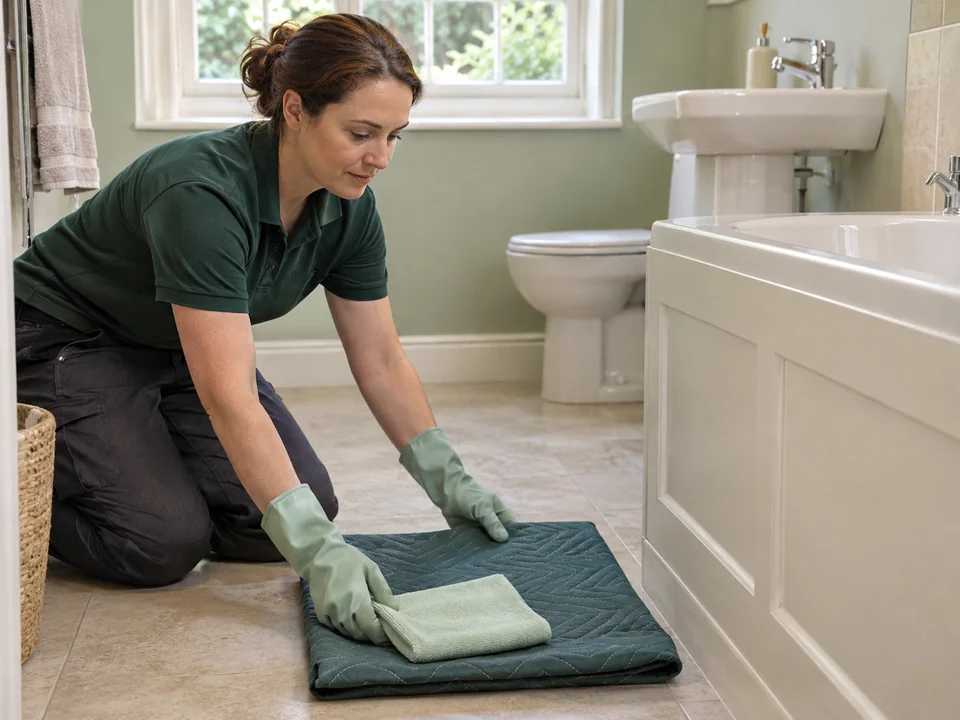
Mould Removal in Clerkenwell
We start Clerkenwell mould removal with the visible surface and the route to it. We assess and prepare the agreed position, physically remove visible mould from suitable accessible hard surfaces and explain what we cleaned during handover.
Can I enquire for a home near Clerkenwell Green?
Yes. Give the full postcode and door that serves the property.
Can you assess a mark beside a split-level landing?
We assess the visible finish and check the available working position before agreeing cleaning.
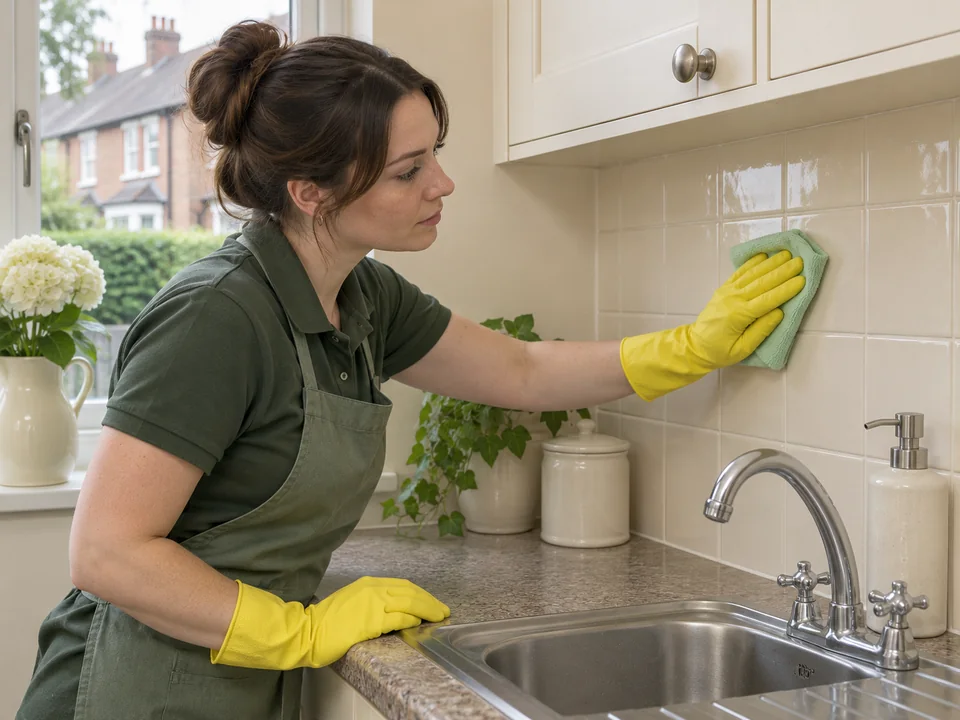
Identify the entrance and affected finish before we arrive
Islington Council lists Clerkenwell Green as one of its designated conservation areas. If you use Clerkenwell Green to describe your location, follow it with the full property address and the exact entrance to the home. A building can have both a street door and a separate entrance reached from a courtyard. Tell us which one serves the affected room, who can open it and how to recognise the door. If access depends on a person meeting us, confirm where they expect to meet and whether they can take us to the room.
At the enquiry, give us a reference point inside the property. An affected area beneath an opening, at a join beside steps or on a return near a fitted cabinet can be described without a long inventory of the room. Tell us which hard surface is involved and whether you can see the whole marked area. If the angle makes it difficult to see the top or end of it, mention that. We use your information to discuss the likely assessment rather than guessing which finish is hidden.
A person who has photographs can share a view showing the nearby door, sill or fitting, as long as the view can be taken safely. Give the room and date with the image and explain what might have changed. For example, the contact who first took a picture may have been able to open a cupboard that is now locked. We need to know what can be shown on arrival, particularly if the resident and the booking contact are different people.
Access within a converted property or split-level home can involve a second person after the first entrance. Tell us whether a hall or stair serves more than one home and which key or intercom is for the level concerned. We discuss entry to the actual property and the position where the work is requested. The person who can open a communal door may still need to put us in touch with the resident or the contact who can approve the work.
- Identify the entrance serving the affected room.
- Give a fixed reference point inside the room.
- Say who can let us through and agree the work.
| Detail | Use during the appointment |
|---|---|
| Street or courtyard door | Locate the correct entry. |
| Actual level | Arrange the route to the affected room. |
| Nearby fixture | Locate the surface for assessment. |
Check what can be seen and reached around fittings
We assess the material and visible condition before deciding whether a particular exposed section can be cleaned. A frame and an adjoining wall return can appear to have one uninterrupted mark. We look for the boundary between them and consider which section can be reached. If an edge is visibly damaged or changes to a different material, we describe it separately when agreeing which accessible suitable hard surface to include.
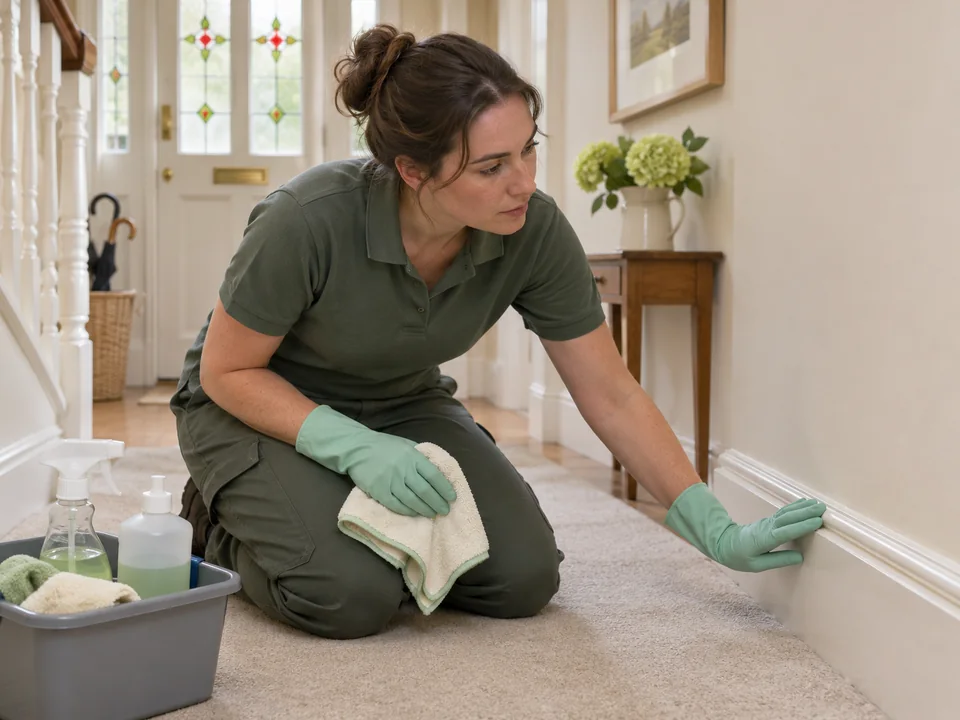
If you noticed the mark from a landing above or below the room, show us the ordinary route you used. We consider where it is possible to stand and which part of the finish can be reviewed from there. A photograph from a stair can show a mark above a window without giving us the working reach. If the available position differs across the surface, we explain what that means for the area we can agree to clean.
An exposed hard strip beside a fitted cabinet can end just where a recess begins. We check whether the part inside the recess is visible and how the approach is limited by the fixed piece. If a hinge or fixed cover obscures part of the finish, we describe the visible edge. The property contact can then decide whether they need someone to examine the inaccessible part separately, with a reference to where it sits.
When you show us another room, tell us whether it is affected at the same kind of fixture or at a different position. We examine the visible conditions independently and confirm the work that can be considered for each. If the initial report mentioned just one room, tell us who can agree additional work. This allows us to discuss what we found before treating a new position as part of the appointment.
A front room and the space at the top of an internal step can share a single window but give access to different sides of it. Tell us which side can be seen from the usual route. We can examine the portion within view and check whether the practical working area matches the part you described.
| Position | Assessment consideration |
|---|---|
| Frame against a return | Where the finish changes. |
| Above a landing | Whether a working position is available. |
| Cabinet recess | Which part is exposed and approachable. |
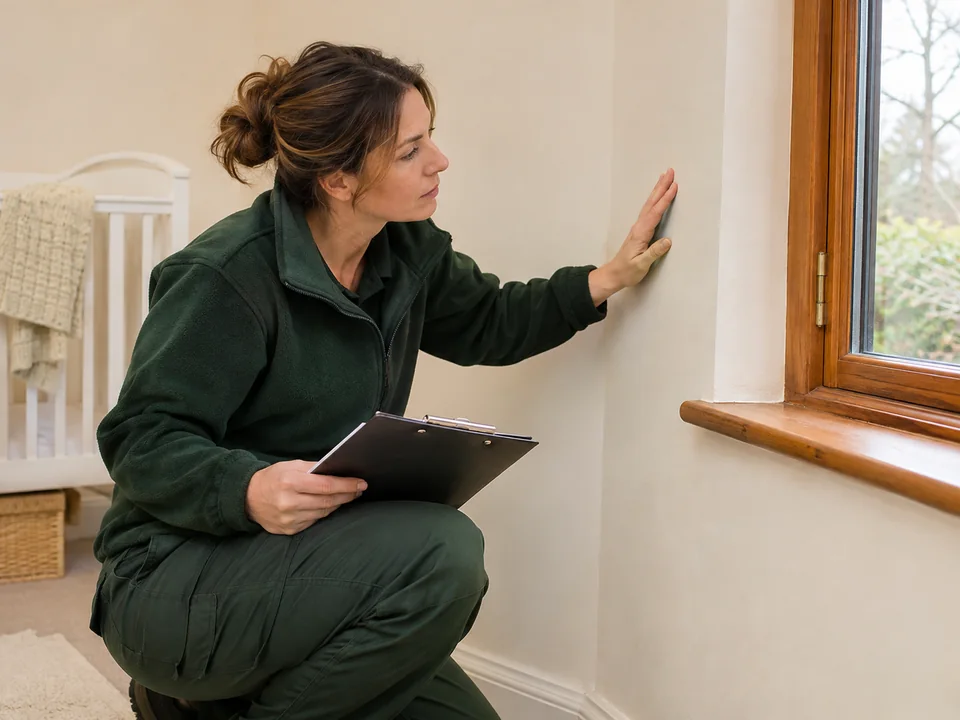
Prepare one working position at a time and then clean
After identifying a suitable accessible hard surface, we agree the section with you and prepare a clear approach. In a property where walking past the affected area is the only way to reach another room, ask the resident when the space can be available. We work out where we can approach and whether the door or hall needs to remain open. If access changes after the first assessment, we review the practical position again.
We ask the resident to identify belongings that can be moved and fixed items that need to remain in place. A low shelf may hold personal items that can be cleared while its brackets prevent a narrow section behind it from being reached. If clearing the belongings reveals a previously hidden finish, we assess it before deciding whether it can be added. We keep any area behind a fixed part outside the agreed accessible work.
We physically remove visible mould from the suitable accessible hard surfaces we have agreed for cleaning. The work follows the identified span of the exposed material. If a hard face sits beside a loose-looking painted edge, we clean the agreed face and explain where the adjoining condition starts. If the edge of the hard surface cannot be reached because of a fixed piece, we note where the work stops so the person responsible can find the same position again.
If the proposed work includes two separate surfaces, we confirm the order with the person on site. A nearby sill might be available first while the hallway area is still being used. We discuss when the other position can be prepared and confirm the work when we see the room available. Where we need to move from a familiar surface onto a different one, we return to the decision made at assessment and check that the change is clearly understood.
During the final review, we look at the agreed area and describe the nearest boundary or remaining concern. An accessible length of frame may have been cleaned while the neighbouring return still shows a visibly different condition. We can point to each section and distinguish where work took place from where the next decision belongs. Those details are also useful for somebody receiving the result without attending the appointment.
- Keep the agreed position and route clear.
- Identify fixed furnishings before we start.
- Confirm the order of work where rooms are shared.
| Review | What we identify |
|---|---|
| Cleaned area | The agreed hard surface where we worked. |
| Physical boundary | Where a change of finish or fitting limits the work. |
| Remaining visible concern | The specific position to pass on. |
Hand back the property with a specific account of the work
We use the room reference from the enquiry when handing the area back. Explain who should see each position and whether somebody else needs to receive the result. If a resident identified the marks but an agent arranged the visit, we agree who can approve the work and who should hear the outcome. A reference to the edge beside a particular frame or door allows both people to locate the same section.
If another property concern is already being considered, tell us who is responsible for it. We explain the visible condition and the hard surface cleaning we carried out. A question about possible moisture behind the finish or a repair to the property needs its own decision and arrangement. The exact location of a damaged or inaccessible area can be passed on to the person handling that decision without expanding what the cleaning visit covered.
An appointment in an empty property can involve a different handover from a visit while the resident is there. Tell us where the keys need to go and whether another person wants to review the result before they are returned. Give us any access deadline and confirm who should be told if a surface remains unavailable. We can then discuss what must take place before access to the property ends.
To start an enquiry, give us the Clerkenwell address, the room and the nearest fixed feature to the mark. Mention any stairs, fitted items or changes at the edge of the visible area that affect what we can reach. If you also need a wider clean for other rooms, send those tasks separately so we can discuss the appropriate arrangement and agree which parts belong with each visit.
For a shared entrance, confirm whether the person who lets us out has also seen the affected room. If somebody else has to check it, we can use the door, floor and feature named earlier to explain where to go. Keep the internal route available until the agreed contact has seen the outcome or received the description.
- Confirm who needs the final account.
- Share the same position with the property contact.
- Give the key return time and recipient.
Questions about arranging mould removal
How do I describe entry into a converted building?
Name the street or courtyard entrance and say who can take us from there to the room.
Can you see a mark that is visible only from stairs?
Show us the route you used. We check where we can stand and what is accessible from there.
Will you move a fixed cabinet cover?
We assess the exposed area and explain where a fixed piece restricts the work.
What if I can only make one room available at a time?
Tell us which room is available first and who can prepare the second one.
Can my agent meet you after the cleaning?
Yes. Confirm who can show us the surface and agree work at the beginning.
How do you describe two patches by the same fitting?
We identify each visible position and describe the closest fixed point for each.
Other Cleaning Services in Clerkenwell
Describe the Clerkenwell property, Discuss separate end of tenancy cleaning
Discuss your mould removal enquiry
Mould Removal Prices in Clerkenwell
Tell us which rooms are affected, the approximate size of the visible patch and what surface it is on.
Get a Quote