 Housekeeper
Mould Removal in Holborn
We plan Holborn mould removal around the visible material and working reach. We agree and prepare the accessible area, physically remove visible mould from suitable hard surfaces and explain what was completed before handing back the room.
Can I enquire for a home near High Holborn?
Yes. Give the full postcode and entry serving the home.
Can you assess the inside of a recessed frame?
We check the visible hard section and see which part can be reached safely.
Establish the correct Holborn entrance and the area inside
Camden's Local Plan map of Holborn identifies streets around High Holborn and nearby squares such as Red Lion Square and Lincoln's Inn Fields. When you enquire about an address in that area, give us the full postcode and the entrance to the home. A delivery door or office reception may share the same street address while serving a different part of the building. Tell us which residential door you want us to use and who can show us the way from there to the affected room.
Start with a reference point in the room. A mark on the side of a hard frame is more specific than a mark by a window and can be distinguished from one on the adjoining wall. If a doorway has two similar returns, use a feature such as the handle side or an inside join to identify the correct one. Estimate the visible extent and tell us whether a fitting partly obscures it. We use that description to discuss the position we need to assess.
If somebody has already taken photographs, give us the date and room for each. A shot that includes the fitting and part of the room can help us place a smaller image of the mark. Tell us anything that has changed since the images were taken. If a door in the photograph opened in a different position or a piece of furniture is now in the way, we need to understand what access will be available on the day.
Before confirming access, establish which person can show us the position and which can approve the work. In a managed property the person opening the building may not be able to advise on the finish in an individual room. The resident can identify the affected area while another contact handles approval. Give us both roles and tell us if the room is only available for a limited period.
- Give the residential entrance and full postcode.
- Describe the position relative to a fixed feature.
- Confirm who can show us the room and agree the work.
| At enquiry | What helps us |
|---|---|
| Reception or door | Exact access to the home. |
| Frame or wall reference | Precise position of the visible mark. |
| Resident and approving contact | Who can assist at each step. |

Assess the finish and working reach around the visible mark
We check the exposed material and where it meets other surfaces. A rigid frame may end beside a visibly damaged return or a painted wall edge. We examine the sides of that join independently and check what can be approached from the available working position. Once we know whether the hard section is suitable and reachable, we can agree what to include and give a clear description of the area where the work will end.
Where an opening is recessed, a visible line can continue into a part the resident can see only with the door open. Show us which position gives that view and tell us whether it can stay available. A fixed fitting can limit working reach even when another part of the same surface is clear. We explain which exposed part we can consider and describe where the fixed edge begins.
For a lower mark close to a fitted cabinet, confirm how you first saw it. We review the face or return within view rather than making a decision about the space concealed beyond it. If the visible area changes when an ordinary item is moved, we inspect the newly exposed material before agreeing any work there. A different finish, access position or visible condition can call for a separate decision.
If the enquiry mentions a second position in another room, identify it before we agree the work. The access route can differ and the finish may look different in person from a photograph. We establish the extent visible on the day for each area and discuss who can approve an addition if needed. The final review will then be able to describe each agreed position individually.
A room can have several similar recesses. If the mark is in the one nearest an internal passage, tell us whether the passage itself offers a working position or only a view of the affected edge. We can look at the mark from both openings where they are available. This helps us confirm which side gives the necessary access and whether a hard section remains partly obscured.
| Area to check | Assessment question |
|---|---|
| Exposed frame | Where the suitable hard part ends. |
| Recess beside an opening | Which stretch can be seen and reached. |
| Cabinet return | What is visible beside a fixed piece. |
Confirm the preparation and order of work
After we agree the accessible hard section, we check what space it needs in front and how the resident can make that space available. Tell us about a room where the approach is shared with another entrance or passes a door that needs to stay in use. We discuss the working position in the actual room and agree what can remain clear while we work.
Agree where movable items can wait during the visit. If clearing a small table would occupy the only approach to a second affected position, tell us so we can plan the order. We confirm which fixtures must stay and make any limit to reach clear in advance. If we see an area that was previously obscured, we inspect that finish and discuss it separately before starting any additional work.
A person opening the property might need to leave after we start. Confirm who can answer a question about access or approve a newly visible area if that happens. If building reception only gives access through a particular route at certain times, tell us which part of the visit is affected. We can discuss how to complete the agreed assessment and work before access changes.
- Agree when each room can be approached.
- Confirm where cleared belongings can go.
- Name a contact for any work decision after entry.
Clean suitable hard surfaces within the agreed boundary
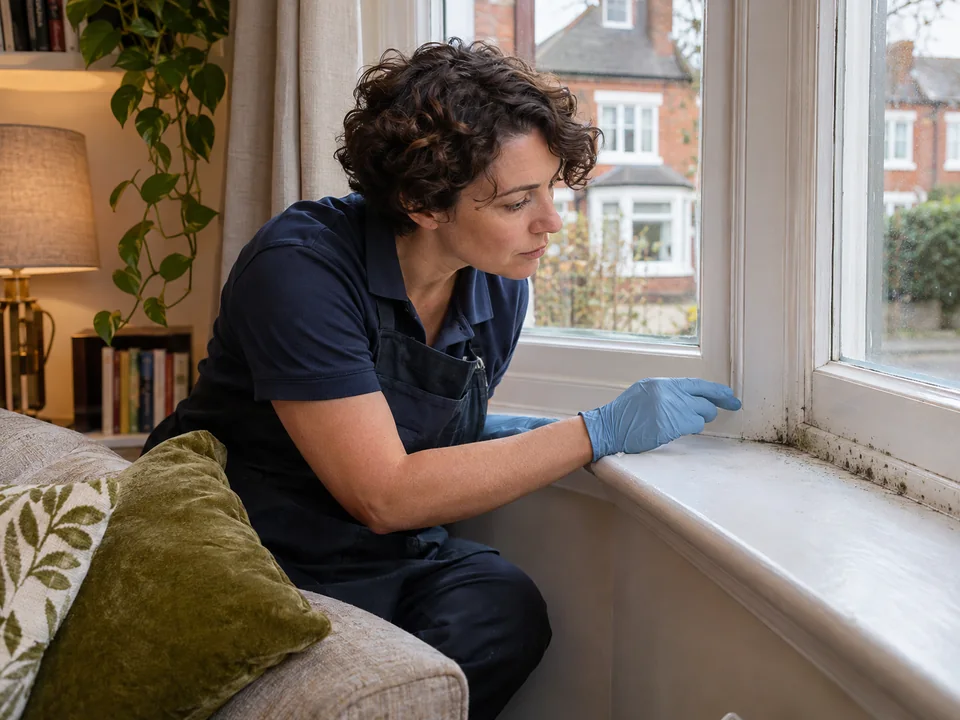
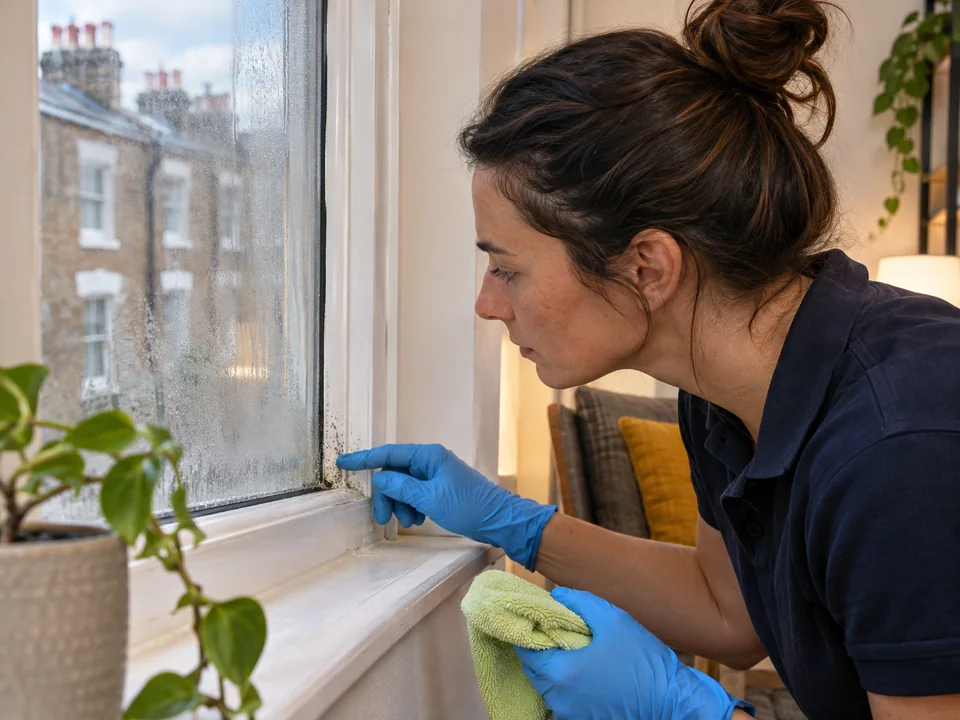
We physically remove visible mould from suitable accessible hard surfaces after we have assessed and prepared the agreed area. We work to the exposed section we identified, using the visible material change or the point beside a fitting as a practical boundary. If a hard frame runs into a visibly deteriorated adjoining part, we clean the agreed frame and explain where that other condition begins.
Once the agreed work is underway, we keep it within the position identified during assessment. The reach may finish at a window catch, a change in frame or a fixed cover. We identify that end clearly so a resident who later asks about the edge will know which piece was cleaned. Where a mark continues beyond the hard part, we describe its visible location separately.
During the final check, we review the surface with the person who can see it or arrange to relay the details to the named contact. We say which part we worked on and whether a nearby area was not included. When there are two similar fittings, the room and fixed feature help distinguish their positions. We use that reference to explain any visible issue that remains for a separate decision.
| At the review | What we identify |
|---|---|
| Hard surface cleaned | The agreed exposed section we worked on. |
| Cleaning edge | The fixture, join or finish change at the end. |
| Separate condition | Any other visible position to pass on. |
Hand over the site with an identifiable record of the result
We describe the part cleaned and any visible condition left around the boundary. Confirm who will receive that information and how to reach them. A resident can review it with us, while a manager or owner who was elsewhere may only need the room, the hard surface and its nearest fixed reference. We use the same description with both people to keep the result tied to the actual section.
Tell us if there is already a property enquiry about a fitting or recurring mark. We explain what we saw at the exposed surface and where we removed visible mould. For concerns about water entry or a part behind another surface, the person responsible for the property can discuss a separate investigation. Our room reference gives that person a place to start without treating cleaning as an inspection of the building.
Agree how and when any keys need to leave the property. A reception desk may receive them while an agent needs to hear the outcome. Confirm whether the area must be checked by the resident first and whether another contact needs to remain available until the door is closed. We discuss the review before the appointment so the result can be understood while the property is accessible.
To enquire about Holborn mould removal, provide the full address, visible material and nearest fixture, plus any restriction on getting to the room. Tell us which person can approve the agreed surfaces. If there is also a broader tenancy clean, send those tasks separately along with the handover deadline. We can discuss the appropriate arrangements for each part of the work.
If the original report goes to somebody outside the building, use the internal room label agreed during booking in the final account. A name from the exterior directory can refer to more than one entrance or part of the property. We keep the result linked to the actual room and feature, including which side of the fitting remained outside the work. This makes it easier for an owner or agent to pass on a specific description.
- Confirm who receives the details.
- Mention any current property enquiry about the same area.
- Tell us the key return arrangement.
Questions about arranging mould removal
Will a street-level reception be enough for access?
Tell us whether reception can also arrange entry to the home and identify who will take us to the affected room.
Can I send a photo taken before the room layout changed?
Yes. Give the date and explain what now affects the approach.
Do you cover a section concealed by a fitted cabinet?
We assess the exposed part and explain where the fixed cabinet limits working reach.
Can the agent approve additional work while the resident is present?
Yes. Confirm who can show us the newly visible area and how to contact the agent.
What if two similar frames are in different rooms?
Name each room and give us a fixed feature that lets us identify its frame.
Can the person collecting keys be separate from the handover contact?
Yes. Give us both arrangements and confirm when access ends.
Other Cleaning Services in Holborn
Give us the Holborn room and address, Discuss a separate tenancy clean
Discuss your mould removal enquiry
Mould Removal Prices in Holborn
Tell us which rooms are affected, the approximate size of the visible patch and what surface it is on.
Get a Quote