 Housekeeper
Mould Removal in Bermondsey
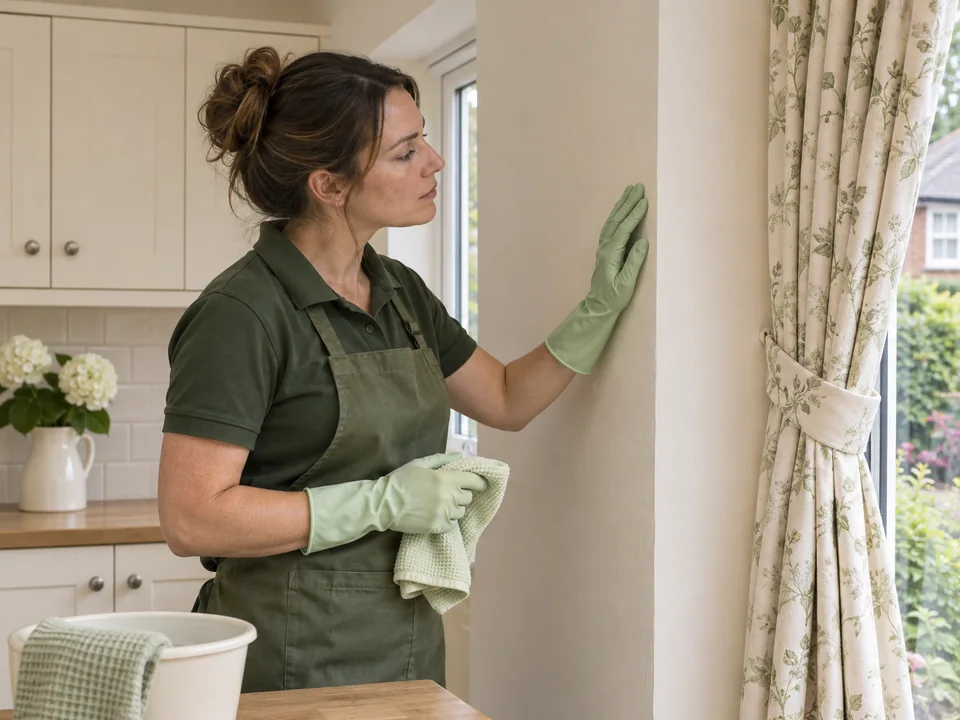
We start a Bermondsey mould removal enquiry by identifying the wall, ceiling or other surface and arranging to see the accessible area when needed. We agree which finishes are suitable for cleaning, prepare the immediate working space and carry out the work agreed for the visit. At the end we review what we have cleaned and explain which areas or building issues need to be dealt with separately.
Can I give a courtyard entrance for an SE1 or SE16 address?
Yes. We use the complete postal address and the entrance that actually serves the property.
What if the affected wall is behind fitted storage?
We discuss what can be viewed safely and arrange any separate access needed before agreeing work.
The details we record when you call
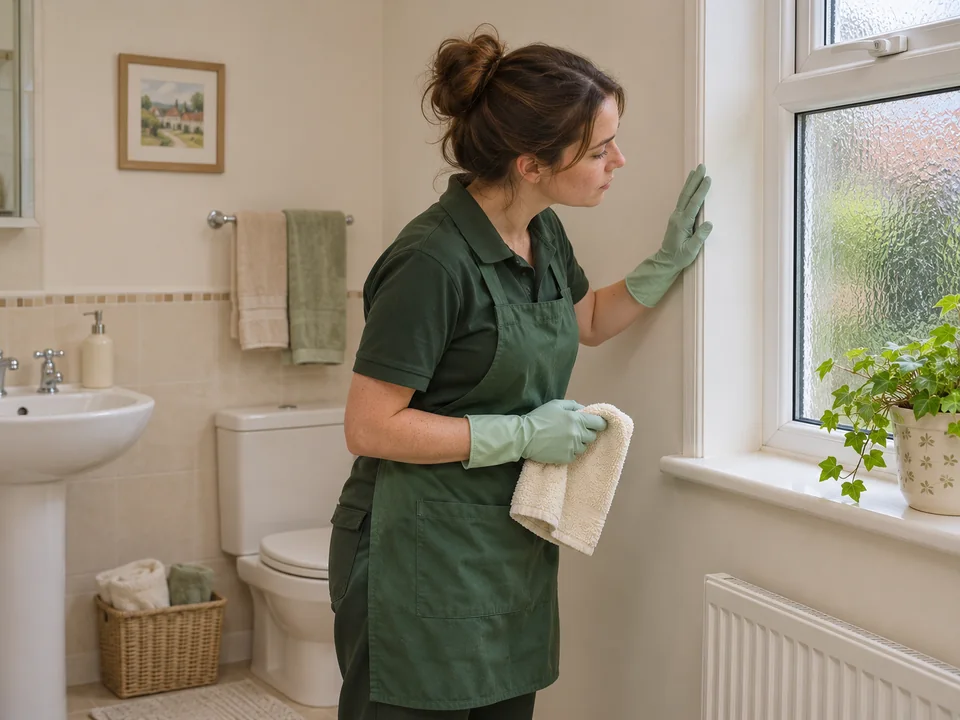
We take the name of the affected room, the position of each visible patch and the approximate size. We ask which finish the marks are on, whether the condition has changed and whether there has been a leak or work in the same area. A practical room label helps if the person who raises the enquiry will be different from the person who opens the property. We can also use photographs showing the wall in relation to a window, fitting or door, provided the images can be taken safely.
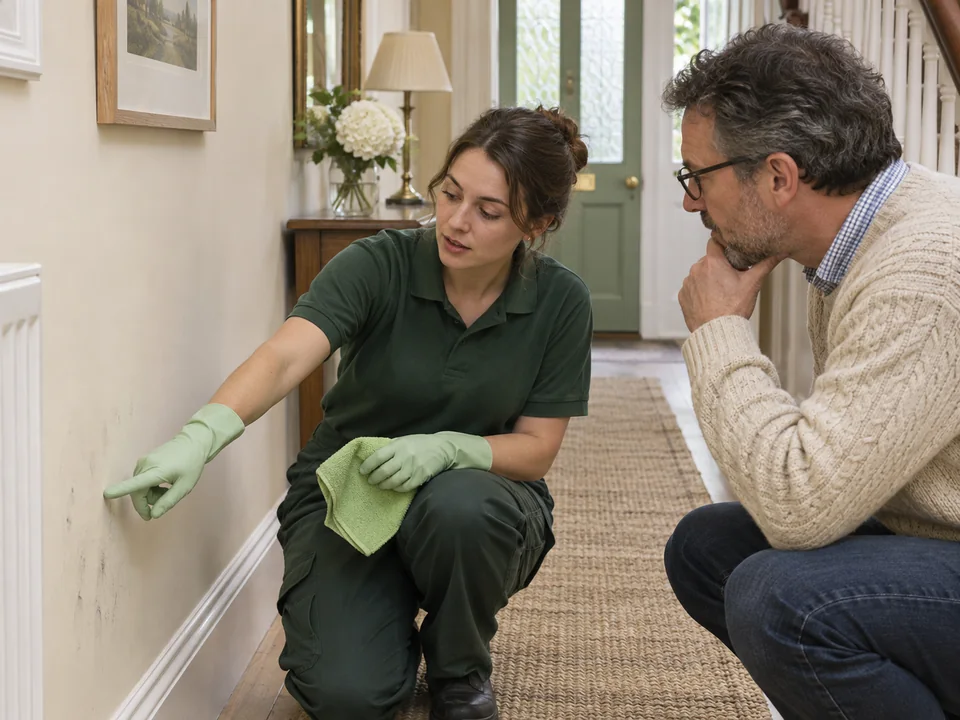
Where there are several surfaces, we record them separately. A patch on a painted wall beside fixed shelving may be easier to see than a mark on the edge of the shelving or behind it. We discuss which areas can be checked during a visit and keep any question about a concealed area on its own. That helps us agree what can actually be considered before a price is based on the information. We ask who will be able to approve the visit and who should receive the quote.
If the property is occupied or under management, we note which rooms are available and which need someone else to provide permission. The first call can be used to prepare for an assessment where necessary. We confirm that distinction before booking, so the customer knows what is being discussed and which decision can only follow a closer look.
- We record the affected rooms and visible materials individually.
- We check how the property and each room will be opened.
- We identify the person who can agree the work.
| Information | How we use it |
|---|---|
| Approximate size | To establish which visible area needs to be discussed |
| Condition of finish | To consider whether further assessment is needed |
| Building history | To separate surface work from unresolved moisture or repairs |
| Access details | To plan how the agreed area can be reached |
Reaching a Bermondsey property through the correct entrance
Southwark Council describes the Bermondsey Street conservation area south of the London Bridge railway line and notes its narrow streets, rear yards and warehouse buildings. For a property in one of those settings, tell us how visitors reach the door. We record the address with the entrance location, the floor of the affected room and any shared gate or stair between them. If a building has a name on the main street but an entrance in a yard, the name alone may be insufficient to agree a reliable arrival point.
Before we confirm an appointment, we check who can open each part of the route and whether there are restrictions on working space or moving through the shared areas. For a mark above a landing, we discuss the height and the position beneath it. For a wall behind storage, we ask what can be seen without disturbing the storage. We then explain if there is an access question that needs to be resolved before a cleaning decision can be made.
If someone other than the occupier is arranging the visit, we ask which instructions should be used for entry. Fitters, managing agents and residents may all have different access arrangements. We work from the one agreed for the visit and check who should be contacted if there has been a change to the available area or arrival route.
- We distinguish the postal road from the visitor entrance.
- We check whether any permission is needed in a shared area.
- We confirm who handles access if the original contact is away.
What we consider before agreeing to clean a finish
Once an accessible surface can be assessed, we review the visible finish and the extent of the affected area. We look at the adjoining finishes when the patch crosses an edge or corner. A painted wall and a panel abutting it can have different conditions and may need separate decisions. We identify whether the intended work concerns just the visible face or whether part of the request depends on an assessment of an area that cannot currently be seen.
We take particular care to distinguish visible marks from a finish that looks damaged. If wallpaper is visibly lifting or a surface has changed after reported water entry, we discuss whether cleaning of that material is appropriate at this stage. We can identify which part of the requested work needs another decision before starting. We also explain if a property or moisture specialist should take a separate look at an underlying question.
A request for a quotation is easier to handle when it refers to identifiable surfaces. We go through which parts of a room the price will cover, such as a reachable wall face adjoining a fixture, and identify work that might depend on a further visit. If the customer reports another affected material, we check how that changes the agreed plan and seek confirmation before adding it.
| Visible finish | Assessment point | Decision before cleaning |
|---|---|---|
| Painted face | Condition and extent of the accessible area | Agree which part is suitable for work |
| Covering or panel edge | Whether the finish has shifted or loosened | Decide if a separate material assessment is needed |
| Area partly concealed by storage | What can currently be reached | Agree whether any further access needs to be arranged |
How we prepare and clean the agreed area
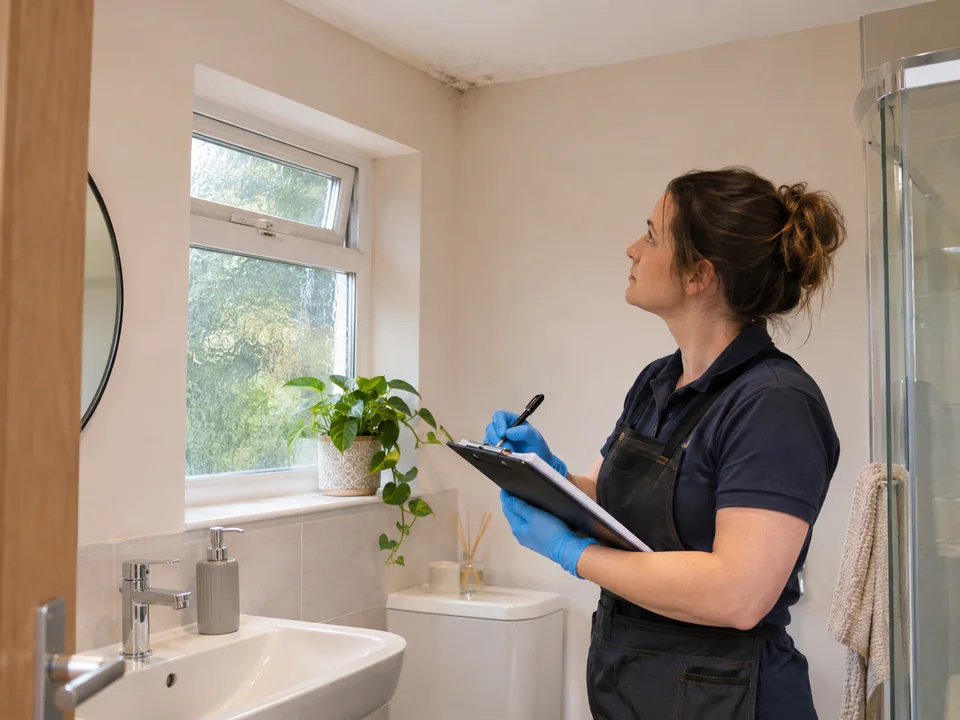
Before we carry out agreed surface cleaning, we confirm where the working area starts and ends. We discuss which items the customer can leave in place and whether anything needs to be dealt with before work can begin. When there is a shared or occupied route through the room, we check who uses it and what arrangements have been agreed. We make sure we are working on the surfaces the customer expects and identify an obstacle before it affects the work.
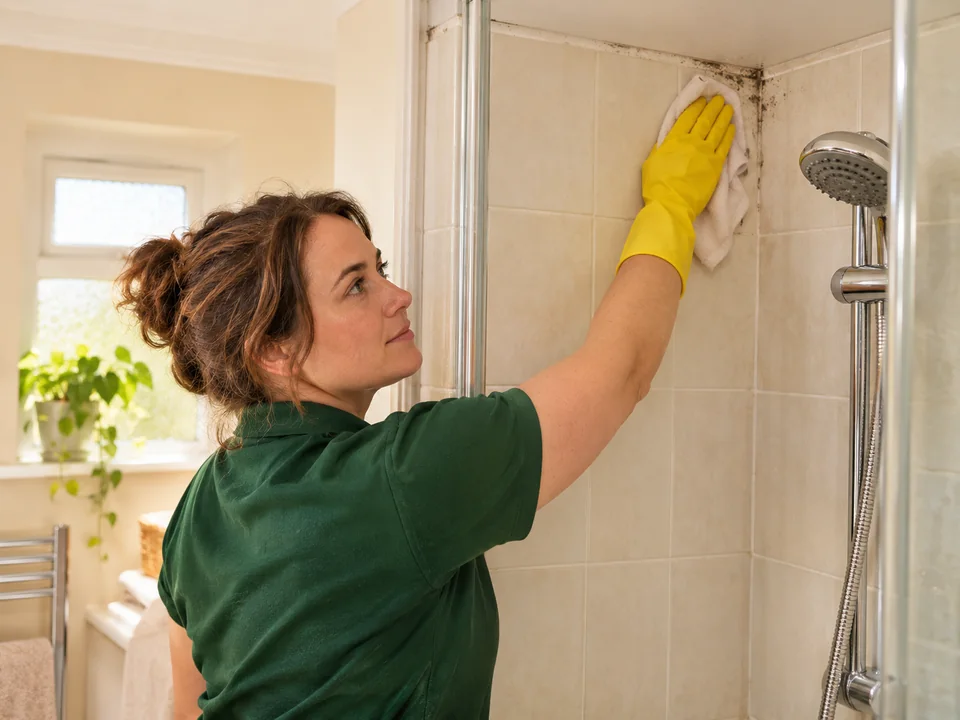
We physically remove visible mould from the suitable hard surfaces agreed for the visit and check their visible condition afterwards. Where the shape of a finish or an inaccessible section limits the work, we keep the agreed boundary clear. If the condition of the area differs materially from the description, we identify the difference and discuss whether it is appropriate to go ahead or whether a separate decision is needed. Any extra areas can be considered with the person who can approve them.
If you have other work at the same property, we discuss how it affects preparation. A move-out visit may leave the wall clearer once furnishings have been removed, while regular housekeeping may need to be planned around a room that is temporarily unavailable. We treat these as separate requests and agree how each affects access, timing and the work due to be performed.
- We confirm the room and working area before starting.
- We discuss access and preparation with the relevant contact.
- We clean the agreed surfaces and review them at handover.
Checking the result and handing back the room
At handover we identify the areas attended to and go through any limits that were discussed. The customer can check the room against the work description. If another person arranged the visit, agree how the information should reach them. For instance, the resident may want to know how the room can be used, while a building contact may need to know which part of a wall needs another assessment. Keeping the details tied to the same room names makes subsequent decisions easier.
If there is an unresolved moisture question, we set it out separately from the outcome of the agreed surface clean. An owner or manager may need to take responsibility for investigating that matter. We can discuss what was visible while the agreed work was being done and explain any area that could not be viewed. The customer can keep this information with any earlier photographs or repair records when speaking to the responsible contact.
Use the booking page to prepare the address, room list and any timing conditions. When you get in touch, we can discuss whether assessment is needed, who will handle access and what should be included in the quote. Confirm the nature of the visit before making plans around it.
| After the visit | What we review |
|---|---|
| Visible surfaces | The areas cleaned and any limits observed |
| Other work at the property | What needs to stay available for separate arrangements |
| Unresolved building matter | Which question to pursue and with whom |
| Handover contact | Who receives the visit information |
When a second decision may be needed
If the room changes before the visit, tell us which parts are now accessible and which are affected. We review those details against the original enquiry before changing the work. This matters when a shelf or unit has been dealt with by someone else and a previously hidden mark comes into view. The new area can then be assessed separately where needed.
If you already have another assessment booked, give the timing so we can discuss the proposed cleaning in the right order. We confirm what information the assessor or building contact may need from you and what we can report about the visible surfaces seen during an agreed cleaning visit.
For a room behind a shared loading or entrance area, we establish whether it can be reached during the proposed time and who controls any part of the route. If a manager can open the main gate but a resident is needed to get into the room, we agree both arrangements. We use the same description of the affected area when discussing access and the work, so a visit planned around one room does not accidentally turn into a broader enquiry about the building.
We also check whether more than one person has been making decisions about the room. One person may have commissioned a repair, while another is responsible for arranging access and reporting visible changes. When they provide differing information, we keep track of what each person has confirmed and what remains uncertain. At the end of the visit we use the same room list to communicate the part we worked on and any part that needs a further decision.
If the affected surface is only one item on a longer cleaning list, we record it distinctly and confirm any timing dependency before we discuss the combined arrangements. Working from two clear descriptions makes it easier for the customer to understand which visit covers the specific wall, ceiling or finish.
Questions about arranging mould removal
What entrance should I give for a flat entered through a Bermondsey yard?
Give the full address and describe how to enter the yard and locate your door. We record the actual arrival route while discussing who can admit us.
How do you handle a mark that reaches the end of fixed shelving?
We assess what is visible from the accessible area. If the surface continues behind the fixed item, we discuss access and any separate assessment before agreeing that part.
Can a building manager approve a cleaning visit for a communal landing?
We check who is responsible for the shared area and what permission is required. We then discuss which surfaces can be reached during the proposed visit.
What if a wall changes after I send the first photo?
Send an updated description and say when you noticed the difference. We review changes before confirming the area and what work can be agreed.
How are the work limits recorded when two finishes meet?
We distinguish the surfaces and check which are suitable. We agree the boundary of the clean and go through the included areas again at handover.
Can the agent receive the outcome when the resident meets you?
Yes, if that arrangement has been agreed. Give the contact details and explain who can approve further decisions during the enquiry.