 Housekeeper
Mould Removal in Stanmore
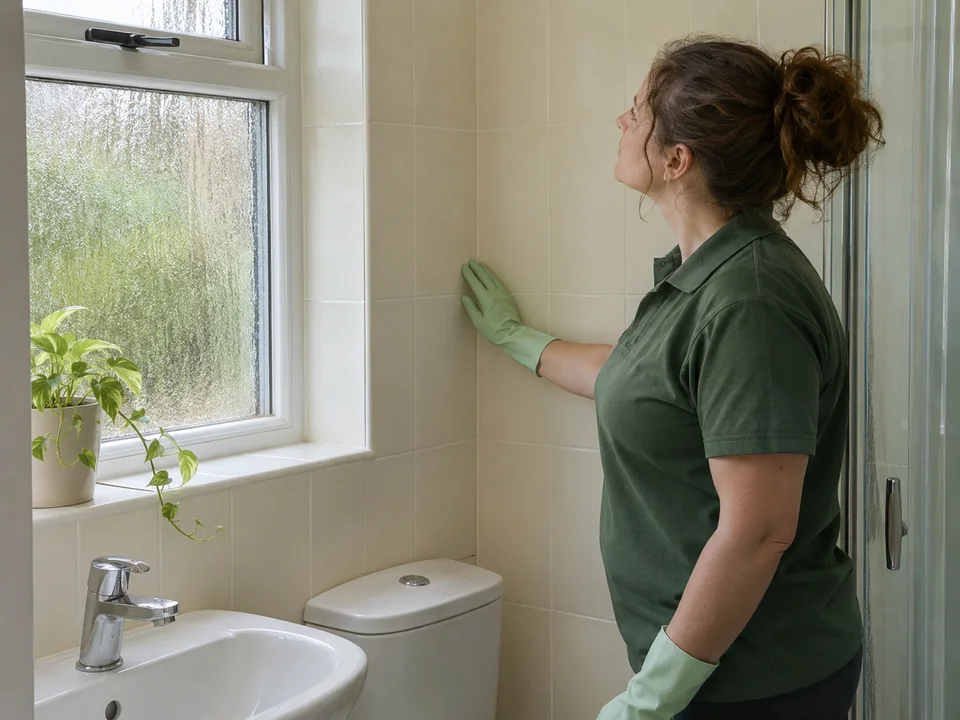
Tell us which kitchen or bathroom surface in your Stanmore home has visible mould and how you normally reach it. We assess the exposed finish, the available working space and any adjoining materials. Once we know which hard surfaces are suitable, we agree where to work and physically remove the visible mould from those areas.
Can I enquire from near Stanmore Hill?
Yes. Include your full HA7 postcode, house or flat number and the normal entrance.
What if the mark is inside the vanity area?
Tell us which hard face is visible and where fixed plumbing limits reach.
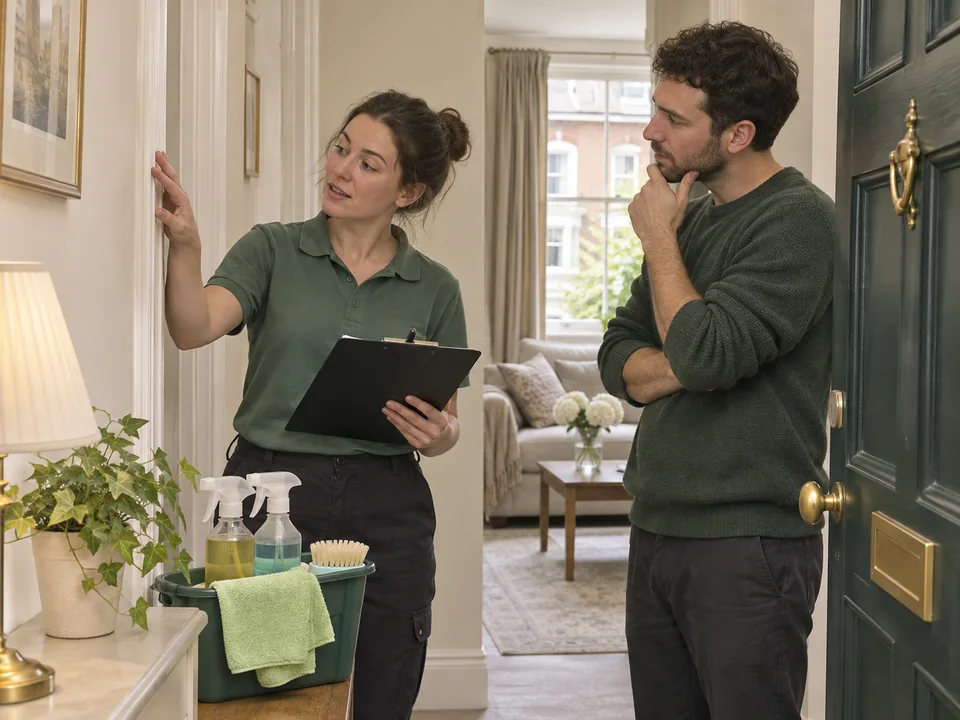
Check the hard faces beneath and around the basin
Affected areas around a sink are often described using the name of the whole unit. A mark can be on the inside of the bowl, the exposed top of a vanity or a hard vertical panel near the side of a cabinet. Identify the face, then tell us what is directly beside it. For a spot beneath a sink, let us know where the plumbing passes and how the cupboard opens. We can discuss the possibilities before we see the material. On site we check whether the fixture leaves enough ordinary access to the surface that actually shows the marking.
Harrow Council publishes conservation information for Stanmore Hill and Old Church Lane. If one of these names helps describe the part of Stanmore you live in, include it as background and use the exact HA7 address for the booking. Give the number on the residential entrance and tell us if a side gate is used for visitors. If you are asking us to see both a kitchen and an upstairs bathroom, say which entrance gives the clearest way to both and whether there is a change of floor level near either room.
With a sink or basin, we start at the part of the hard face you can reach from the room. We check the point where the visible growth runs towards the wall, along a projecting lip or onto the front of the unit. An exposed edge may be suitable for cleaning while the line behind it is blocked by the fitment. We agree where the work can reach, prepare the immediate space and remove visible mould on the suitable hard faces. The final check shows each face from the side used to work on it.
When a room contains a pair of basins, specify the right or left from the viewpoint used in the photo. If both are affected, describe them separately. The surface may be the same in front while different fixings occupy the space behind each one. We can check both when the positions are clear.
- Identify the surface beside the bowl or pipe.
- Give a wider image showing its place in the room.
- Mention damage or a change in the finish.
| Surface description | Detail we need |
|---|---|
| Side panel below the basin | What can be seen with ordinary cupboard access |
| Hard finish next to a sink | Whether it meets a different material at the mark |
| Underside of a projecting top | Available view and working position |
Agree which parts of the wet room can be left free
Consider when the kitchen or bathroom will be available and which fixtures the household uses most. A vanity may be clear at one end while the other end is in front of a radiator or laundry basket. We consider the actual route to the surface. Tell us if someone needs to use the room during the proposed visit. Where space is limited, we can discuss starting with another face that can be assessed while the basin or kitchen sink is busy. An ordinary route between rooms helps us use that time without disrupting other parts of the home.
If you want us to assess inside a cabinet, take out lightweight loose items ahead of the visit only when you can do it safely without disturbing the affected area. Leave pipes, brackets and attached panels in place. Tell us if a cabinet door has a restricted swing because it meets a wall or another fitting. Once we are there, we look at the position a person can actually work from. A door or plumbing assembly can make one face harder to reach even after all stored items have been cleared.
For a pair of basins, we assess and prepare each position on its own. One side may have a clear counter return while the other meets a fixed storage tower that blocks the edge. We look at the condition of the exposed hard material on each side before agreeing what to clean. If a mark reaches under a projecting lip, we check how much of that part is still accessible. At review we use the two basins as reference points and show where the work stopped on either side.
For a bathroom with a storage tower close to the affected vanity, give us the usable width between them. A photo from beside the bowl can show the hard facing without revealing a difficult approach from the door. If the normal working place is tight, tell us where you would stand to point out the patch.
- Clear a route to the actual surface rather than just the door.
- Keep plumbing and attached parts in their normal positions.
- Tell us when the room can be free for the assessment.
| Room arrangement | Practical point to agree |
|---|---|
| Cabinet door opens partway | Reach to the marked face with the door open normally |
| Narrow passage beside vanity | Usable standing position if fixtures stay in place |
| Sink is needed at a fixed time | Order in which the areas can be seen |
Agree the actual hard faces before removing visible mould
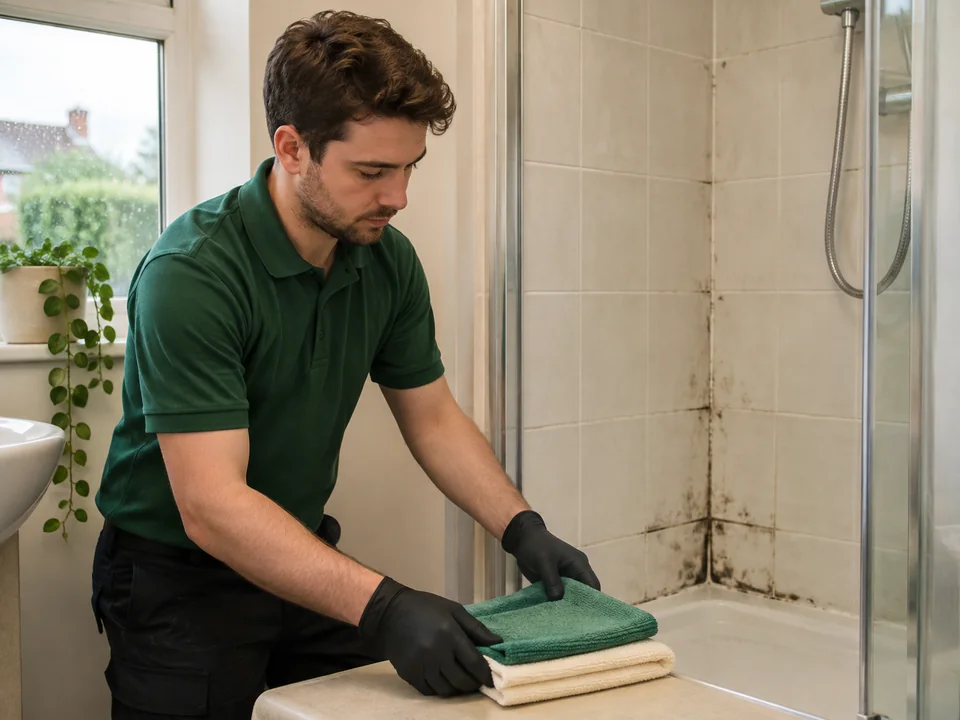
We look at the surface in person and show you where the mark meets an edge or another material. A sound hard top and the softer joint next to it can have different outcomes, especially if the joint is already separating. If an adjacent piece is loose, we explain where the hard area ends. We also consider whether a rough, bare edge at the bottom of a panel is part of the visible area you want us to assess. The work is agreed using what we can actually see and reach in the room.
Once we have agreed the suitable accessible hard faces, we prepare the immediate area and physically remove visible mould from those exposed surfaces. We work within the positions we have confirmed. If a patch extends behind a fixed pipe or into a damaged edge, we stop at the accessible part and discuss it with you. We may be able to work on one hard face without including an adjoining finish with a different condition. If we need to adjust the working area, we explain what we have found before continuing.
In a double-unit setup one part of the work may be agreed using the handle or near edge as a reference. For the other part we may need to use the point beside a pipe. We choose a clear reference so you can see which boundary applies to which face. Even if both areas are on the same top, let us know which needs to be dealt with first. A mark beneath one section may be clearly visible without being reachable from the normal front approach.
If the mark runs underneath a projecting lip, show where the surface begins to turn and whether the face behind it can be reached without moving a fitted part. We look for a sound hard section and discuss whether we can get to it from the side. The inspection may identify a strip alongside the bowl that can be worked on before the reachable area ends. We can draw attention to that edge during the review, giving you a way to see why two parts of one unit had a different result. We assess every adjacent surface before extending the agreed work.
- Use a fixed point to confirm each boundary.
- Note any point that has to be left around a joint.
- Keep the person agreeing the work reachable.
Review the surfaces before returning them to normal use
At the end of the visit we review the agreed areas with you. We point out the section worked on and any discolouration or damage that remains visible. If an adjoining area was excluded for reasons of condition or reach, we explain where that decision applied. Use the names of the fixtures and the part of each face that we agreed. A note that says simply that the kitchen was cleaned is less precise than one showing which visible mark on a hard surface was addressed.
If you notice new moisture or marking later, record the date and the position relative to the bowl, pipe or cabinet edge. Give a picture with enough context for a property contact or relevant trade to understand the location. If a fitting is due to be removed by someone responsible for that work, tell us when a previously hidden hard face becomes accessible. We can consider another assessment based on the exposed condition at that point. If you are arranging a separate cleaning visit, mention the different areas when you enquire.
At handover we show which hard faces were cleaned, such as the end of the right-hand counter or the accessible face below the left basin. We point out where a mark carried past the suitable surface or into a covered section. The distinction stays clear even where both cabinet fronts look alike.
Some vanity fronts have two colours or separate inner and outer panels. In our final review we refer to the visible panel and the nearby fitting, so the person taking over knows exactly what was worked on. That can be particularly helpful when a later report uses the general name of the basin unit and several different surfaces are involved.
Before making another booking, check whether the new concern is on the same face or beneath the adjoining unit.
| At the review | Detail to keep |
|---|---|
| Worked-on hard face | Unit, position and agreed edge |
| Adjoining finish still marked | Condition and location from a fixed reference |
| Fresh observation days later | Date and what is visible now |
Questions about arranging mould removal
Can you see marks under a double basin?
Show which side is affected and how the cupboard opens. We check each exposed face and its reach on arrival.
Should I take the pipes off before you look?
Leave plumbing in place. Tell us what can be seen around it from the ordinary opening.
Can I request cleaning around one kitchen sink only?
Yes. Describe the relevant face and tell us if a separate area is also affected.
Can you assess a vanity while another resident is home?
Yes. Tell us when the room can be clear and whether they need to use it during the visit.
Will you show me the part you could not reach?
Yes. We can point out the exposed limit and give the nearest fixed reference during the review.
What if a plumber takes out the sink after your first visit?
Tell us when the finishes are exposed and available. We can discuss a separate visit to review suitable hard faces.
Other Cleaning Services in Stanmore
Our mould removal assessment and cleaning process, Explore separate oven cleaning
Discuss your mould removal enquiry
Mould Removal Prices in Stanmore
Tell us which rooms are affected, the approximate size of the visible patch and what surface it is on.
Get a Quote