 Housekeeper
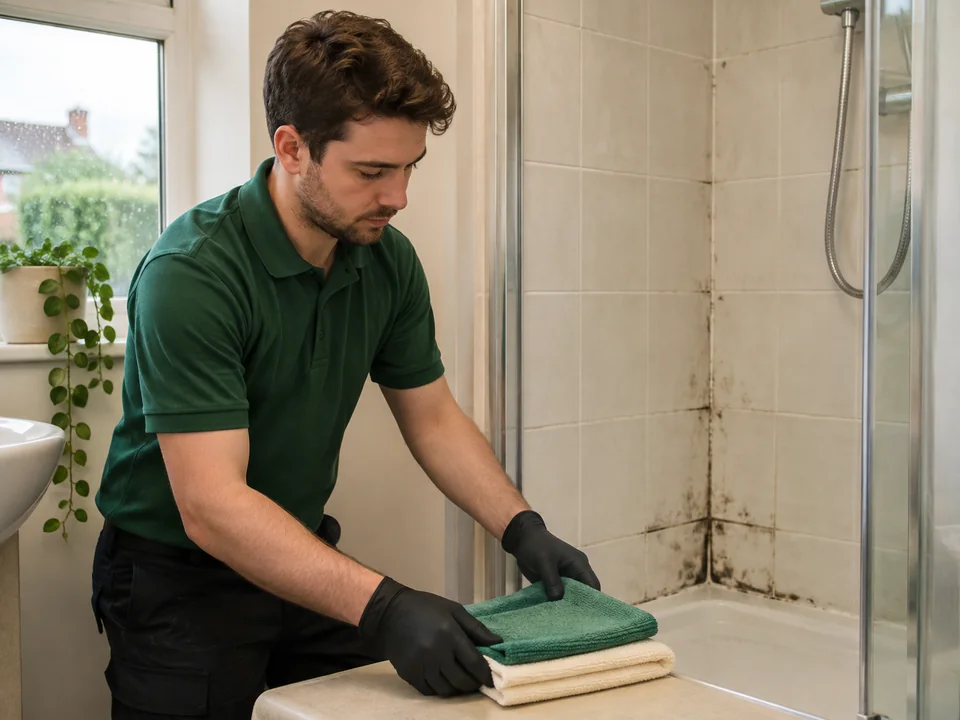
Mould Removal in Colindale
A Colindale mould removal enquiry starts with the part of the property you can show us. We ask which room it is in, what finish is affected and how we can get to it. For a flat with a managed entrance or a room with a fitted unit beside the mark, that advance information can change what we are able to assess on the day.
What address details do you need in Colindale?
Give the full NW9 postcode, building name, flat number and entrance you use.
Can I ask about a shared lobby?
Yes. Identify the lobby separately and tell us who is authorised to agree work in the communal area.
Who reports the mark and who opens the door
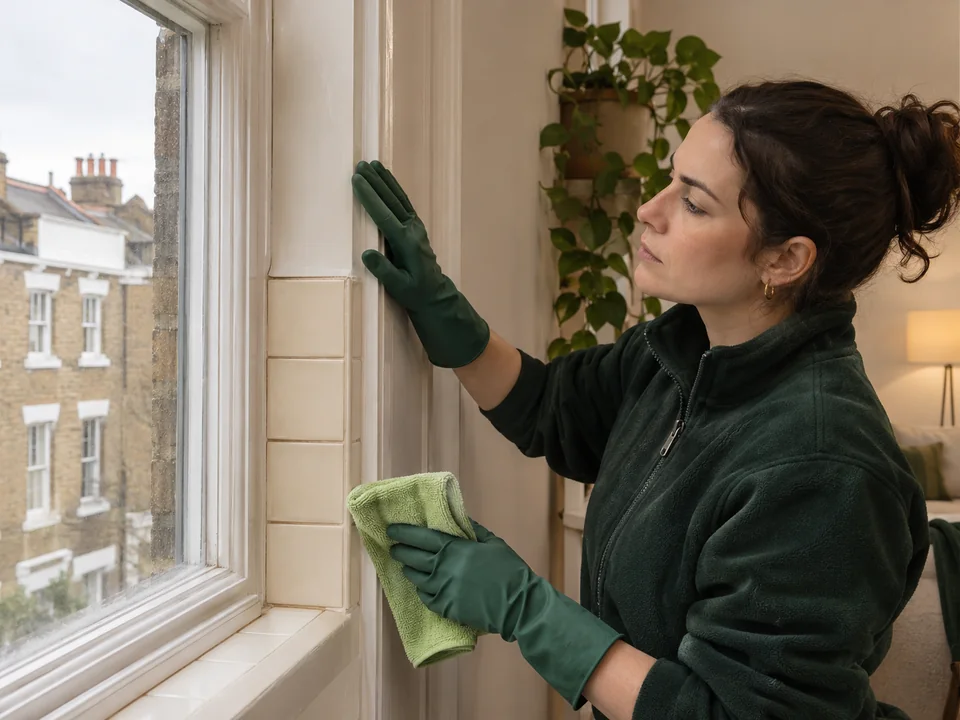
When you request a visit, we check who has seen the affected area, who can let us in and who can agree the work. In a managed flat these can be three different people. The occupier may know how a mark has changed while the building team controls entry or can advise on any reported water issue. If someone is arranging a visit on behalf of another person, give us one contact for the appointment and say how the others can be reached if a decision is needed.
Barnet Council identifies Grahame Park and Colindale Avenue in its local regeneration information. Those place names are useful orientation, but they are not instructions for finding a particular home. Use the correct building name and number even if you normally describe your address by the nearest junction or estate. Say which gate or entrance is for your block. If two doors lead into the same development, tell us which one actually gives access to your flat rather than relying on the postcode alone.
If the mark is reported by a tenant, it can help to write the affected rooms in the order you would show them. We ask for the visible size of each area and whether the person meeting us has seen all of them. That helps us discuss a visit with the right person and prevents a small enquiry about the window in one room from being confused with a separate building concern elsewhere.
- Provide the building and flat details used for appointments.
- Identify the people responsible for entry and agreeing work.
- List affected rooms separately, even if they are close together.
Assessing a flat with fitted cupboards or an obstructed wall
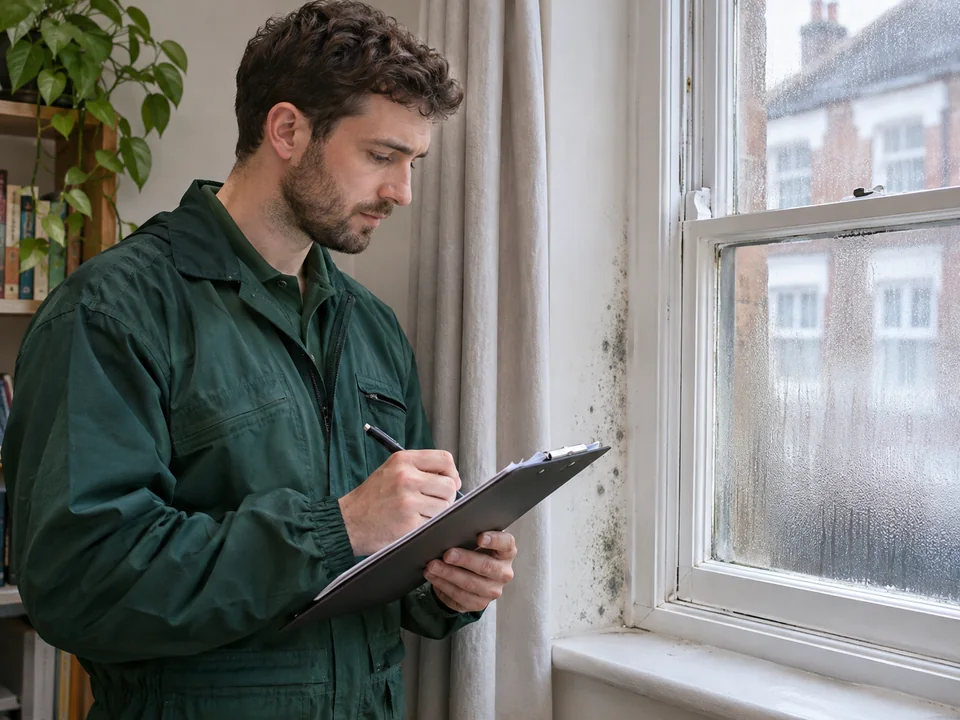
For an agreed assessment, we start with the visible part of the wall or other finish. A fitted wardrobe may hide a continuation of a mark, and the exposed side of a unit can be a different material from the wall behind it. We check where one finish ends, which part is accessible and what can be viewed without dismantling anything. Tell us if you have only seen a narrow affected edge, so we can discuss whether that is all you want assessed.
A wide photograph can show an access problem that a close-up misses. From the doorway, picture the area and the item beside it. A second photo can show a change in the surface, such as an exposed hard strip adjoining absorbent board, without asking you to move a heavy obstruction. We use the information to discuss whether the enquiry can proceed as visible surface work or whether the person responsible for the building needs to consider what is concealed.
If there are marks in rooms with very different finishes, we do not assume the same work applies to every one. Tell us which accessible surface matters most. We can explain what we see during an assessment and why a sound hard finish might be considered separately from damaged plaster, a loose covering or material that needs another decision. We also discuss whether an ongoing water issue has to be investigated before work can be agreed.
In properties where the affected surface sits beside a built-in storage run, an occupier can sometimes describe side, back and top faces separately without shifting anything. Start with the face that is actually visible. If a separate item is raised, tell us whether you are asking about the wall or the item itself, as the two requests may need different conversations. We keep that description with the room details so the person assessing it knows what is being asked.
| Where the mark stops | What we check | Decision before cleaning |
|---|---|---|
| Edge of a fitted wardrobe | Accessible wall and visible finish | Whether only an exposed strip is included |
| Back of a loose shelf | Condition and permission to move it | What preparation can be agreed |
| Joint beside a sealed unit | Whether the visible area ends at the unit | Who should look at any concealed section |
Preparing the accessible work area with the occupier
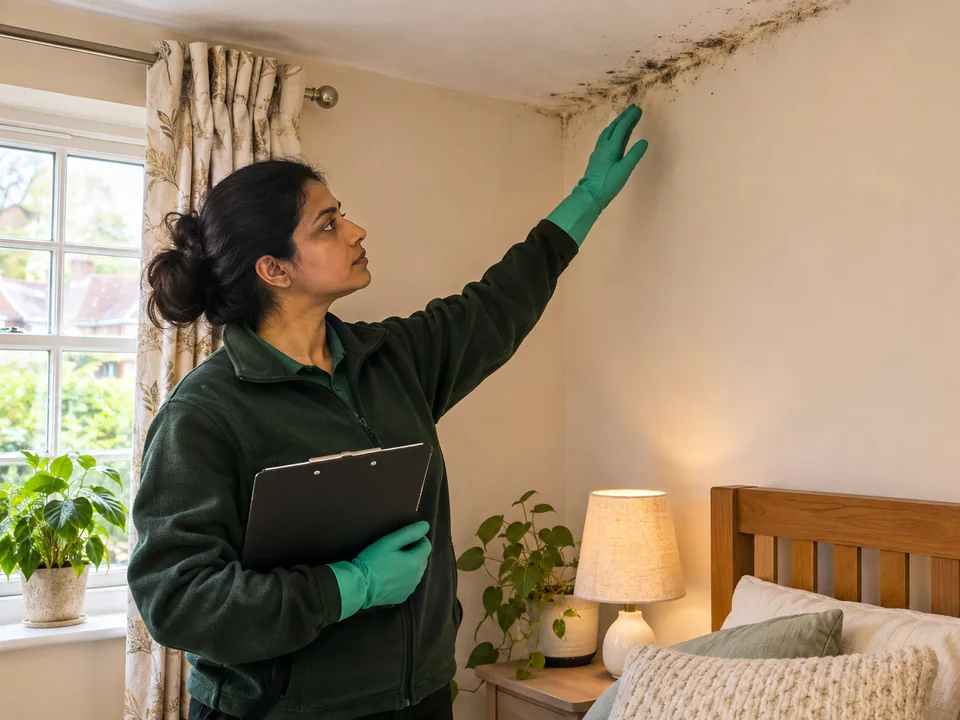
Before working, we agree which surface is included and who can prepare the space around it. In a compact flat, moving a small loose item may make that part accessible, whereas clearing an entire room may be unnecessary. We discuss what can be set aside and where it can go. If the only clear route passes a shared doorway, we talk through how to keep that entrance available. We do not assume that space in a communal corridor belongs to the appointment.
For rooms that remain in use, we agree when the working area can be left clear and when it needs to be available again. A spare room used for storage may be straightforward to schedule differently from a room someone uses throughout the day. Tell us if a cot, a desk or an item of furniture has to stay exactly where it is. We take that into account when confirming what is reachable and what needs to be excluded from the agreed work.
At the point of starting, we confirm the room with the person present and make sure the named area is the one they expect to be cleaned. If the quoted item is a visible hard finish beside the door, a second mark at the opposite end of the room is a separate decision. We explain how to raise it before anything outside the agreed work is undertaken.
- Keep agreed access routes open while the work is arranged.
- Identify furniture that cannot move and rooms that stay in use.
- Confirm which locations the person meeting us can authorise.
How we work on the area agreed for cleaning
We remove visible mould from accessible suitable hard surfaces that are included in the agreed visit. Before starting we confirm the exposed area and evaluate what the finish can reasonably take. If part of a surface has started to separate or crumble, we explain why that section needs a different decision. We keep the work to the suitable exposed finish, rather than extending it into a part of the property that we could not assess.
If an area turns out to be wider than originally visible, we pause to discuss the difference. That can happen when a loose object has already been moved by the occupier or a corner is clearer from another angle. We can agree how to deal with the visible addition if it is practical, or limit the visit to the original area. We do not classify the rest of the room as treated simply because a small exposed section was cleaned.
After dealing with the suitable surface, we look at the area again and explain what has changed. A sound finish can still have discolouration that cannot be put right by surface cleaning alone. Where the remaining appearance is an issue for the owner or a rental handover, we describe the affected location separately. This makes it clear what cleaning covered and what remains a question for the person managing the property.
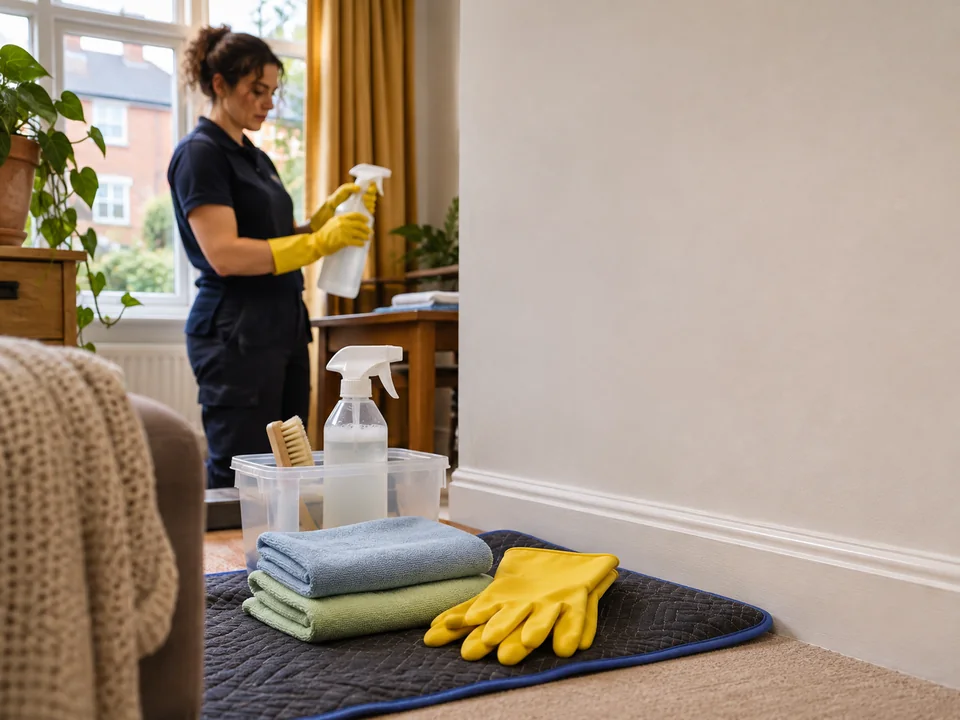
| Stage | What we do | What it establishes |
|---|---|---|
| Before the clean | Review and agree accessible hard surfaces | The locations and limits of the visit |
| During the work | Remove visible mould where the agreed finish is suitable | Which visible area was included |
| After the clean | Look again and discuss what remains | Whether condition or moisture needs separate attention |
Where the request moves from cleaning to building assessment
A repeated damp patch, water still entering a room or an issue concealed behind a fixed lining cannot be explained by cleaning the visible face. We ask what has already been reported and who is handling it. In a flat, the contact may be the landlord, managing agent or other person responsible for the building. Explain if access for that person has already been arranged so we can discuss whether a cleaning enquiry is useful now or after the underlying situation is assessed.
If the marks return after an earlier visit, give us the location, the date you noticed them and what has changed in the meantime. We can use those facts when discussing what would be appropriate to assess again. It is important to distinguish a new visible patch from an area left outside the first visit. At handover we make that boundary clear so that a follow-up starts with the correct room and surface.
A visible surface can be accessible on an ordinary visit even though a concealed part of the same wall is not. If the building manager plans to inspect that concealed part, tell us whether the exposed area needs to be left as it is until they have seen it. We can then discuss the order of work with the person authorised to decide.
- Say who is dealing with a reported moisture issue.
- Give a separate description for any concealed location.
- Keep the previous cleaning and property assessment notes distinct.
Handover and arranging the quote
At the end of an agreed visit, we review the exposed areas with the occupier or the person nominated to receive the update. We describe what was cleaned, identify any limits and explain if an area still requires further attention. If the keys came from a concierge or a property contact, agree the place and time of return at the booking stage. A clear handover helps avoid requiring someone to open the flat again just to establish which room was dealt with.
To discuss a price, give the Colindale address and the number and approximate size of the visible areas. Mention restrictions that change how the room can be reached or used. We can discuss whether a closer assessment is needed before a price can be agreed. Other regular housekeeping tasks can be discussed separately if they are useful. That way the quote identifies the particular surfaces you are asking about and does not turn into a general cleaning arrangement.
| What you tell the office | Why it matters |
|---|---|
| Full address and building entry | We can confirm the access route and who will meet us |
| Approximate extent and finish | We can discuss whether assessment is needed |
| Who receives the handover | We can share which surfaces were cleaned and which need follow-up |
Questions about arranging mould removal
What if my building uses a separate visitor entrance?
Give the visitor entrance and the flat details. Explain whether a concierge must let us through and who opens the flat itself.
Can you work on a visible strip next to a fitted wardrobe?
Describe the exposed strip and the finish. We can discuss that accessible area and whether the part behind the wardrobe needs separate assessment.
How do I include two flats with affected surfaces?
Explain the work requested in each flat and give the access contact for each. The visible extent and materials should be discussed separately.
Should a resident move a large fitted unit before the visit?
Tell us it is fitted and what can be seen around it. We discuss the accessible parts and who would need to assess a concealed section.
What do you discuss if the finish looks different after cleaning?
We review what was done on the agreed hard surface and explain the condition of any marks remaining. Other work can be considered separately.
Can you leave the keys with a different office?
Agree where and when to return the keys when you arrange the visit. Make sure the person meeting us knows about that arrangement too.
Other Cleaning Services in Colindale
Discuss your mould removal enquiry
Mould Removal Prices in Colindale
Tell us which rooms are affected, the approximate size of the visible patch and what surface it is on.
Get a Quote