 Housekeeper
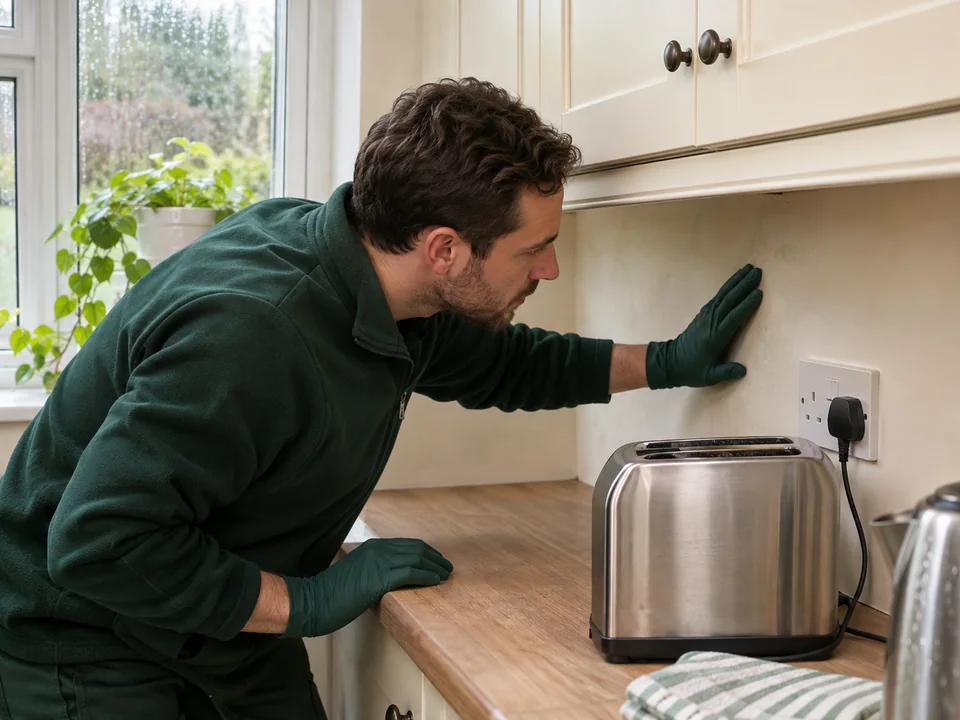
Mould Removal in Covent Garden
We plan Covent Garden mould removal around the room, the finish and the access available. We assess visible marks, agree which suitable hard surfaces we can reach and prepare those positions. We then physically remove visible mould from the agreed surfaces and review the result with you.
My flat entrance is off Bow Street. Which address should I give?
Use the full postcode and the name or number on the residential door.
Can you look at marks by both sinks?
Yes. Identify each room and its affected finish when you enquire.
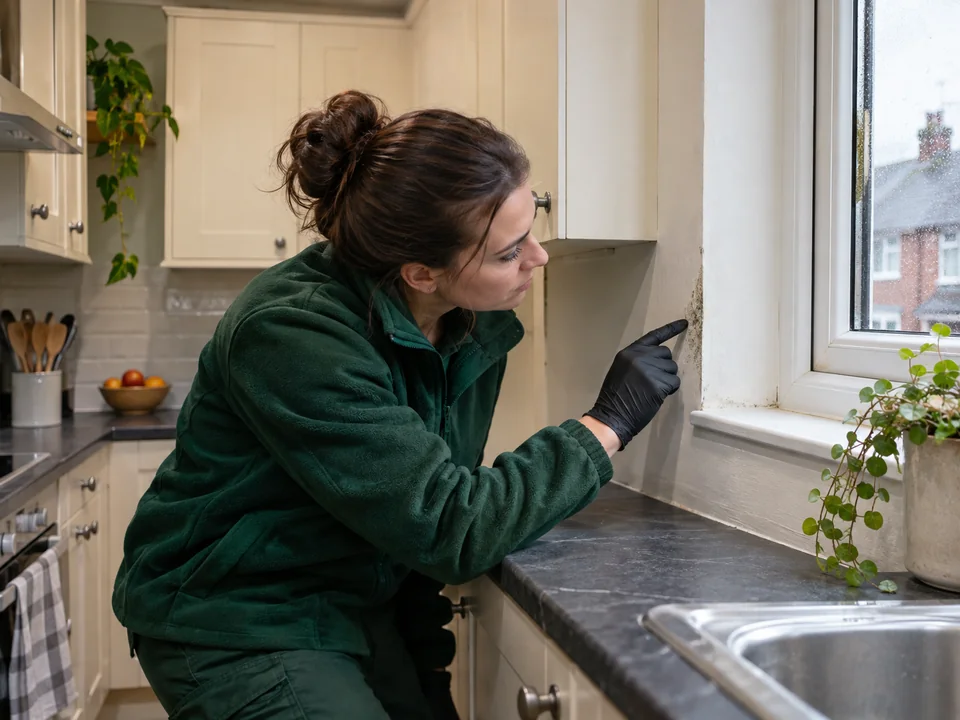
Give us the residential route and the room position
Westminster City Council describes Broad Court as a residential passage off Bow Street and maps nearby streets lined with a mixture of uses. A street name on its own can leave an important detail unresolved when the flat door and the shop beneath it open onto different sides of a building. We ask for the full property address and the actual residential approach, including the doorway name, floor and any instruction for the intercom. If someone meets us at street level, tell us where they will wait and whether they can take us right to the bathroom or kitchen.
When we open an enquiry, we identify the exact position before discussing the visit. A dark area at the back of a tiled sink splashback raises a different access question from a mark near the top of a tall window. Give us the room and the nearest fixed feature, and tell us whether you can see the whole mark from normal floor level. A wide photograph showing that relationship can help. We use the position to plan what needs to be seen and consider whether the working reach is available once we arrive.
If we are dealing with a tenant and an agent, we ask who will open the flat, who has looked at the affected area and who can agree any changes. An entry code may get us to a hallway but resolve neither room access nor approval. We need to be able to reach the relevant surface without assuming that a building caretaker can authorise work inside a home. When different people handle these steps, give each one the same room description so they know which enquiry we are discussing.
- Give the name displayed at the residential entrance.
- Identify the room and a fixed feature close to the mark.
- Name the contact who can approve the cleaning.
| Enquiry detail | How we use it |
|---|---|
| Street approach | Identify where a resident can meet us. |
| Room and level | Find the precise area for assessment. |
| Visible extent | Discuss how much of the finish we can inspect. |
Assess kitchen and bathroom finishes separately
We can look at two nearby areas on a single enquiry while making a separate decision about each. For example, we can examine visible mould on a continuous area of glazed tile and also look at the edge that meets a painted bulkhead. We look for a change in material or condition before agreeing what we can clean. If a section of the finish has lifted, or the underlying surface cannot be seen without taking something apart, we explain which visible positions we can assess and which need a different decision.
Bathroom furnishings often divide a small room into more than one working area. We check a tiled strip behind a basin from the standing position available, then consider separately whether the same finish can be reached alongside the shower screen. An apparently clear photograph of the tile does not show whether the door opens far enough or which fittings occupy the approach. We use the visit to relate the picture to the actual room and agree the section that we can access for surface cleaning.
We also ask what has happened to the area since you saw it. If it was recently wiped and then changed again, tell us which part you noticed first. If work is already booked to investigate a leak near that wall, let us know how that affects access and whether the surface will still be in place. Those details help us discuss the timing of visible cleaning and identify the points to pass to the relevant property contact. They do not establish where moisture originates.
Some kitchen splashbacks end at a trim while others continue into a recess beside a cabinet. When the mark crosses that edge, we ask you to show us the two surfaces from the same position. We look at what is exposed on either side and whether the edge itself looks loose. Agreeing that boundary avoids treating a photograph of one area as an instruction to clean every adjoining finish in the room.
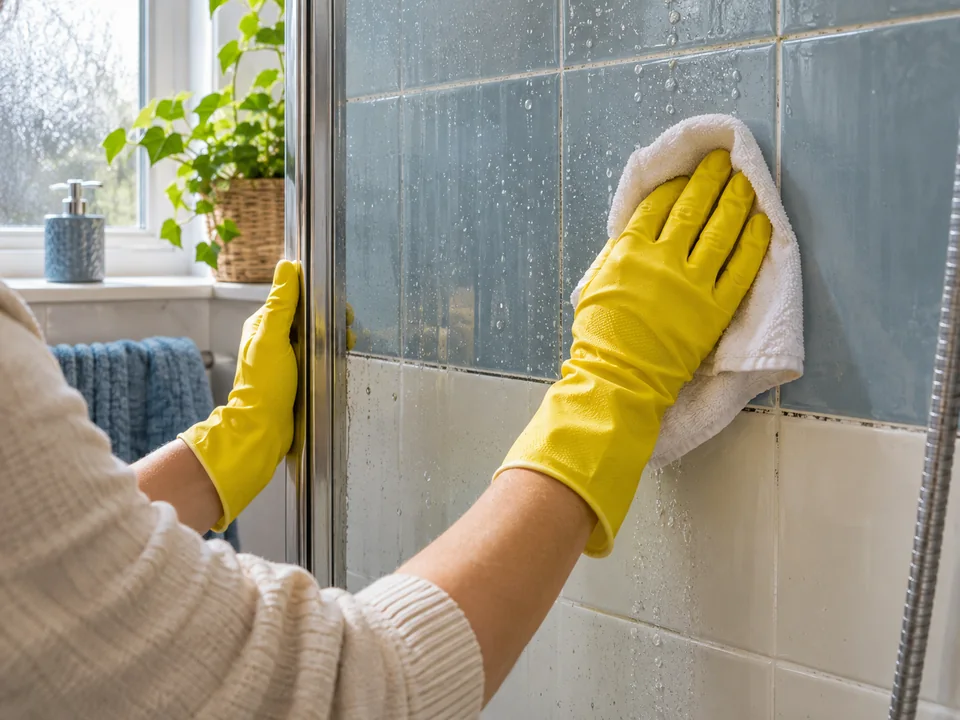
| Visible position | Assessment question |
|---|---|
| Tiled splashback | Which part is clear of appliances and fittings? |
| Bathroom enclosure | What can be reached with the screen open? |
| Upper wall transition | Where does the material or condition change? |
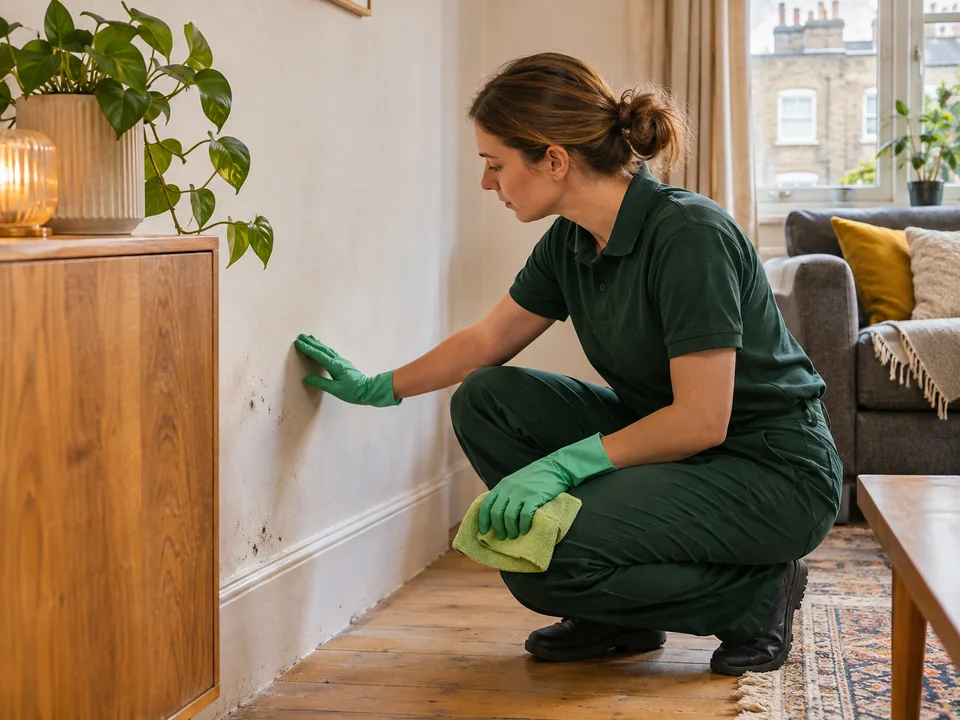
Agree a working position in a compact room
Before cleaning begins, we go through the agreed section with you or the person responsible for the flat. We identify which part of the room we need clear and confirm where ordinary items can wait while we work. We also consider how people will use the route through the property. In a one-bedroom flat with a bathroom opening directly onto the kitchen approach, temporarily keeping the doorway free may require more coordination than clearing the affected surface itself.
When a movable item overlaps the mark, there is a useful distinction between a cup on a shelf and a cabinet that belongs to the property. We ask the person responsible to agree the handling of personal possessions and to identify anything that needs to stay in place. We plan for the visible area that can be reached once that is settled. If a screwed-in fitting still blocks the position, we exclude the hidden area from the agreed cleaning and discuss what the property contact needs to know.
If the work would be taking place while people are using the flat, we ask about conflicting activity before fixing the room order. The kitchen may be available first while someone is getting ready for work in the bathroom. We can discuss the positions that remain clear and confirm the starting point with the person meeting us. This is especially useful if the agreed work is limited to part of each room and someone needs to keep using the route between them.
- Agree where to keep the entrance and approach clear.
- Point out belongings and fitted items that must stay in place.
- Say when the kitchen or bathroom needs to be available.
Remove visible mould from the hard surfaces we agree
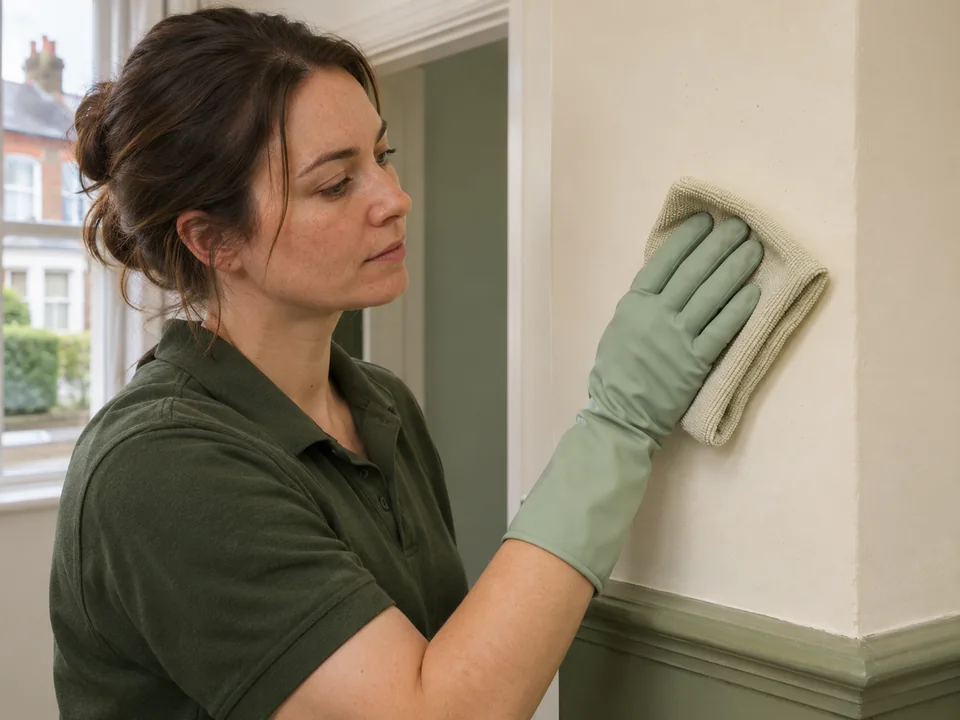
We physically remove visible mould on suitable accessible hard surfaces where we have agreed that work. We follow the limits we identified during assessment, taking account of the actual material and its condition. If the job is the bathroom tiles beside a basin and the kitchen wall has an uncertain finish, we keep the cleaning aligned with the agreed tiles. The name of the room does not make every finish in it suitable for the same work.
While cleaning, we can sometimes see a boundary more clearly than was possible at the outset. The difference might be a narrow strip that changes from tile to a fragile painted edge, or a part of a joint that stays discoloured after the neighbouring hard surface is cleaned. We return to the agreed area in the final check and explain those distinctions in everyday language. You can then describe the remaining position to whoever is responsible for the property.
The same care applies if we reach the end of an accessible surface. A mark may be visible into a narrow space behind a fixed unit without being reachable from the space in front. We describe where we stopped and why. If a resident is arranging a separate clean of the wider flat, they can use that description to distinguish the mould removal work agreed for this visit from the ordinary cleaning tasks still on their list.
| Cleaning stage | What we review |
|---|---|
| Before cleaning | The agreed surface and where it ends. |
| During the work | Changes in finish or reachable area. |
| At the end | The cleaned area and any visible concern remaining. |
Hand the kitchen or bathroom back clearly
We close the visit by identifying each place we worked on and explaining whether anything remains visible or unresolved. If you can join us, we use the familiar reference points given at the start, such as the row above the kitchen socket or the corner next to the bath. For an absent property manager, agree who will hear the result and how the office can reach them. A summary tied to a specific fixture is much easier to follow than a general statement about the room.
A tenant can use that description to keep the surface cleaning separate from any open building issue. Give us the name of the person responsible for dealing with a recurring or expanding mark, particularly if somebody has already asked for a plumbing or building inspection. We report what could be seen and cleaned on the day. If a visible change later returns, knowing the original edge of the affected area helps the resident explain what they saw and where it happened.
If you're preparing to hand back the flat, tell us when access closes and when someone will look at the property. We can discuss a visible mould assessment alongside your other plans as long as the work on each surface is agreed. Confirm the time for us to hand back the keys and tell us whether the same person should see the positions assessed. Use the booking page to start with your full postcode, the room and the most useful fixed point for describing the affected area.
If you need to pass the result to two people, tell us which details each needs. A resident may want to know when the basin can be used again while an agent may need the location of a deteriorated edge. We identify the agreed work and explain where we saw a different condition. This gives each person a concrete starting point for the question they have to deal with.
- Confirm who will receive the handover.
- Use the same fixture names when describing any remaining marks.
- Tell us when the property needs to be handed back.
Questions about arranging mould removal
The entrance on my booking is for a commercial unit. What should I do?
Give us the full residential address and describe the door the person meeting us will use.
Can you see the patch under a fixed bath panel?
We assess the surfaces visible from the available opening. We keep surfaces concealed behind fixed panels outside the agreed cleaning.
Will you treat a fragile area next to solid tiles?
We assess the two finishes separately and explain which part can be agreed for surface cleaning.
How should I photograph a mark above kitchen fittings?
Take a wider image from a safe standing position so we can identify the affected area in relation to the fittings.
Can my tenant tell you the bathroom is available first?
Yes. Please identify the tenant and confirm who is authorised to approve the work and receive the result.
Can I enquire when the flat is being emptied?
Yes. Give us the handover time and tell us which rooms are likely to be clear when we arrive.
Other Cleaning Services in Covent Garden
Discuss your mould removal enquiry
Mould Removal Prices in Covent Garden
Tell us which rooms are affected, the approximate size of the visible patch and what surface it is on.
Get a Quote