 Housekeeper
Assessment for carpets with wear or marks
Carpet Cleaning in Holborn
Start a Holborn enquiry with the rooms you want assessed and the practical route to reach them. A shared entrance can lead to a private fitted hall, while the room itself may have limited clear space around the furniture. Tell us the kind of floor you have, what is visible and which part of the visit matters to you.
Can I request a WC1 or WC2 carpet quote?
Yes. Give the full postcode, permitted building entrance and dimensions of the accessible fitted areas.
Do I count separate landings as rooms?
List each landing, short stair and turn separately so measurements and equipment access can be discussed.
Distinguish the Kingsway landmark from the door the technician can use
Transport for London lists Holborn Underground station on Kingsway. If that is useful when explaining a nearby address, continue from the station to the exact residential entrance. Give the full property postcode and the number or wording on the door a visitor will see. If a mixed-use building has a separate door for flats, state the street it opens onto. Inside the first door, tell us which floor and how to identify the private entrance if the post uses only the main building name.
Let us know the point where a technician can unload and the route after it. Count any steps to the shared lobby and mention the lift or entrance the building permits for equipment. If a gate must be opened by another person, identify who they are and how they will meet the technician. A tight corner between two doors can be harder to pass than a long clear corridor. Give both details where needed. If access has to be timed, say so when arranging the quote.
- Give the full address, private door and visible bell label.
- Name the approved route past any shared entrance.
- Note the narrowest turn and the lift's served level.
Identify the fitted carpet in the actual layout of the flat
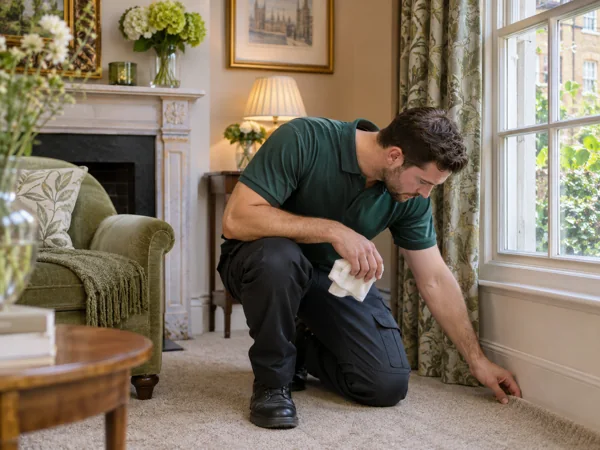
Measure the open floor you want assessed, including narrow strips beside fixed shelves and any recess near a door that opens towards the room. A fitted room might be wider around its entrance or use another carpet in the bay. Mark the spot where each surface begins and ends. A room count is a useful starting point, but adding the dimensions and shape of accessible carpet helps the office discuss work that reflects what you are asking about.
Where a fitted space is connected to a landing or lower room, say which pieces you want considered. In a home still occupied during the visit, mention which routes between rooms have to stay available. If a desk, bed or cabinet stays put, show the space around it, including any side that can be reached from the doorway. Keep a simple description of the carpet as it will look after planned furniture moves, and send an updated photograph if the original does not show that layout.
If the caretaker has given you a signed collection slip, keep it handy and nominate someone who can answer the phone while the rugs and furniture are being checked. Ask where to leave a freestanding floor sign, should one be wanted, and agree where the equipment can wait if the lift is occupied by another delivery. A written note about the small step from the lobby to the corridor also helps when the entrance looks flush from outside.
Start with an available care record and inspect visible edges
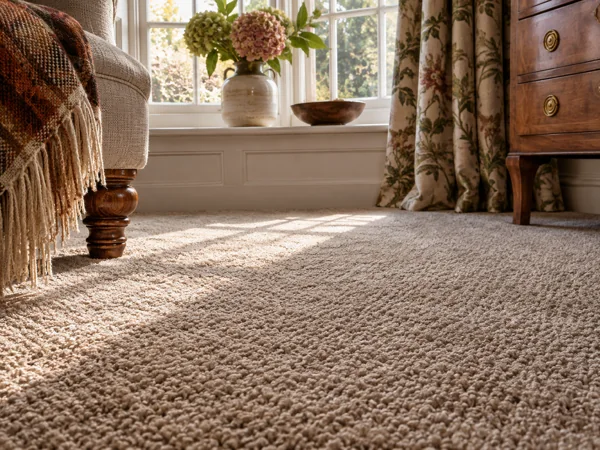
If you have a maker's record, installation note or sample, tie it to the particular carpet. A fitted covering in one room may look like the hallway but have been laid differently. Tell the technician about a joint, patched section or a threshold with a different height, and show it in a photograph. Do not detach the edge in search of a label. Existing visible areas and any documentation can help the technician assess the fibre and condition of the floor itself.
An inspection can cover the exposed pile, colour stability, accessible backing and the current fitting. Tell us if a section shifts when walked on, or if work was previously done to a seam. A damp patch or unresolved water entry should be discussed separately ahead of ordinary treatment. If only part of the floor can be identified, explain which material information is certain. The technician can then describe the areas that can reasonably be considered and the places needing more investigation.
- Link each record or photograph to the correct room.
- Show seams and raised edges as fitted.
- Give earlier repair and moisture history before inspection.
Holborn room details before the quote
| Section | Measure the available area | Mention |
|---|---|---|
| Private hall | Open dimensions around door | Whether it is the only resident route |
| Two-level fitted room | Each level and any connecting tread | Raised trim or a seam |
| Fitted area beside cabinets | Open strip and reachable edges | Pieces that stay |
Study the fitted construction when discussing cleaning methods
Water-based extraction can be considered for a suitable fitted carpet. Equipment manages solution application and recovery, with further drying needed afterwards. The fibre, backing, joins and existing condition influence whether the technique is appropriate. If a care restriction limits moisture or previous work left an uncertain edge, ask about lower-moisture or specialist assessment. A clean appearance cannot establish how a method will affect a carpet or whether a repaired section can take the same treatment.
Tell us which rooms matter most and what access you can provide around them. If the technician needs more information about an old runner, it may still be possible to discuss another sound fitted carpet independently. Ask where the proposed work can stop and what preparation is required to reach it. A different method or omission may change room order or the best way to keep a path available afterwards. Discuss the intended work before agreeing the quote, with the current condition and every area of uncertainty acknowledged.
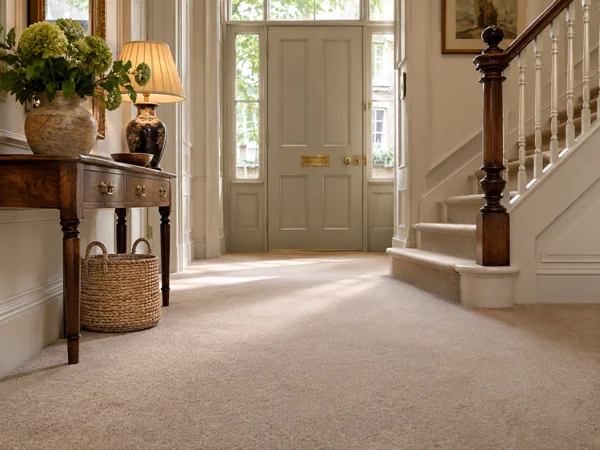
Give context for darker pathways and old treatment marks
A darker path turning in from a doorway may combine soil and a change from foot traffic. A spot in a quieter section can have a different cause. Photograph both where they sit in the property and show a closer view if available. Where shade changes depending on your position, tell the technician that. Cleaning can address some soil without changing worn fibres, prior chemical change or fading. Show where an object used to cover the carpet if that helps explain a clear outline.
For a known spill, report the substance, approximate timing and anything used on it already. Mention an odour or return of the mark after drying if it happened. A liquid may enter a deeper layer than is obvious from above. Avoid adding another cleaner just before the appointment so the technician can inspect the existing condition. If the carpet is persistently damp, explain whether another source such as a leak is suspected. It deserves a separate discussion from ordinary spot work.
- Give the date and sequence of previous attempts when known.
- Use wider photos to show room and traffic context.
- Report smell or dampness independently from colour.
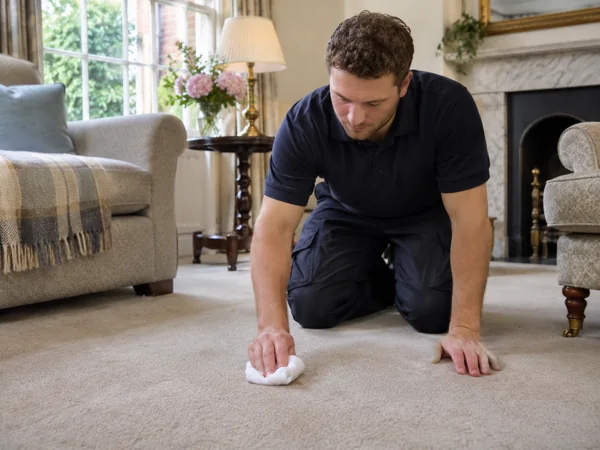
Arrange usable space beside furniture and on interior stairs
State which pieces of furniture remain and what parts are accessible beneath or around them. A fixed cabinet might cover the carpet altogether, while a light piece can be moved before the visit. Think about where it will go without blocking another area or leaving the only exit obstructed. Tell the technician about cables, damaged edging or a floor fitting concealed by anything you plan to move. A photo after the room is partly cleared can show what has changed since the initial enquiry.
If private stairs are included, count only the fitted treads for treatment and provide separate measurements of any landings. Explain turns, rods or changes of material and photograph visible fixings rather than lifting them. A stair used to reach the home also belongs in the route details, even if it is bare or a common part. Specify where the private treatment should stop. For a shared carpet you intend to include, confirm the organiser has permission to arrange the work.
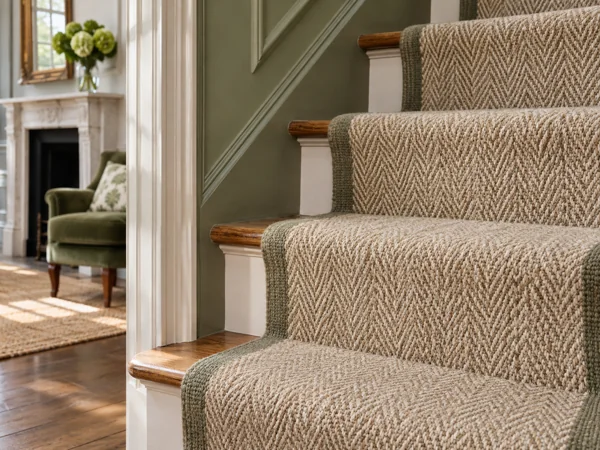
Inspection cues for several carpet surfaces
| What you noticed | Give the technician | What may affect treatment |
|---|---|---|
| Seam on half landing | Photo showing nearby edges | Movement and safe reach |
| Track from private doorway | Opposite views in ordinary light | Soil and pile wear |
| Old residue after spot product | Dates and earlier steps | Earlier colour or fibre change |
Use a route that keeps recently treated areas clear
Make a plan for access after the appointment. A fitted hall may connect bedroom, kitchen and front door, so people may need to know which way to go while drying continues. Tell the technician if there is a pet, work meeting or family member who needs one of those routes. Mention windows that must stay closed and doors that cannot be left open. Ask how the rooms can be aired with those constraints and which area is sensible to prioritise.
Drying varies with the material, process, ventilation and room conditions. Tell us about a timetable for a delivery, check-out or opening the rooms for use again. Do not assume the end of treatment is also the point at which furniture or normal traffic returns. Ask the technician for aftercare instructions and pass them to any later occupant or keyholder. If a room is scheduled to stay occupied during the visit, establish how its use will change with the carpeted route after cleaning.
Ask for the quote against an itemised Holborn work list
Use the postcode form to prepare an enquiry with the actual address, carpeted rooms and fitted stairs. Supply room sizes and the accessible area around fixed pieces. Include a note about any older repairs, material concerns and separate marks that matter. For a loose rug, mattress or upholstered item, give distinct measurements and care details available. A combined enquiry can include these pieces without treating them as part of the fitted carpet.
Confirm the work, price, address and availability directly with the office. Share the same room list and entrance plan with a keyholder if another person will meet the technician. They should know which carpeted areas you expect to include, where furniture stays and who can approve changes. If the access route or floor condition changes from the original enquiry, update the office before arrival. This can matter if a manager changes the lift policy or if a common entrance closes at a different time from when someone usually leaves the building.

WC1 and WC2 route planning
| Requirement | Provide | What to agree |
|---|---|---|
| Separate door off street | Visible sign and actual approach | Approved equipment access |
| Shared lift or turn | Floor, steps and permission | How to reach private room |
| Carpet route needed later | Ventilation and next use | Aftercare plan |
Get a carpet cleaning quote in Holborn
Request a quote with the carpeted rooms, stairs and any loose items listed separately.
Get a QuoteOther Cleaning Services in Holborn
Local references · Transport for London, Holborn Underground station
Holborn carpet cleaning questions
Can I ask about a fitted lobby that is the only entry to my Holborn flat?
Yes, give dimensions and tell us when people need to use it. We can discuss the work order and access while the carpet dries.
Should I give the house name and a different bell number?
Provide both along with the full postcode and say which one a visitor actually needs to use.
What if a patch lies between the fitted room and the landing?
Show both sides of the boundary and say where the carpet changes. The technician can assess that edge and the nearby material separately.
Can a worn turn in the carpet return to the shade under furniture?
An inspection can distinguish some removable soil from physical wear. It is reasonable to expect some contrast to remain if the fibre has changed.
Do I add a bare building stair to the count for carpet cleaning?
Put it in the access notes and count only the fitted treads you want considered as part of the work.
Can the office confirm a time when the cleaned floor will be usable?
Discuss your deadline at enquiry stage, then follow the technician's advice for the method, fibre and conditions at the property.