 Housekeeper
Care for built-up cooking residue
Oven Cleaning in Bow
If your oven has a build-up of grease where a tray sits or around the door, tell us the location and how it got there. A Bow oven cleaning quote starts with the appliance or cavity, the condition of the visible parts and a full postcode for the home.
Can I request a quote from E3?
Yes. Include the whole postcode and the correct residential entrance.
Can you discuss just the grill area?
Send the model, affected cavity and its tray or insert so we can discuss it separately.
Describe the first visible sign of build-up
Look from the opening of the cool oven and decide which part needs attention first. A stripe down a side, thick spill at the base or drops under the grill each give different clues. Note the usual shelf height and say which tray sits above or below the mark. If a spill crossed a join around the lining, photograph enough of the surrounding area to show the change in finish. Tell us where the deposit stops and mention any separate mark that was already visible before the spill.
Include the approximate age of the deposit and whether the cooker has heated since it formed. A dark build-up on an oven floor can be old cooking residue, a discoloured finish or a combination. The technician can assess the accessible surfaces in place and discuss what can be treated and what may remain visible. If one area matters to you more than the whole cavity, mark it in the photo and show the technician at the start. Let the technician examine unfamiliar surfaces without scraping or lifting them first.
- Give the location, age and likely source of the stain.
- Show a nearby shelf or fitting as a reference.
- Report any older wear beside the deposit.
Keep earlier cleaning attempts in the description
Tell us about any product the household has already used and the surfaces it reached. Give the name and approximate date, and mention if you cooked afterwards. For a built-in programme, add the model and what setting was used. A partial clean can change the look of the finish at the point where two surfaces meet. If another household member carried out the clean, ask what they remember and distinguish what happened from what you can see today. Keep a photograph of the label if you still have it.
A care guide can also explain whether the oven walls contain a catalytic lining or another special surface. Share relevant pages alongside the affected cavity or part. If a shelf or tray has a different finish from the interior, give the separate instructions when available. Avoid adding another product to test a mark before the assessment. A previously treated area can require extra checking; the technician can discuss that history alongside the condition of the surface and nearby fittings. Mention if the original mark changed immediately after an automatic cycle.
Name the appliance parts as you see them in use
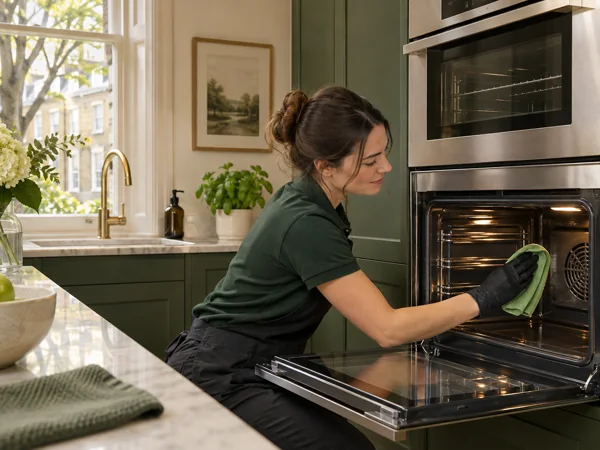
For a built-in oven, take a front picture that includes controls, glass and handles. A grill can be part of the main cavity or belong to a separate appliance above it. Identify each one by position and function, then list the compartments you intend to discuss. Use the exact model if there is a label you can read easily or if the maker’s paperwork is available. Leave the oven fitted in place. If a lower drawer is used to store trays, mark it as storage so it is clearly separate from the request.
Give a concise list of each unusual part, such as a specialist liner or an accessory that only fits one cavity. Ask about the main oven separately if another compartment stays outside the work. If the oven sits in a range with a hob and separate grill, keep those parts distinguishable. The technician can identify what belongs to each cavity and decide what can be assessed safely. A clearly labelled request also helps the person providing access if they are less familiar with the cooker than you.
- Show the controls and doors together.
- Name which oven or grill contains the deposit.
- Give relevant care information for each compartment.
Locate the heaviest deposit
| Area | Helpful detail | What to assess |
|---|---|---|
| Below a roasting tray | Age, type and position of spill | Accessible residue and surface |
| Near grill | Tray height and photos | Reachable areas and fittings |
| On side panel | Finish and product history | Suitable approach to the material |
Set aside original shelves and optional accessories
Count wire shelves, rails and any grill pan you want assessed. Mention if a shelf moves on an extending mechanism or has been hard to withdraw. Tell us about a tray with a removable insert and whether you want both parts considered. Leave anything fitted or sticking for the technician to check. Suitable removable pieces may be soaked in a dip tank after assessment. Some accessories have a coating or construction that changes what can be done. Provide the maker’s care guidance for unusual pieces if you have it.
Empty personal bakeware, food and loose foil from the cold oven. Keep your own trays or dishes apart from those that were supplied with it. If a removable piece is already in a cupboard, identify its normal position and put it somewhere it can be recognised. Give the technician a clear counter next to the oven and the room to open the door. Ask for the agreed parts to appear on the quote so you can check the list before work and know which pieces to ask about at the handover.
Locate a smear on the glass with the oven cool
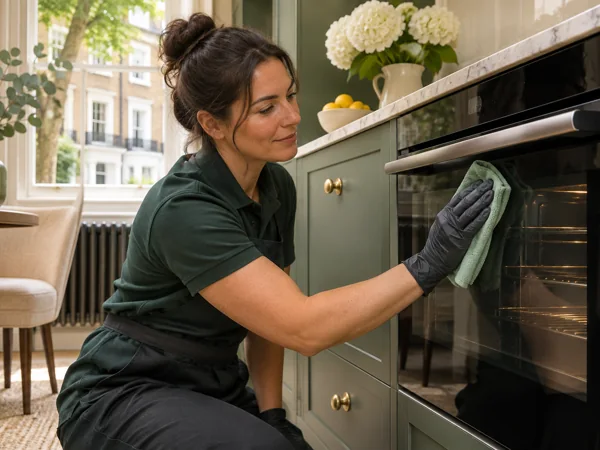
Some deposits show up only when you move away from the cooker and see the glass in reflected light. Look from the closed position and the open position after the oven is cool. Tell us which side you believe the mark sits on and what makes it visible. It could be on a reachable face or visible between panes. The technician can assess the approach once the door design and condition are known. Mention if the frame is damaged or has had earlier work.
Leave the fittings where they are when looking for a mark. If you can send a photograph from the right direction, add a wider picture showing the correct door. In a double oven, the photo can otherwise look like it shows both cavities. Ask which faces can be reached and which ones are part of the agreement. When you are mainly concerned with an isolated streak at the border, knowing the actual position helps distinguish reachable residue from a permanent change in the surface itself.
- Give the light angle and door position.
- Report any marks or looseness around its edges.
- Discuss each face before agreeing additional glass work.
Recognise removable parts by use
| Piece | What to give | Decision |
|---|---|---|
| Rack | How many and which cavity | Parts to include |
| Runner | Movement and finish | Safe removal |
| Grill insert | Pair with its matching tray | Which pieces need treatment |
Describe the journey to your Bow kitchen from the street
Transport for London lists Bow Road Underground Station in E3. If the station helps explain the vicinity, include it with the full property postcode and an arrival note for your own building. State which street the visitor entrance faces. A postal address can refer to a block with more than one side or a row of flats with separate bells. Give the exact name or number on the entrance and explain where to wait if a resident has to admit the technician.
Check with the building contact about the equipment route, including any authorised unloading point and the lift available to visitors. If there is a delay between reaching a resident and waiting for reception, give a practical contact who can do both. Describe any later steps or turns to find the correct flat and the route into the kitchen. Where the oven is on a lower floor, say if a separate door leads there directly or if someone will have to go through the main entrance first.
Work on the surrounding grease only as agreed
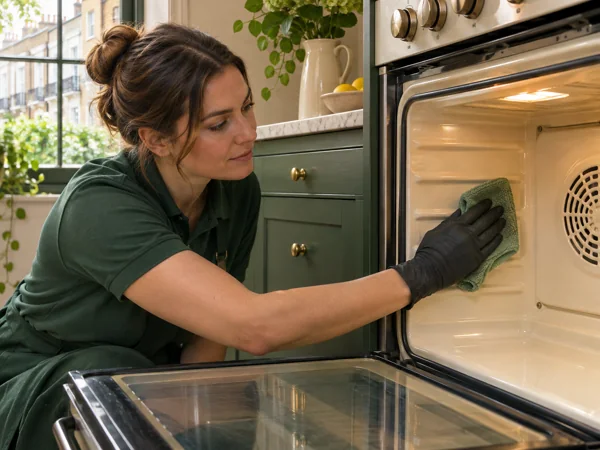
A cooktop and an oven can share a frame while their finishes require attention separately. If you want the hob included, tell us the surface type and which pan supports, controls or zones need consideration. If grease has reached a splashback or separate surround, give the material and put it on the request independently. The technician can discuss reachable surfaces and the correct approach. Send a wider picture to show which areas overlap and how much space needs to be clear once the oven door opens.
For an extractor, give the approximate height and location of the filter. Identify its type if possible. A visible cover and a removable metal or disposable filter need separate checks. If the hood is high or mounted in an island, warn us before the appointment rather than assuming it can be reached from the same part of the kitchen. Check the options appear on the quote before adding work beyond the oven. Agree who will keep each area free while the visit is under way.
- Describe the hob type and the grease around it.
- State what you know about the extractor filter.
- Confirm which optional surfaces are listed.
Give the next cook the right advice
Start the enquiry with your full postcode and collect oven photos, the component list and confirmed access route. Let the cooker cool fully before arrival, clear a counter and keep children and pets outside the area. If a flatmate or building contact can open the door but cannot choose the work, give the technician a contact who can confirm decisions after inspection. Mention any restricted kitchen passage and discuss how occupants can reach another room while the oven is open. Supply agreed facilities if they are needed.
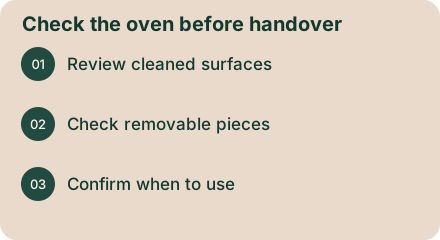
Ask which parts were cleaned and confirm when you can use the oven again. Identify which cavity takes the cleaned shelves or grill tray and pass the instructions to the person preparing the next meal. If a mark remains visible because of finish change or access, note its exact location with the model and cavity. An accurate note is useful if you later want another part of the cooker assessed or need to tell a landlord or resident which work was completed during the visit.
Give an arrival and handover note
| Stage | What to confirm | Who needs the information |
|---|---|---|
| Street | Residential door and unloading | Person meeting the technician |
| Block | Steps or lift to use | Building contact and visitor |
| Kitchen | When the oven can be used again | Next person cooking |
Get an oven cleaning quote in Bow
Request a quote with the oven type, number of cavities and any extra appliances.
Get a QuoteOther Cleaning Services in Bow
Local references · Transport for London, Bow Road Underground Station
Bow oven cleaning questions
What if the deposit sits partly under a fixed shelf rail?
Describe where it reaches and leave the part in position for assessment.
Should I show the colour left by an earlier oven spray?
Yes. Give the product if known and when and where you used it.
What if I cannot tell which glass face shows a streak?
Tell us which viewpoint shows it and mention any damaged or loose edge. The technician can assess access.
Does the cooker model matter if we want only the grill pan?
Yes, if available. Give the cooker and cavity details and describe the pan and insert.
Can the technician meet reception for building access?
Confirm the building’s rules and tell us who can admit visitors and which lift or door to use.
Can a separate splashback be considered with the oven?
Ask about it separately and give its finish and position. Agree any extra work before the appointment.