 Housekeeper
Mould Removal in Camberwell
If you have spotted mould where two parts of a Camberwell room meet, send us the location and tell us what the surfaces are made from if you know. We check the finishes before confirming where we can work. We then physically remove visible mould from the suitable accessible hard faces agreed with you.
Do you take enquiries near Camberwell Green?
Yes. Give the full SE5 postcode and the residential entrance.
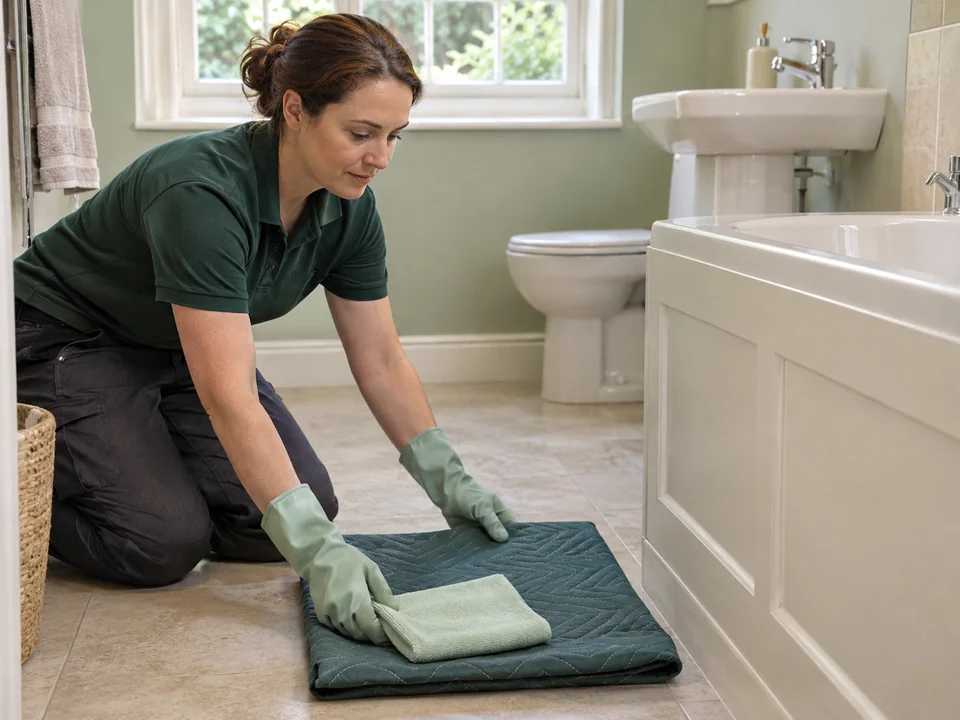
Can you check the hard boxing beside a bath?
Tell us whether it is fixed and which face shows the marking.
Inspect the visible growth across the turn in the surface
A patch of visible mould may begin on a flat surface and continue around the corner of a boxed-in pipe, a bath panel or a ledge. Send a wide picture showing the full shape and, if convenient, another view from the direction in which the mark continues. Tell us which part is hardest to see. A straight-on photograph might make the wall and adjoining panel look continuous. Checking both faces lets us assess the finish and practical reach before agreeing how far we can work along the patch.
Southwark Council includes Camberwell Green among its conservation areas and publishes a dedicated appraisal for it. If you use one of those roads to locate your home, give us the complete postal address and the entrance instructions as well. A converted house might have a common entrance and another door at a half-landing. A newer home might be reached by an access route behind a main road. Identifying the actual entrance and floor helps us discuss an assessment of the surface you have reported.
We check the outer face of the casing and the adjoining return before deciding what can be reached. A visible line along a corner may extend onto a second material or into the gap behind a fixed panel. We inspect the exposed edge without moving the casing and consider the condition of both accessible faces. If a compatible hard surface can be treated despite the adjoining section being unsuitable, we agree exactly where to stop. At handover we show the result from the working side and identify any concealed or fragile area for a separate decision.
Let us know how you recognised which part is affected. A reflection in a bath screen or sheen from a glazed panel can make a patch appear to extend farther than it does. Take a straightforward view showing the nearest joint and floor if you have enough space. If another resident will admit us, tell them which angle to use so they can point to the face that the original photograph shows.
- Use a fitting or seam to mark the location.
- Show the face on each side of the corner.
- Tell us if the appearance has changed since the original photo.
| Location | Helpful description |
|---|---|
| Boxing beside the bath | Whether the mark reaches a second face |
| Hard panel touching the floor | Nearest point where the materials change |
| Recess beneath a ledge | View from the normal approach |
Establish the working position on each side of the corner
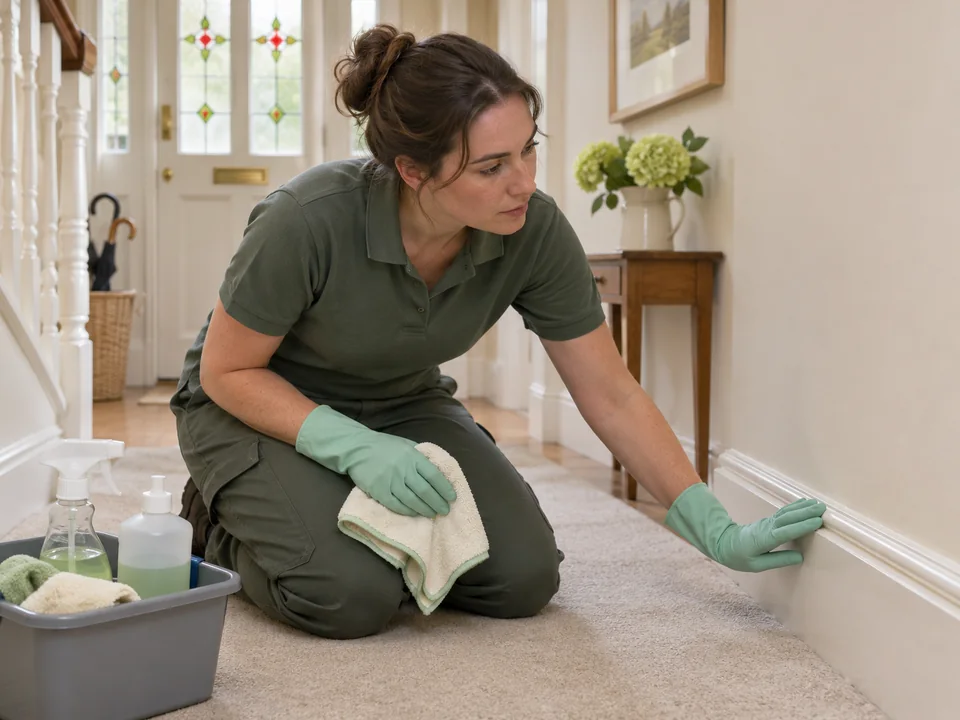
An inward-opening door can leave one side of a corner in normal reach while the other is visible only when the door moves. We inspect both exposed faces from positions available in ordinary use, keeping the fittings in place. Where the hard material is suitable, we prepare the area that can be approached and remove visible mould from the agreed face. If a narrow return cannot be treated without disturbing another fitting, we note it before work. During the review we use the turn in the surface to show precisely which side was cleaned.
We agree the working area in the room before preparing the surface. In a utility or bathroom still in use, access around a casing can change when the doorway or adjacent position must remain available. We organise work around the exposed hard areas that can be reached and distinguish that from any section behind a fitted item. A mark that continues around a corner may require separate assessment on the other face. We identify the treatment boundary and review the finished area with the occupant using the same casing, turn or return as a reference.
If a fixture is on a different level from the door, mention the change when arranging the visit. Let us know whether the affected panel can be approached from the standing floor or whether someone usually sees it from farther away. A second view around the corner can help us discuss the available reach. If a fixed item hides the middle of a face, it may limit the area we can agree even when both ends are visible. We can explain that boundary after inspecting the room.
Sometimes a property manager holds a key to the dwelling, while a resident controls the room itself. Please agree the appointment with the person whose items are in the working area and tell us who can decide which exposed surfaces to include. We will check the exact position with them before work.
Let us know if another visitor is already booked to look at the room that day. Give each appointment its own clear period so we can see the actual arrangement before the working area changes.
- Explain the normal door position and standing area.
- Move loose items only where they can be cleared safely.
- Let us know if the room must be available at a set time.
| Working detail | What we discuss |
|---|---|
| Inward-opening door | How to approach the first and second face |
| Fixed fitting in front of the patch | Where the available reach ends |
| One bathroom in use | Timing that gives us a clear inspection and working period |
Clean the hard surface up to the agreed boundary
We inspect the accessible finishes in person. A hard panel may be sound in front but loose or rough around the point where it turns behind a fixture. We look at those places separately. A bath may meet tile and a softer joint, for example. We can assess the exposed hard side on its own and explain where it cannot be worked on in the same way as the surrounding finish. Show us existing damage or a recent alteration before we agree the relevant faces.
Once we have agreed a suitable place to work, we prepare the immediate area and physically remove visible mould from the accessible exposed hard surfaces. Where a mark crosses a changed finish, we work only to the boundary confirmed in the assessment. If cleaning brings a loose edge into view or access changes, we pause and discuss the remaining area with you. We can explain whether one of the faces is still suitable while another needs its own attention. We keep the visit focused on the surface work we have agreed.
If a long casing meets a short vertical return, ask us to show you which one we are assessing before we begin. Sometimes the small return is an attachment to the main finish and sometimes it is part of the same installation. Its condition can still differ from the broad face. We can include an exposed adjoining surface only after checking the available reach and the condition of that face. This is useful when two small patches lie close together at what looks like a single seam.
The person who gave us access may be able to point out earlier work on the room, including a panel that has been replaced rather than repaired. Tell us where that change happened and we can use the known information when checking the finish. We base the actual cleaning decision on the exposed condition we can see.
- Agree names for both faces before we begin.
- Identify a damaged edge that may affect the work.
- Confirm who can discuss any change during the visit.
Use a clear reference at the final review
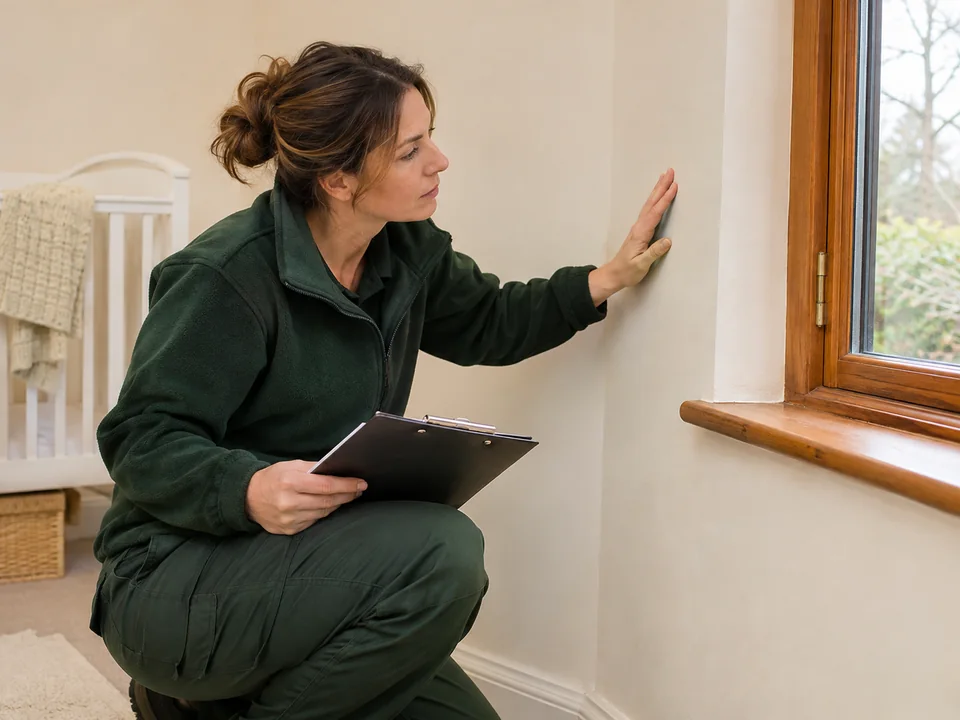
When the work is complete, we review the exact faces with you. We point out where visible mould was addressed and explain any marks or damaged finish that remain. If we could clean an exposed section but a fixed part hid another area, we describe the position from a fitting you can both see. A useful handover identifies both the main face and the point where we stopped. It prevents a later photo of a neighbouring surface from being mistaken for a record of the part already cleaned.
Check how the room should return to its usual arrangement, including which surfaces another person still needs to see. If you later notice fresh moisture or further marking, give the date and location to the person responsible for the property. Show which side of the corner it appears on and where it meets the previous area. A wider image can help them see whether it lies next to the fitting, behind it or on an adjoining face. We can consider a new enquiry if the surface changes or more of it becomes accessible.
Two nearly identical bathroom panels can be confusing in a written report. Use the position relative to the door or bath when describing the one we worked on. If another person comes to assess the condition later, tell them which side can be seen without altering any fitting.
When we work at a turn in the surface, the review may need two viewpoints. We can start by showing the part visible from the middle of the room and then point out the return on the other side. Compare the result with any photographs you made when enquiring. If a new issue appears later, that same pair of views can help identify whether the observation concerns the section we cleaned or the neighbouring return. Keep the door and fixtures in their normal positions when looking again so the view continues to represent ordinary access.
Ask us to show the affected face again if changes in the normal lighting make a small return hard to distinguish from the surface beside it.
| Aftercare reference | What it tells the next person |
|---|---|
| Part of the hard face worked on | Exact agreed area between fixed points |
| Remaining mark by a join | Position and any condition limit |
| Fresh change on adjoining face | Date and which side of the corner |
Questions about arranging mould removal
Can you look at two faces which meet around a pipe cover?
Yes. Show the exposed sides and tell us whether the cover is fixed. We check each hard face before agreeing work.
Should I open a service panel before you arrive?
Leave service fittings in their usual position and show us the marking you can see on the exposed hard areas.
What if the door makes the side panel hard to reach?
Tell us how it normally opens. At the visit we look at what can be reached in the ordinary position.
Can a separate patch be shown in another room on the same floor?
List both when enquiring and explain which should be seen first. We assess each face and access individually.
Does a close photo tell you whether a face is cleanable?
It helps with the location and layout. We confirm the finish and its condition in person.
Can you show what you did to someone who was not there at the start?
Yes. Tell us who will be present for the review and we can use the same room and fitting references.
Other Cleaning Services in Camberwell
Our mould removal service and assessment, Discuss a separate one-off clean
Discuss your mould removal enquiry
Mould Removal Prices in Camberwell
Tell us which rooms are affected, the approximate size of the visible patch and what surface it is on.
Get a Quote