 Housekeeper
Mould Removal in Walworth
To arrange mould removal in Walworth, we start by identifying the exposed surface and the way into your home. Where a room is reached above a shopfront or through a shared entrance, we agree who can provide access and what can be assessed from inside the dwelling.
Which address details help near Walworth Road?
Give the full SE17 postcode, unit or dwelling number and the door leading to the home.
Can you discuss marks on a low wall beside the entrance?
Tell us the visible material and how far the mark goes before it is concealed.
Check the affected face at the doorway and floor edge
At floor level, we inspect the hard face and the join where it meets the covering or doorway. A mark can be visible in the room and continue past a door stop, into a covered strip or onto a softer finish. We check the condition and reachable length on each side before agreeing which hard faces can be cleaned. After preparing the accessible position we remove visible mould from those agreed sections. At review we show where the work reached, using the nearest fixed edge to describe any visible continuation beyond it.
Where similar marks sit on either side of a doorway, we check each face separately. One room may have a suitable hard surface beside the frame while the other has a finish in poorer condition or less room to work. We prepare for the agreed sections and clean each suitable face from the side that gives better reach. At handover we use the room names with the doorway position to identify what was done. That avoids confusing two marks that look as though they sit in the same place.
We ask for the approximate visible area and how it has changed since you first noticed it. If a previous room arrangement differs from what is available now, mention that before agreeing a date. For example, a unit may have been refitted or a surface may have been redecorated. We use current access details alongside any earlier observations.
If there is a change at floor level, name the side of the door from which it is visible and explain how the surface appears beside the floor covering. A threshold, a skirting and the lower wall can each meet at the same place. We ask what the wide picture shows because the visible face may be reachable from one room and hidden from another. The introductory description should identify that direction of approach as well as the surface name.
- Name each room and its exposed finish.
- Identify the area from a doorway or other fixed feature.
- Explain any changes since earlier photographs or reports.
Give the doorway and floor for an SE17 appointment
Southwark Council lists the Southwark Heritage Centre and Walworth Library on Walworth Road in SE17. If the property is near there, give the full residential address and doorway rather than relying on a landmark or ground-floor frontage. Tell us if residents enter from a separate street or passage, and describe the route to the affected room. Where somebody needs to meet us before entry, give their role. Provide the dwelling number and floor even if the affected position is visible once inside. That gives us an address and room route rather than just a general arrival point.
If the affected strip runs towards a shared doorway, we check how far the work can go from within the dwelling. The hard face inside may be clear while the far side has a separate finish or access arrangement. We agree the accessible part before preparation. At review we point to the threshold or frame and show exactly how much of the dwelling side was cleaned. Any affected area beyond that edge is identified separately.
| Access stage | Information we confirm | Why we use it |
|---|---|---|
| Arrive at the property | Complete postcode and residential entrance | Reach the correct door rather than the main frontage |
| Enter the dwelling | Floor, unit number and access contact | Reach the room agreed for assessment |
| View any shared area | Relevant permission and building contact | Distinguish it from the accessible dwelling surfaces |
Assess the surface where it meets the floor or doorway
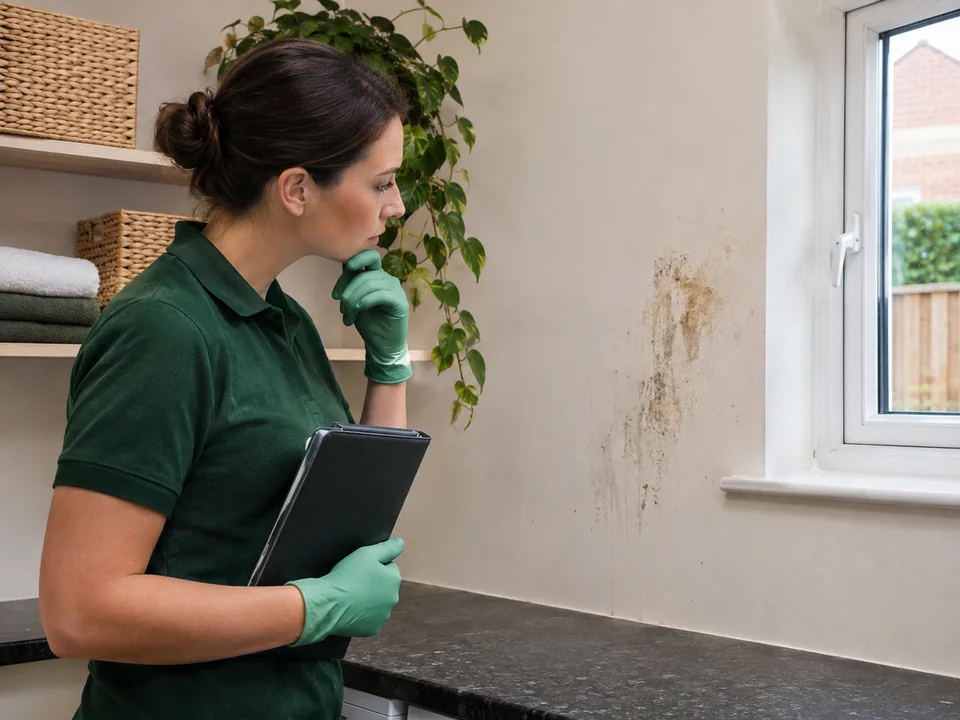
We consider each exposed finish on its own condition. If the mark extends from a hard floor edge onto skirting or a wall face, describe where the change in material begins. Tell us if you can see a raised area, worn edge or a lining that is no longer flat. We discuss the suitable accessible hard surfaces and identify materials needing their own decision before treatment. A report about a room should say which part of the finish is visible. If a fitting or floor covering hides a portion, we keep that part separate rather than assuming it can be treated.
If an owner or contractor has already considered part of the room, explain where their work or inspection ended. A maintenance record is useful when it identifies the position and date, but we also need what can be seen now. If the visible surface changed after a recent repair, mark the new position in relation to the old one. We assess the accessible finish and discuss any need for separate consideration of the structure or a concealed layer. We explain which part of the room it is possible to consider without relying on access that is still unavailable.
Where the wall has been painted around an existing floor covering, describe the part you can see rather than assuming the finish continues beneath it. If the reported area stops at a strip or trim, mark that line in the room notes. During the assessment we can use it to distinguish the named face and any adjoining position. Issues below a covering or beyond an inaccessible part remain separate from a visible hard finish we can consider.
| Position | What we review | What it helps decide |
|---|---|---|
| Floor edge against the wall | Finish and reach of the visible mark | Which exposed hard surface might be suitable |
| Skirting or adjoining lining | Condition and boundary where materials change | Whether it needs its own assessment |
| Part beneath a fixture | Visible edge and remaining obstruction | What falls outside the accessible work |
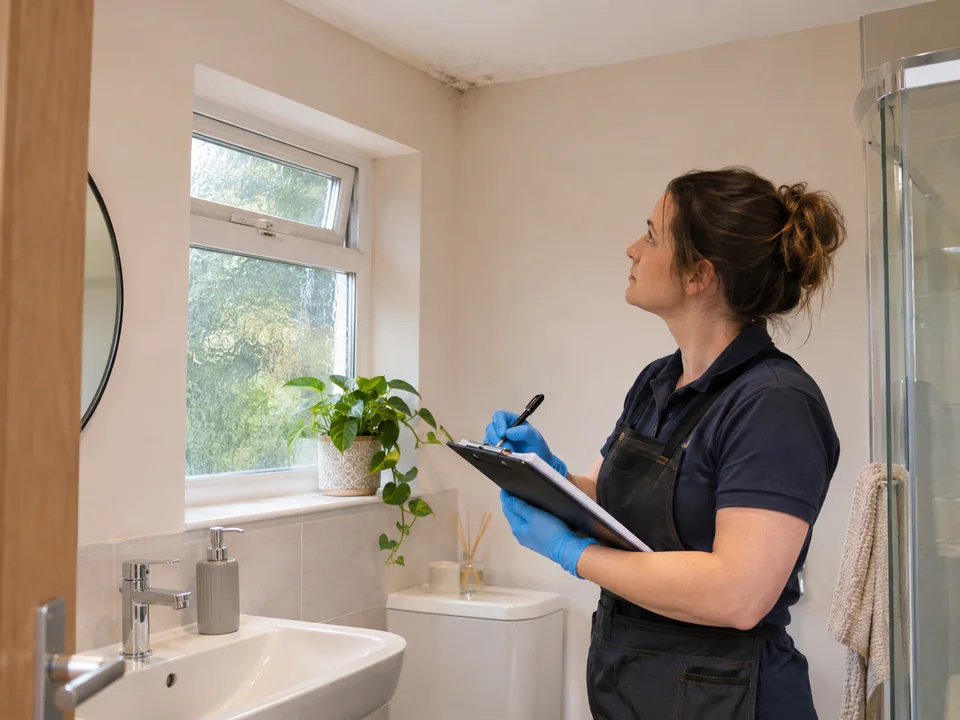
Agree preparation in a room that remains in use
We discuss what stays in place and how we can approach the agreed room. A narrow hallway may need to remain usable for residents. A room beside the entrance might have a fitted storage unit that determines which positions are exposed. Tell us which objects are fixed and where there is space around the finish. We agree any practical preparation in light of the available access. If another person has to confirm whether anything can move, give their role before settling an appointment date.
When a separate visit is expected to change the finish or reveal a hidden area, tell us what it will do and when. We can consider the current exposed region without assuming the later work has been completed. If the room is expected to be clear by the time we attend, name the person who can confirm the change. We can then discuss an appointment based on both the visible material and a route that can be provided in practice.
- Point out fixed fittings or items that restrict access.
- Check who can agree practical preparation.
- Mention other work that changes which surface can be seen.
Physically clean suitable accessible hard surfaces
We check that the named finishes can be reached and confirm the preparation discussed before starting. We physically remove visible mould from suitable accessible hard surfaces agreed for the appointment. If a mark reaches exposed hard material and then continues towards a damaged finish or behind a fitting, we confirm the appropriate boundary of the work. We do not assume that a different material is included because it is in the same room. If a surface becomes available but has not been assessed, we discuss that change separately.
After treatment, we review the accessible areas and explain what was cleaned. We discuss aftercare for the agreed hard finishes and identify questions for a material or property assessment if they remain. If a part was unavailable or unsuitable, we state where it lies so the person receiving the outcome can find it. Keeping the visible work record precise helps someone distinguish what was done from an issue referred to the relevant property contact.
At the review we identify the place treated by the room and the relevant fixed feature. If a mark was reported at the bottom of the wall and at the threshold, we differentiate the areas covered and any edge that stayed outside the work. The person receiving the outcome should be able to stand in the room and recognise the position without needing to interpret the first close-up photograph.
| Visit stage | What we do | Handover information |
|---|---|---|
| Preparation | Confirm suitable areas and the agreed approach | Named finishes and limits |
| Treatment | Physically remove visible mould from agreed hard surfaces | Where the accessible work took place |
| Review | Review the treated areas and discuss aftercare | Unresolved positions and the contact responsible |
Discuss the quote and future room use
We discuss price against the surfaces and access available. Ask what part of the work is being priced and which area still needs information before an agreement can be reached. Say if a resident or owner expects a room to return to normal use by a particular date. We can discuss the timing and what access needs to be arranged before then. If an original quote was based on a different layout, explain what the person attending can see now. That gives us the chance to review the proposal before relying on a former arrangement.
If you are also considering housekeeping or a move-out clean, give the rooms and tasks for that service separately. A finish assessed during mould removal does not set the room priorities for a recurring domestic visit. A checkout clean has its own inventory and access requirements. We discuss each visit against its own work and practical timing. If an agent or building contact receives some of the handover, explain what room or shared position they are expected to consider.
If the household is arranging regular cleaning after a property appointment, tell us which rooms will be ready for the agreed tasks and which conditions may still change. We discuss those visits independently so that the housekeeping instructions describe ordinary work in the rooms actually available. For a checkout appointment, include the date and access required for that inventory rather than relying on the room list from the surface enquiry.
- Confirm what the quote covers and what stays separate.
- Give other cleaning visits their own room or inventory list.
- Agree who receives the handover and any follow-up notes.
Questions about arranging mould removal
Which Walworth Road entrance details do you need?
Give the full address, dwelling number and residential doorway. Describe the part of the approach controlled by the person meeting us.
Should I mention a mark reaching from the floor edge to the wall?
Yes. Identify the finishes separately and describe where each visible mark starts and stops.
What happens if only the dwelling side of a wall is available?
We discuss the exposed side and note any separate area that would need permission or further property assessment.
Which surfaces do you clean after agreeing work?
We physically remove visible mould from the suitable accessible hard surfaces included in the agreement and review those areas afterwards.
How do I describe a hallway that residents must still use?
Tell us the accessible area and the route that needs to stay clear. We discuss preparation around those practical conditions.
Can you take account of a separate handback date?
Yes. Tell us which visits depend on the date and provide the checkout tasks separately from the named mould removal surfaces.
Other Cleaning Services in Walworth
London mould removal service, Regular housekeeping, End of tenancy cleaning
Discuss your mould removal enquiry
Mould Removal Prices in Walworth
Tell us which rooms are affected, the approximate size of the visible patch and what surface it is on.
Get a Quote