 Housekeeper
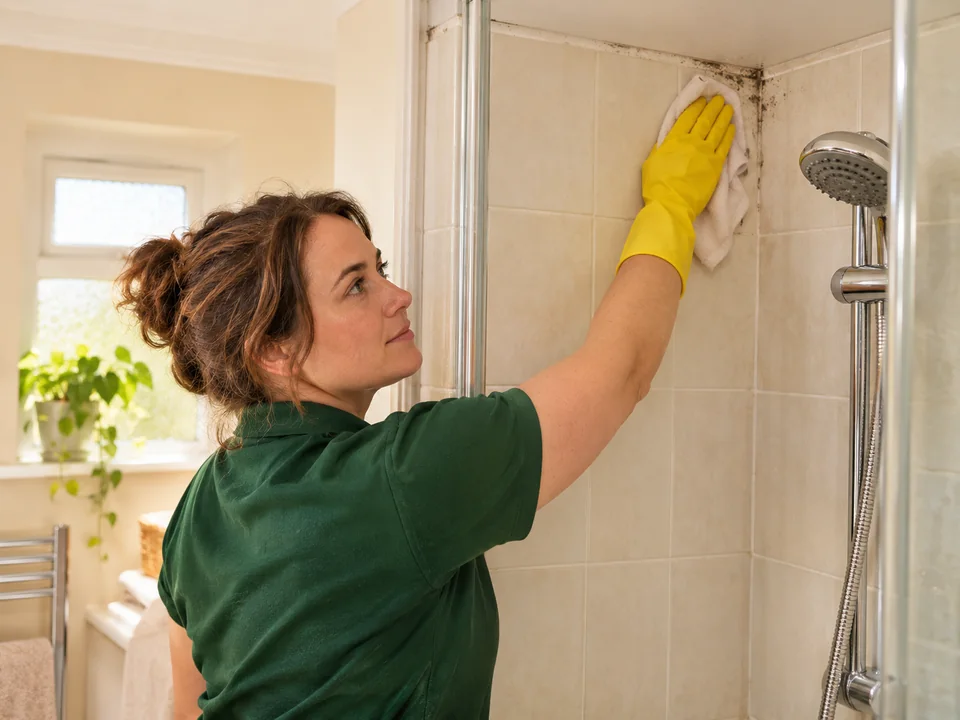
Mould Removal in Elephant and Castle
Our Elephant and Castle service starts with the visible affected area. We assess the material and access, prepare the agreed working position, then physically remove visible mould from suitable accessible hard surfaces. We show the cleaned area and discuss anything still visible during handover.
Can I enquire about a flat close to Elephant Park?
Yes. Give the full postcode and the residential entrance you want us to use.
Can you check both the shower wall and the splashback?
We can assess each visible surface and discuss which accessible sections to clean.
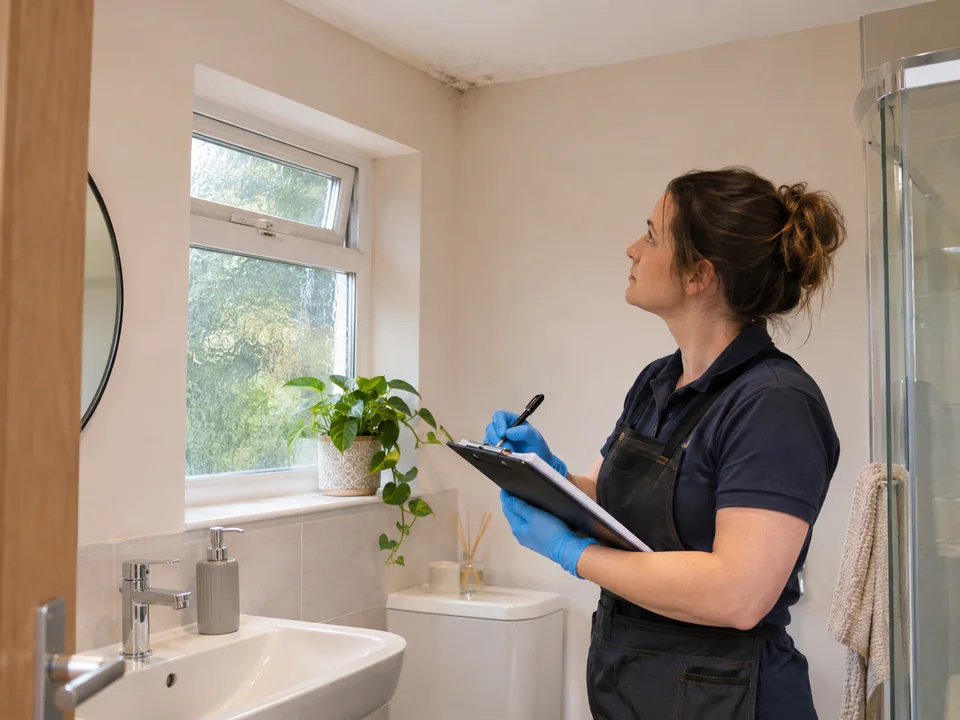
Show us which room and entrance are involved
Southwark Council's open space background paper identifies Elephant Park alongside improvements at sites including Nursery Row Park. A park name is useful as a broad orientation point when we discuss a property in Elephant and Castle, but please give us the full street address and postcode. If several buildings share a pedestrian route, tell us the door label and whether a resident will meet us at the entrance. If somebody else manages entry, say who can get us through to the actual flat and who can approve the work once we see the room.
Then describe the visible position by naming the fixture beside it. A mark in a bathroom near the window can be on the exposed hard frame, the reveal or an edge behind a blind. In a kitchen, a spot beside the sink can be on the tiled return or extend behind the tap. We put particular weight on what you can see and reach from the available floor position. An overall photograph of the room and a safely taken closer view can help the two of us identify the same finish.
If the two rooms are entered from the same short hall, tell us whether a door opens across the route to the other room. When somebody is using one of the spaces, an available doorway may matter as much as the surface condition. Ask the person who will be there to explain how each room can be reached. We use that detail during the initial discussion and confirm the route with the person who lets us in.
If the room is usually identified by its occupant, give us a description that will still make sense if the occupant is away. The bathroom opposite the front door or the tiling at the far end of an open-plan kitchen gives a person who arrives later an exact place to look. Find out who can verify that description on the day. That is especially useful if the person answering the booking enquiry is someone other than the person meeting us.
- Give the full postcode and the entrance serving your flat.
- Explain where the mark is in relation to the nearest fitting.
- Name the contact who can authorise work inside the property.
| Point to confirm | Detail we need |
|---|---|
| Building | Actual street entry and flat number. |
| Affected room | A fixed feature we can find in person. |
| Access | Who can open the property and take us to the room. |
Examine the bathroom and kitchen finishes separately
We consider the exposed surface rather than using the room name to decide what can be cleaned. In a bathroom, we can look at a hard tiled section and check how it joins a screen or shelving. Where a line continues onto a different finish, we show which part is directly visible and within reach. We inspect the condition before agreeing that section and make another decision about any area where the finish has visibly deteriorated.
For the kitchen, identify where the working surface ends and where a fixed fitting begins. A view taken above a sink can show the top of the affected area but omit the working position underneath it. We use the assessment to establish whether there is room to reach the full exposed patch. Where the area is visible only at an angle behind an appliance or a fitted panel, we explain the available boundary and keep any concealed surface outside the agreed work.
When you see a change between enquiry and assessment, point it out at the beginning of the visit. We look at the position as it appears on the day and discuss the effect on the work. If the same type of mark has appeared in a second room, we still check that surface on its own. The other room can have different fittings and materials, and the person who brought the first concern to us may not be the person responsible for the second.
A small bathroom can have a shelf whose edge sits immediately above a clear hard surface. We establish where the mark stops relative to both pieces and discuss what can be reached in the room. A track or fitting can block a narrow strip even when the surrounding tile is accessible. Show us whether the fitting opens or stays fixed and tell us if the person arranging the visit has conditions about how it can be handled.

| Common position | What we look for |
|---|---|
| Behind a sink | Whether the exposed strip can be reached. |
| Near a screen | How the visible tile meets the fixed part. |
| Next to a window | Whether the finish changes along the frame. |
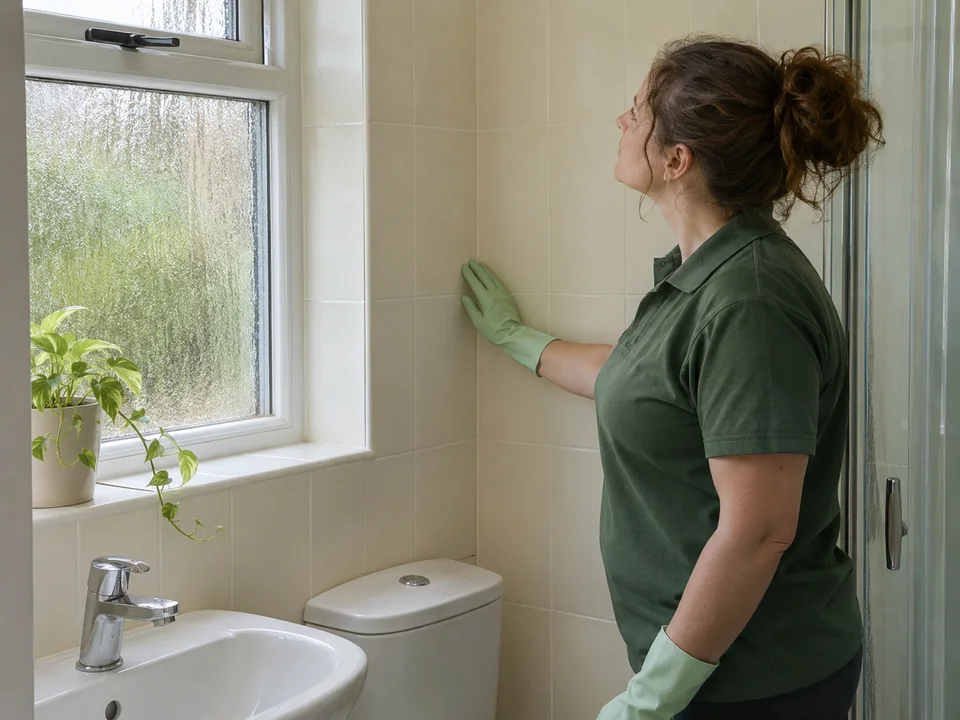
Prepare the agreed working area around everyday use
Once we agree the visible surfaces, we establish which everyday items need to move and where they can go. If you are still using the kitchen, there may be items you want to keep close to hand. Tell us which ones need to stay available and whether part of the worktop can be cleared for the visit. We ask for working room in front of the agreed section and a route to reach that position.
A resident can usually describe which shower items or countertop belongings are easy to put away. Fitted rails, shelves and panels need a different decision because they belong to the property or affect access to the finish. Identify the permanent pieces and tell us what we may use or open. If a visible strip remains inaccessible once the room is clear, we explain where the clean can go and confirm the limit with the person responsible.
For two rooms we discuss the order with the person who will be there. One room can be prepared first while the resident finishes using the other. Confirm which room is available and who can clear the second space when it is time. In a managed building, it is also worth telling us whom to contact if a temporary access arrangement expires during the visit or a different door needs to be opened before a room can be reached.
- Clear agreed personal items from the approach.
- Identify fixed shelves, rails and panels.
- Tell us when each room can be released for work.
Remove visible mould from the accessible hard surfaces
We physically remove visible mould from suitable accessible hard surfaces once the area and working position have been agreed. The work follows the visible span we inspected. A good example is a tile return next to the sink where we agree the exposed tile up to the point it meets a narrow painted edge. We explain which portion has been agreed and consider any additional surface separately if the finish or access changes.
If another part becomes visible after the resident clears some belongings, show us that position before assuming it forms part of the planned work. We consider the newly exposed area in relation to the material and the room available in front of it. If a fixed item still hides the edge, we show where we can actually see and work. That distinction stays in the final review so everybody hears the same account.
We look over the agreed positions once we finish, including the boundary where we stopped. If we cleaned the tile beside a shower screen and the surface behind a fitting remains outside reach, we identify both positions. There may also be a visibly damaged edge on an adjoining material that needs to be considered by the person responsible for the property. The room name alone would not explain the difference, so we use the nearest recognisable point to make it clear.
| Review point | What we describe |
|---|---|
| Cleaned area | The visible agreed section of suitable hard surface. |
| Limit | Where another finish or fitting affected the work. |
| Other observation | A visible condition for a separate property decision. |
Hand back the room and explain the result
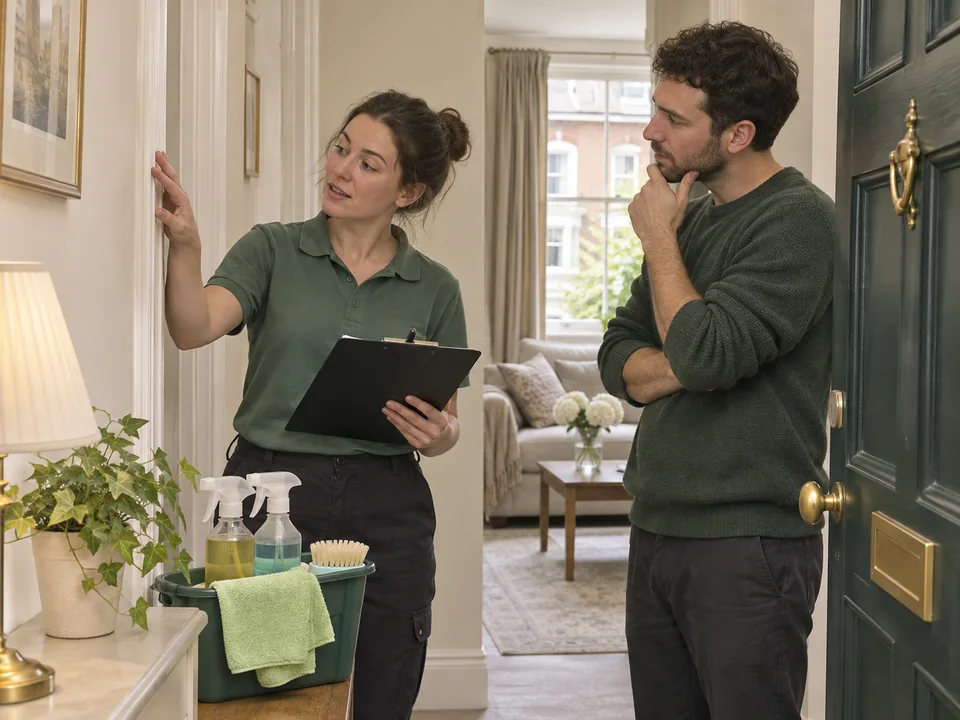
We go through what was cleaned and note any visible area that remains for a separate decision. Where one contact arranged the work and a resident was there to open the door, confirm which person should receive the details. We can describe the agreed surface by the same feature that identified it at the start of the visit. That gives someone who could not attend a way to see exactly which position the conversation refers to.
If an agent or building manager is already dealing with a report about water entry or a recurring mark, mention that before the appointment and tell us which fixture the report concerns. We talk through visible conditions and the work completed at the accessible area. For an investigation or repair to the property itself, use the separate arrangement with the responsible person. The description at handover helps them distinguish the cleaned surface from any neighbouring position still under discussion.
You can start by giving us the Elephant and Castle postcode, the building and the affected room. Tell us whether the mark is at the window, on a splashback or beside another fitting, and explain what needs to stay in place. If the property is changing occupants, add the time the keys need to be returned and the name of the person receiving them. Those details let us discuss the assessment and keep the agreed work tied to the actual room and appointment.
If the result covers two rooms, it can help to hear the bathroom first and the kitchen second, using the same room names from the enquiry. We spell out whether the positions formed two separate areas or were parts of one appointment with different working limits. Confirm who needs each account. The person preparing a flat for handover can then tell the next occupant which surface was worked on without having to rely on a general description of the home.
- Agree who needs to hear the result.
- Use the same location if you speak to the building contact.
- Tell us when the keys need to be returned.
Questions about arranging mould removal
Can I book if the person meeting you has access to only one room?
Yes. Tell us which room is currently available so we can discuss whether the other needs a separate arrangement.
Can you reach the patch if a fitted screen blocks part of it?
We assess the visible, reachable part and explain where the screen limits the agreed work.
Do the two rooms need to be clear at once?
Tell us when each can be clear. We can discuss the sequence during booking.
Can I send a wider photo without including personal belongings?
Yes. Show the position relative to a fixed fitting or doorway so we can identify it.
Will you tell my agent where the cleaned area ends?
Yes. Name the person who needs the handover and give us a contact if they cannot attend.
Can this be discussed alongside a wider rental clean?
Yes. Describe the mould separately from the ordinary cleaning tasks and confirm the key return deadline.
Other Cleaning Services in Elephant and Castle
Start a mould removal enquiry, Discuss a separate tenancy clean
Discuss your mould removal enquiry
Mould Removal Prices in Elephant and Castle
Tell us which rooms are affected, the approximate size of the visible patch and what surface it is on.
Get a Quote