 Housekeeper
Mould Removal in Peckham
We carry out visible mould removal in Peckham after assessing the exposed material and working reach. We agree and prepare the area, physically remove visible mould from suitable accessible hard surfaces and review the result with the resident or property contact.
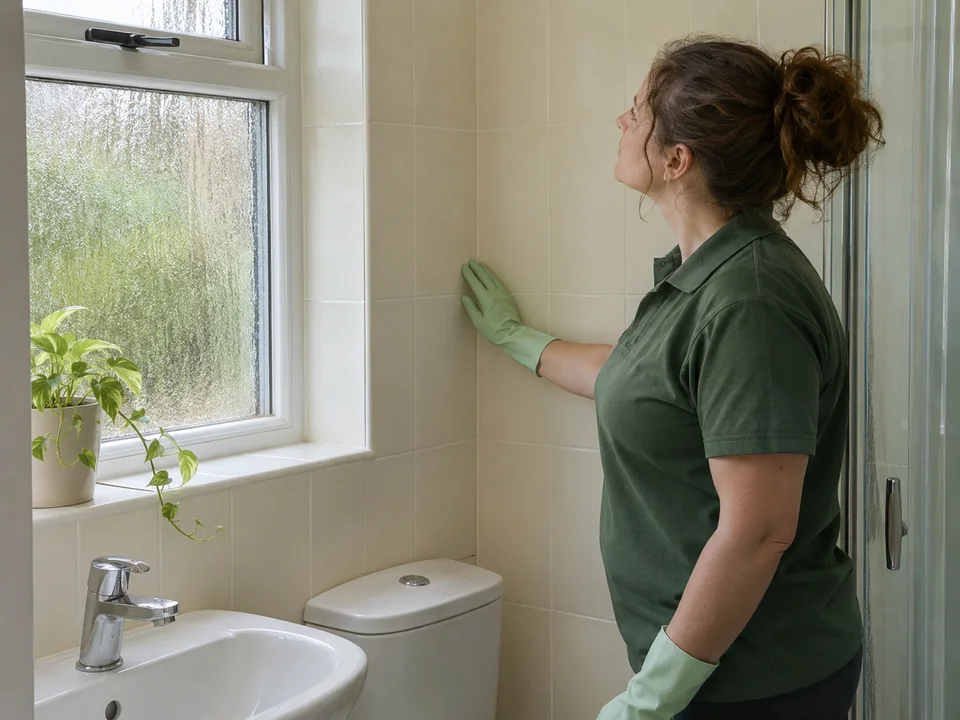
Can I enquire about a flat near Holly Grove?
Yes. Give the full postcode and tell us which door serves the affected room.
Can you assess a mark at the side of a bay?
We can look at the exposed finish, its condition and available reach.
Trace the affected edge around the bay or fixed unit
Southwark Council places Holly Grove conservation area south of Peckham Road, with Rye Lane along its eastern edge. These names can help orient an enquiry, but the property address and entrance are what we use to plan the visit. If the front door is shared, identify the bell and the contact who can take us to the right floor. A room below the main entrance may be reached by another route, so tell us how the resident normally gets to the affected position and which way can be used that day.
When the mark is around a front bay, we ask whether it is on the exposed frame, on the adjoining wall or down where the floor meets a fixed feature. When it is in a rear room, describe the door or window beside it and say whether furniture sits in front of the mark. We use that description to discuss the positions we should see. If the two areas are both in the same room, give each one a separate reference so we can identify it.
In a front bay we inspect the sill, the hard face below it and the returns at either side as separate positions. If the mark is only visible along an edge from the doorway, we check it from within the bay before deciding how much of the face is suitable. We prepare the agreed working position and remove visible mould from the accessible hard section. The final check is made against the same sill and returns, so the exact area covered is clear.
Where a low mark sits beside a fixed unit, we check whether the visible line is confined to the exposed wall or crosses into the join behind the unit. We can prepare the clear area and work along a suitable hard face if it stays within reach. The part hidden by the installation remains outside that section. At handover we describe the endpoint with the unit in place, using a nearby corner or seam so another resident can recognise it.
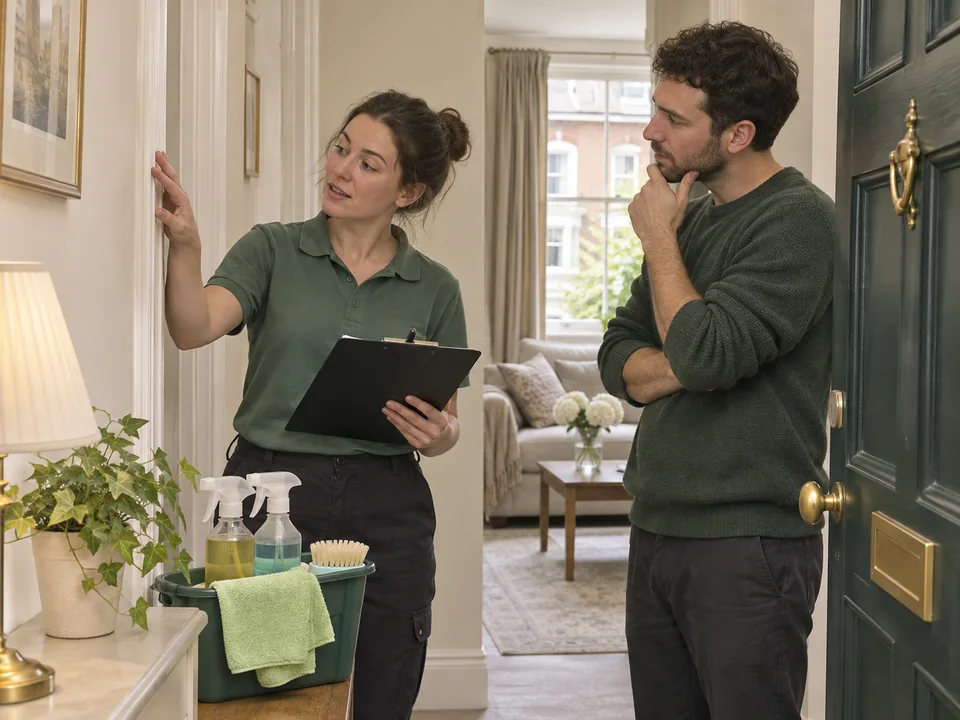
- Name the correct bell or route to the affected floor.
- Identify the feature beside each patch.
- Confirm who can grant entry and agree the work.
| Tell us | How we use it |
|---|---|
| Level and doorway | Find the room directly. |
| Nearby fixed piece | Locate the visible mark. |
| Contact for the room | Check who will show us the surface. |
Review the exposed finish and where the mark stops
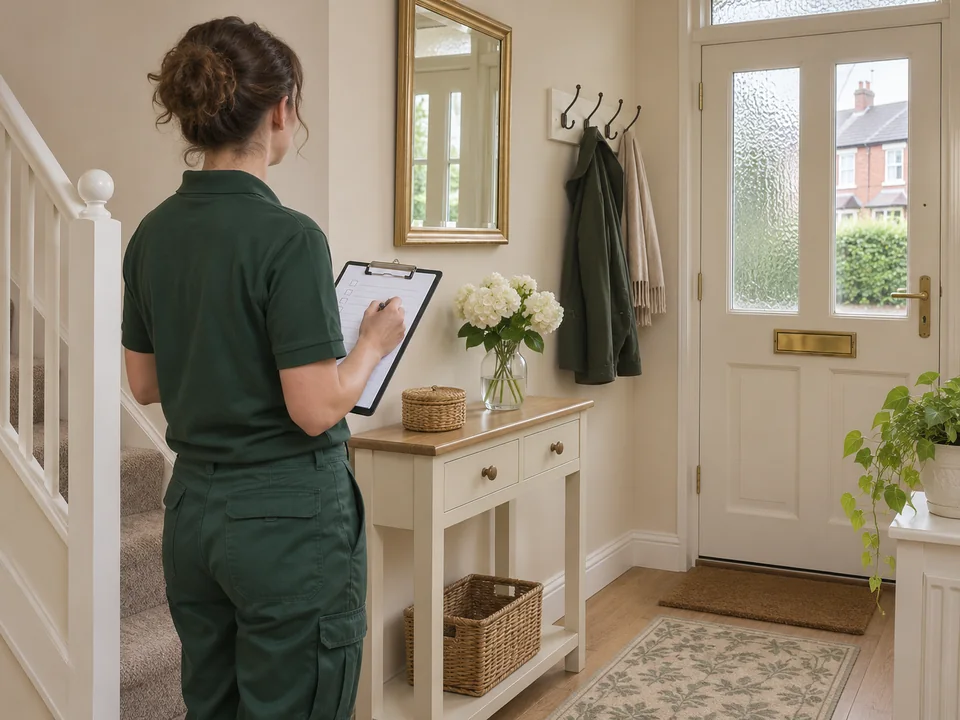
At the assessment we look separately at the visible pieces of material. Around a bay there may be a suitable hard face and a neighbouring painted return in different condition. We identify the part that is accessible and check where it joins the other finish. If the affected area crosses that line, the two parts receive separate decisions. We explain which exposed hard surface can be included and what the contact needs to know about the neighbouring area.
A low mark beside a fixed unit can show around its outer edge. Ask the resident to point out which direction they viewed it from, then tell us whether the unit is intended to remain in place. We see what the available space allows and assess the visible portion. Where we would need access behind a fixed piece, we identify the end of the exposed area so the responsible person can consider that part separately.
Several marks along the same wall can look similar from a distance. One may sit on a hard surface you can reach from the front of the room, while another lies on an internal return seen only through a narrow gap. We confirm the route to each and use the material to discuss what can be cleaned. Even if the person booking describes them by the same wall name, we identify their positions independently when we agree the work.
If the affected surface was recently cleared or covered, say what changed before we assess it. A new visible part may have a different finish from the original section. We use the current condition and explain whether we can see the same edge that was visible on the first photograph. If the material looks altered or access has changed, we discuss what that means for the actual work before anything is agreed.
When you show us the room, say whether the bay can be approached from both sides or only from the centre.
| Visible area | What can affect the decision |
|---|---|
| Bay and painted return | Where we see a change of material. |
| Edge of a cabinet | Whether the exposed part can be reached. |
| More than one mark | Each surface and approach require assessment. |
Prepare the part of the room that needs to stay clear
After agreeing the exposed surface we discuss where the resident can put belongings and how the floor approach will stay open. A bay at the front of a regular living area can be partly occupied by a chair, a low table or belongings on the sill. Tell us which pieces can be moved and which need to remain in their usual position. We identify the working space for the agreed section and review how to reach it.
If a room has a narrow entrance and is used throughout the day, establish when we can approach the surface without affecting essential use. Another room may be ready while the resident finishes work or moves belongings in the first one. We confirm the revised order with them and take each work position as it becomes available. If something remains in the way, we revisit the boundary rather than assuming it will be moved later.
The corner behind a basin can be narrower than it looks from the open doorway. We check the available reach before cleaning that area. If the hard surface can be prepared and worked on, we agree the length to be cleaned. We carry out visible removal along that exposed section and show at review whether the mark finished there or extended behind the fixed fitting.
- Clear personal items from the agreed approach.
- Point out any fixed units that stay.
- Let us know when the working area can remain available.
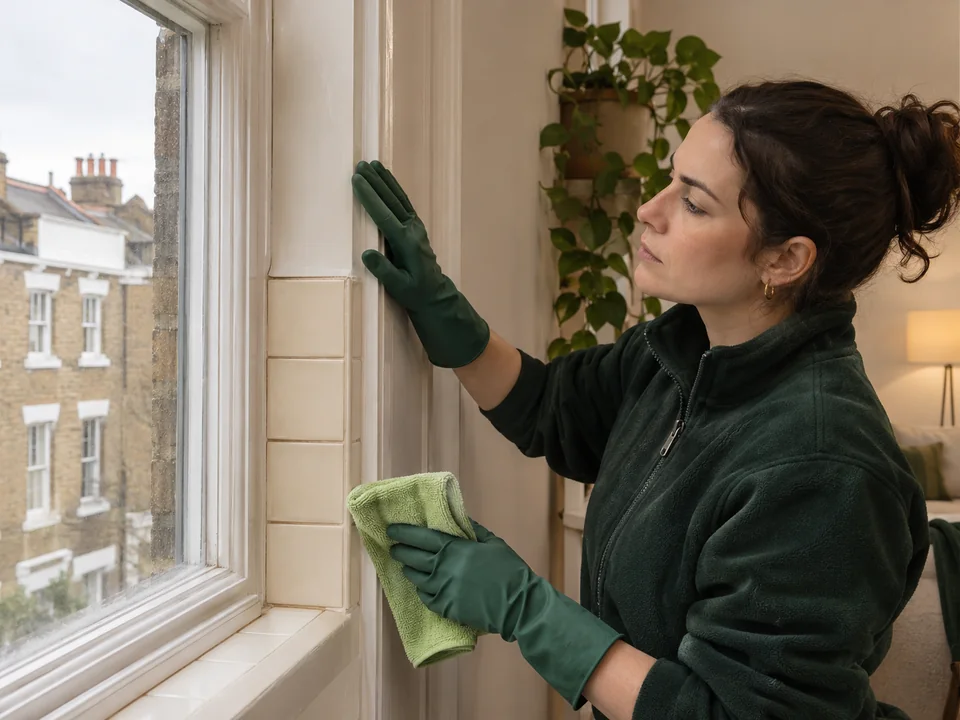
Clean the agreed hard section and review it in place
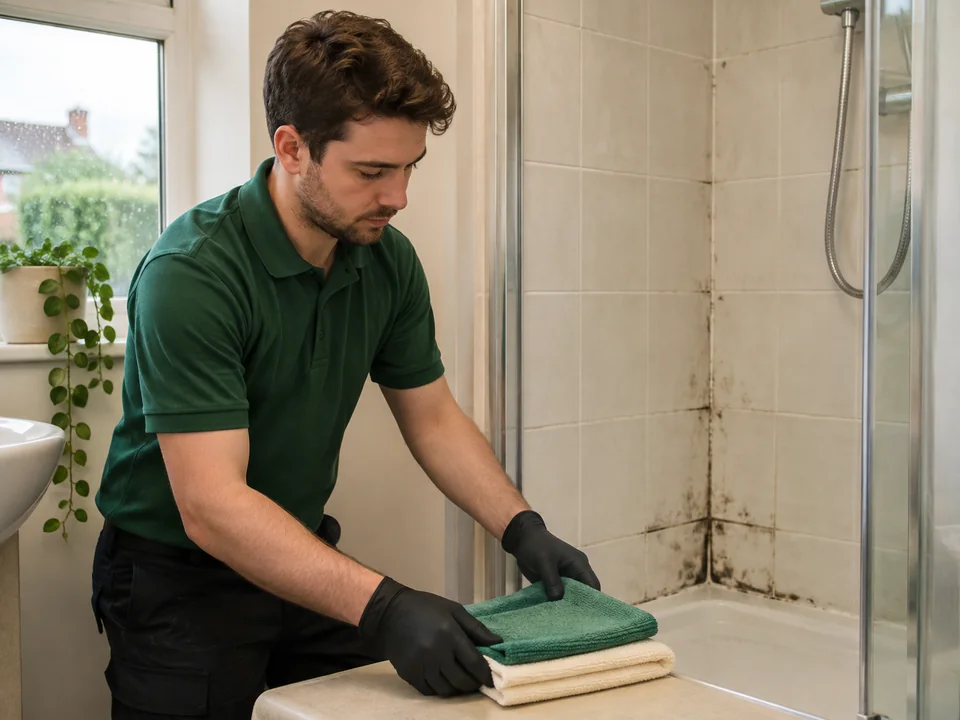
We physically remove visible mould from suitable accessible hard surfaces once we have assessed the position and agreed the work. We continue across the surface identified during the assessment while checking how it meets the surrounding finishes. If the exposed side of a frame meets a visibly damaged return, we work to the agreed boundary and explain which adjacent area was excluded from the work. The person responsible can then consider the separate condition.
As we finish, we look across the cleaned part to the feature that marks its edge. For example, we may refer to the inside face beside a fixing rather than the whole window. The narrow strip around a fitting and the rest of the exposed surface can be separate positions. We identify which was included and tell you where any obstruction or different finish affected the area we could clean.
Where the visit covers a second room, we use the names from the enquiry during the review. Point out if a different contact needs to see one room or if you want the visit result passed to an agent. We describe each agreed position and any visible area still needing attention. A resident can use the same references when comparing the exact spot on another visit or speaking to the person responsible for the property.
| Review detail | What we describe |
|---|---|
| Area cleaned | The agreed hard accessible section. |
| Finish boundary | The edge we reached or where material changes. |
| Other visible position | The location outside the agreed work. |
Explain the remaining visible condition before returning access
We report the work completed and show any accessible adjoining condition we have identified for the property contact. For an occupied home, agree whether a resident will review the room with us. When an agent or owner needs the account, tell us whether they can attend or will be contacted in another agreed way. Use the room and fixed feature so both parties can tell the difference between the surface cleaned and a neighbouring position.
If a mark is recurring or there is a separate concern about water coming into the property, say who is dealing with it. We explain what could be seen while the room was open and where the agreed visible work finished. A building inspection or repair needs its own arrangement. The person who handles it can use the section we identify to find the right part of the room and check any adjoining surface that remained outside the cleaning.
Before arranging the visit, tell us about a deadline to hand the property back or a time when someone else needs access. If a resident and an agent each need to see the room, establish who will arrange that before the keys are returned. If the person receiving the keys is different from the person receiving the result, give us both names. That makes it possible to finish the review while the room is still accessible.
Start the Peckham enquiry with the full postcode, affected floor and route to the room. Tell us the closest fitting and give the extent you can see. If you also need a wider home clean, describe those tasks separately and say when the rooms are available. We can discuss those arrangements while keeping the assessment and visible mould work clear to the person who will be there.
- Identify the person reviewing the room.
- Give the property contact the same reference point.
- Confirm the key return contact and deadline.
Questions about arranging mould removal
How should I describe two marks in one sitting room?
Name the fixed feature next to each, such as the bay frame and the edge of a fitted unit.
Can you reach a strip behind a fitted cabinet?
We assess what can be seen and reached at its edge and explain where the fitting limits the work.
Can the resident show you the mark if someone else booked?
Yes. Identify the person meeting us and make sure we can contact the person who can agree the work.
What if furniture has been returned since the photographs?
Tell us what changed and whether the approach can be cleared for the assessment.
Will you clean the paint beside an agreed hard section?
We review the painted finish separately and explain the condition before agreeing which surfaces can be cleaned.
Can a different person collect the keys afterwards?
Yes. Agree who should get the result and where the authorised contact expects the keys.
Other Cleaning Services in Peckham
Discuss the affected Peckham room, Enquire about a wider clean
Discuss your mould removal enquiry
Mould Removal Prices in Peckham
Tell us which rooms are affected, the approximate size of the visible patch and what surface it is on.
Get a Quote