 Housekeeper
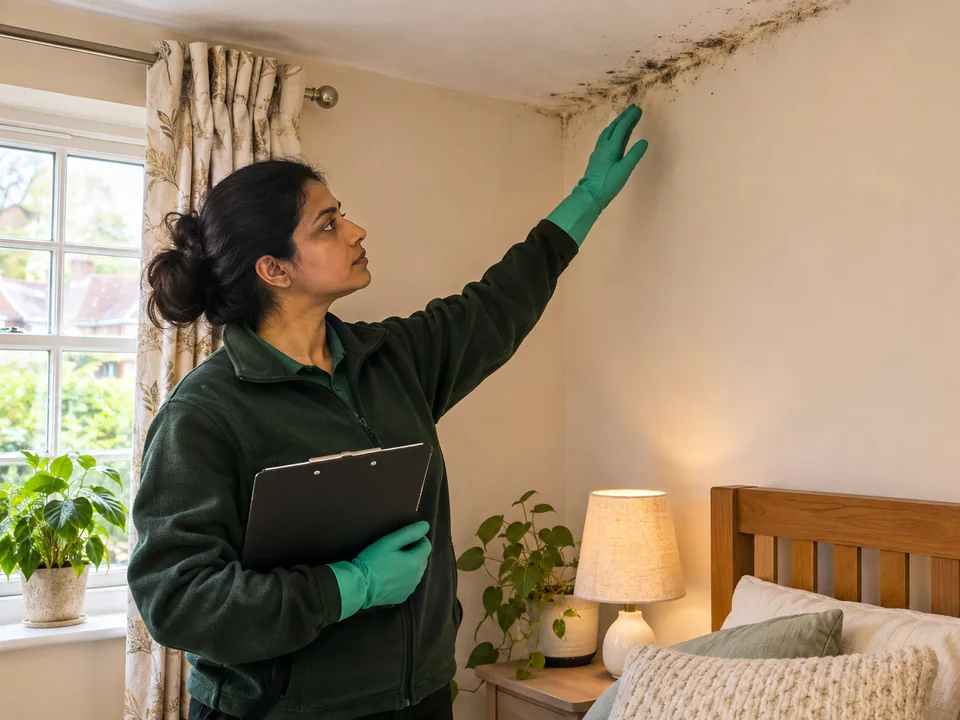
Mould Removal in Tooting
If you see mould beside a bath, shower screen or another hard surface in Tooting, tell us which face is exposed. We check the material and reach, agree the cleaning and review each area at the end.
Can I enquire from SW17?
Send the full postcode and describe the affected room and fixture.
What if I see the mark when the shower door is shut?
Tell us which part shows and how the screen normally opens so we can discuss access.
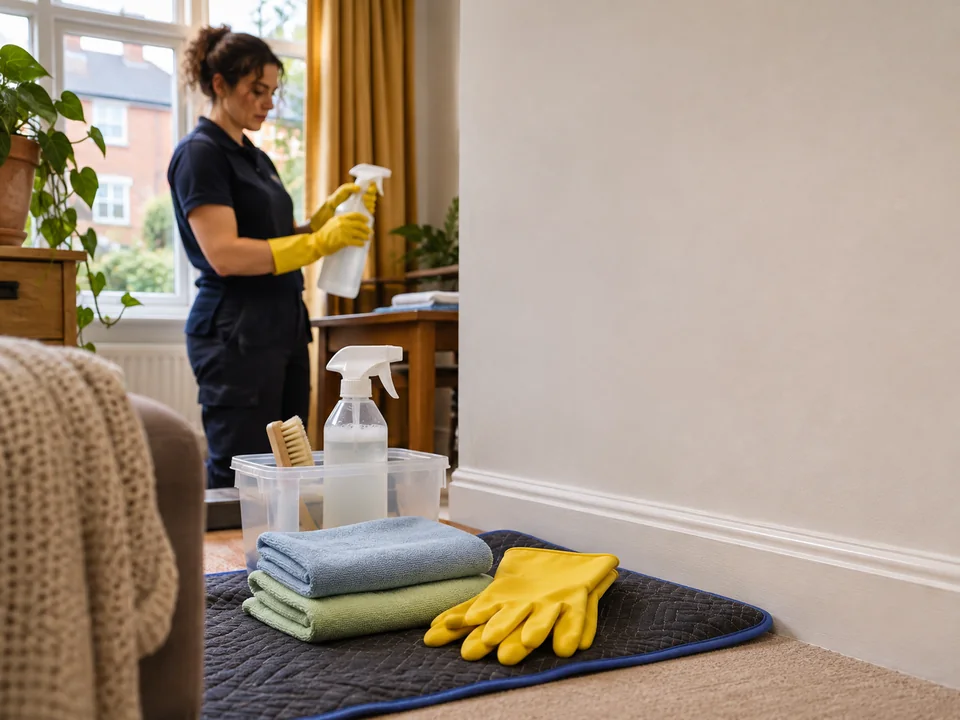
Follow the visible mark around the shower screen
At a shower enclosure we inspect the accessible screen face, tray and adjoining wall separately. A mark following the lower screen can extend around a bend and meet a panel or seal. We check how far that line can be reached with the enclosure in place and agree which hard faces are suitable. We prepare the immediate area and remove visible mould from those faces. At handover we follow the same run of the screen and show the endpoint where the finish changed or access narrowed. That gives you a clear distinction between the exposed parts cleaned and anything concealed by the fitting.
Wandsworth Council describes Totterdown Fields as a cottage estate whose design reflects Garden City and Arts and Crafts influences. The appraisal identifies Franciscan Road as a link to nearby areas around Tooting Bec Common and the Heaver Estate. Those names can help place an address in the area, but a visit needs the actual full postal address and the door you have agreed to use. If you have a side or lower entrance near the bathroom, give us that distinction and who will meet us.
Tell us whether the bath or screen has changed since you first noticed the mark. A replacement panel can cover part of an old stain or leave a different hard surface exposed. You can send an earlier photo for context, but let us know what the room looks like today. A recent wide view gives us more information about the approach. A separate close view shows whether the line follows the rim, the frame or the adjacent wall.
If there are affected marks in another part of the bathroom, give them their own position. For example, the inside edge of a high window and a lower wall panel over a shower tray need different checks. Say if a fixed rail or cupboard occupies the space in front of the mark. We can then ask what needs clearing for each area rather than assuming the same preparation applies across the room.
| Visible area | Detail to include at booking |
|---|---|
| Screen | Hinge, rail or glass face where the marks sit |
| Wall or tray | Rigid panel, tile or other finish beside the mark |
| Room access | Which entrance and floor reach the bathroom |
Prepare the room while leaving the screen and panels fitted
We discuss what loose objects to set aside. Move toiletries and small containers from the side of the bath or the area by the opening. Tell us if a rail, permanent shelf or fixed seat occupies the space we would need. The hinged screen generally stays installed, and the available approach can change when the panel swings. Describe which way it opens and whether there is a point where it can stay clear of the visible patch.
We check the work position with the bathroom fittings in their usual places. Beside a bath, the reach may narrow where the screen opens towards the basin. We inspect the open hard face and look at the joint before choosing what can be cleaned within that space. Once the area is agreed, we prepare the position and remove visible mould from the suitable surface. If the mark continues behind a rail, we use that fixed detail to describe the limit at review.
In a small bathroom, the floor area beside the bath may be shared with a pedestal, cabinet or door swing. Tell us where you usually stand to see the mark. A photo can show a visible line at the far end without showing the restricted space below it. We assess the real approach once the room is ready. If a fitting cannot be safely opened in its usual way, leave it in place and tell us what part remains in view.
- Set loose belongings aside near the agreed work area.
- Show us the normal movement of the screen.
- Agree who can open and make the room available.
Assess the tray, screen and wall profile as distinct finishes
We check the visible part of the screen and how it meets the wall or bath. A hard glass face can be in good condition while the bead at the bottom is dark or loose. We consider the exposed hard part separately and let you know how far we can approach it. If a panel is acrylic, coated or made from another identifiable material, tell us about any care directions and where the marks appear on it. We decide suitability from the material and condition.
Along a shower tray, several faces can sit very close together. The outer rim may be available while the back edge disappears beneath a fixed profile. If the line is on a firm hard surface we can see and reach, we can discuss cleaning it. A mark within an aged corner joint or behind a fixed cover needs its own consideration. Show us which part you first noticed and where the finish changes. That gives us a clear starting point to agree the work.
Where the wall is formed from large rigid panels rather than tiles, look at how the affected line follows the channels and corners. A pale upright can hide the line in a shadow until the door moves. We identify what is stable and which edge is exposed before deciding what can be cleaned. If there are loose edges, cracked joints or signs of moisture behind a panel, we explain the visible concern. Arrange further investigation through the property contact if it needs to be inspected from behind.
If there has been work on a leak or seal, tell us which section was involved and whether the same place has marked again. We compare the description with what is accessible during the visit. That can help distinguish a hard face suitable for surface work from a deteriorating part that cannot be included. The condition of the exposed material is what we use to agree the actual cleaning.
At a curved enclosure, the rail can follow the front of the tray before turning into a short upright. A visible line may have one end on the top face and the other lower down. We use the curve and the nearest fixed screw or handle to identify the exposed areas. If the inside of a closed profile is affected, the property contact can arrange any further check.
| Visible feature | Assessment focus |
|---|---|
| Rigid screen or wall face | Condition and which side can be reached |
| Tray perimeter | Which portion of the edge is exposed |
| Panel or seal junction | Changes in material, wear or a concealed edge |
Clean the agreed hard faces around the fitting
We remove visible mould from the suitable accessible hard surfaces you agree with us. In a shower that can mean the exposed wall section beside the tray or an accessible part of a rigid screen. We identify which face is included and where its edge meets the next material. When the mark looks continuous along the lower line but the surfaces differ, we check the agreed work area with you and explain where it stops.
If moving toiletries reveals another patch at the end of a bath, we check that surface and ask whether it should be considered. The face may be hard and visible, or it may be part of a fixed panel with a different condition. Tell us who can approve changes if the person at the address only agreed to open the bathroom. We can describe the newly exposed area and leave the visit as agreed if there is no decision to extend it.
We work up to the usable part of the fitting and leave it installed. A slide or hinge may cover part of the profile when it sits in its normal position. We note the visible boundary as we work so that you can identify it later. Old discolouration or worn material may still be apparent beside the cleaned hard face. We explain its position at handover.
- Confirm which exposed faces are suitable for cleaning.
- Agree who can approve a different or additional section.
- Ask us to check the limits around a rail or hinge.
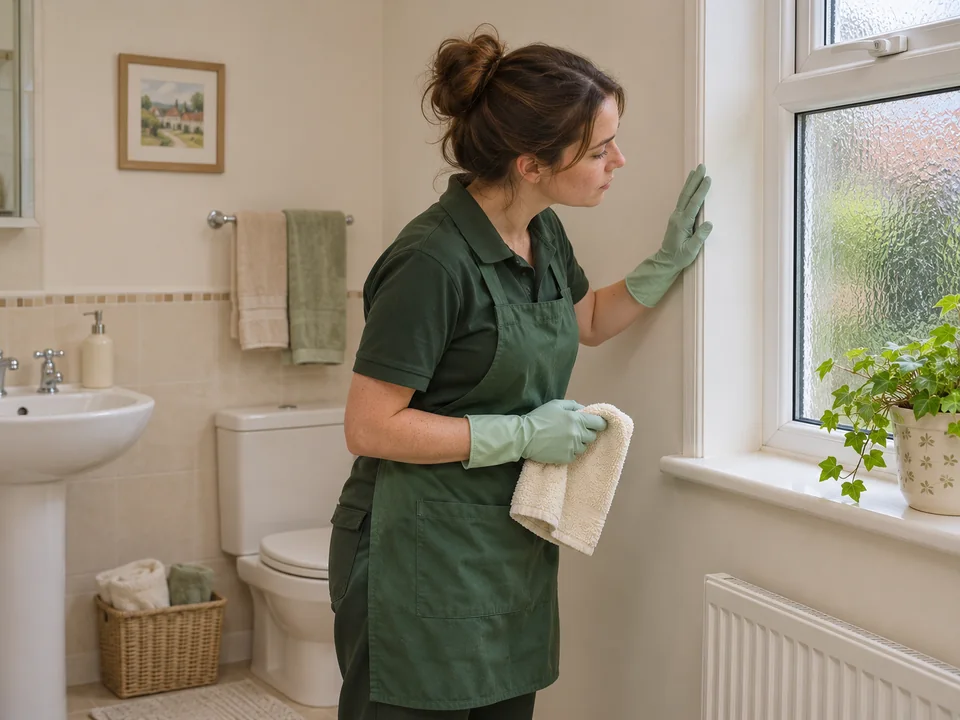
Review the shower and other agreed areas before we leave
At handover, we show the hard surfaces we cleaned and explain whether a mark remains at another finish or beyond the accessible part. With a shower, we can identify the particular panel or the hinge position that separates the two areas. If another room was included, we name it and review those faces separately. That makes it possible to pass on a clear report to a property contact or resident who was unable to join us.
If a patch reappears near the same screen or tray, describe where it is in relation to the hinge, fixed rail or wall corner. We can explain the finish and exposed area visible at the time we worked. This may help when you ask the person responsible for the property to arrange an inspection of the fitting or any concealed concern. Agree their contact details in advance if they need the handover directly.
At the end we check each agreed area of the shower from the room side. We show the exposed part of the screen, the accessible tray edge or the hard wall face that was cleaned. If a line continues along a covered edge, we identify the point it passes behind the fitting. This makes it easier to see which part the clean addressed and which area needs a separate decision.
- Review the result from the same side of the screen.
- Ask where the cleanable surface ended.
- Agree who receives the update for each affected room.
| Review item | What we identify |
|---|---|
| Cleaned face | Specific side of the tray, wall or screen |
| Boundary | Position of an unsuitable join or restricted edge |
| Contact | Who will receive a description of the result |
Questions about arranging mould removal
Can you consider a hard acrylic wall panel?
Tell us what kind of panel it is and how much is exposed. We assess its condition and suitability before agreeing cleaning.
Should I unscrew the bath side panel or remove the shower door?
Leave both fitted. Describe what you see from a normal position and tell us which areas are obstructed.
Can you assess the marks where a shower tray meets a rigid surround?
Yes, we look at the exposed materials separately and discuss how far we can reach around the join.
What if the bathroom is only available in the morning?
Give the time and say whether another room can be assessed separately. We can discuss the order and who will admit us.
Can you include an area that lies under a fitted shelf?
Tell us how much remains visible. We assess the suitable hard face we can reach without removing the shelf.
What should I ask about during handover?
Ask which hard faces we cleaned, which edges were out of reach and where any discolouration remains visible.
Other Cleaning Services in Tooting
Regular housekeeping in Tooting, End of tenancy cleaning in Tooting
Discuss your mould removal enquiry
Mould Removal Prices in Tooting
Tell us which rooms are affected, the approximate size of the visible patch and what surface it is on.
Get a Quote