 Housekeeper
Mould Removal in Highbury
We look at the visible surface and the nearby finishes before agreeing mould removal in Highbury. If the area sits beside trim, a decorative panel or a fitted cupboard, tell us what is exposed and how we can approach it.
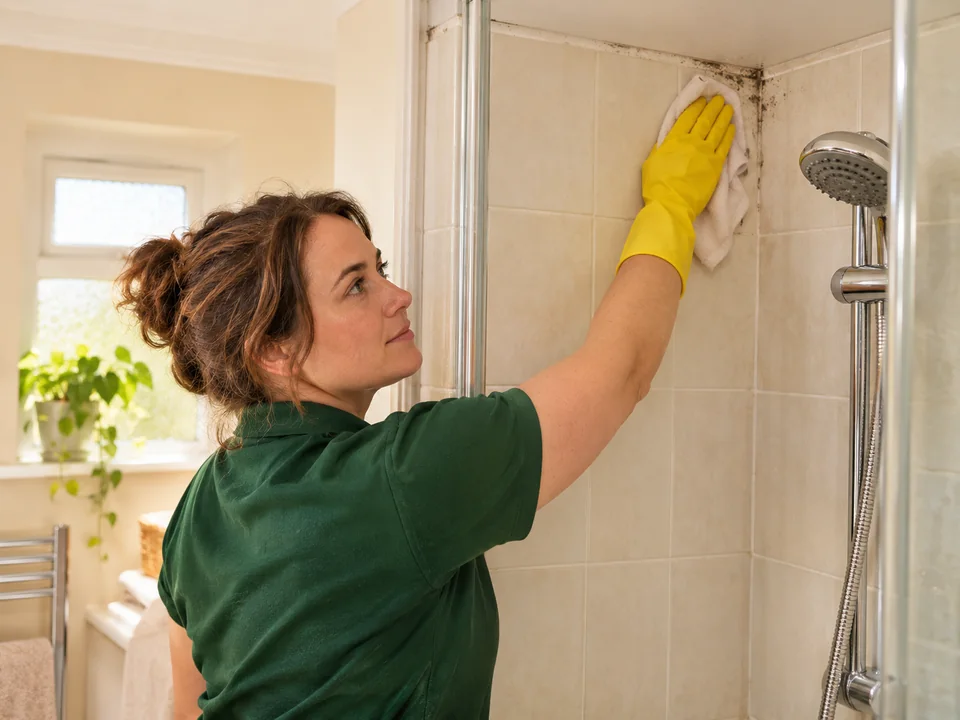
Can I enquire about an N5 home?
Send your full postcode, the room and the affected face.
What if the visible mark sits against decorative trim?
Tell us which side of the trim it is on and whether the surrounding finish looks stable.
Inspect the exposed growth beside original joinery
We check the area around visible growth where it touches the nearest original trim or joinery. An exposed hard face beside a raised bead can be firm enough to clean, while a narrow recess or delicate coating needs a separate assessment. We inspect the material and ordinary reach of each face without moving installed items. If the area is suitable, we prepare and physically remove visible mould from the compatible surface included. At the review we show where treatment reached and identify any concealed or fragile piece independently rather than treating the complete decorative feature as cleaned.
Islington’s Highbury Fields guidelines identify traditional frontage details along Highbury Terrace, Highbury Place and Highbury Park, and distinctive brick walls and piers along Highbury Crescent and other roads. For your own home, a common gate, a front stair and a lower entrance can be separate references. Tell us which door visitors will use and how to reach the dwelling from the full address. If a flat uses the name of the house alongside a letter or number, include both.
We confirm which side of a decorative surface is normally accessible in the room. A patch can cross from a smooth inset onto a raised edge where the coating or working reach changes. We check the exposed material and set the boundary before preparation. The suitable hard face is then cleaned as agreed, with any altered or concealed finish kept separate. At handover we use the same inset, corner or strip as reference to show what was treated and where the next material began.
We agree the immediate working position around the affected fitting while keeping nearby items and original details in place. If one exposed face remains reachable while another sits behind a fixed seat or unit, we review them separately before treatment. We prepare and clean the suitable surface included, then identify the boundary during review so the resident can distinguish the treated part from an area requiring different access or specialist care.
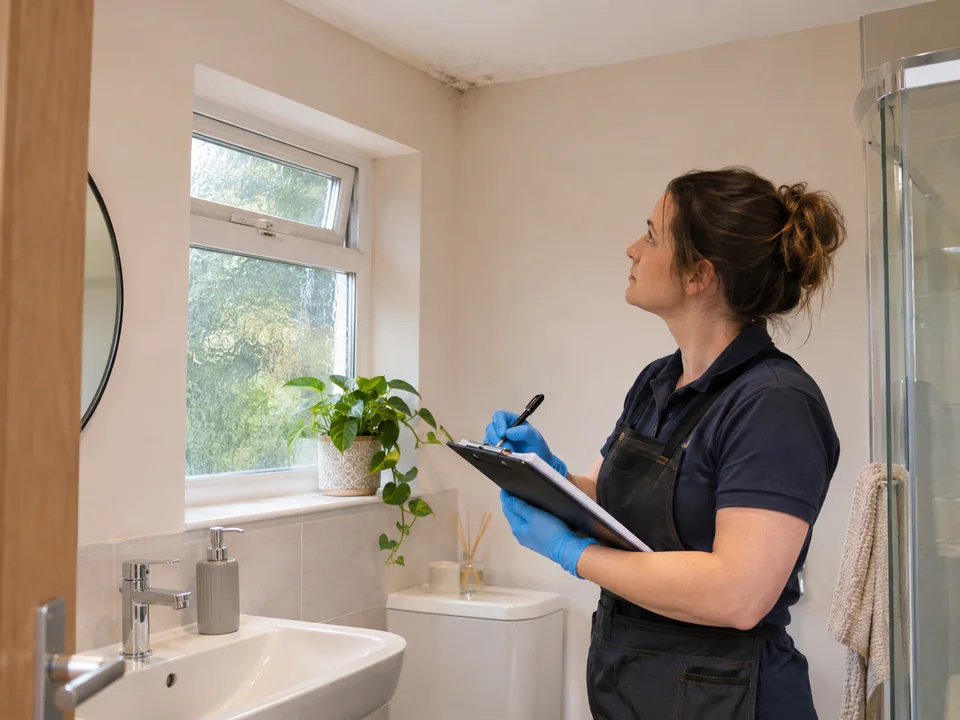
| Enquiry detail | Reference to give |
|---|---|
| Room and affected part | Sash ledge, hard tiled recess or area beside a rail |
| Nearby finish | Existing paint, decorative material or coating |
| Entry | Actual door, floor and full postcode |

Set up around trim or joinery that needs to remain in place
We discuss how to make the affected area available while leaving original or fixed furniture alone. Put away loose items from the hard face only if you can safely do so. If a shallow shelving unit was fitted across part of the wall, tell us where its side ends in relation to the mark. The available floor space and position of the shelf will help determine what we can see or reach. We check that in person before cleaning.
Where an opening is next to a built-in seat or a door opens against a panel, describe the normal position of those fittings. A sash or shutter can change which side of a surround is exposed. We can discuss how someone who knows the room normally opens it and whether you want it to stay closed. If the room is being redecorated or part of a finish is covered, mention when it will be ready and what you want left untouched.
If a household resident can let us in but another person holds the care instructions, arrange who can answer questions. A resident could know the location of a visible patch without knowing how an original fitting was restored. If the home is managed remotely, tell us whether the manager wants to see the exposed area before any cleaning is agreed. We can describe the location and access to the person you nominate.
- Move loose pieces away from the agreed face.
- Leave decorative trim and fixed furniture in place.
- Have information to hand about existing coatings or repairs.
Look at plain and decorative faces separately
We assess which exposed parts are hard, sound and practical to reach. A wipeable hard tile beside an older painted border needs to be considered separately from that border. Look at where the mark changes appearance across the join. We will check the surface condition before agreeing any nearby cleaning. If there is a texture or finish that requires special care, tell us how the different parts have been maintained and identify the face you are most concerned about.
A raised profile beside a frame can have shallow recesses where the finish is different from the outward face. A worn coating, an open joint or small losses at an edge may set a limit. We look at the affected part from a safe position and explain where we can work without interfering with that condition. A dark line inside a narrow recess may remain visible even if we can clean the suitable accessible hard face beside it.
You may also notice that different layers show at the outside edge of a fitting. If the area has been restored in stages, tell us what you know about when the surface was last finished. We can use this information alongside its current condition. If moisture seems to continue behind a panel or within a wall, discuss investigation with the person looking after the property. We assess what we can see rather than assuming where a concealed problem begins.
Some rooms have a glazed or enamelled tile inset that ends in line with the wall panelling. The inset can be sound even where the surrounding paint is uneven. We look at the exposed tiles as individual pieces and check the edge where the panel comes forward. If the patch follows the small vertical join, we can use that boundary when discussing what can be cleaned. Tell us if a tile already has cracks, because a visible mark on a damaged tile is different from a mark on an intact one. We explain any existing surface condition that affects the work.
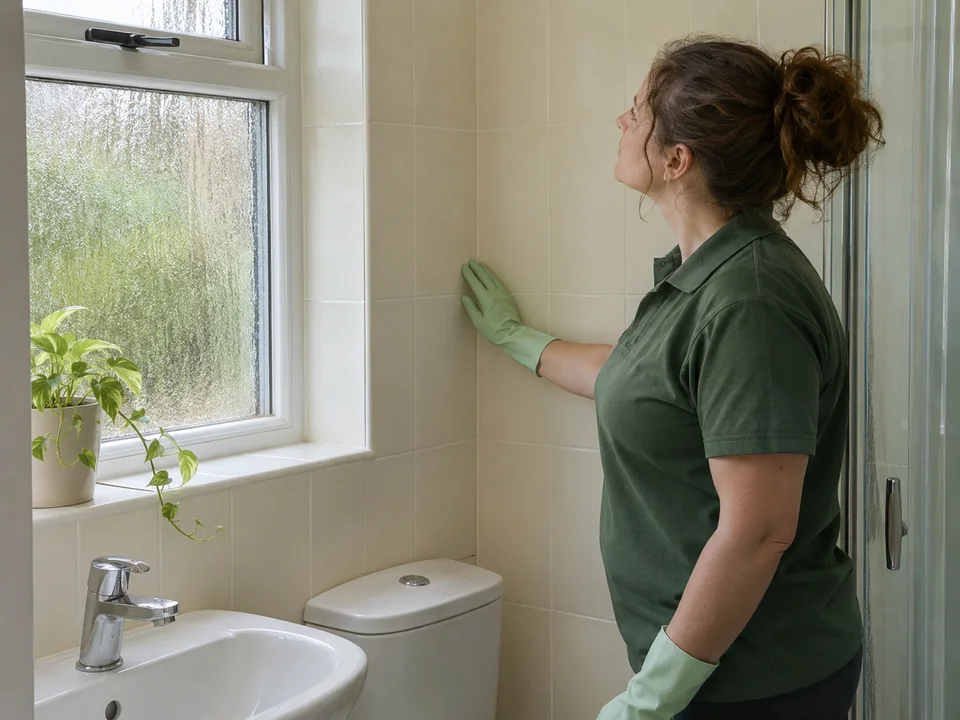
| Observed area | Question we discuss |
|---|---|
| Hard sound face | Which exposed area is suitable and reachable? |
| Raised or decorative edge | Are there visible changes in the finish at the boundary? |
| Concealed part | Which accessible surface can be assessed without moving trim? |
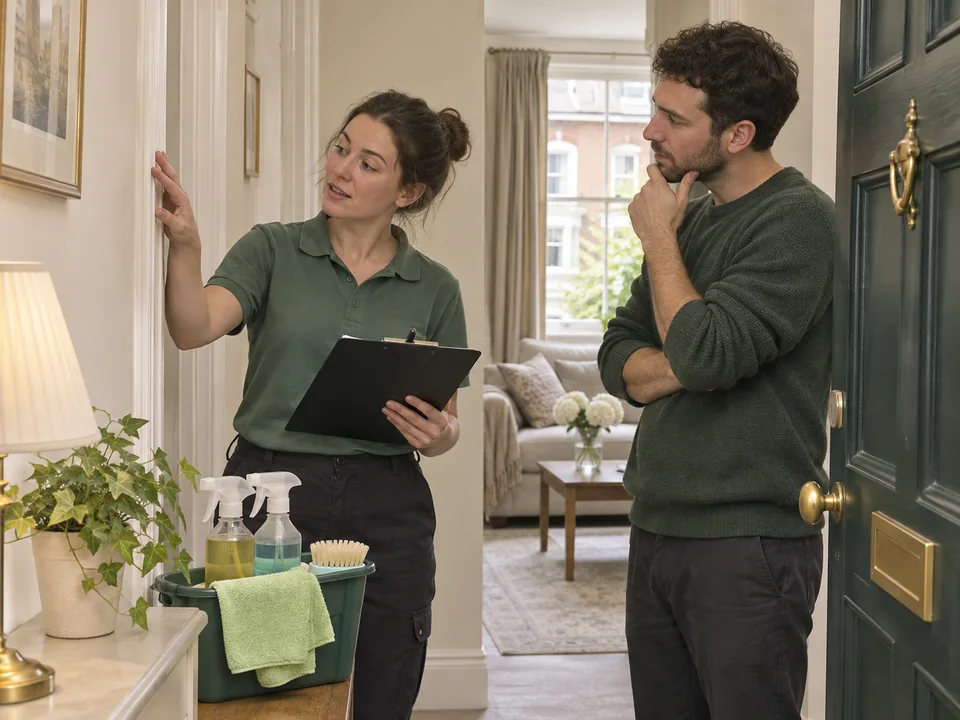
Remove visible mould within the agreed surface boundaries
We remove visible mould from the suitable accessible hard surfaces you agree with us. Where a mark is beside a decorative face, we confirm the work area in relation to its edge. A wall with several materials may have one approved hard face and a separate visibly worn join. We identify the reachable part and explain where we will stop before we begin working. If there is another relevant room, we review its finishes independently.
If clearing loose items reveals another part of the mark, we show you the area and check its suitability. It may continue along a rigid surface or turn into an exposed coating of a different condition. We tell you how it relates to the work agreed and ask if the responsible contact wants to include it. If you are arranging the visit for an occupier, confirm whether they can approve an addition or should just show us the area.
An original decorative edge, narrow bead or fitting can break up a hard surface that looks continuous in a photograph. We work on the agreed faces where they remain accessible and avoid stressing installed joinery. Tell us if you wish to look at the boundary with us before the work is complete, particularly where two parts are easily confused. At handover we can identify what was cleaned using the nearest visible detail.
When an exposed hard face is interrupted by an ornate corner, we discuss the exposed pieces on either side with you. A small decorative projection can hide the return even when the flat section is nearby. We can show you which agreed face is accessible from the room and leave inaccessible parts in position. At the review, point out any detail you want to use as a reference for a later report.
- Confirm the work boundary around the trim.
- Identify who can approve a newly visible face.
- Ask whether staining may remain at an older join.
Show what was cleaned without assuming hidden sections were reached
The last step is to review the agreed areas with you. We show the hard faces worked on and explain where the finish or a fitting affected access. If the visible mark follows the line of a rail, we can identify which section is suitable and which nearby edge was left. If another person is looking after the property, agree who should walk through the result and what details the booking contact wants them to confirm.
For a mark that appears again, identify the room and the nearest fixed reference when you report it. A panel on the window side of the sitting room is easier to find than a mark near some woodwork. We can pass on what we saw at the exposed face and where we reached our agreed limit. If the next step involves looking behind a panel or checking moisture within the wall, the appropriate property contact can arrange that separately.
To get a quote, give us the postcode, affected surface and current clear approach. A wide and stable tiled face with open floor space can be a different visit from a narrow strip beside an old fitting. Tell us who can open the address and who can answer about prior work on the finish. We discuss the visible cleaning and individual price in relation to the surfaces involved.
- Use the room and a fixed fitting to locate the work.
- Check the exact boundary next to a decorative edge.
- Agree who will receive the final review.
| Review point | What to identify |
|---|---|
| Work completed | The agreed exposed face |
| Limit reached | The rail, join or fitting where the work ended |
| Further question | The condition to take to your property contact |
Questions about arranging mould removal
Can you assess a hard face next to decorative woodwork?
Yes, describe both surfaces and show us where the mark meets the trim. We review the accessible condition and agree which faces are suitable.
What if no one knows how the original piece was finished?
Tell us what you can see and if there is an existing care note. We assess the visible condition before agreeing work.
Should I remove a rail or fitted shelf beforehand?
Leave it in place. Tell us which part is exposed and where you can see the affected surface.
Can somebody else open a separate entrance below the front steps?
Yes, agree the arrangement in advance and give the full address, the lower entrance reference and the contact’s details.
What if the mark follows two materials around a corner?
Describe each face. We consider which parts are accessible and suitable before agreeing the cleaning.
Can you tell my property contact which part was left alone?
Yes, if you arrange the contact beforehand. We can identify the exposed limit and any visible condition affecting it.
Other Cleaning Services in Highbury
Regular housekeeping in Highbury, End of tenancy cleaning in Highbury
Discuss your mould removal enquiry
Mould Removal Prices in Highbury
Tell us which rooms are affected, the approximate size of the visible patch and what surface it is on.
Get a Quote