 Housekeeper
Mould Removal in Canonbury
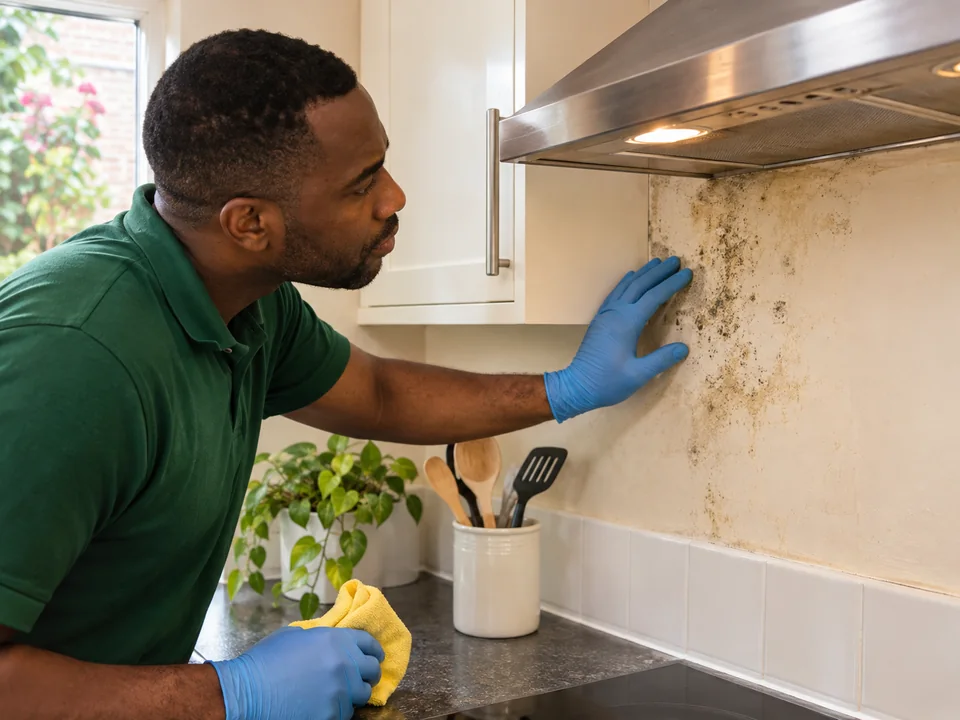
We discuss the room and the visible mark before arranging mould removal in Canonbury. We assess what we can reach, agree and prepare the working position, physically remove visible mould from suitable accessible hard surfaces and review the result in the room.
Can I enquire for a lower-ground home in Canonbury?
Yes. Give the complete postcode and the entrance serving the affected room.
Can you look at a mark along a garden door frame?
We can assess the exposed finish and confirm what we can safely reach.
Describe the route and the position from inside the home
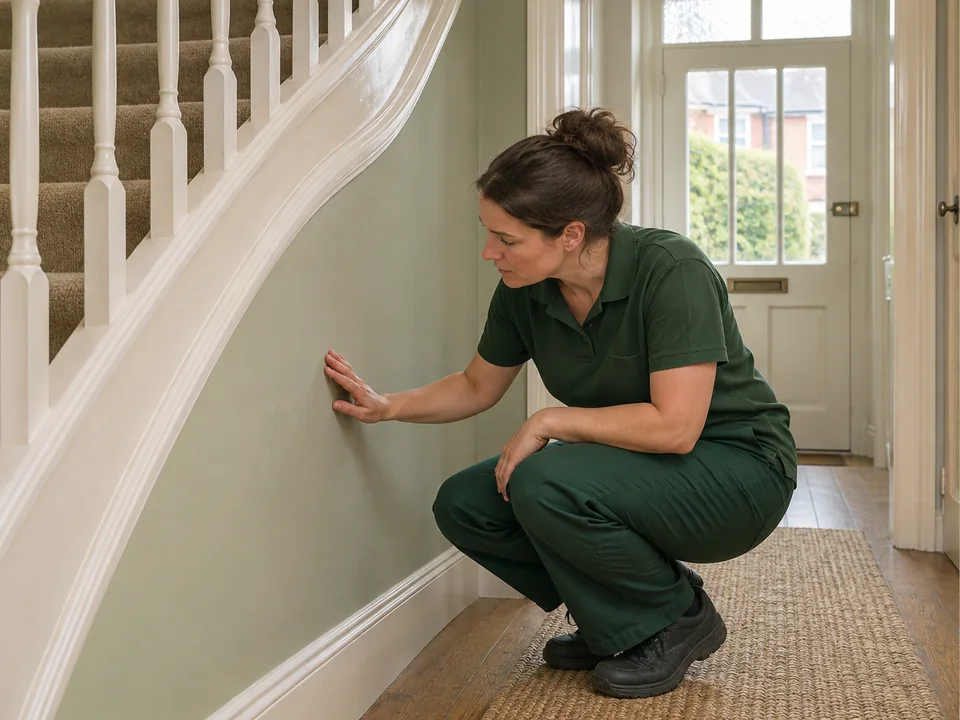
Islington Council identifies Canonbury and East Canonbury as separate conservation areas. If you use either name when describing the neighbourhood, please also tell us the street address, flat number where relevant and full postcode. We ask which door is used to reach the affected room. The number on the upper door can be different from the way a lower-ground property is identified by visitors, so we need the entrance you want us to use.
Join that arrival description to the position in the room. A return beside the garden door, a frame in a front bay or an edge near an internal stair can be more specific than simply reporting mould in the sitting room. Tell us what the visible part looks like and whether the whole patch is in view. If we can use a nearby fixed feature to recognise the area, name it and describe which side of the feature the mark sits on.
A wider photograph can help us recognise the wall or opening. Take it from a position you can reach safely and explain which room it shows. You can also share a closer view if you already have one, especially if the patch sits near a change of material. We use photographs to prepare for the assessment. We confirm the actual visible position and the available approach when we see the room.
If one household has several floors and the rooms are used by different people, tell us who can give access to each. The person answering the enquiry can identify who is responsible for the property and who knows where the mark is. If they are different people, give each one the same room and finish description. That lets us discuss the assessment with the person who can show us the area and reach the person who can agree the work if needed.
- Give the postcode and entrance to the affected floor.
- Describe the mark using a fixed reference point.
- Identify who can open each room and agree work.
| Enquiry detail | How we use it |
|---|---|
| Door and floor | Plan the route to the room. |
| Fixture by the mark | Identify the visible surface. |
| Access contact | Confirm who will show us the area. |
Assess the individual finishes and establish the accessible extent
On arrival, we look at the exposed surface and consider how it can be approached. A wide sill, the frame above it and the adjoining wall are three positions even where one mark appears to cross them. We identify whether the hard section remains firm and how it meets a different or visibly deteriorated material. That gives us a clear basis for deciding which accessible parts can be included and for explaining why the treatment boundary falls where it does.
Garden-level doors can have a narrow side return where the hard finish changes as it reaches the wall. If the visible patch sits at that change, we check the two finishes with the opening in the position you use to show us the area. Tell us whether a fixed stop, track or grille prevents that opening from moving further. The available working space can differ between the face of the frame and the edge concealed when the door is shut.
If the mark lies beside a built-in unit, point out the visible edge and tell us whether the unit must stay in place. We assess what is exposed and make the limit clear when part of the affected area is inaccessible. We cannot tell how far a concealed mark extends from looking at the neighbouring finish. If part of that position needs to be opened up or investigated, the person responsible can arrange that separately.
The condition we see when we arrive shapes the work we can discuss. If more of the wall is now visible, mention whether you moved a piece of furniture since taking the photograph. Show us which part you first saw and where the newly visible area starts. We can then look at both positions rather than interpreting the earlier image as a complete description of the surface.
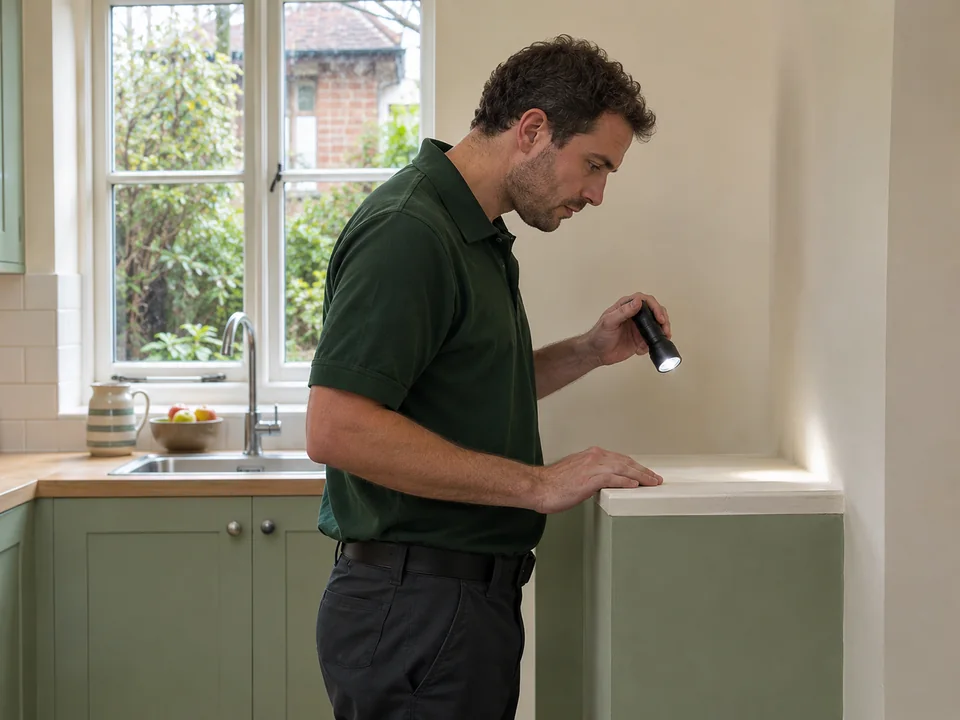
| Feature | What we assess |
|---|---|
| Bay frame and sill | Where the material and access change. |
| Door return | Whether the door can open enough to expose the finish. |
| Built-in unit | Where the reachable area ends. |
Prepare the room before work on the hard surface
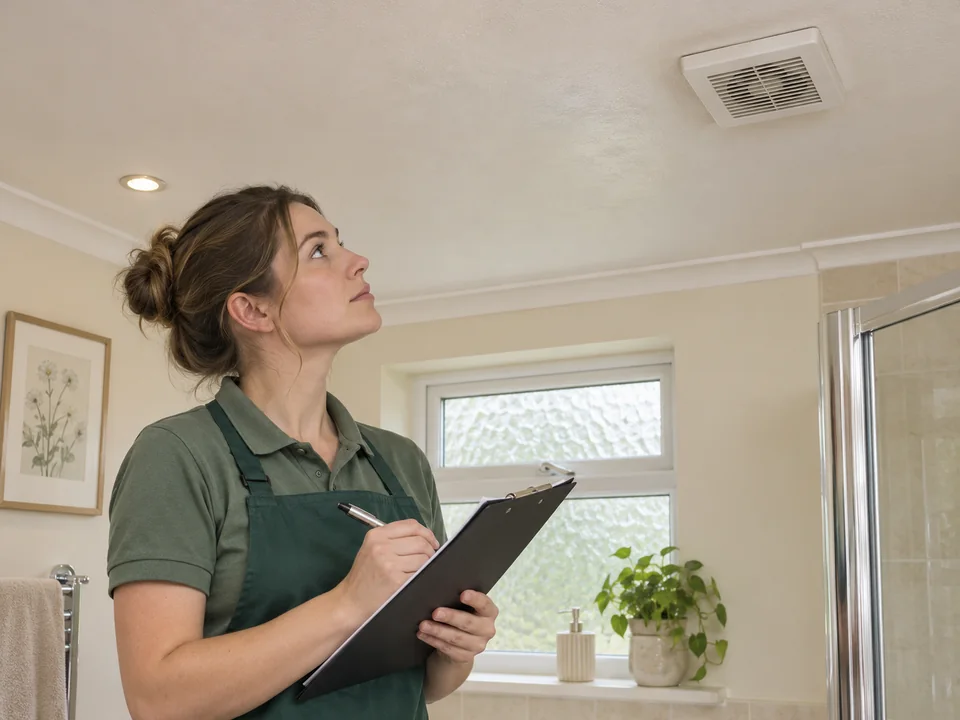
After we have agreed the visible surfaces to work on, we discuss how each one can be made available. We need the area immediately in front of the mark and a workable route to it. In a room reached through narrow stairs, tell us whether the stairs are also the route to an occupied area upstairs. We can confirm which access is available and what needs to stay clear during the agreed work.
Ask the resident which belongings they can move and which ones need to stay where they are. If clearing the sill would put items in front of a second affected area, agree a different position for them beforehand. Where a fixed item changes the available reach, we keep it in place and discuss the position that can be worked on. The aim is to have the agreed surface accessible without assuming that a property fitting can be moved.
If we need to work in two rooms used at different times, tell us when each room is available. A resident who can give us entry may only be able to keep one doorway clear at first. We can discuss which area to assess and prepare first and who will make the second space available when required. If someone leaves after opening the property, agree a contact who can make a decision on any new area exposed while we prepare.
If the garden door gives the only way to reach an outdoor area the resident needs, tell us before we prepare the position. We can discuss whether the door can be kept still while we work on the frame or whether another part of the home offers a better starting point. We confirm the choice with the resident.
- Clear the agreed approach to the surface.
- Say which fixed items must remain in place.
- Tell us when each room becomes available.
Carry out the physical removal agreed during assessment
We physically remove visible mould from suitable accessible hard surfaces that have been agreed for cleaning. We follow the exposed area we inspected rather than making the work apply to every place around the nearest feature. If the sill has a hard exposed face and a part beyond it meets a damaged wall, we clean the agreed face and explain where it ends. Agreeing the material and boundary before starting makes this clear to the person using the room.
There are times when the item closest to the affected section leaves only part of the patch available. A bay frame, for example, may have an exposed length ending at a fixed cover. We identify the part we can reach and explain where the cover begins. The same approach applies if a narrow return has one firm area and a different area at its end. We can describe each position separately during the review.
When we have cleaned the agreed surface, we look across it with the person available on site. We point out any visibly changed or deteriorated finish around it and identify any concealed position outside our work. For a mark across more than one finish, we give each section a separate description so the resident or owner can find it again. We use the nearest recognisable fixture and a description of the side or end of the area.
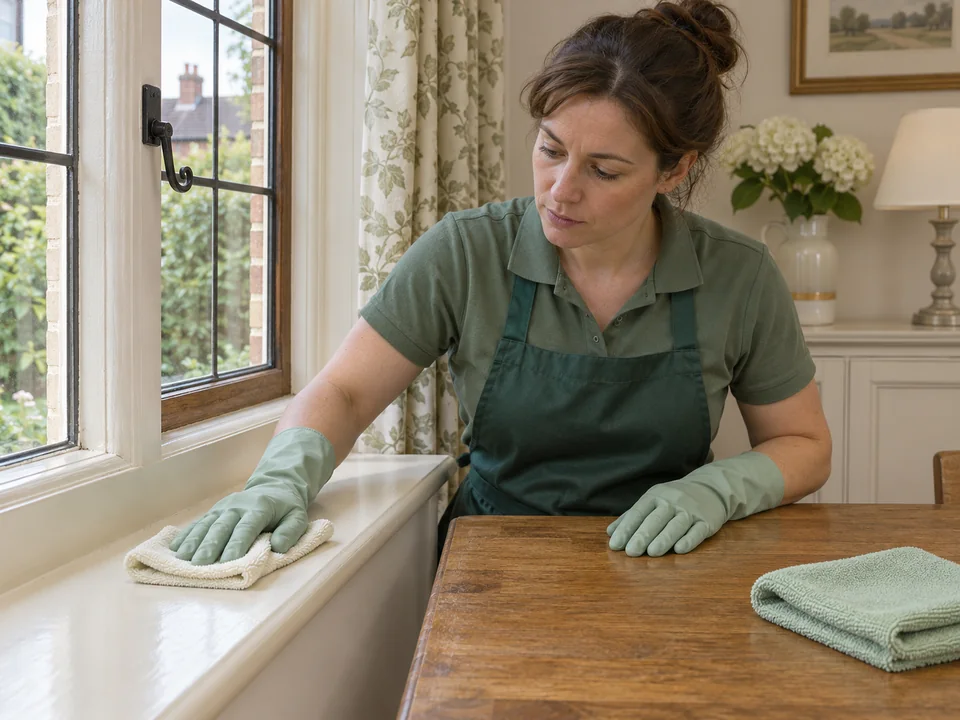
| After cleaning | What we explain |
|---|---|
| Area cleaned | The hard surface where work took place. |
| Boundary | The material change or obstruction where work ended. |
| Visible issue | The position for a separate property decision. |
Handover with enough detail to find the area again
The person arranging access may have more immediate information than the person responsible for decisions about the property. At handover we describe the actual position cleaned and where the agreed work stopped. If the property contact could not attend, confirm in advance who should receive the same result. We use the wording established in the assessment, such as the hard inner edge of the garden door, to connect the two conversations.
Tell us if there is already a report about a leak or recurring mark, especially one linked to the same room. We can say what we saw and what visible cleaning was carried out. The property owner, manager or other relevant contact can use that information if they decide to arrange investigation or repairs. A description tied to a specific finish is helpful when they are considering an adjacent area that we could see but did not clean.
If the result includes a second room, keep the rooms separate when telling us who should receive the handover. One resident may use the lower room while another can show where an upper window was assessed. Agree whether we should show both rooms to the same person and how the keys are to be returned afterward. Repeating both room references in the handover allows someone to review them individually on a later occasion.
Start the enquiry with your Canonbury address and full postcode, then tell us the room, the nearest feature and the finish you can see. Include any practical access limitation and identify the person who can agree the work. Where ordinary housekeeping is needed for other rooms, give those tasks their own description and timings. We can discuss how a mould removal assessment fits around those appointments and where a property contact needs to be involved.
- Confirm who hears the result for each room.
- Tell us about an existing property report.
- Agree how any key return will work.
Questions about arranging mould removal
Can I give the entrance as the gate below the steps?
Yes. Add the full postal address and identify the door or bell used to reach the affected floor.
What if the mark meets the painted wall at the edge of a sill?
We assess each visible material separately and explain which suitable hard part can be agreed for cleaning.
Will you look at the concealed part behind a built-in unit?
We look at the exposed area and explain the limit where the fixed unit blocks what can be reached.
Do I need to clear every room before you arrive?
We discuss the working position and approach for each named room. Tell us which room can be made available first.
Can one resident show the marks and another hear the result?
Yes. Confirm who can open the property and who should receive the handover.
Can I add a room found after making the booking?
Point out the new area and we can discuss a separate assessment of its surface and access.
Other Cleaning Services in Canonbury
Start with your Canonbury address, Discuss regular housekeeping for other rooms
Discuss your mould removal enquiry
Mould Removal Prices in Canonbury
Tell us which rooms are affected, the approximate size of the visible patch and what surface it is on.
Get a Quote