 Housekeeper
Mould Removal in Chadwell Heath
We assess visible mould in Chadwell Heath homes before agreeing the cleaning. We identify the accessible hard surface, discuss preparation and physically remove visible mould from suitable agreed areas. We then review the cleaned section and point out any visible issue still requiring attention.
Plan your enquiry
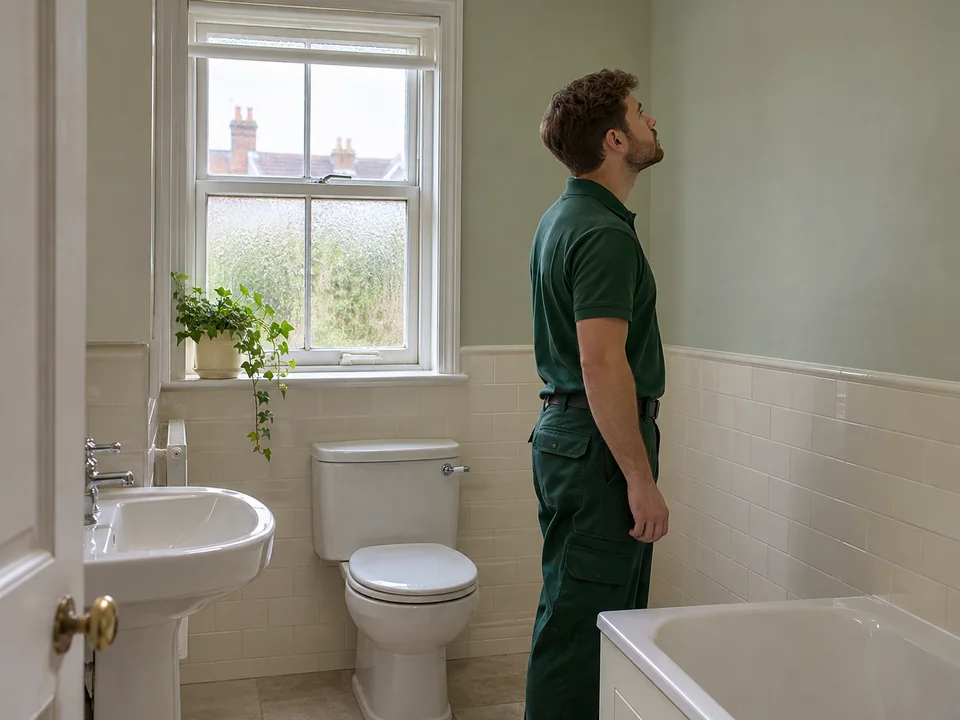
Can I enquire for a home near St Chad's Park?
Yes. Give your full postcode and the property entrance.
Can you assess a strip by a utility cupboard?
We check the visible material, where fixed fittings begin and what we can reach.
Inspect visible growth around the affected opening or alcove
Barking and Dagenham's open space study identifies St Chad's Park as a local green space for Chadwell Heath. If you use the park as a reference while describing your property, please also give the full RM6 address and postcode. Tell us which entrance you use to reach the room with the visible mark. A ground-floor room may be reached from a side passage even when the main door is easy to identify from the street. We need the route available on the day and the name of the person who will let us in.
We check the exposed patch against the nearest fixed feature and inspect where it changes material or disappears from view. In a utility alcove the room-facing surface can be firm while a strip next to the fitted unit is hidden. We assess the accessible areas separately and agree where we can work with the fittings in place. If the exposed hard material is suitable, we prepare it and physically remove visible mould from the part included. We then show the treated face and describe any area still concealed.
We look at the patch from the ordinary working side of the room. A mark at the edge of a door may be visible even though clearance around the fitted frame prevents access to one section. We check the exposed faces and agree whether a compatible hard part can be cleaned independently. Where height, fixed parts or a difference in finish limits the clean, we identify that point and show it alongside the treated area.
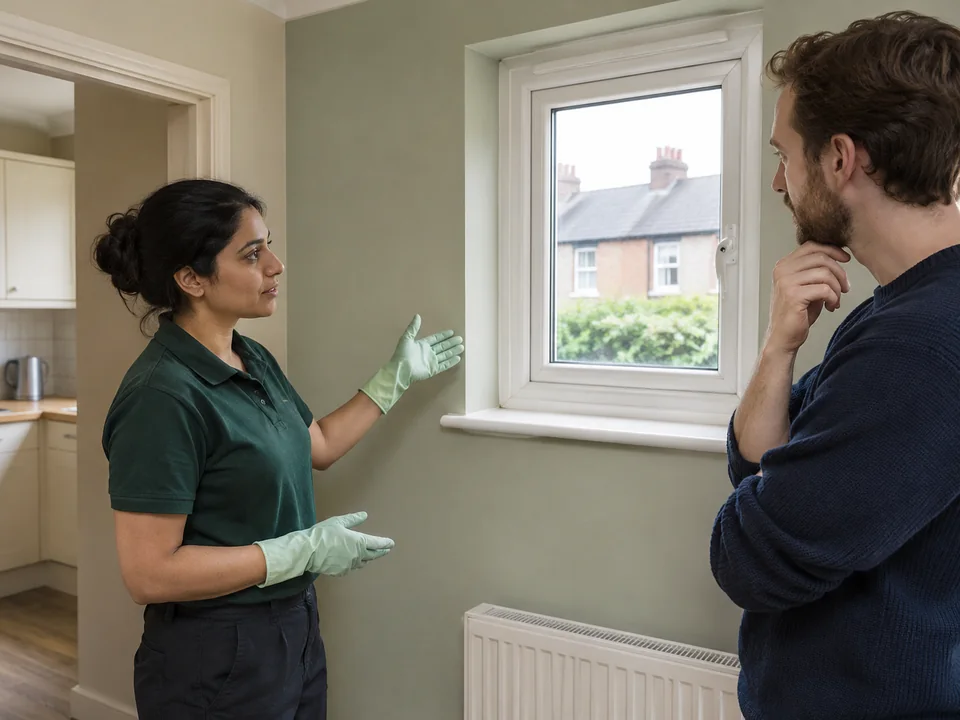
Ask the person meeting us to say whether anything has changed recently. They may have first seen the patch after moving belongings, or a previously visible edge may now be blocked. The change helps explain the difference between a photograph and the current position. Tell us if someone else is responsible for the room and will need to agree the work once we have discussed those details.
- Give the actual address and the door we can use.
- Name each visible patch by its closest fixed feature.
- Confirm who will show us the current condition.
| Detail to share | Why it matters |
|---|---|
| Entry route | Find the door that serves the room. |
| Visible position | Identify which finish is affected. |
| Recent change | Understand how the original report compares with today. |
Assess the exposed finish and any change beside it
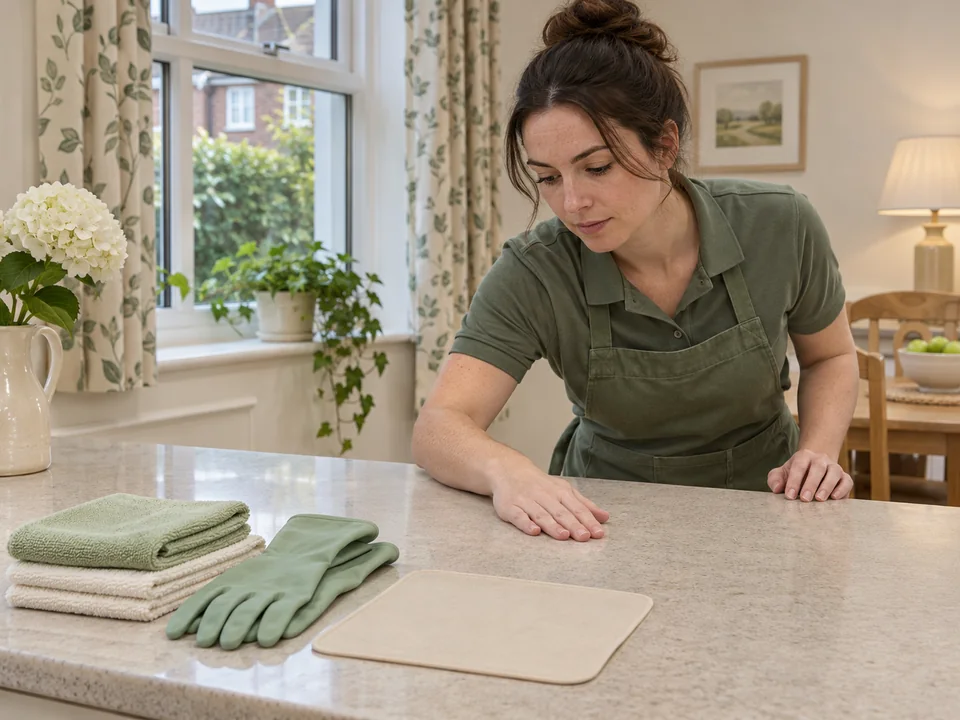
We review the accessible surface where you can see the mark. For a stable hard finish beside a utility sink, we consider the part in front of us and where it runs up to another piece. A metal or tiled section can meet paint, a softer strip or a visibly damaged edge. We explain which part looks suitable to clean and where the change in finish means a separate decision is needed.
Access can vary along the length of a single feature. The front face of a cupboard can be exposed while a return close to a pipe is only visible from one angle. Show us how you saw the mark and what can move during normal use. We check the room from the position available and discuss which exposed part we can safely reach. Anything behind a fixed fitting remains a matter for the person responsible for opening or investigating it.
Past photographs can still tell us something useful about the position, particularly if a resident can identify a fixed reference point. We check whether the image shows the same surface and whether the visible extent has changed. If the surface was covered or has visibly deteriorated since the image was taken, we use the condition on the day and discuss the new area separately. That keeps the decision tied to the surface we can inspect.
If marks are visible at both sides of a door, we examine the sides as individual positions. One side may be a sound, exposed hard frame while the other adjoins a fitting. We use the first assessment to decide the reachable boundary and explain which positions can form part of the visit. A hard surface at one side does not establish whether the other side has equivalent access or material.
| Visible position | What we check |
|---|---|
| Hard strip near a sink | Where the material changes. |
| Cupboard return | Which part remains within reach. |
| Both sides of a door | Whether each has suitable access and material. |
Prepare the work area and the approach to it
After agreeing the area, we discuss making it available. A utility alcove can share floor space with laundry, storage or the route to a garden. Tell us whether those uses can pause while we prepare and work. We need a clear approach and room in front of the surface, so agree where everyday belongings can be kept and identify anything installed that needs to stay where it is.
Sometimes we can start on an exposed section while a resident clears a second position. Tell us who can move the belongings and confirm that the second room can be opened when it is needed. If moving an item shows another finish, we assess its visible condition before we discuss including it. An appointment for a named surface only changes when the person responsible agrees the additional accessible work.
We agree the immediate work area before preparing the affected surface. If the growth continues behind a fitted appliance or onto the adjoining room’s face, we check the reach and material at that boundary separately. We treat the suitable accessible hard surfaces included and explain any part left outside. At handover we use the same opening or fitting to show the cleaned area and identify any separate issue requiring different access or further assessment.
A side passage may lead straight to the door where the mark is visible, but space on the inside still matters. Tell us whether the door opens into the area you want us to see and whether the usual resting position blocks access to its inner edge. We can review it in the position you can make available and agree when the opening can stay still while we work.
- Agree where movable items can wait.
- Point out fixed items that limit reach.
- Give us an available decision-maker.
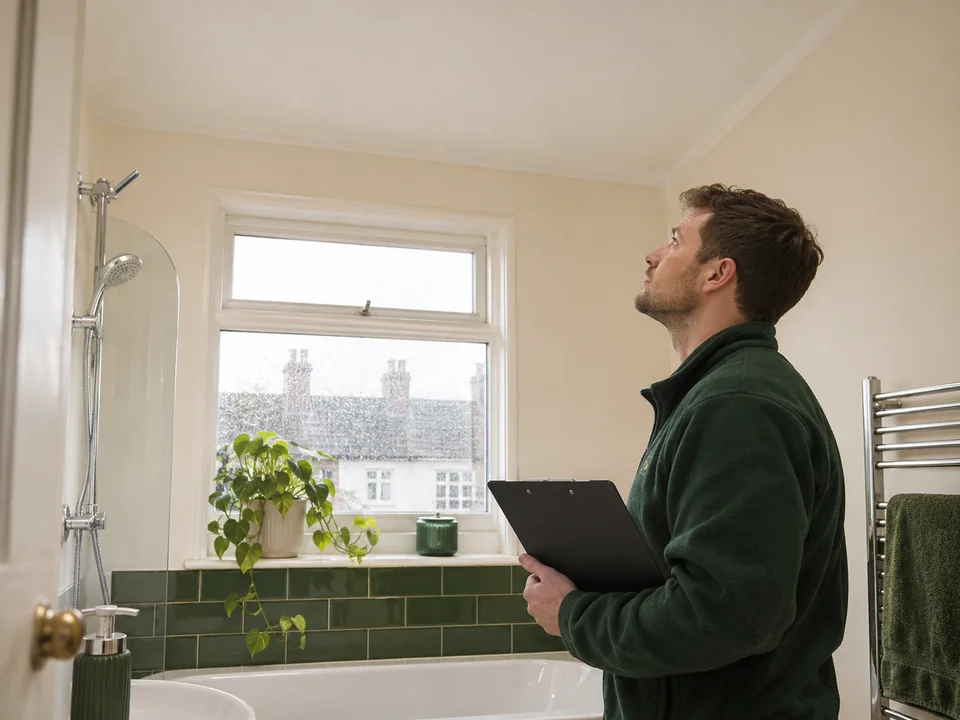
Physically remove visible mould on agreed hard surfaces
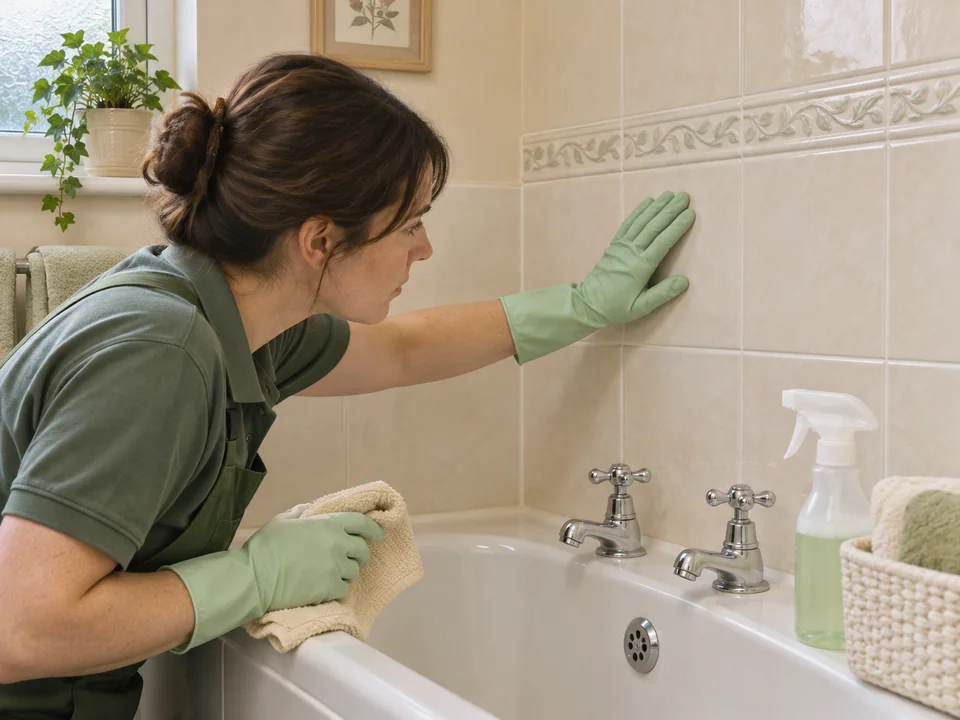
We physically remove visible mould from suitable accessible hard surfaces after assessment and preparation. The work follows the specific section agreed with you. We can clean a sound hard area within reach while leaving a different or visibly damaged adjoining finish for separate assessment. If a fitted item interrupts the accessible section, we work within the agreed boundary and explain where the obstruction begins.
While working we keep track of the position used to identify the area. The end beside the door latch or the part between the sink and the joint can be easier to find later than a general reference to a corner. If another mark becomes apparent at the edge and falls outside the agreement, we identify it as a separate position. It can be discussed based on its condition and access rather than being assumed to be part of the original work.
At the end we review the agreed section and the next visible feature along it. We explain whether we reached the end indicated at assessment and whether an adjacent area was outside cleaning. That might be a different finish at a pipe cover or an area behind a fixed frame. Use the same landmarks when showing the result to someone who was not present, especially if they need to decide whether to investigate further.
| Review point | What we identify |
|---|---|
| Hard section | The area where agreed work was carried out. |
| End beside a fixture | Where the cleaning boundary lies. |
| Neighbouring concern | What still needs the property contact's attention. |
Give the result to the person who can act on it
We close the visit by pointing out what was assessed and cleaned. A resident can review it with us, or you can agree who should receive the position and result if they are elsewhere. We use the room name, surface and fixture from the enquiry so each person can distinguish the cleaned area from other surfaces in the same room. Tell us if two people need separate information because they have different roles.
If a recurring mark, possible ingress or visibly damaged finish is already reported, tell us which contact handles it. Our handover describes what was visible and what cleaning was carried out on the accessible surface. Any separate investigation into the building or repairs belongs with the person responsible for it. Give them the surface reference used during the review so they can find the adjacent condition without guessing which part of the room you mean.
If the keys are in somebody else's care, let us know who expects them back and when. The person collecting the keys may be different from the one who should receive the result. Agree whether someone needs to inspect the room before access changes. We confirm those practical details at the start so the work and review can take place before the handover deadline.
For a Chadwell Heath enquiry, give us the property address, affected room, closest fixture and any practical restrictions on access. Tell us what the surface looks like and who can point to the visible area. If other household cleaning is also being planned, give it a separate list and preferred date. We can discuss how to arrange the visible assessment and cleaning around the other work and the people using the property.
- Agree who will receive the room details.
- Mention an existing report about the same position.
- Confirm who receives any keys at the end.
Questions about arranging mould removal
Can I use a side gate for the appointment?
Tell us how to recognise the gate and who can lead us to the affected room.
What if the room looks different from the original photo?
Show us the current visible extent. We review it in person before agreeing work.
Can you assess either side of a utility door?
We can assess both exposed positions and see how the surfaces and working reach differ.
Do I need to take a fixed cover off first?
Tell us what the cover obscures. We assess what is visible and explain the practical limit.
Can someone else set out the room before I get home?
Yes. Give them the same room reference and confirm who can approve the work if needed.
Will the handover identify any inaccessible edge?
Yes. We explain where the accessible cleaned surface stopped and why.
Other Cleaning Services in Chadwell Heath
Describe the area for a Chadwell Heath visit, Discuss separate regular cleaning
Discuss your mould removal enquiry
Mould Removal Prices in Chadwell Heath
Tell us which rooms are affected, the approximate size of the visible patch and what surface it is on.
Get a Quote