 Housekeeper
Care for built-up cooking residue
Oven Cleaning in Haggerston
We clean Haggerston ovens when grease has collected under a shelf, around a door or through the main cavity. We inspect the deposit and the material underneath before choosing how to clean the accessible surfaces. The visit can include suitable removable trays, shelves and reachable glass.
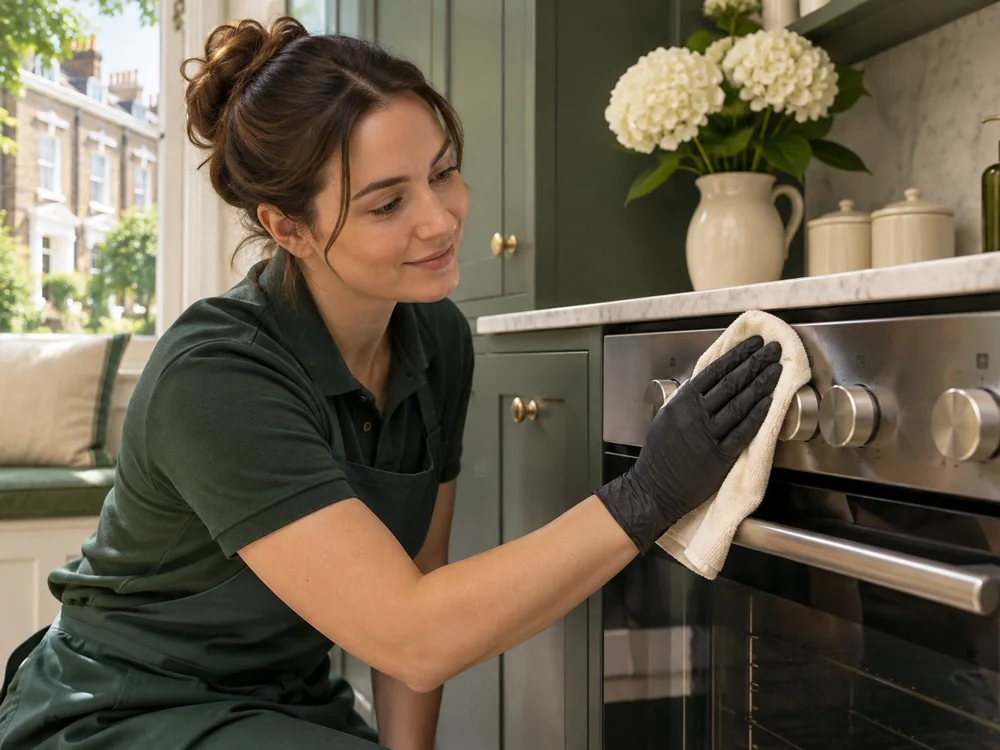
Can you clean grease behind a shelf?
We check whether the shelf can be removed normally and inspect the reachable space behind it. Fixed runners are left in place where removal is unsuitable.
Can I ask about grease under a rack?
Yes. Identify the cavity, finish and nearby shelf or rail for the technician to assess.
Follow a grease trail to where it collects
Drips on a glass door can come from the same oven use as a wider film around a shelf rail. We compare the exposed surfaces and work on the relevant deposits rather than treating every visible dark patch as the same material.
Where residue runs across the edge of a liner, we assess each side of that join. The procedure for a suitable enamel section can differ from the way we handle a neighbouring specialist panel.
- Show the cavity and surface where the grease sits.
- Tell us what cooking preceded the problem.
- Highlight older changes to the material if visible.
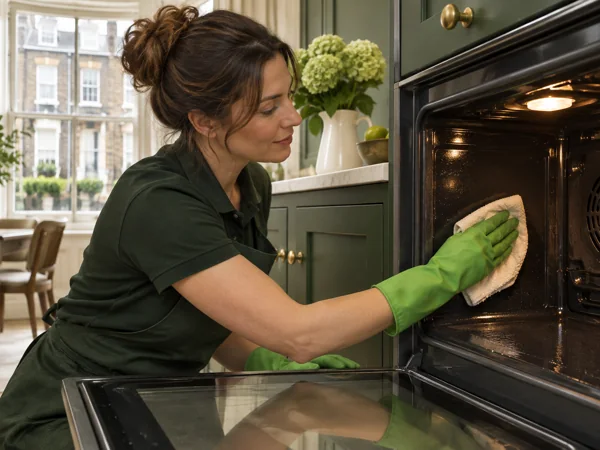
Assess older treatment marks before working on them
An area that has already been partly cleaned may show a hard film, dull surface or both. We inspect whether the mark can be lifted from the finish and explain what could remain visible.
The accessories are checked independently of the cavity finish. A tray with a coating and a wire shelf exposed to the same grease can require different handling.
Set entrance and unloading details for a Haggerston visit
National Rail lists Haggerston station on Lee Street in E8. Use the street or station as a reference if it helps, but give the full postcode and residential entrance for the actual address. In a block with several approaches, a delivery address may open to a different lobby from the residential lift. Tell us which door a visitor with equipment should use. Add the visible bell label and whether the technician should telephone someone before entering a shared court or following a passage.
For a building with a porter or service lift, confirm how to arrange access before requesting a time. Include an authorised place for unloading and state which lift or steps reach the kitchen. Check if another door has to be opened beyond the landing. If there is a limit on a visitor pass, show how it can be returned afterwards. For a flat entered directly from the street, name any shared gate and describe the floor change from the pavement. Give a contact who can guide the technician if signs differ.
- Give the residential postcode and entry door.
- Confirm the correct lift, staircase or route through the building.
- Name the person who can address access questions.
Explain where grease collected
| Area | What to describe | What to check |
|---|---|---|
| Oven floor | Age and cause of spill | Accessible deposit and finish |
| Upper grill | Tray position and repeated use | Reachability |
| Door glass | Viewpoint and edge condition | Possible affected face |
Set the scope where fitted units share a front
A matching glass panel can belong to a small grill or another oven rather than to the one booked. We identify the included unit first and keep its trays with it before treating the interior.
If the hob or extractor also needs work, it is assessed separately. This keeps the oven clean focused on what was agreed while allowing additional pieces to be discussed for the same visit.
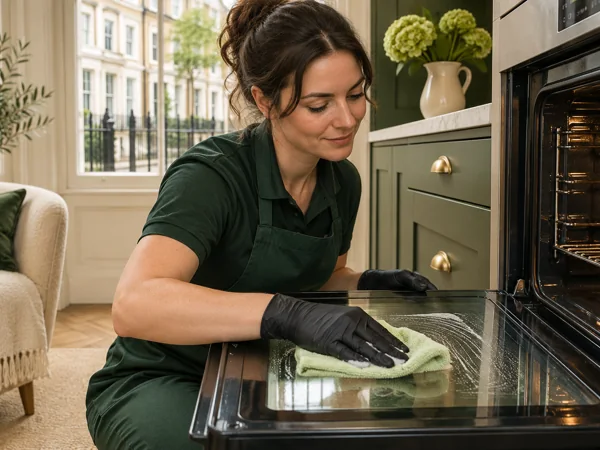
Clean compatible removable parts independently
A rack that slides out freely can be assessed all around its bars and corners. We clean suitable pieces separately so the exposed cavity and concealed accessory faces can both be reached.
A fitted shelf mechanism that binds is left in place. We work around any accessible edges and review the restriction at handover.
- Count shelf and tray parts by cavity.
- Mention the assembly when a rail extends or catches.
- Identify loose inserts and bought-separately accessories.
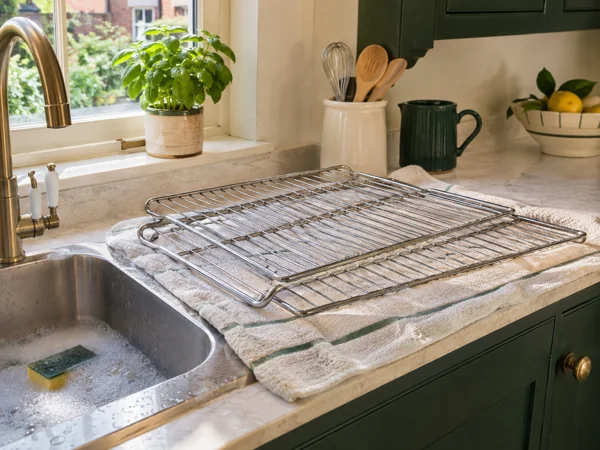
Identify removable parts
| Part | Tell us | Decision |
|---|---|---|
| Wire rack | Cavity and count | Which pieces to include |
| Extending guide | Movement and condition | Safe removal |
| Grill tray | Insert and finish | Appropriate treatment |
Decide which parts of the door are accessible
We inspect the glass along its exposed borders as well as across the middle. A streak that is on a reachable surface can be assessed, while haze within a sealed assembly may remain out of reach.
If the trim is already loose or a pane has damage, we point out what access that leaves before cleaning. We do not dismantle the fitted unit as part of an oven clean.
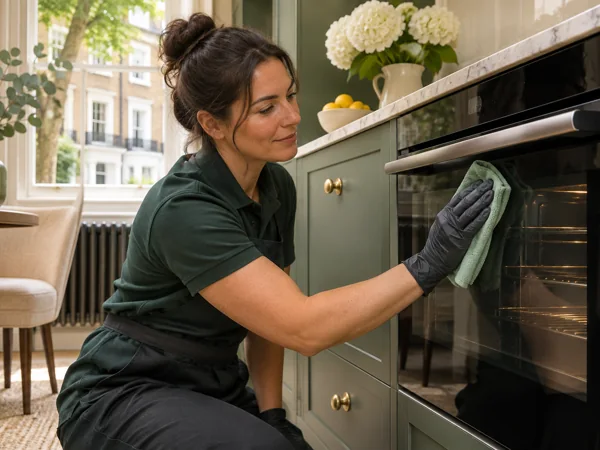
Treat grease beyond the oven as a separate request
A shiny hob and oven frame can have different care requirements even when they touch. Tell us the hob type and affected areas, including any removable supports. Identify separate trim or splashback material only if you want to enquire about it. A stain that crosses a joint should be described by both surfaces. Give any relevant maker’s care instructions. If a second person uses part of the kitchen while the appointment takes place, agree how to keep the included hob or surrounding area free.
For an extractor, give the cover position and the approximate height and type of filter. A cover, washable metal filter and disposable insert may need separate handling. Supply the instructions if the filter is enclosed and can only be located in the manual. Discuss each part independently and ask to see the agreed work on the quote. Enough space near the extractor may be needed even though the oven is across the room, so check the access and clearance for any optional work before confirming it.
- Identify the exact hob material and areas.
- List the extractor cover and filter separately.
- Confirm working space for every agreed item.
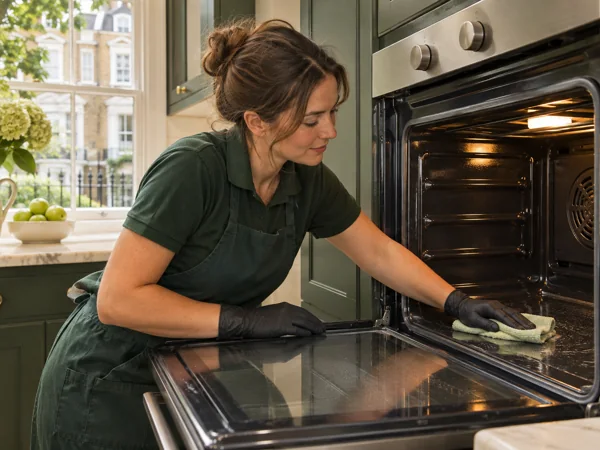
Review the original deposit after the clean
We use the first area of concern to show the result and then check the other work agreed for that cavity. Racks, trays and glass are considered separately so an accessory is not overlooked.
We explain which surfaces were cleaned and when to use the oven again. Any remaining wear or inaccessible deposit is identified distinctly from the completed work.
Confirm the route and timing
| Stage | Information | Contact |
|---|---|---|
| Street | Full address and chosen door | Resident or property contact |
| Lobby | Lift and any visitor sign-out | Reception or porter |
| Kitchen | Clear counter and cooking deadline | Person on site |
Get an oven cleaning quote in Haggerston
Tell us the oven type, number of cavities and whether the hob or extractor also needs cleaning.
Get a QuoteOther Cleaning Services in Haggerston
Local references · National Rail, Haggerston station
Haggerston oven cleaning questions
Can I identify which mark has been treated already?
Yes. Give the product and approximate timing, and distinguish that spot from marks you left alone.
What if the greasy mark sits next to a worn patch?
Point out both. The technician can assess the deposit and explain whether the permanent change will remain.
Should I put the appliance model on each separate request?
Give it for every unit you want considered, especially if the grill or hob is independent of the oven.
Can you use a different entrance from my postal address?
Give the postal address and clear directions to the approved entrance for equipment.
Does a previously removed rack need to go back before the appointment?
Leave it where it is if you are unsure how it fits, and identify its original cavity and position.
Can the extractor work be limited to grease on the cover?
Yes. Give the height and finish and state which accessible parts you want considered.