 Housekeeper
Care for built-up cooking residue
Oven Cleaning in London Fields
For a London Fields oven cleaning enquiry, start with the place where grease or a spill has collected. Identify the cooker, the affected cavity and any parts you want assessed separately. Give the full postcode and the door the technician should use.
Can I enquire for an E8 home?
Yes. Send the full address and the entrance to your property.
Can I ask about grease beneath a runner?
Yes. Leave the part in place and describe the cavity and the area you can see.
Read the route a spill took through the oven
Once the appliance is cool, look directly below the shelf where you usually leave deep dishes. A drop can pass through the wires and spread along a recess in the base, while grease from repeated grilling might form a wider film higher up. Send the position of the shelf, a description of the deposit and what you remember cooking. A broad photo from the opening can show a ridge or lip that a tight picture misses. Keep spill details separate for ovens that sit next to each other.
If the drip ran past the edge of an enamel floor and onto a separate liner, describe both surfaces. Tell us which part is the priority and what was already visible before the latest spill. A pale or worn section may remain visible even after accessible residue is removed. The technician can check the finish alongside the deposit at the first inspection. If a mark seems to lie underneath an attached rail, explain how far you can actually see it without moving the hardware, then leave the fitting as it is.
- Name the cooking shelf and affected cavity.
- Identify the line where the spill crossed surfaces.
- Point out anything visible before the latest use.
Explain the arrival route near Mentmore Terrace
National Rail gives Mentmore Terrace in E8 as the address of London Fields station. If that location helps orient a visitor, use it with your complete residential address and the door approved for equipment. A shared building can have an address plate at the street entrance and a separate way into an individual flat. Provide the visible bell label and, if relevant, the way to the correct block through a courtyard. Tell us when a resident should meet the technician rather than leaving them to guess between similar doors.
Give the unloading position you have confirmed and describe the route from there to the cooker. For a kitchen reached by a lift, check which level opens closest to the flat and whether steps remain after it. Where an entrance has more than one gate, state who can open each and which should be used on departure. Share the note with whoever will be there and keep a number available for access questions. If the kitchen is on a lower level reached by stairs, include the flight and turns between rooms.
Check the finish before choosing an approach to the deposit
Find the maker’s instructions for the affected cavity if you can. The base, liner and door can have different finishes even inside a single oven. A manual can name a catalytic lining, explain a self-clean programme or give separate advice for a particular accessory. Tell us if you have already run a programme and when. If an earlier cleaner was used, give its name and the surface it touched. A light patch around a darker deposit can tell part of the story, particularly if it showed up only after treatment.
Pass on the order of events where you remember it. For example, a spilled oil may have baked on over several uses, then a product was tried on the door and part of the floor. The technician can look at the surface and material separately, including any change to the finish. If the history is unknown, such as in a newly occupied flat, describe the condition as you found it. Avoid applying more product to test a spot before the inspection. Share the relevant maker’s care page alongside the affected area or cavity.
- Provide the lining or coating name where known.
- Give the areas touched by each earlier product.
- Mention a built-in cleaning cycle and its timing.
Trace grease by its source
| Where you see it | Tell us | First assessment |
|---|---|---|
| Below a roasting shelf | What overflowed and where it ran | Visible surface and residue |
| Upper grill area | Which dish or tray sits below | Reachable areas and nearby fittings |
| At the liner edge | How far it crosses the join | Care for each material |
Separate the cooking functions behind the glass doors
Take a photo showing the separate doors and control labels. Write down which cavity handles the meals that prompted the enquiry and which is a grill or combination unit. Some doors hide a warming drawer or storage compartment. Use the terms from the manual when available and give the model from there or an accessible label. Keep the appliance in place. If you want to leave one cavity outside the job, state its position. A pair of nearly identical doors can otherwise make a request difficult to match to the cooker.
When the cooking function is established, list the accessories that sit in that compartment. A ribbed insert and its drip tray are different pieces, while a wide roasting rack may also be stored in another oven. Match each concern to a door and use the same names in the quote and at the visit. If something in the cooker came from a former appliance, describe it as an extra accessory and give the finish. Let the technician assess its suitability before assuming it can be treated like the original parts.
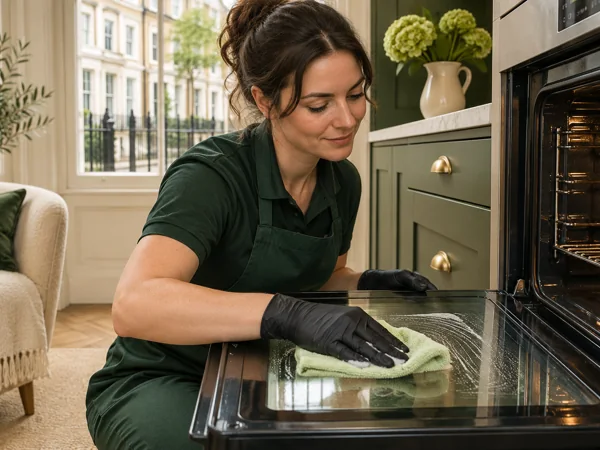
Keep parts that move on rails identifiable
Count the loose wire racks, original trays and any grill inserts you want considered. Describe a shelf that slides on an extending guide and tell us if it catches at a certain point. Keep anything fitted or stiff where it is. The technician can inspect each part for construction and condition, then safely remove suitable components. Some removable pieces may be soaked in a dip tank. If their coating or mechanism needs other handling, the technician can discuss the appropriate approach. Give the maker’s instructions where they refer to a particular shelf or insert.
Clear the cool oven of food, personal dishes and loose foil. If a replacement tray is already in a cupboard, identify which cavity it fits and whether you want it on the quote. Keep pieces of a two-part accessory together if they are already loose, and leave fitted ones for assessment. Reserve a stable counter near the appliance for the agreed components. If several people use the cooker, check that another occupant will leave the correct trays available. Ask which items have been included when you review the quote.
- Identify original metal parts and optional cookware separately.
- Tell us if a rail extends, sticks or has been removed.
- Clear a surface where parts can be examined.
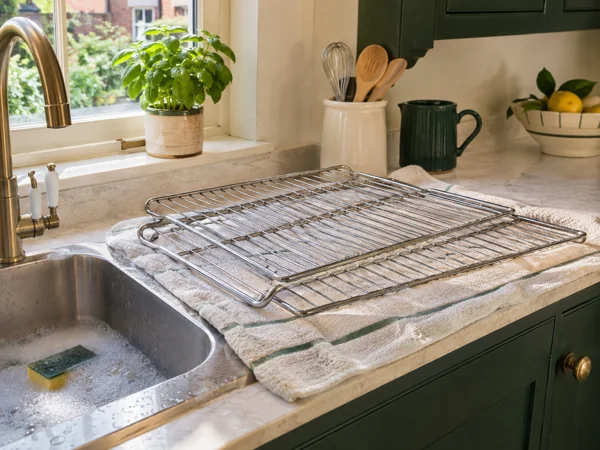
Describe removable parts in context
| Part | Useful detail | What to check |
|---|---|---|
| Grill insert | Matching tray and coating | Individual parts to include |
| Sliding runner | Cavity and where it catches | Safe handling |
| Spare rack | Which oven it originally fits | Whether an extra item is suitable |
Choose the right angle for any streaks on door glass
Look from the room and then the opening once the oven is cool. Describe how the mark appears in the light and how close it is to the edge or handle. Accessible glass can show a greasy smear, or the mark may sit between panes. Safe access to that space depends on the model and door condition. Tell us if the trim moves or if an edge is chipped. If a previous occupant or technician worked on the assembly, share what you know without attempting to take it apart again for a photo.
Use a second image showing the full door when the mark needs a close-up. This helps identify the affected cavity in a double oven. If a streak follows a patterned or coated border, show where it meets clear glass. Ask which faces the technician can reach by the appropriate method. A mark on a permanently changed finish can remain visible afterwards, and a deeper section may be outside safe access. Make clear that the glass is your first priority if the visibility through it is what led you to get a quote.
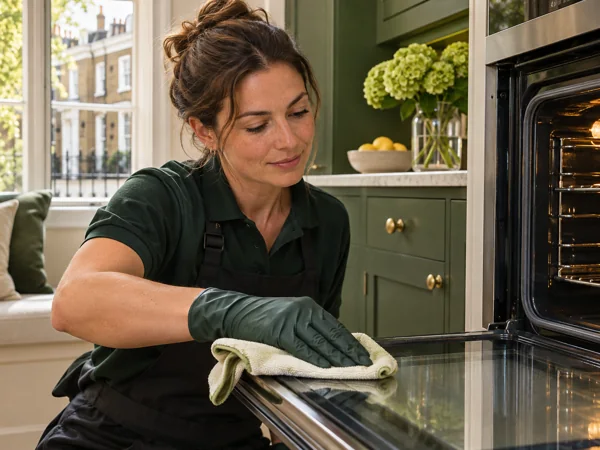
Ask about grease outside the cavity separately
The area above the oven can include a hob top, trim and a splashback made of different materials. Send the surface type and identify which pan supports, controls or cooking zones should be considered. Where a mark crosses to a separate finish, identify that area independently. Even though the surfaces are close, care instructions can differ. Let us know if the hob is elsewhere in the kitchen and if you need another cooking zone available for a particular meal. Ask for each agreed item separately from the oven cavity and parts.
With an extractor, distinguish the visible cover from a filter deeper in the unit. Give its approximate height and the filter material if known. A removable metal filter and a disposable insert can need different handling. If it sits behind part of the cabinetry, share the manual or model and explain where the cover can be seen. Check the written list against the parts you expect to include. Clear the space in front of both appliances if work on the hob or hood is agreed.
- Identify hob type and specific areas.
- Give the extractor height, cover and filter details.
- Put all agreed extras on individual quote lines.
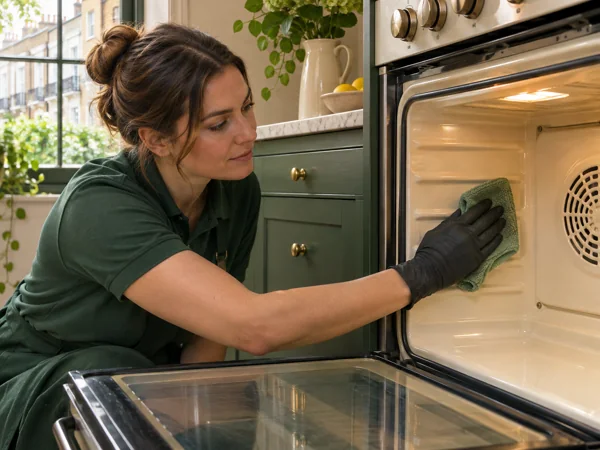
Plan around the cool oven and the first cooking afterwards
Use the postcode form to begin. Have the model, pictures and access note available, and tell us where water or power can be reached if relevant. Leave the cooker fully cool and make room to open the door and work on a nearby counter. Keep children and pets away from the area while parts and equipment are handled. If the kitchen is also the route to another room, agree where people will pass. Give the person admitting the technician a contact to discuss any findings from the inspection.
At the handover, ask what was cleaned and when the appliance can be used again. Confirm where the cleaned racks or trays normally sit and pass the advice to the next person who cooks. If the technician identifies a permanent mark or surface outside the agreed work, note it alongside the relevant model and compartment. Keep any care instructions in the same place. If a property or key holder needs a record of the visit, provide the individual cavities and parts that were actually treated and follow the agreed exit or key arrangements.
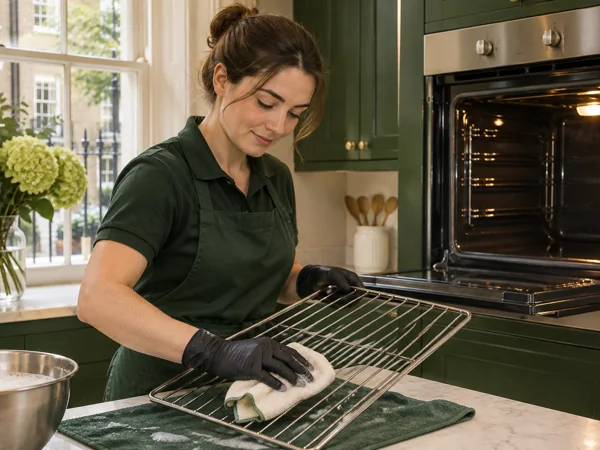
Agree the approach and return to use
| Moment | Confirm | Share with |
|---|---|---|
| Arrival | Postal address and authorised door | Person admitting the technician |
| Inspection | Cavity and priority area | Person approving the work |
| Handover | When the oven can be used | Next person cooking |
Get an oven cleaning quote in London Fields
Request a quote with the oven type, number of cavities and any extra appliances.
Get a QuoteOther Cleaning Services in London Fields
Local references · National Rail, London Fields station
London Fields oven cleaning questions
What if a drip went under a fitted shelf guide?
Describe the visible part of the deposit and leave the fitting in place for inspection.
Can a product used on the glass change what needs to be checked?
Yes. Give its name, timing and exact area so the technician can consider the finish as well as residue.
How can I identify a grill if its door matches the main oven?
Send a photo with the controls and mark the door position or function from the handbook.
Can I identify the building from Mentmore Terrace?
Use it as a reference if relevant and provide the full residential address and actual visitor entrance.
Can I ask about grease on an extractor cover alone?
Yes. Give the cover material and height and say if the filter should be left outside the quote.
Who should be available at the first inspection?
Arrange someone to give access and keep a contact available who can confirm the appliance and decide what work to agree.