 Housekeeper
Signature care for well-used ovens
Oven Cleaning in Bethnal Green
Tell us how the appliance fits your Bethnal Green kitchen and which areas you want covered. An oven in a fitted counter and a separate grill in a cabinet may need different access discussions. Give the model, cooking deposits or other marks you have noticed, and the route to your home so we can consider the visit.
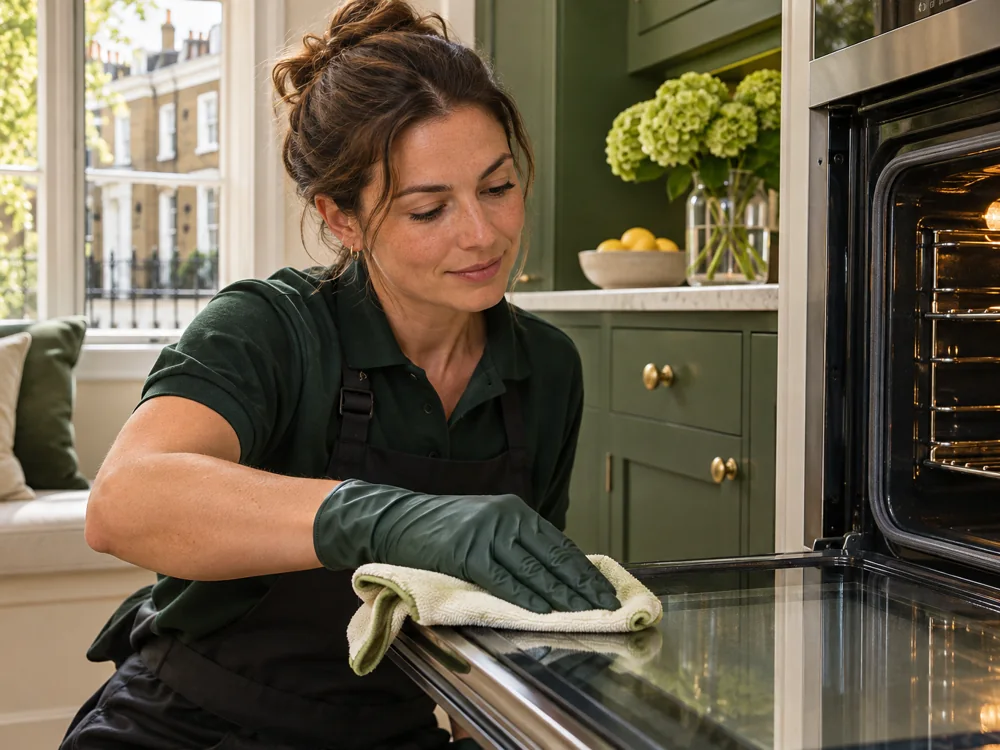
How should I describe an address near Bethnal Green Gardens?
Give your full E2 postcode and the street or courtyard with the residential entrance.
Is it useful to mention the worktop next to an oven?
Yes. Show the room available and identify the material around the affected part.
Show the boundary between the oven and fitted surfaces
A front view identifies the oven while a side view shows where it sits beside the next cabinet. If the door opens close to a painted edge or a metal handle, include both in the photograph. Tell us which finishes border the glass, fascia and floor if you know. A light surface with a visible chip or worn area should be mentioned alongside any grease that reaches it. If another material needs its own care instructions, point it out before the visit. Keep the appliance and panels in their normal fitted positions.
Let us know how far the door can open and where somebody can stand when it is cool and open. If a fixed worktop or dining counter makes the space narrower than it looks from the front, describe the side where it restricts access. Move loose items from the floor if this is practical. A nearby surface can be discussed for reviewing the removable pieces you request. Note its material and whether it will be available when the oven is out of use.
- Give a wide shot of the installation and door clearance.
- Name the finish of the closest fixed surfaces.
- Mention any existing wear or limits to working room.
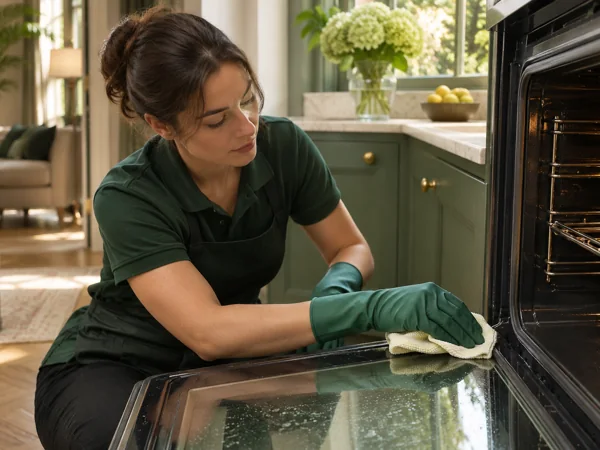
Match the controls with their oven and grill
Look at the whole appliance before describing a single cavity. An upper door might serve a grill, warming compartment or second oven. If you use it for cooking, give its function and parts separately. If two appliances are stacked, indicate the one you want considered and give both models where they can be read. Include a picture of the control area showing the settings and which door belongs to them. Avoid moving the oven to look for a label that is outside reach.
A manual can identify an internal liner or fitted support where the material is hard to recognise. You can include the manufacturer’s terms and describe how you normally use the oven. If a tray belongs to a combination unit rather than the main oven, note it under the correct model. For an appliance supplied with the flat, report the number of working cavities and the present condition of the one you use. Mention which areas should have priority if another person is meeting the cleaner.
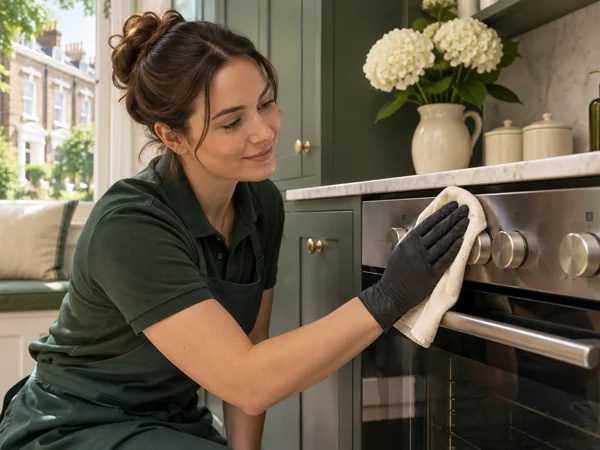
Describe the condition of the area under the residue
A mark around a shelf may sit on textured material while residue on the base is on a smooth surface. Give the position and describe the edge where the materials change. If you have the manual, name any fitted lining. Send a photograph when the applicable cavity is cool. Include the nearest shelf position or door edge so the technician can locate the patch. If there is more than one affected area, label them by cavity and say which one is the main reason for the enquiry.
Report any cleaning product or cycle you know was used previously. If the finish looks dull or less even after a prior attempt, mention what changed. A patch of wear may need to be identified while grease or baked-on residue is assessed alongside it. Leave damaged or unfamiliar fittings in place. We can inspect accessible surfaces and take their current condition and materials into account before confirming treatment. If a mark was on the oven before you moved in, note the position from the inventory if it helps locate it.
- Locate each patch by an edge or shelf position.
- Give the prior treatment if known.
- Identify wear and changes in finish before inspection.
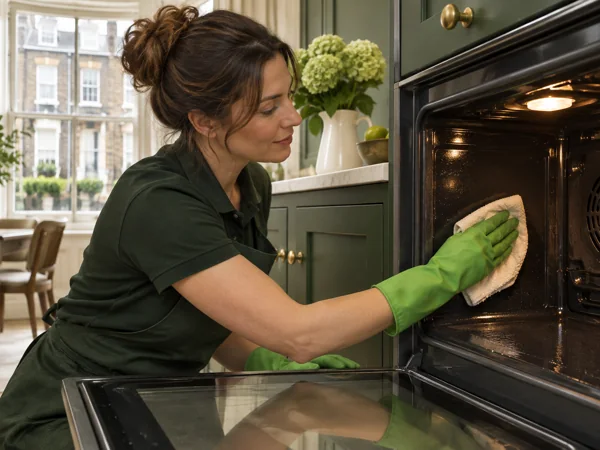
Describe the surfaces around a fitted oven
| Position | Surface detail | What to tell us |
|---|---|---|
| Along door side | Cabinet or metal trim | Existing wear and clearance |
| Below the fascia | Control or handle finish | Area affected by grease |
| At cavity edge | Glass, seal or fitted liner | Where the mark crosses materials |
Name loose pieces and nearby fitted supports separately
A shelf can sit on runners, lift straight out or rest alongside a tray. List only the pieces you want considered and note how they are fitted. If a grill pan includes a wire insert and separate handle, give those pieces their own names. Put personal cookware away before the visit. If a spare shelf is kept in another cupboard, tell the person meeting the cleaner where it is. Leave a runner that is fixed or difficult to move in the position it normally occupies.
We can consider dip-tank treatment for suitable removable parts once they have been checked. The construction, material and condition determine which pieces can be soaked. Mention a special coating or worn edge in the enquiry and give the model if a tray is unusual. If the countertop near the oven is narrow, agree another place where the requested parts can be seen and counted. Take note of which cavity the pieces belong to in case the home has more than one oven or a grill with similar rails.
- List wire shelves, trays and loose inserts by appliance.
- Mention a coating or existing damage.
- Leave unfamiliar fittings where they are.
Plan the residential approach around Cambridge Heath Road
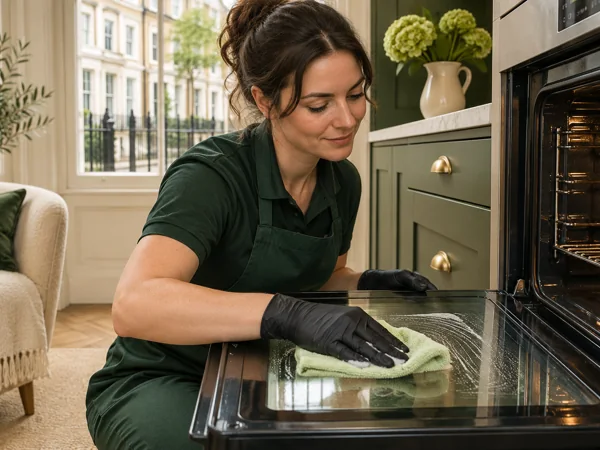
Tower Hamlets Council places Bethnal Green Gardens on Cambridge Heath Road next to Bethnal Green Underground station. If you use that landmark when giving directions, add the full postcode and exact door that serves your home. A nearby flat may open from a courtyard or a side street while its windows face another road. For a property with a block name and a flat number, give the name visible at the first door. Say where the cleaner should wait if someone needs to come outside before they can enter.
Describe any route between the shared entrance and the appliance, including stair access or a gate that opens into a second yard. If your property has a lower-level entrance, identify the stairs and the door it reaches. Ask a building representative about access if you cannot open a shared area directly. Provide a contact who can direct the cleaner to the kitchen and explain which oven items were agreed. Keep codes and key arrangements private when a visit is being set up.
Agree which glass and fascia are accessible
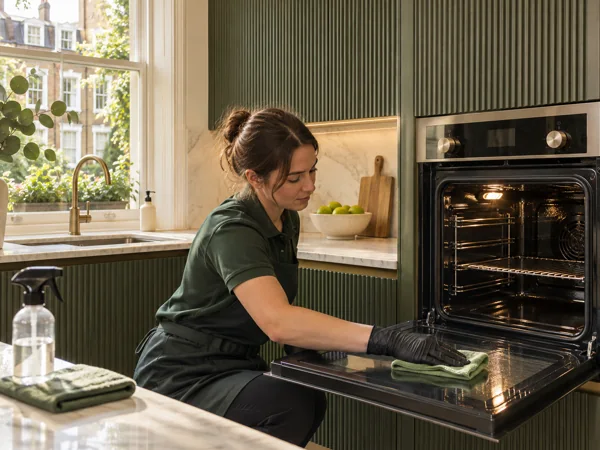
For residue around a door window, explain whether you can see it from the kitchen, from inside the cool oven or in both positions. If it seems to sit between panes, give the affected window and model. Door design and existing condition affect which faces can be reached. If a lower door and a small grill have similar glass, label the photographs to distinguish them. Show the adjacent trim or seal if a mark comes up to its edge, and leave the fitted pieces alone.
The controls may be set into glass or mounted in a panel with a print or metal finish. Give the nearest knob or setting to identify a mark and note fading, scratches or loose fittings you have noticed. A picture of the entire panel helps identify the change of finish where the controls meet the front. We can inspect which portions are accessible and discuss what to include with the cavity. Use the same names when reviewing the glass, control panel and handle after the visit.
- Give the model and affected door.
- Identify the likely glass face and nearby trim.
- Report worn settings or damage before assessment.
Identify loose appliance parts by fit
| Part | Position | Detail to include |
|---|---|---|
| Wire shelf | Ordinarily on a side guide | Quantity and condition |
| Grill insert | Inside matching pan | Separate the tray and insert |
| Fitted support | Along cavity wall | Model and whether it moves normally |
Quote an adjoining cooking surface as its own item
If grease is visible near a gas ring or a glass cooking zone, report it as a hob item. Give the surface type and any removable supports you want considered. A thin metal or stone edge can meet the hob, so include the surrounding material when residue comes close to it. Identify a separate splashback with its position and finish if you want to discuss it. A picture with the entire top in view is useful when a control strip or part of the counter has a similar appearance.
An extractor above the hob may have an exposed panel and a grease filter with different care requirements. Give the model or visible details and describe where the hood sits. If it is inside a cupboard or canopy, a photo from below can show the arrangement without removing anything. State which surfaces or filters you want discussed. Checking the quote by appliance makes it clear whether the hood and hob are agreed alongside the oven or are items you will ask about later.
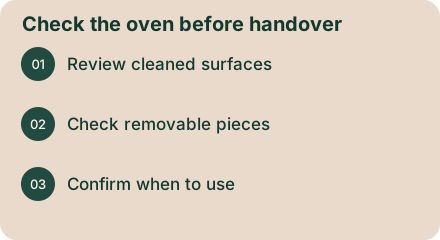
Check the agreed finish and parts before the kitchen is used
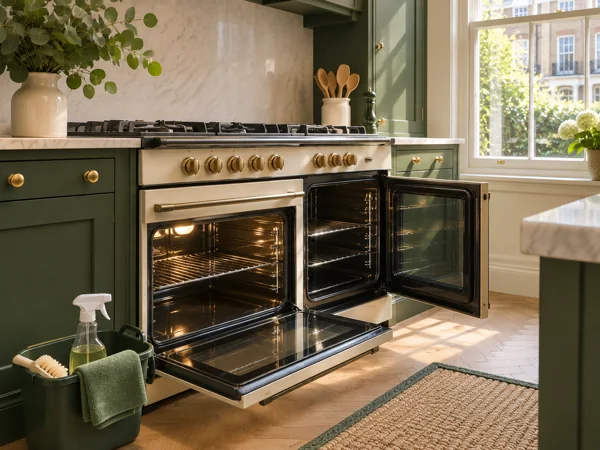
When the work is complete, go through the same list of cavities and removable pieces with the cleaner. Find the areas you reported around the window, lining or controls. Ask which parts were removed and what could be accessed. If another person arranged the visit, confirm what you will tell them about the areas assessed. The agreed item list can go with an inventory if the kitchen will be handed to a new occupant. Make sure any wear discussed during the visit is identified by its position.
Ask when the oven can go back into use and share the instruction with the person who will cook. Keep the model details, original tray and manuals together for the next user. If a further appointment may cover a separate hood or second cavity, keep a distinct record for that item. When you are handing keys to somebody else, arrange time to see the oven before access ends. That person can use the accepted request to confirm which accessible surfaces and loose parts were part of the visit.
Plan entry near Bethnal Green Gardens
| Stage | Details to send | Who confirms |
|---|---|---|
| Street | Full postcode and residential door | Person booking |
| Building | Block name, gate or landing | Resident or key-holder |
| Kitchen | Location and list of oven items | Person meeting the cleaner |
Get an oven cleaning quote in Bethnal Green
Request a quote with the oven type, number of cavities and any extra appliances.
Get a QuoteOther Cleaning Services in Bethnal Green
Local references · London Borough of Tower Hamlets, Bethnal Green Gardens
Bethnal Green oven cleaning questions
Can I show a cabinet that makes the oven difficult to reach?
Yes. Send a view from the side or across the kitchen and describe how far the oven door opens.
Should I mention Cambridge Heath Road if my door is off a courtyard?
Give the actual entrance and postcode first. Include Cambridge Heath Road only if it helps someone find the approach.
Can I include the shelf from an older combination oven?
Give its material, usual location and appliance model so suitability can be discussed.
What if I cannot tell whether a line crosses the oven seal?
Give the door and model and show where the line is visible. Leave the seal in place for assessment.
How can I describe an older finish around the selector knob?
Show the full panel, identify the setting and report any fading or existing scratches next to it.
Should the person showing the kitchen receive the same quote list?
Yes. Give them the oven position and model, the accessible parts named for review and any agreed hob or hood items.