 Housekeeper
Signature care for well-used ovens
Oven Cleaning in Dalston
Plan oven cleaning in Dalston for a fitted oven, grill or range. Show the affected cavity and give the model, fittings and condition you want assessed. Include how to reach the kitchen, especially if the residential entrance and the ground-floor frontage are on different sides.
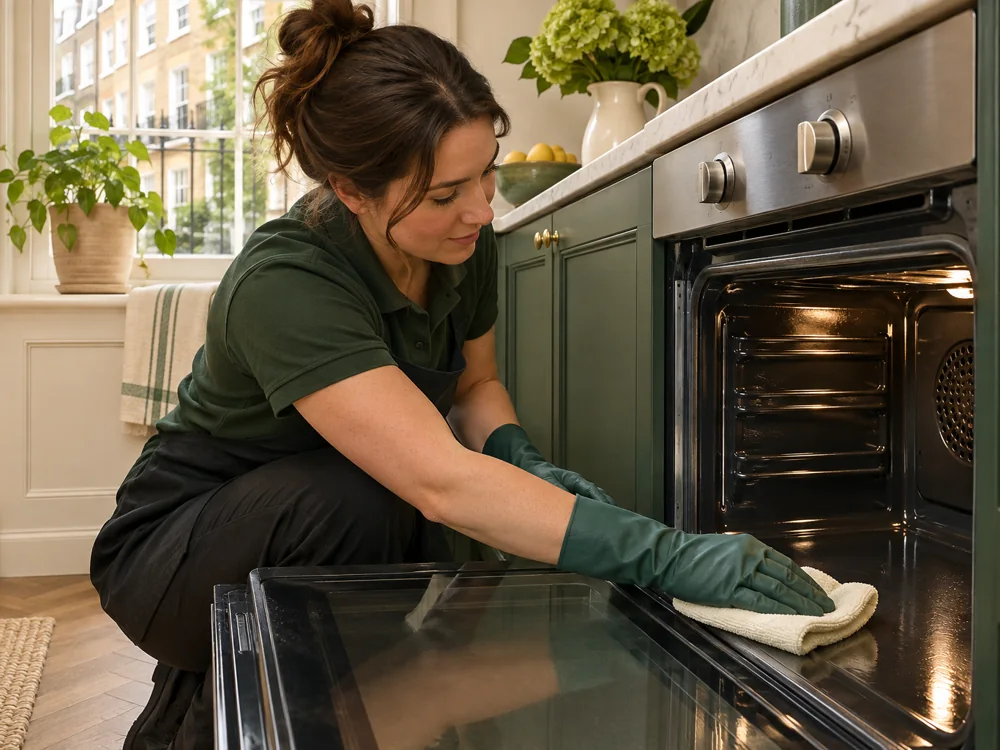
Can I enquire for an oven in a flat near Ridley Road?
Yes. Give your full property postcode, actual residential entrance, stairs or lift and details about the cooker.
Can you assess older grease beside a coated panel?
Yes. Show the mark and surrounding finishes and tell us about previous products or cycles.
Use the first assessment to identify the oven and the work area
Start with a photo taken far enough back to show the cooker door, controls and space beside it. If a microwave or combination unit is in the same bank, mark which door you mean. Identify the cavity in use and its regular purpose, such as baking or grilling. An independent grill might sit alongside an oven or behind the smaller door on a double cooker. Give the relevant model from the paperwork or a visible label near the opening while the cooker is cool and fitted into the kitchen.
Tell us whether the door opens across a narrow aisle or beside another appliance. A trolley or table might normally stand out of the way but interfere when the cooker is open. Move loose items before the technician arrives and give an area to look at accessories. If a second compartment will remain free for a household member, explain the layout and how they plan to use it. This can affect positioning of parts and whether an item needs its own assessment before a quote is agreed.
- Identify the oven by door and function.
- Show the immediate working space in a wide photo.
- Mention separate cooking appliances that need to stay accessible.
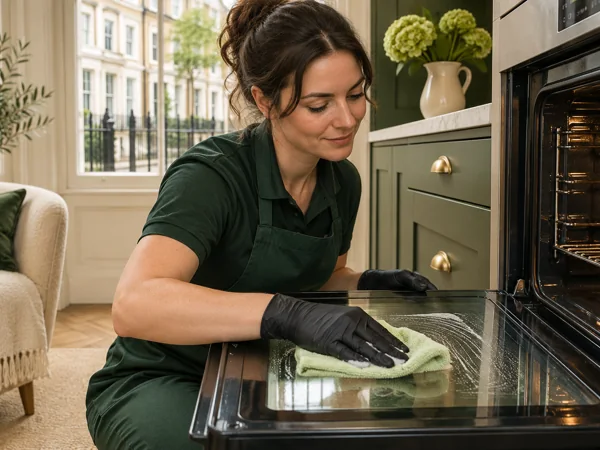
Tell us where an oven cleaner can reach your Dalston property
Hackney Council describes Ridley Road Market as being on Ridley Road in Dalston. If that street or the market helps explain your locality, give your full address as well, along with the door that leads to your kitchen. A flat above shops can have its own stair around the back or an outer door that uses a different label. Tell us which one can be used by the technician. In a residential block, provide the visitor entrance, intercom label and floor rather than relying on the postal building name alone.
Ask the building manager or key holder where unloading can be agreed and how far the technician has to go from that point. If a shared passage is involved, confirm whether a gate is locked and who can open it. For an upper flat, tell us if stairs remain after using the lift. Give a clear meeting point if someone will be outside. Check they can stay long enough to show the cooker itself and identify the nearby accessories, particularly if access goes through another building or ground-floor premises.
- Give the actual residential door.
- Discuss unloading and any shared entrance.
- Specify the lift or stair and who can give access.
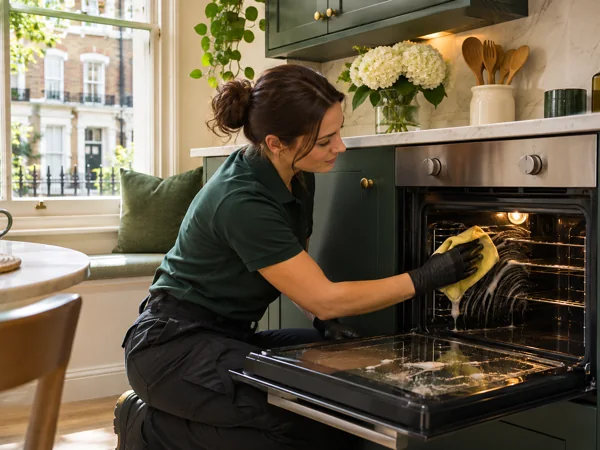
Describe a complex cooker by its usable parts
If you have a range, name each door by position and use. One might lead to an oven, another to an independent grill and a third to a warming or storage compartment. A fitted double oven can have two working cavities even when one set of controls is shared. List the parts you want assessed in their actual order. Tell us if a second cooker has been fitted separately since the kitchen was installed. An overall picture helps if cupboard fronts are nearly identical and the position of the controls is the clearest difference.
Mention known faults before the visit. A damaged seal, loose hinge or problem with heat can matter for an assessment even if the appliance usually cooks. Report any compartment already out of use. Refer faults with operation to a qualified appliance specialist separately. For cleaning, identify the areas you want reviewed in the appliance’s current condition. If pieces were replaced, list them rather than implying that all trays and racks came with the cooker. Tell us which oven is used most often when you give your priorities.
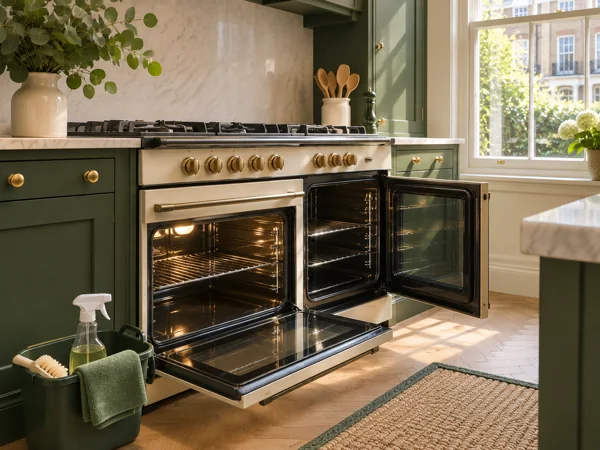
Identify the work area before treatment
| Where | What to show | What to confirm |
|---|---|---|
| Cooker front | Controls and complete door layout | Priority oven or grill |
| Inside cavity | Residue and adjoining finish | Areas to assess |
| Nearby worktop | Door swing and accessories | Space for separate treatment |
Describe how continued cooking affected the build-up
A black patch under a dish can form after a spill has heated more than once, while regular roasting can leave grease on side walls and near a tray. Photograph where the mark sits, using the door edge or a shelf as reference. Explain whether the spill happened once or the grease built up gradually. Report a recent oven spray or self-cleaning programme and where it was used. The technician can look at the surface and see whether residue, discolouration or a changed finish may be involved.
Give instructions from the maker for catalytic or specialist liners if available. A lining can meet ordinary enamel near the base, so show the surrounding material as well as the patch. If you notice lifting coating or a chip, mark that as a different concern. The technician can discuss compatible treatment and what can be reached. If the glass is cloudy, compare it with the door open and closed. Note whether a pane or trim has been changed, because the construction and condition affect access to the glass.
- Describe the most affected area in relation to the shelves.
- Mention sprays and cleaning cycles already tried.
- Separate visible damage or older marks from grease.
Set aside accessories for separate consideration
Remove food, ordinary cookware and loose foil while the oven is cool. Set out the tray, grill insert or racks you want looked at, keeping items with the oven they fit. Suitable removable pieces can be cleaned separately and may be soaked in a dip tank depending on their material, coating and condition. A coated pan that was bought later may not take the same treatment as an original wire rack. Put any detachable handle beside its pan and tell us if a tray has developed a loose patch in its finish.
Leave fixed or unfamiliar runners in place. If they catch during use, show where movement becomes difficult rather than trying to take them off yourself. Note if a shelf leans to one side or a retaining point already feels loose. Give the technician a clear space to consider each removable piece separately. If the person meeting them does not normally cook, give them a photo of the accessories grouped by cavity. Ask them to mention if any parts on the list are missing or different.
- Identify coated trays and spare racks separately.
- Keep the pan, insert and handle together.
- Leave an unfamiliar shelf support in position for assessment.

Check each extra appliance rather than including the whole cooker by default
A gas hob can use removable caps and separate pan supports, whereas a glass surface may have marks on one zone or the edge to consider. Give the type and finish and identify the part you want assessed. If there is an additional griddle, show where it fits and describe its material if known. Photograph shared controls if the oven and hob use the same panel. Confirm the hob as its own item on the quote and mention any chipped surface or worn markings.
For a hood, describe how it is mounted, the visible finish and approximately how high it sits. A filter may be metal mesh or be a disposable insert depending on the extractor. Ask separately about the greasy outer cover and the inside filter. Include a picture showing any shelves or cabinetry that affect reaching it. Check what work can be agreed for each component. If the original request was for the oven alone, ask to update the quote before booking an additional hob, filter or external cover.
Distinguish cooking residue and condition
| Observation | Useful detail | What to discuss |
|---|---|---|
| Dark patch at the base | Overflow and later oven use | Cooking deposit or changed enamel |
| Film toward the glass edge | Visible with door open or closed | Affected surface and access |
| Coated pan | Wear or replaced finish | Suitability for separate treatment |
Confirm which parts were treated before the kitchen is used again
Leave the cooker cool, out of use and clear of food before arrival. Move utensils and food off the immediate worktop. If the kitchen is shared, tell others which route they need to avoid and which equipment can remain accessible. Keep children and pets away from the work area and agree any water or power needs ahead of the appointment. Give the next time the oven needs to be ready. For a gathering or an evening meal, explain whether another appliance is required to prepare food first.
At handover, ask the technician which surfaces and accessories were treated and when the oven can be used. Confirm where each shelf or tray goes. If an item was left in place because of its condition, ask for that point and any appropriate care advice to be explained. Give the next cook the instructions before they start a meal. If the key holder leaves at the end of the visit, arrange how they can pass on the advice and keep a copy of the agreed list.
- Give the next planned time for oven use.
- Check which components stayed fitted or untreated.
- Pass the return-to-use guidance to the next cook.
Prepare a quote request somebody at the property can confirm
Use the postcode enquiry to send the appliance photos and access route. Identify the priority cavity and give each extra oven, rack, tray or other appliance its own description. Include existing condition and any coating information. If somebody else is providing entry, share the final items with them and tell us how the two of you can communicate if a different issue is found. Ask for any omitted piece to be considered in the quote before setting a time for the appointment.
For a move or handover, compare the actual cooker and accessories with the inventory list. Tell us if other work also needs to take place in the kitchen or access will depend on a key being collected. Check that somebody can be there to hear when the oven can be used. Keep the timing and visitor route available alongside the item list. If a local access arrangement changes before the appointment, send an update so the technician still has a workable approach.

Confirm the approach to the Dalston kitchen
| Point | Instruction | Who can confirm it |
|---|---|---|
| Street | Residential address and door label | Occupier |
| Entrance | Unloading, shared gate or internal stair | Person providing access |
| Oven | Working space and next use time | Person receiving handover |
Get an oven cleaning quote in Dalston
Request a quote with the oven type, number of cavities and any extra appliances.
Get a QuoteOther Cleaning Services in Dalston
Local references · Hackney Council – Ridley Road Market
Dalston oven cleaning questions
Can I use a rear staircase if we usually enter from the market side?
Use the route your building permits and give the actual door and steps from an agreed unloading point.
Can you distinguish the warming drawer from a small oven?
Show all doors and their controls and say which functions each actually performs.
Should I move trays that belong to another oven?
Set those aside unless you want them considered and identify the parts for each cavity separately.
Can you assess an oven that has a loose seal?
Tell us about the known condition before booking. An assessment can determine what can be considered.
Can I ask about grease on just the extractor cover?
Yes. Describe the cover, finish and access separately from the filter.
What should I pass on to someone next using the cooker?
Tell them when it can be used again and which parts were treated, left in place or belong to each cavity.