 Housekeeper
Mould Removal in Wembley
Tell us where you see mould in your Wembley property and how to reach the room. We check the exposed finish in person, agree which hard surfaces can be cleaned and explain the result before we leave.
Plan your enquiry
Can I enquire for HA0 or HA9?
Send the full postcode, room and affected exposed surface so we can discuss the property.
What if visitors have to register first?
Tell us where to sign in, the block and floor, and who can grant access to the dwelling.
Assess the exposed faces around the fitted recess
Around a recessed cabinet or vanity we look at the edge you can reach from the room and follow the visible track towards the fitting. A hard strip can be suitable for cleaning up to its join while a continuation behind the fitted unit stays outside reach. We agree what we can cover before we prepare the working position. After the clean we show the exposed strip and the nearest fixed point where the work ended.
Brent’s Wembley Housing Zone information describes the High Road as a link between the established Wembley Central area and the Wembley Park area around the stadium. These are distinct references when describing an address. If you are in a development with several cores or entrances, give the number or letter shown at the one that reaches your floor. If a reception or intercom grants access through the communal door, name the person who will then admit us to the dwelling.
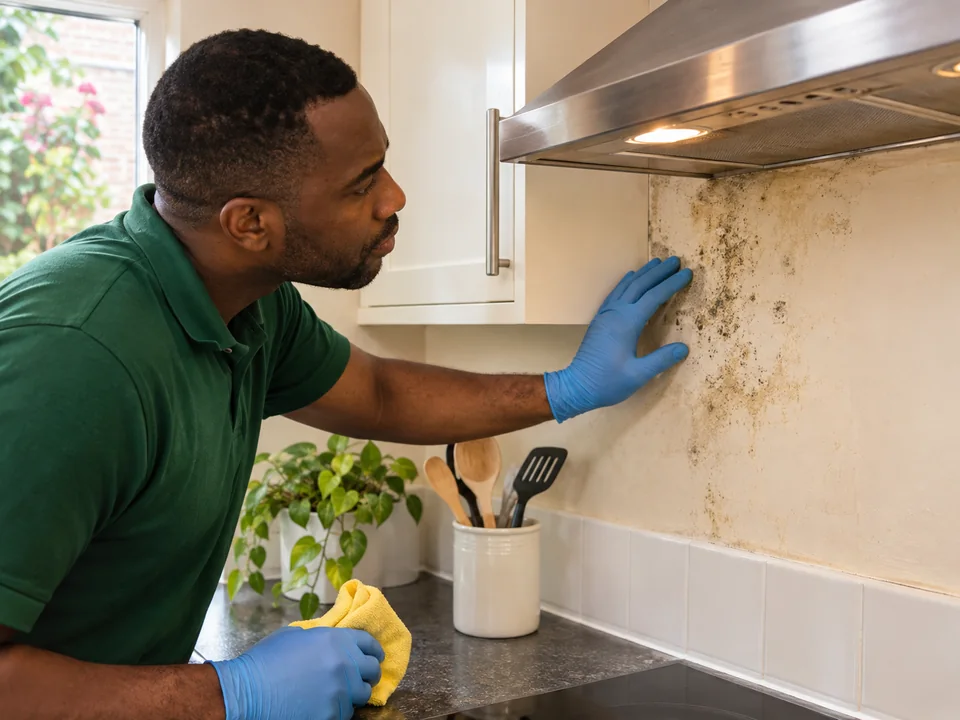
Identify the part of the room where the mark is visible. Around an en-suite, you may see a dark line beside an exposed rigid wall panel, around the outside of a mirrored cabinet or near the frame. In a compact kitchen, it might be on the wall face above the sink or around the edge of a recessed tile. A wide view makes the position and fit-out easier to see, while a closer view can show what material actually carries the mark.
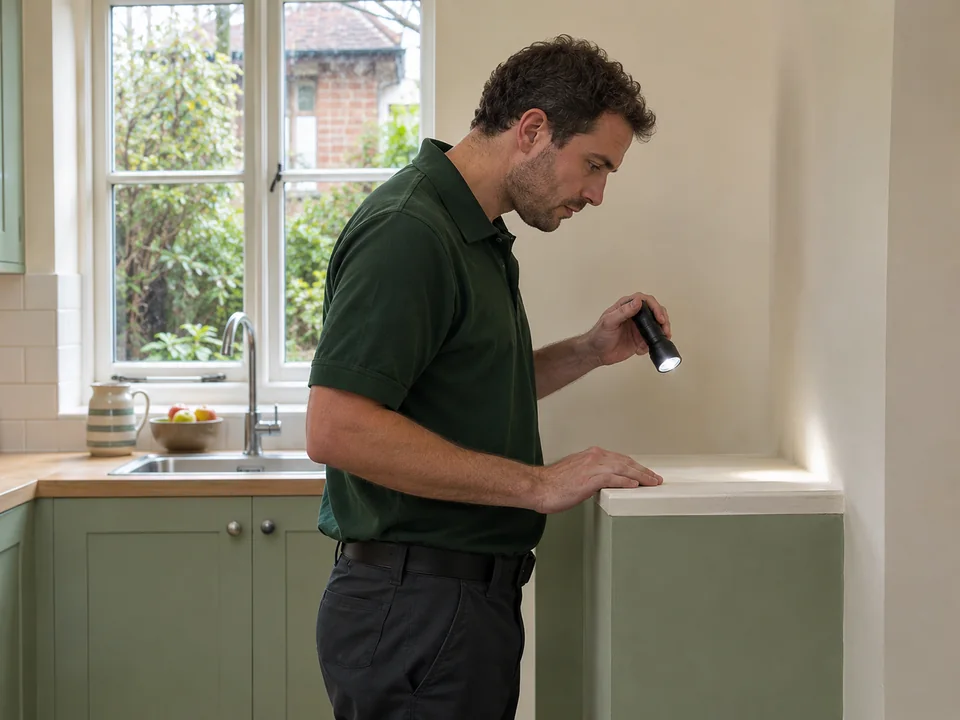
We assess the recess in its actual state on the day. An exposed hard face below a mirror can be reachable while the corner adjoining a cupboard is blocked by the surround. We look at the condition of the face and the available working angle before preparing the agreed section. If the line continues behind the fitting, we identify the point where it disappears at handover, with the installation still in place.
| First enquiry | What to include |
|---|---|
| Address | Full postcode, building name or number, floor and dwelling |
| Entry | Visitor lobby or intercom and name at the door |
| Visible patch | Room, exposed material and closest fixed feature |
Plan the access from the lobby to the surface
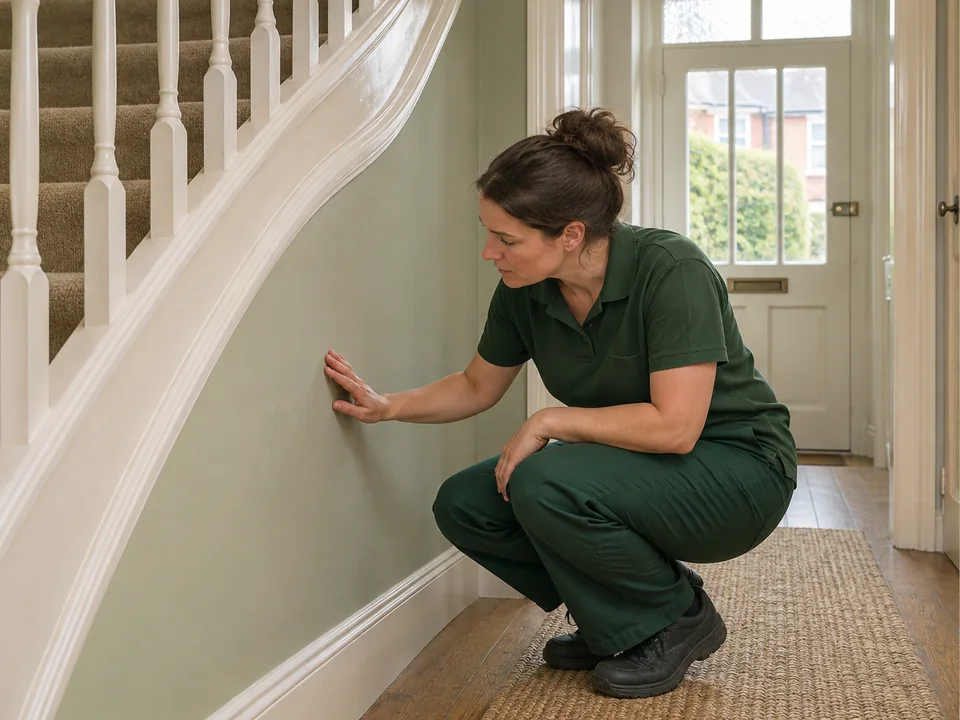
We discuss how an appointment can work if access is shared. A building may have a visitor desk at one entrance and a resident who can open the flat at another. Find out which route they expect us to use and when the right people will be available. It may also be useful to mention if a lift serves only part of your floor, or if the lift opens into a corridor with two separately locked doors. We can check those practical details while discussing the booking.
Once inside, we need a clear way to approach the face you want assessed. Move loose toiletries or items on the kitchen worktop if they are at the marked part. A tall storage unit, fixed mirror or integrated appliance should stay where it is. Tell us which faces can still be seen around the fitting. A utility cupboard that opens from the hallway may leave only enough space to look in from the entrance, so describe it before anyone tries to clear or move furniture.
If the resident needs a particular part of the flat during the appointment, tell us when. A shower room can be free early while the kitchen remains in use, or the person providing access to an en-suite may need to leave. We can discuss which area to consider first and who should be there to point out the mark. If the booking contact is off site, agree who can make decisions about a new area we may see once loose items are cleared.
- Confirm the visitor entrance and route to the correct floor.
- Clear the agreed area of loose belongings only.
- Name the contact who can open the room and approve any changes.
Assess the exposed faces around the fitted parts of the room
We inspect the visible finish and how it joins the fitting. An exposed glazed wall can be sound around a washbasin while the line against a built-in cabinet is marked or worn. A rigid section beside a fitted mirror can look continuous from a distance but stop at a separate backing material. We point out the different faces and discuss which ones are suitable and reachable. If you have care directions from a supplier or a management pack, show us which finish they apply to.
For a mark near a recessed cabinet or ventilation cover, tell us which side is open to the room and whether you can see behind the edge without moving the fitting. We consider the accessible outer hard surfaces. Leave fixed covers and panels in place. If the mark appears to lead inside a closed fitting or through a wall, the people responsible for the property can arrange whatever inspection is needed. We describe the location of the exposed concern during the assessment.
Where a frame or lining has been changed recently, mention it before we assess the area. Another visit may have left a new edge beside the material in the original photograph. If a hard finish has lifted or an adjoining panel has become soft or stained, we explain how that changes what can be cleaned. A visible mark in a worn join may stay apparent even after the adjacent hard face is addressed.
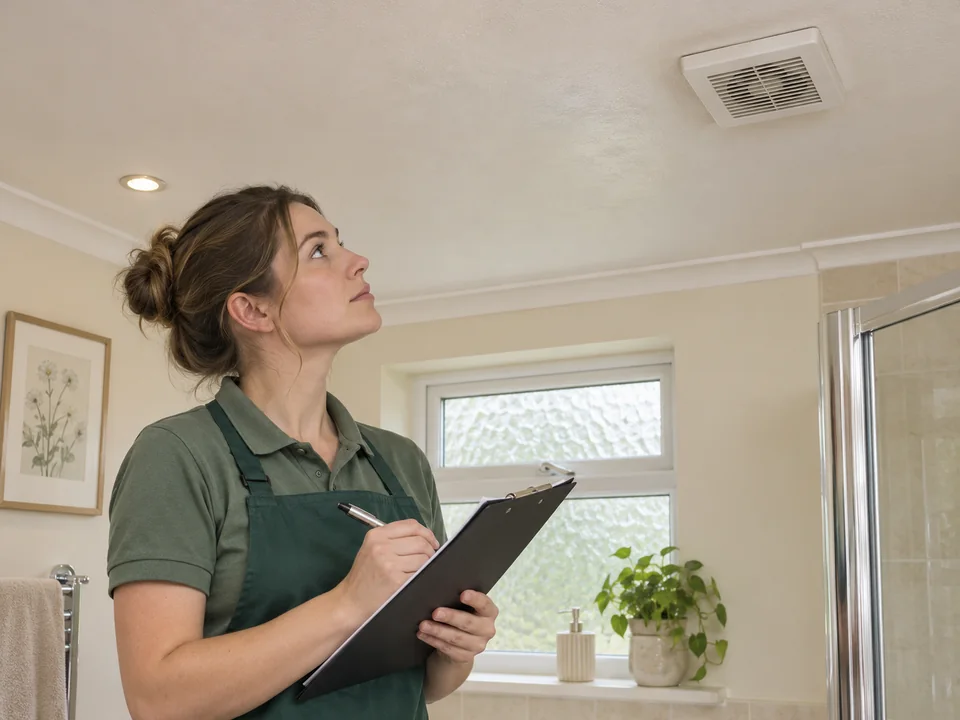
Some fitted bathrooms have a shallow recess between the mirror and the wall lining, or a narrow strip below an integrated light. A reflection can show a dark edge that is hard to locate directly. On arrival, we look from the accessible side and identify whether the mark sits on the exposed face, a joint or the underside of the fitting. Tell us whether the light or opening is normally accessible or protected by a fixed cover. We can explain the exposed area that can be assessed while leaving the installation as it is.
| What we can see | Point to agree |
|---|---|
| Hard exposed wall or panel | The visible condition and safe approach |
| Joint beside a cabinet | Which face is suitable and where the work would stop |
| Closed or hidden part | The exposed edge we can consider from the room |
Clean the agreed surfaces without opening fitted units
We remove visible mould from the suitable accessible hard faces we agree with you. A job in an apartment bathroom might concern the wall face beside a fitted cabinet and a separate hard surround around the basin. In the kitchen, it might involve a limited group of tiles beside a recessed opening. We identify the agreed sections before cleaning and consider where an adjoining fixture or different material marks the boundary of each.
If moving loose items away shows another part of a hard face, we assess it and ask before including it. Tell us how to contact the person who authorised the visit. They may want the original work to stay as agreed or may ask us to consider a new section. We explain whether that part is accessible and whether its finish looks suitable. If material is worn or its condition changes at the edge, we describe that before working nearby.
Where only one side of a fixture is available, we clean the agreed exposed section and point out its boundary. A dark line may carry on behind a rigid vertical panel or fitted shelf even when the accessible hard facing has been addressed. We can show where it goes out of view, and note which intact areas were within the agreed work. If you asked us to review a second room, we use its own fitted details to identify the result. In a small kitchen, use the nearest tap or unit handle as the reference when we review the section. That helps distinguish two short returns between identical units on either side of the room.
- Confirm the hard faces that can be cleaned in each room.
- Agree how additional work would be approved.
- Review the location where a fitted piece blocks access.
Review the work with the booking contact or on-site resident
At handover, we go through the agreed exposed surfaces and explain where their condition or an obstruction limited the work. Use the room and nearest fitting to tell one section apart from another. If a join remains dark beside a cleaned hard face, we show the two surfaces separately. If a property manager needs the result but a resident opened the room, agree how the manager will receive the details before the visit. Keep the floor and room reference together.
If a mark returns, give the responsible property contact the precise position, room and level. For example, a specific edge outside a mirrored cabinet gives them a better reference than a broad description of the en-suite. We can tell you what we saw on the exposed material and which parts were beyond the work. If the problem involves the building or the inside of a fitted unit, follow up through whoever can arrange the appropriate inspection.
At the final check, we return to the recess and go through the agreed hard faces one at a time. We show which edge was cleaned and whether the visible mark ran into a covered section. If a second room was included, we review its surfaces separately so the limits around each fitting remain clear.
- Use the exact room and fitted item when reviewing the work.
- Ask about any related visible area we could not reach.
- Agree who will receive the final update.
| Review item | What we identify |
|---|---|
| Cleaned area | Agreed faces and room reference |
| Visible limitation | Where a fixture or damaged finish prevented work |
| Follow-up contact | Who wants the description of the result |
Questions about arranging mould removal
What if the entrance used by visitors differs from the one I usually use?
Give the full address and describe the visitor entrance separately, including the block and sign-in arrangements.
Can you assess an exposed hard face beside an integrated cabinet?
Yes, identify the surface and tell us how much can be seen with the cabinet fitted. We check the material and reach.
Should I take a ventilation cover down for you?
Leave it in place. Tell us which exposed area around it is marked and whether the concern appears to lead inside the fitting.
Could the resident open the room while the landlord agrees the work?
Yes, discuss both contacts when you enquire and tell us who should approve any additions and receive the handover.
Can you consider a mark beside the mirror and one by the kitchen sink?
Yes, describe both independently. We assess the exposed hard faces and agree the suitable cleaning in each room.
What if marks are visible in the join after cleaning the main face?
We discuss that possibility during assessment and can point out the material and location of any stain or damaged edge at handover.
Other Cleaning Services in Wembley
Regular housekeeping in Wembley, End of tenancy cleaning in Wembley
Discuss your mould removal enquiry
Mould Removal Prices in Wembley
Tell us which rooms are affected, the approximate size of the visible patch and what surface it is on.
Get a Quote