 Housekeeper
Plan your kitchen visit
Oven Cleaning in Streatham
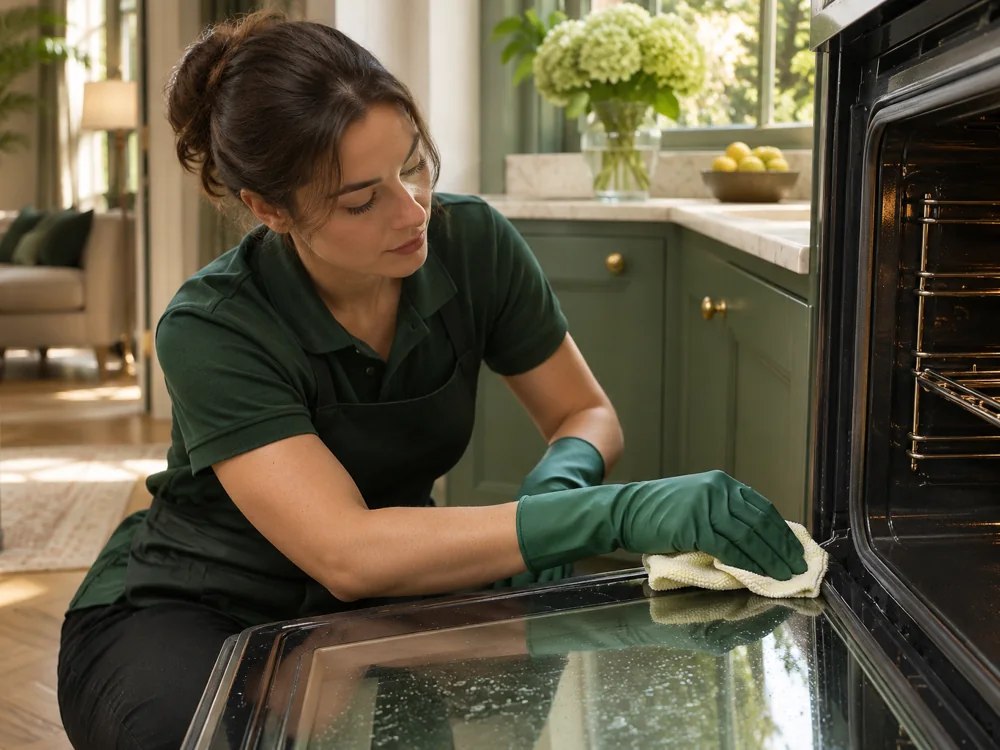
Get an oven cleaning quote in Streatham for the cooker you use most often. Identify the cavity, mark or greasy accessories you want discussed and include how a visitor can reach the kitchen. Tell us if the household uses a separate hob, grill or extractor that you would like assessed as well.
Can I enquire for a flat near Streatham Common station?
Yes. Use the complete property postcode and give the entrance label, bell and stairs to the kitchen.
Can I ask for one oven if the kitchen has a double cooker?
Yes. Name the cavity and its accessories and explain which area you want assessed first.
Make the enquiry usable by the person on the doorstep
National Rail gives Estreham Road as the address of Streatham Common station. If you use that station as a reference point, say where your own address is in relation to it and give the complete postcode. The station and the common can be different starting points when someone is unfamiliar with the area. Give the actual house or block number before adding a landmark. If a path to the front runs beside a taller building, explain which entrance to take and specify the label that appears on the bell.
Tell us where the kitchen sits once the person is through the door. A dividing hallway can lead to two separate flats on the same floor. A side entrance may lead straight to your apartment while the main steps lead to a different home. Describe any shared route used by equipment, and ask your landlord or managing contact about access if needed. If you arrange for the technician to be met outside, give a clear location and confirm whether the person can open every door from that point to the oven.
- Provide the residential address and exact bell label.
- Name the person meeting the technician if this is arranged.
- Include gate, steps and the floor of the kitchen.

Identify the cooker even when its paperwork is missing
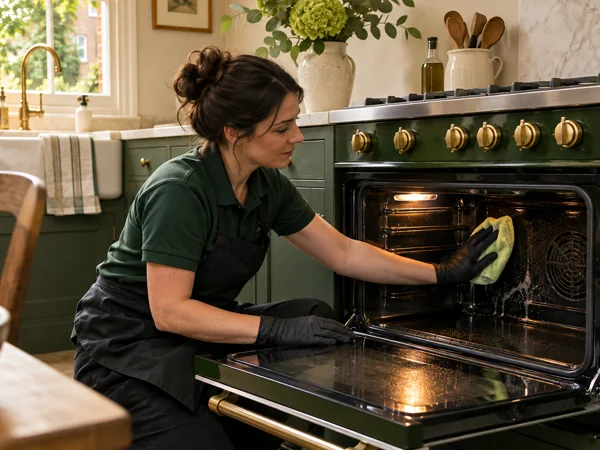
Many people know how to use the oven without remembering the model. Start with the style of cooker and which doors you want assessed. Note whether the grill is part of the main oven, an upper cavity with its own door or a different appliance. Take a picture of the complete cooker with its controls visible. If there is a visible model label at the opening, record what you can see when the oven has cooled. The appliance should stay fitted into its normal position.
For a double oven that came with the flat, describe how often each cavity is used. A top section used mainly for toast can have greasy accessories even when the lower oven is the larger job. If a separate combination unit shares the cupboard, include it in the photo and identify its relationship to the main oven, even if you do not want it considered. Mention replacement parts or known faults as part of the description so the technician can discuss what is practical with the existing appliance.
- Take an overall picture before photographing the area of concern.
- State which compartment holds the grill.
- Describe any component staying out of use.
Identify shared and private access points
| Point | What to give | What to check |
|---|---|---|
| Street | Full postcode and address | Closest approved unloading point |
| Main doorway | Visible bell and building name | Who can provide entry |
| Kitchen approach | Stairs and any second door | Room for the technician to reach the oven |
Choose between a cavity clean and particular problem areas
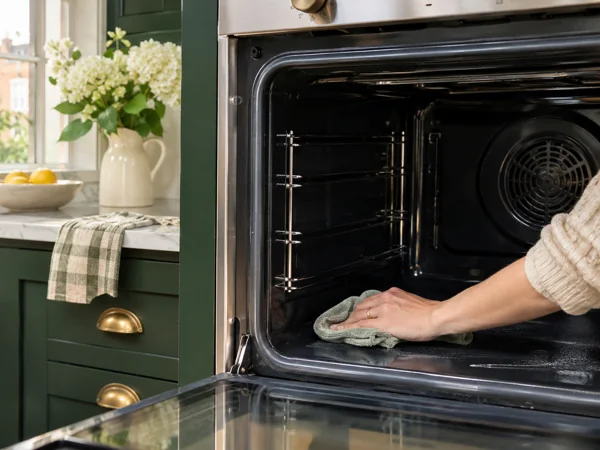
Look for the places you want discussed before the oven is used again. A roast can leave drops along the sides of an oven, while a dish that bubbled over may leave a single concentrated area at the base. A grill that sees more daily use can collect grease on its pan, shelf and accessible lining. Explain what changed if the issue appeared suddenly. The technician can assess the priority item or the whole cavity, and explain which signs of wear might remain visible.
A dark mark can be a deposit or a permanent effect on the finish. Mention any recent sprays and identify where they were applied. If the oven has self-cleaning or catalytic panels, refer to the manufacturer's guidance and let us know if you ran a programme recently. Include photographs of the surrounding area in case grease spans the edge between two types of surface. Note any wear on the closest fittings before choosing priorities. Fit and condition influence how parts can be handled during the cleaning process.
- State which parts collect grease most often.
- Describe recent oven sprays or self-cleaning treatments.
- Flag an area with a different type of lining.
Put the pieces you want treated beside the right oven
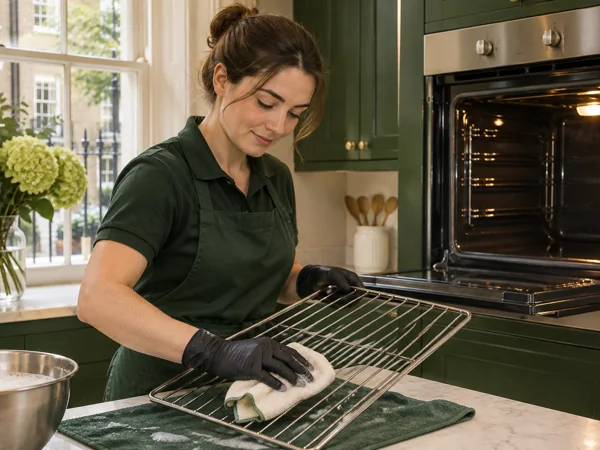
A loose rack, roasting dish and fitted shelf runner can have visibly different finishes. Tell us which items should be considered when you enquire, including any that you usually keep in another cupboard. Suitable removable parts can sometimes be taken out and soaked separately in a dip tank. Material, wear and condition affect suitability. Extra racks or replacements should be identified so they do not get treated as identical to the original set. Point out any damaged coating and which oven the pieces belong to.
Remove loose kitchenware and food while the appliance is cold. A stuck shelf or fitted support can stay in the oven if you are unsure how to remove it. Show where it catches instead. Make space on a clear work surface for the technician to inspect loose items, and leave the grill insert and handle with the relevant pan. A marked shelf may still work normally, but describe any movement or fit issue you already have so it can be considered before anything is removed.
- Keep each oven’s loose parts together.
- Identify any loose coating or bent racks.
- Leave stuck or unfamiliar fittings for assessment.
Describe the marks that appear when the door opens
An oven light can make the inside of the glass look greasy even when it is hard to tell where the mark is from outside. Take a photo with the door open and one with it closed if the issue is visible in both positions. If you suspect it is between panes, say where it appears in relation to the edge or handle. The technician can inspect the door design and tell you which surfaces can be reached, taking into account its condition and any previous changes.
Tell us if the glass was replaced or if a hinge is loose. Mention a damaged seal or paint near the door, even if it does not stop the cooker working. Keep notes on existing faults separate from the surface concern when you book. A temperature or ignition issue can be discussed with an appliance specialist, while cleaning can be planned around the parts and conditions that the technician is able to assess. If the oven has unusual trim or cabinetry near the door, include it in an overall photo.
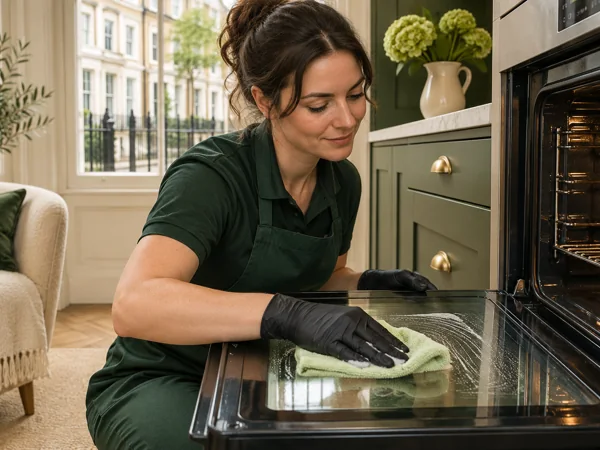
Identify the affected cooking area
| Surface | Useful description | What it can clarify |
|---|---|---|
| Grill tray | Grease on the insert or underside | Removable parts to assess |
| Oven floor | Single overflow or older baked-on spots | Location of the affected finish |
| Door glass | Visible from one side or behind the pane | Which surfaces can be reached |
Decide whether grease outside the oven is part of the request
Oven cleaning can be discussed on its own when the hob is already maintained by the household. If you want to consider the hob as well, name its material and say if it is gas, induction or another type. List removable burner caps and supports if they need attention. Identify a glass surface with marks around one frequently used cooking zone. Let us know if the hob controls are on the oven front, since their position can help identify the appliance when looking at your pictures.
An extractor may be fitted underneath cabinetry even when the ordinary view from the doorway does not show it. Describe its cover, filter type and height over the hob. Mention a mesh filter or a disposable insert if you know which one you have. Ask to discuss the visible exterior and filter as separately identified parts of the request. Arrange safe working access before the technician arrives and explain if the cooker is on an island or underneath a cabinet that limits reach. Check what is agreed before adding it to the visit.
- Use separate entries for the oven, hob and extractor.
- Describe filter type alongside the hood finish.
- Include the cooking zone or supports you are concerned about.
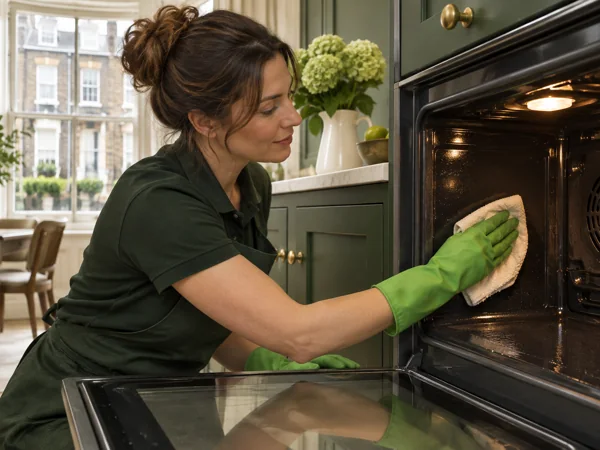
Keep the appointment easy to fit into a shared kitchen
Allow the oven to cool before the visit and keep it out of use so it is ready for inspection. Clear the worktop and any route taken when the door is open. Put away food, pans and utensils that would be in the working area. If another household member plans to use the kitchen, agree when they can do so and talk to the technician about which appliances need to remain accessible. Give the next cooking time when you discuss the appointment and leave space for the oven trays to be handled.
Before arrival, agree any water or power needs and tell us if the usual tap or work surface cannot be used. Keep children and pets away while the parts are being treated. At handover, ask what was cleaned and when to start using the oven again. If the person who opened the property was only covering access, make sure the next cook receives the instructions and knows where fitted or removable accessories should be. The handover can also identify any mark or usable part that needed separate care.
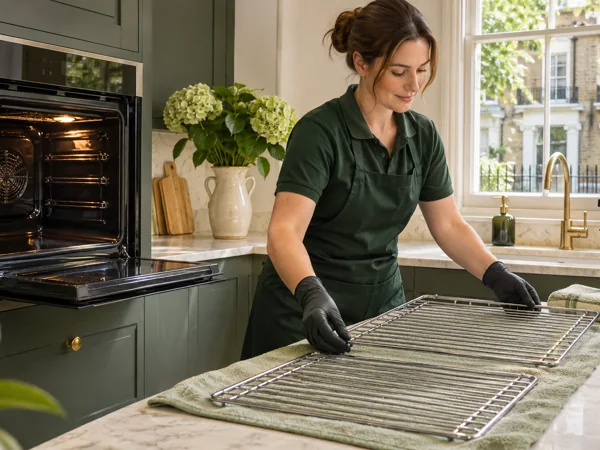
Send one request that contains the oven and access details
Start with your postcode and add the cooker model and exact cavity. Attach a brief list of the accessories you want assessed and identify any additional appliance separately. Give the name of the person handling arrival and an explanation of the approach when a shared entrance is involved. If a landlord or housemate is making decisions about the clean, leave room for them to clarify which oven areas or parts should be included before agreeing an appointment. Keep written notes on known faults with the photos you send.
Review the quote against the photos and the item list you already shared. If the oven is being prepared for a tenancy handover, confirm which other cleaning arrangements might limit access to the kitchen and who can release the keys. Tell us if that contact changes. An up-to-date description helps everybody know which appliance and accessories apply when the person on the property did not make the original enquiry. Share the date by which the oven needs to return to use and confirm what can be arranged for your address.

Prepare for a shared kitchen appointment
| Time | What to do | Who needs the details |
|---|---|---|
| Before arrival | Leave the oven cool and clear the worktops | Housemates or family members |
| At the appointment | Show the cavity and loose racks | Person providing access |
| At handover | Ask when the oven can be used | The next person planning to cook |
Get an oven cleaning quote in Streatham
Request a quote with the oven type, number of cavities and any extra appliances.
Get a QuoteOther Cleaning Services in Streatham
Local references · National Rail – Streatham Common station
Streatham oven cleaning questions
Can I give you a landmark instead of the full property address?
Add the landmark as an orientation detail. Use the full postcode and exact entrance for the appointment.
Is a narrow grill door counted on its own?
Give its position and explain which parts you want assessed. Ask for it to be listed separately.
Can I add an unopened spare rack?
Describe its material and the cooker it fits and say why you want it assessed.
Should I run a self-cleaning programme before the visit?
Leave the oven cool and say if a programme was used recently and which cavity it affected.
What if the door has more than one layer of glass?
Describe where the mark appears. The technician can look at the model and condition to see which surfaces can be reached.
Do I have to arrange for the same person to open and close the flat?
Agree who provides access and who hears the handover. Give both people the same appliance and booking details.