 Housekeeper
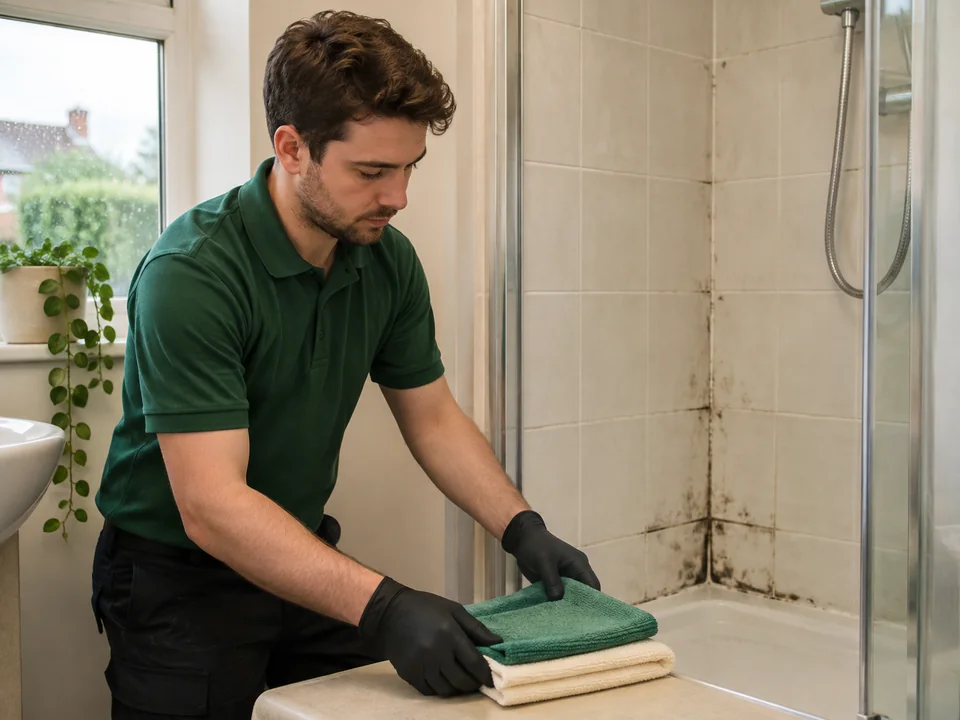
Mould Removal in Clapton
If a hard surface in your Clapton home shows mould, tell us exactly where the patch sits. We assess the exposed finish, agree which areas can be cleaned, and show you what we could reach.
Can I ask about an E5 property?
Give us the full postcode and identify the affected room and finish.
What if the rear room is reached from the garden?
Describe the side gate or rear entrance and tell us who can let us in.
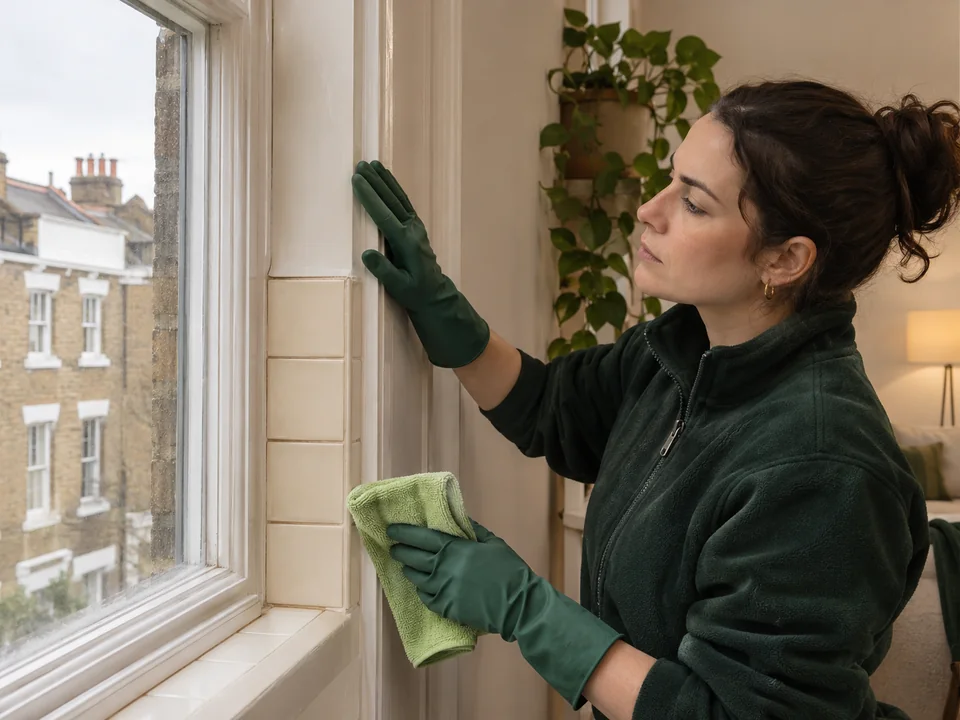
Inspect the visible growth at the rear room edge
We inspect where the growth meets the exposed material near a rear doorway, low wall or hard floor edge. The visible line can continue under fixed trim even where the room-facing part is firm and reachable. We check both the material and available working space before agreeing which hard face can be cleaned. If a fragile coating or a concealed section sits next to it, we identify that boundary and prepare only the appropriate exposed part. During the review we show the area treated against the usual doorway or floor line so any separate section is easy to recognise.
Hackney Council’s Clapton Square conservation area profile identifies listed terraces on the square and historic houses on Sutton Place. Those streets are useful references for the surrounding area, while the service discussion needs the actual postal address and the approach to the dwelling. If an existing terrace has a rear addition or was divided into flats, say which door you have agreed to use. For a garden room with an independent entrance, explain whether we should meet someone at the house first.
On a hard surface beside the floor, the visible mark may run from an exposed rigid skirting face to a painted line above it. At the back of a utility room, it might be alongside a tiled upstand near the washing machine. Explain which material you can see and what lies in front of it. If you have photos, take a normal view of the whole affected corner and a separate closer view of its exposed edge. Leave heavy appliances and fitted furniture in place.
We establish which side of the opening can be approached normally. A strip visible from the garden or adjoining room may not be reachable from the working side, especially where a fixed frame changes the position. We agree the suitable exposed faces and physically remove visible mould where they are included. Afterwards we identify the treated edge and note any inaccessible or neighbouring section as separate work.
| Detail to share | Useful reference |
|---|---|
| Rear room | Location relative to the kitchen, landing or garden |
| Visible edge | Where the affected hard surface meets the floor or wall |
| Access | Front route, side gate or separate door |
Make space at the floor edge and around the approach
We discuss what loose items can be put aside so the affected face is available. In a utility room, removing a basket or floor mat can give a better view along the hard edge. If an appliance occupies more space, please leave it where it is and tell us which sections are still exposed. A switched-off or unused room can still contain fixed storage or disconnected appliances that are awkward to move. We prepare around the room as it actually stands.
Where the work area sits beside a garden door, we check available clearance with the door and trim in their usual positions. We work around the agreed exposed surfaces and leave the installed parts undisturbed. If a mark continues from a compatible hard face into a fixed join or beyond ordinary reach, we identify that transition before treating the included area. At handover we review the cleaned section from the working position and distinguish the neighbouring face that remains outside the agreement.
If the work is in a room used for storage, choose a space to put loose objects where they will not block the next surface. Sometimes you can expose the floor edge around two sides of a room simply by putting small items away. If a fixed shelf runs over the marked area, explain if the lower part is fully visible underneath it or only from the side. We check the area when it is ready and agree the limits with you.
- Put aside small items that cover the visible face.
- Tell us about connected appliances or fitted storage.
- Agree any access needed through a garden door while we work.
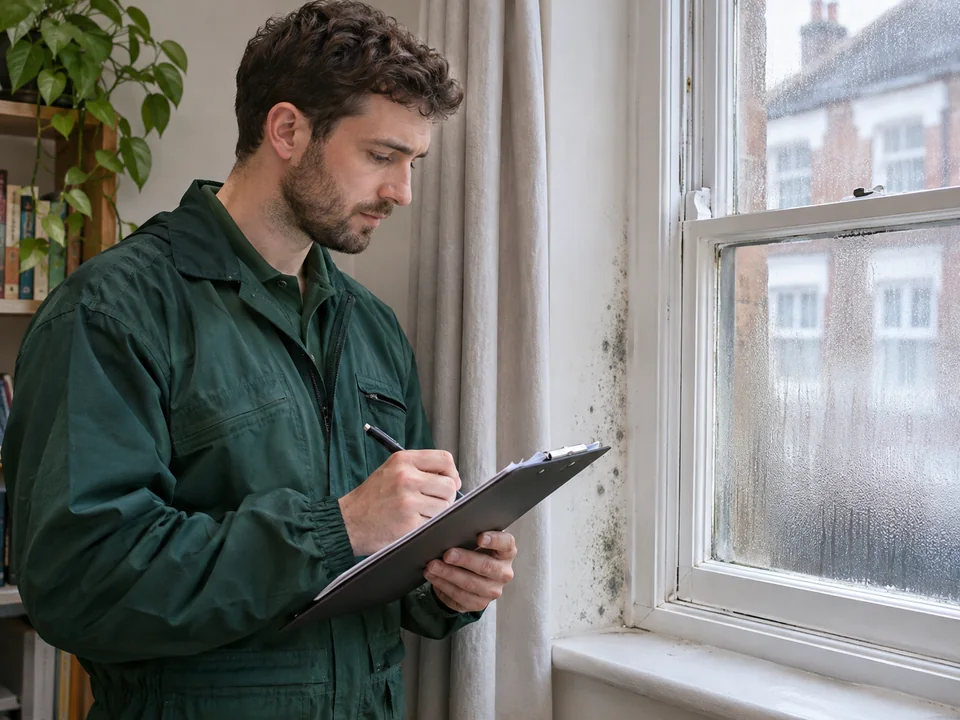
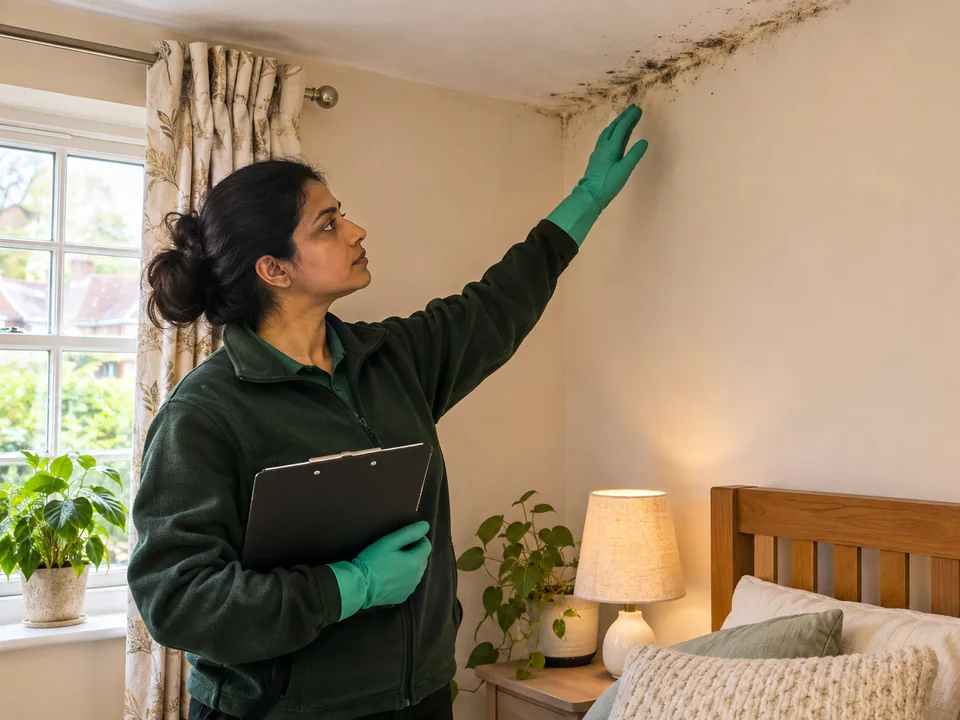
Assess where the hard material meets the surrounding finish
We look at the exposed material on its own and at the edge where it changes. A rigid upstand can be in good condition while a painted board beside it is visibly worn. A hard tile along the utility floor may have an accessible upper edge, with another section covered by the machine. We consider what we can see and reach without shifting a fitting. Tell us if a trim has lifted, a covering has softened or a change was made near the patch.
For a mark near the point where a rear door meets the floor, we look at the accessible faces of the threshold and the frame separately. One may be a firm wipeable surface while the other has an exposed joint that is already dark or damaged. If the room was altered after a leak or a door was replaced, say which part remains affected. We match that account to what we can see. An inspection within an opening or behind the floor needs someone responsible for that part of the property.
Tell us if the same line has returned along the edge after you last addressed it. This helps us agree the expected visible result and describe what else you might need to discuss with the person managing the property. A mark that follows the line of a fixed unit can be visible where the unit ends and hidden behind its centre. We explain that difference in the assessment before deciding on cleaning.
A tiled upstand can extend in front of a service panel and continue behind a cabinet plinth. We identify the part that is exposed without disturbing those fittings and ask if there is a reason a particular section needs to remain untouched. If a vent or outlet is close, show it to us so we can distinguish the surface around it from the opening itself. A mark down at floor level can be hard to see from a doorway, so we check the position of the face before reaching any agreement.
| What we see | How it affects the agreement |
|---|---|
| Firm exposed upstand | May be suitable if there is room to reach it |
| Loose edge beside it | We consider the condition before cleaning nearby |
| Mark behind an appliance | We identify how far the exposed part can be assessed |
Work along the suitable hard edges agreed with you
We remove visible mould on the suitable accessible hard surfaces agreed during assessment. In a rear utility room, that could be an exposed area of hard tiling beside the sink or the accessible face of a rigid floor-level trim. We can work as far as the agreed visible edge without extending behind installed items. If two parts meet at a doorway, we explain which material and which face belongs to the cleaning before we start.
After small items are put away, another section can come into view. If that happens, we show you the surface and discuss whether you want it considered. A low rigid board may extend behind a storage basket but stop where it meets a soft wall edge. We look at the newly visible area before agreeing any addition. Tell us if someone else organised the appointment and needs to approve changes, or if the resident would prefer to leave the original plan in place.
Where an affected edge runs along a hard surface towards a fixture, we keep track of whether that reaches the agreed part or continues beyond it. We can identify the last exposed area beside a fitted unit or door frame when reviewing the work. If more than one finish in the room shows marks, the result may look different across their join. We discuss that in advance and describe the remaining condition afterwards.
- Identify the exact face to be cleaned rather than treating the room as one surface.
- Check who can approve extensions to the work.
- Ask us to show the point where a solid item obscures the affected edge.
Review the low edge or rear doorway with the booking contact
At handover, we show what was cleaned and describe where access or material condition set a limit. A rigid face beside the rear door may sit against an unsuitable stained join; we point out the location of both. If another person will check the room after us, use the nearest fitting and side of the room to identify the relevant edge. We agree who to update if it needs to be someone other than the person who unlocked the door. When two doors reach the same room, identify the one nearest the affected finish so the contact can find it again from either side.
If you notice the patch again, give your property contact the room, level and location along the surface rather than a general report about the back of the building. Include where the mark sits in relation to a threshold, wall or cabinet. We can say what the visible finish showed at the end and where we could not see farther. Further examination of the structure, a concealed gap or fitted pipework should be discussed through the responsible contact. Include the visible height of the line if known.
Ask for an individual quote with the complete address, affected rooms and how we can approach the surface. A firm tiled face with floor space around it is different from a narrow gap beside a utility unit. If the person with the key is only there for part of the day, say when they can show us the affected area. Give us the details of any second hard face you also want assessed, so we can discuss the work and the order of the visit.
- Use the same room name and nearest fitting as in the enquiry.
- Ask us to identify any area left visible beside the cleaned face.
- Agree who should receive the review.
| At handover | What we can identify |
|---|---|
| Agreed hard face | Which exposed section we worked on |
| Limit | Condition or obstruction at the nearby edge |
| Contact | Who needs the information about the result |
Questions about arranging mould removal
Can you assess the face of a hard trim beside the utility room door?
Yes. Tell us the material if you know it and which part of the visible trim needs attention.
Should I move an appliance that obstructs the affected area?
Keep it in place. Tell us what can be seen around it and who can show us the available approach.
Can the mark near a threshold and the mark above a sink be discussed together?
Yes. Describe each independently so we can consider both finishes and the room around them.
What if the gate key is with somebody in a different dwelling?
Agree who can open it before the appointment and tell us where we should meet them.
What if the hard surface meets a peeling painted line?
We look at the visible condition of both faces and explain which parts may be suitable for cleaning.
How do I describe a mark that sits at floor level?
Give the nearest door, corner or fitted cabinet and specify whether the mark is on the upright face or the adjoining floor edge.
Other Cleaning Services in Clapton
Regular housekeeping in Clapton, End of tenancy cleaning in Clapton
Discuss your mould removal enquiry
Mould Removal Prices in Clapton
Tell us which rooms are affected, the approximate size of the visible patch and what surface it is on.
Get a Quote