 Housekeeper
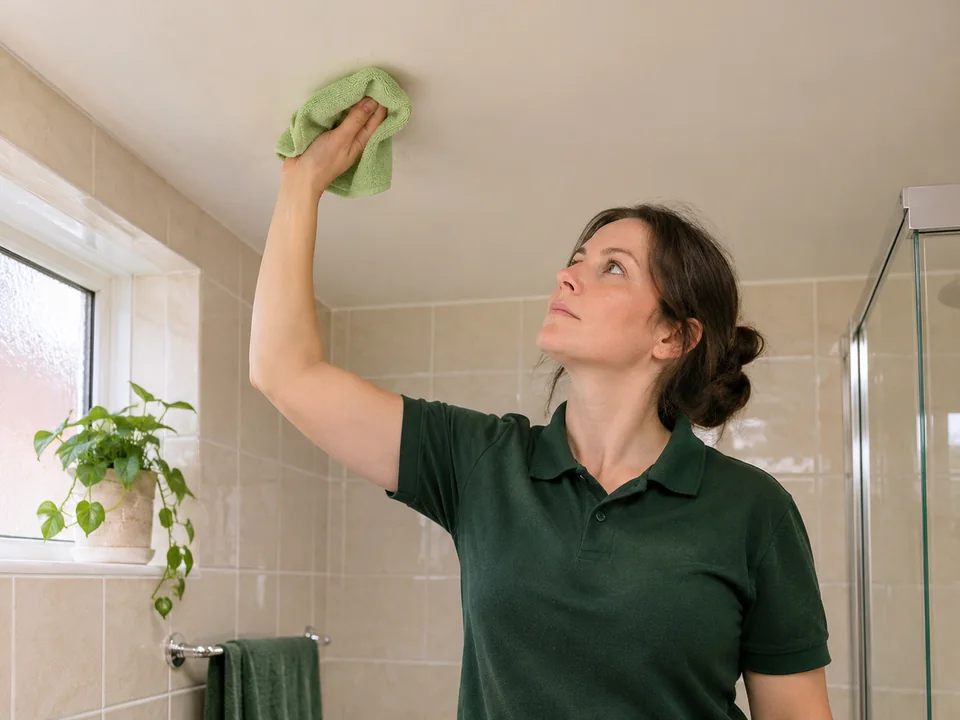
Mould Removal in Dalston
A dark mark above the shower and a second patch at the kitchen window can look like one job when you call from a Dalston flat. We start by separating the two surfaces and finding out how each room is used. That tells us which work we can discuss from your description and where an inspection would be more useful.
What helps with a Dalston E8 enquiry?
Give the full address, flat entrance and the rooms affected. Say if the flat is reached through a side door or shared stair.
Can I include a bathroom and kitchen?
Yes. Tell us the visible finish and size of each patch so we can discuss both separately.
We start with two clear room descriptions
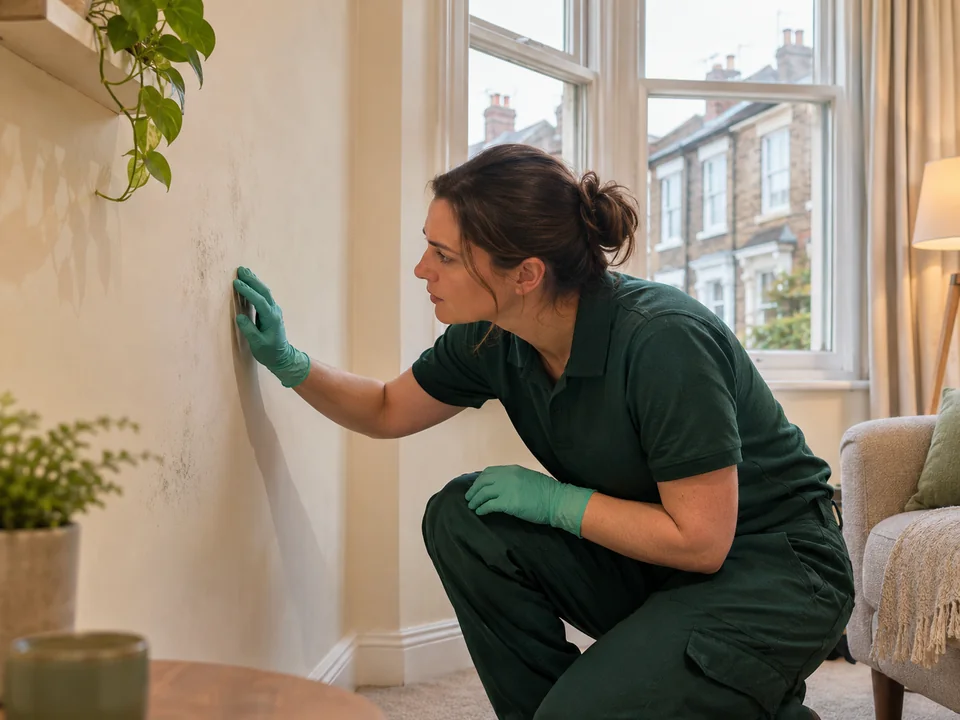
When you get in touch, we ask you to describe each patch as you would describe it to someone standing at the doorway. In the bathroom that might be a narrow strip beside the shower screen, a visible mark on the tile grout or an area on the painted ceiling. In the kitchen it might be the wall beside the window or the painted return behind a countertop. We ask which parts are visible without moving a fitting. A photo showing the whole wall often tells us more about the practical access than a close-up alone.
For Dalston enquiries we confirm the full address before discussing a visit. Hackney Council's Dalston conservation area information describes Victorian and Edwardian terraces along the Kingsland High Street shopping stretch. Where the rooms sit above or behind a shop, the shopfront may be a poor guide to the residential entrance. Tell us the actual door, the floor and who will be there. We also ask if you have a shared staircase or a hallway where someone else needs to be able to pass while we work.
If the bathroom illustrates the problem best, start there and add the kitchen as a separate second item. A combined description such as “all around the windows” can leave out a window that opens into a different room. We ask for approximate lengths or patch sizes where you can estimate them from floor level. We can then discuss a visit that accounts for both areas without assuming how a concealed edge looks.
- Tell us the bathroom and kitchen locations separately.
- Say which door leads to the flat and which floor it is on.
- Mention any areas blocked by a cabinet, appliance or fitting.
How we assess the area you can actually see
At the start of a visit agreed for assessment, we look at the accessible surfaces you have described and check the extent of the visible marks. We ask what you have noticed about timing. A bathroom patch noticed after a recent overflow is a different enquiry from marks that have returned around the same window over several months. Describing what happened helps us distinguish work on the visible finish from a question about a damp material or an unresolved leak. We explain when there is enough information to discuss cleaning and when the underlying condition needs a separate assessment.
We look at where the finish changes. The glazed surface of a tile, an adjoining strip of grout and a painted ceiling may sit close together while calling for separate decisions. The same applies to a kitchen window with a hard sill, painted reveal and peeling edge. We identify what is accessible, what appears sound enough to discuss cleaning and which areas we would leave alone. We do not assume that a mark seen on the front face of a surface tells us what is behind it.
Where a patch seems to reach the side of a window opening, we ask whether the surface continues behind a roller blind, panelling or a fitted unit. That distinction matters to the assessment. The part you can reach may be a durable surface while the covered part remains uncertain. We describe the limit of what we can see and discuss who should check the rest if it needs further investigation.
| What we look at | What we clarify | How that affects the visit |
|---|---|---|
| Glazed tile and wall joint | Which parts are affected and visible | Agree the exposed surfaces before work starts |
| Painted ceiling | Whether there is lifting paint or a reported leak | Discuss whether a separate assessment comes first |
| Kitchen window reveal | Where the painted edge and hard sill meet | Agree the limits for each finish |
Preparing the bathroom without disrupting the whole flat
Before cleaning agreed surfaces, we confirm which room can be used and where there is clear working access. In an occupied flat, a bathroom may be the only one available to several people. We discuss timing with the person arranging the visit so the door and floor can be kept accessible while the work takes place. If toiletries, towels or a bath mat are in our way, we agree what needs to be cleared. We avoid asking you to dismantle screens, remove fixed fittings or reach up to the affected ceiling before we have discussed the work.
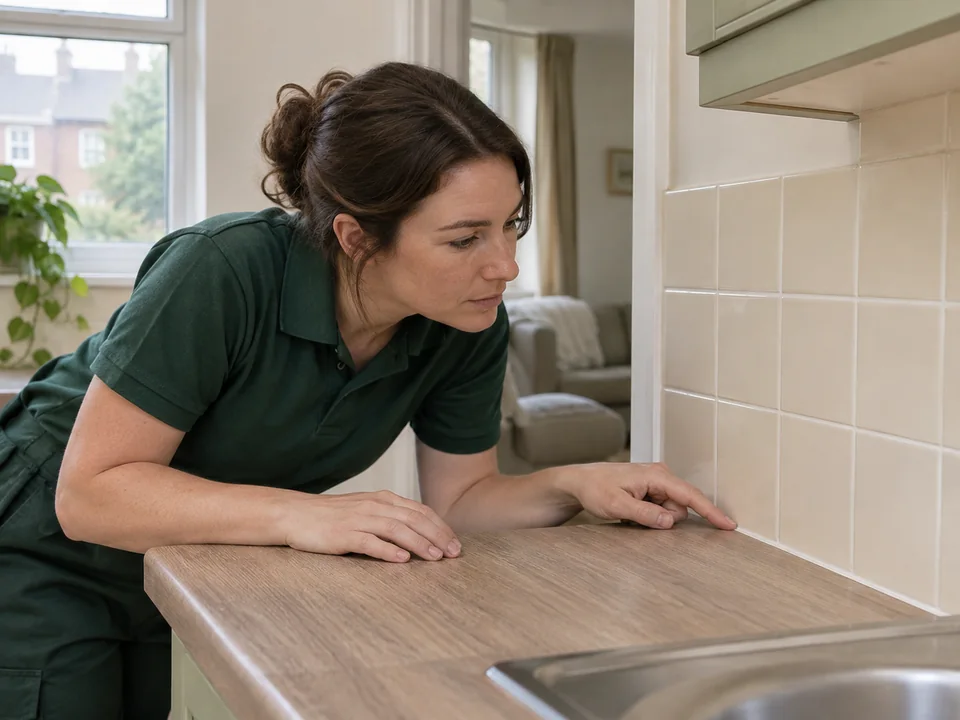
The kitchen preparation is often about separating the area at the window from the space used for preparing food. We agree which items should be set aside so the adjacent exposed surface can be reached. If the affected patch appears to go behind a fitted cupboard we note that as a separate access question. We agree the accessible area before work begins so a visit priced for an exposed return does not turn into an assumption about opening a fitted unit.
For a shower room opening directly onto a narrow corridor, we also agree where anyone using the flat can wait or pass. We keep the access question tied to the agreed room rather than asking you to clear unrelated parts of the home. If the keys must be collected from another entrance, give the contact person and collection time when you discuss the appointment.
- Agree when the bathroom can be kept clear.
- Identify loose things you can set aside before we arrive.
- Point out fitted items and surfaces we should leave undisturbed.
How we clean the exposed finish agreed for the visit
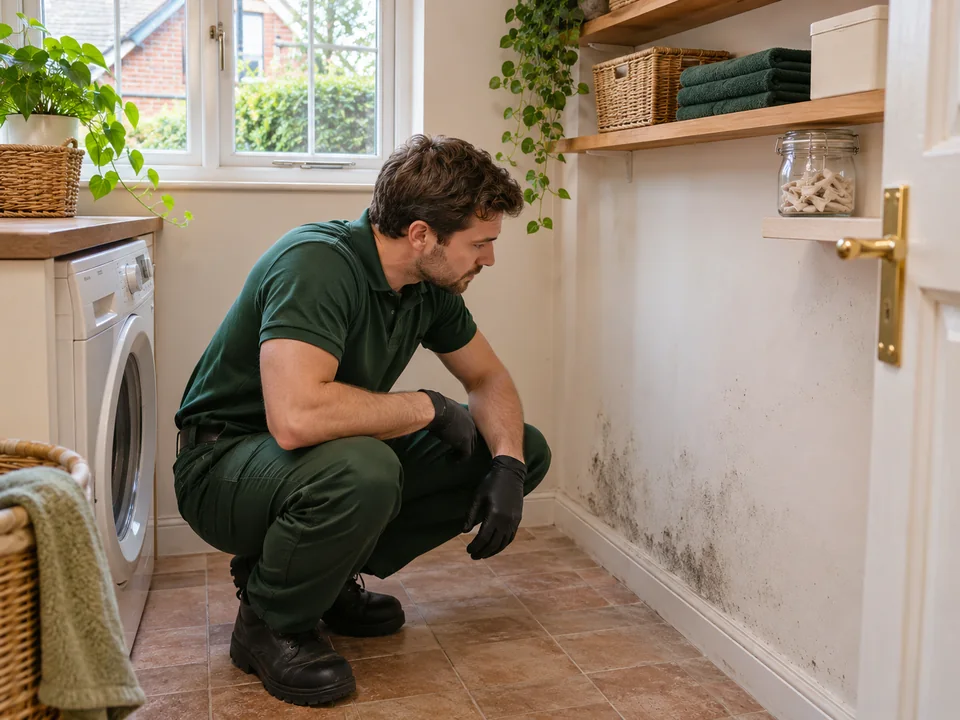
Once the areas have been assessed and the work agreed, we focus on removing visible mould from the accessible hard surfaces suitable for cleaning. We work within the boundaries agreed for that room and take account of the condition of the finish. If a tiled section and a painted section meet, we deal with each as a separate part of the visit. That keeps the request practical. Cleaning a sound accessible tile face does not mean that the material underneath a damaged joint has been dealt with, and it does not imply work on a loose or absorbent surface next to it.
If our initial view changes once the area is clear, we stop at the point where that change matters. A mark hidden by an item may turn out to extend beyond the photographed area. A painted edge may already be loose where it looked intact in the first photo. We explain the difference before proceeding outside the agreed area. Sometimes we can keep to the suitable part of the job; sometimes it makes more sense to ask for separate property advice before treating the affected area. The work should reflect what can actually be reached and inspected.
The person agreeing the work can help by naming the priorities if the rooms differ significantly. A sound tiled area may be ready for cleaning while a soft ceiling section needs another decision. We make that distinction explicit before treating the two areas together. It is useful to know if a tenant needs the bathroom available again before anyone can return to inspect the ceiling.
| Stage | What we do | What you can expect to discuss |
|---|---|---|
| Before cleaning | Confirm the named room and exposed finish | Access and the agreed boundary |
| While working | Remove visible mould from the agreed suitable hard surface | Any change that affects what can be cleaned |
| Before leaving | Review the work with the person handling the visit | What was cleaned and what was left for another assessment |
Dealing with a persistent mark at the edge of a finish
We discuss marks that remain in the material separately from the visible growth on the surface. In a bathroom the affected part may run across the edge of the seal or a worn line where finishes meet. In a kitchen it may extend into a painted recess or a wall covering. We can explain what was included in the surface work and identify areas where the appearance or condition still needs attention. A different finish after cleaning is not a reason to assume that the whole wall needs to be repainted or that a further clean will change what is underneath.
If moisture is still entering the room or the affected area grows back repeatedly, we advise discussing the moisture problem with the person responsible for the property. Regular cleaning helps you keep an agreed cleanable surface in use, but it does not establish why a wall has stayed damp. We keep the two issues separate when discussing your quote. That way someone arranging a repair will know which parts of the property need checking and which accessible surfaces were dealt with as cleaning.
- Tell us if a mark has returned in the same place.
- Point out changes that appeared after a leak or building work.
- Discuss a separate property assessment if the condition is unresolved.
How we close the visit and quote for any next steps
At the end of the agreed work, we review the rooms that were included. If you arranged the clean on behalf of a landlord, tenant or family member, decide beforehand who will be available for that conversation. We explain which exposed surfaces were cleaned and which areas could not be included because of access, material condition or the need for another assessment. If both the bathroom and kitchen were part of the enquiry, we distinguish the two in the handover so it is clear where any remaining issue sits.
The price depends on the rooms, accessible surfaces and work that can be agreed after reviewing your enquiry. Give the full E8 address, an approximate size for each area and the times the rooms can be made available. Ask the office what the quote includes and when it might change. We can discuss routine housekeeping or oven cleaning separately if it helps you arrange other work around the visit. Keep those jobs listed separately so a cleaning plan for a mould-affected area does not get confused with a general kitchen or bathroom clean.
| Enquiry detail | What to share |
|---|---|
| Two affected rooms | Room names, accessible surfaces and approximate sizes |
| Managed or shared property | Entry arrangements and who can agree changes |
| Follow-up work | Which accessible surfaces remain an issue and what the property contact has arranged |
Questions about arranging mould removal
Can you quote on the kitchen if the bathroom still needs assessment?
Tell us which kitchen surface is accessible and why the bathroom needs a closer look. We can discuss the two areas separately so the office can explain what needs to happen first.
What should I show you if a mark follows the shower screen edge?
Show the accessible tile and the adjacent joint or seal in the same photo. Mention any parts hidden by the screen so they are clear during the initial discussion.
Can I include a painted ceiling above a bath in the same visit?
Give the approximate height, describe the finish and mention where someone would need to stand. We discuss the assessment and access before agreeing what can be cleaned.
Do you need to move my countertop appliances?
Tell us which loose items prevent access. We agree preparation with you before work. If access would require moving or dismantling a fitted appliance, explain that at enquiry stage.
What if the affected kitchen wall sits behind a fitted cupboard?
We can discuss the visible part of the wall. Tell us which section is concealed so we can identify whether the enquiry needs input from someone responsible for the property.
Can my tenant give access if I arranged the quote?
Agree who will let us in and who can authorise a change to the agreed work. Decide who needs the handover so both the tenant and the person arranging the visit know what was covered.