 Housekeeper
Detail-led care for your oven
Oven Cleaning in Clapton
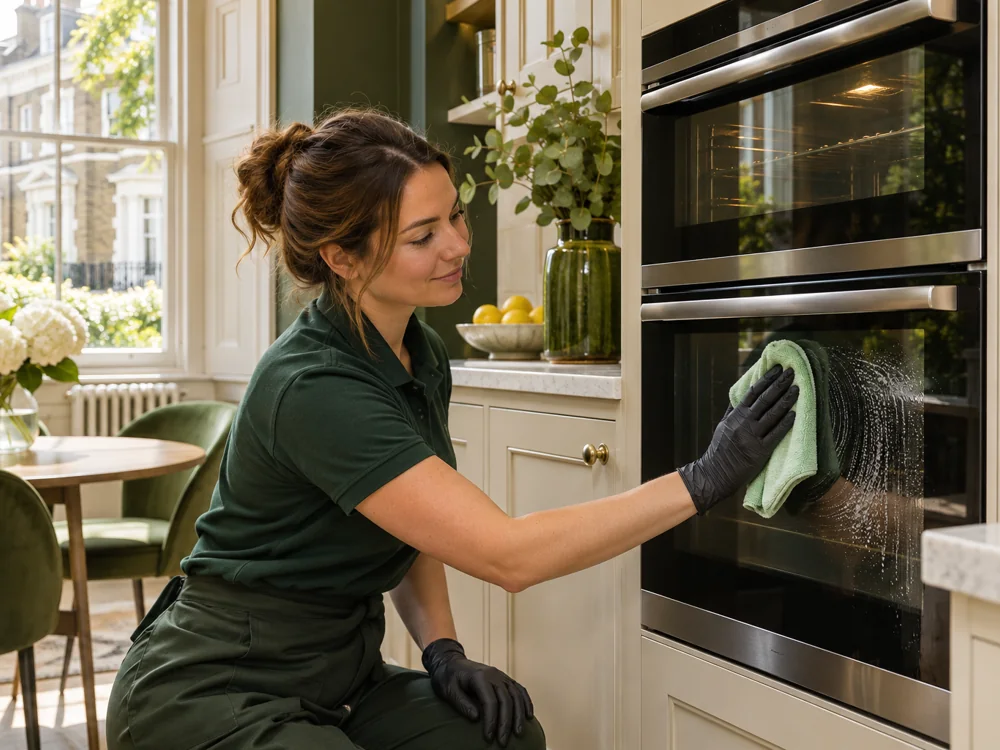
Show us the cooker in place and identify the parts you want assessed in your Clapton kitchen. If an oven sits against tiled walls, painted cabinets or a worktop with its own care instructions, include those surfaces in the wide view. Let us know which working cavities, original accessories and optional extras you would like to discuss.
What entrance details help for an address near Clapton Pond?
Give the full E5 postcode and the house, flat or side door you want us to use.
Can I include separate ovens on the range?
Yes. List the working cavities and explain which accessories belong to each.
See what belongs to the cooker and what belongs to the kitchen
An oven may be close to other finishes even when it stands on its own. Look along the sides and below the controls to see where its door passes the nearest cabinet. A coated metal edge, tiled upstand and painted timber can all sit in that narrow area. Photograph the space so it shows the edges of the appliance and the room available to work. Identify a surface that has its own care instructions and describe any loosened trim or chip already present. Avoid moving the cooker or its fittings while taking the photograph.
Make a separate note of worktop or splashback surfaces you want considered. A picture of the full area shows where the cooker stands while a closer image can point to grease that reaches the edge. If the door stops near a handle or deep counter, report how it opens and any restriction. Tell us about a second surface that can be discussed for laying out removable oven pieces. That helps the quote discussion account for both the appliance and the limits of the working space.
- Photograph the cooker in its fitted position.
- Name the surface where the oven meets another finish.
- Report chips, wear and limited clearance in advance.
Label working doors on a range or cabinet oven
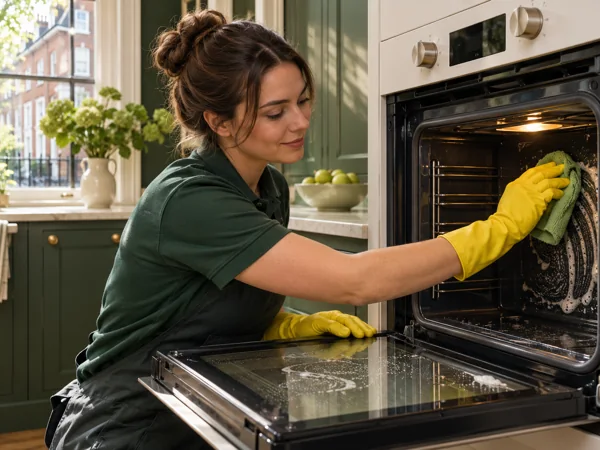
Look at the cooking compartments you use and give the position of each. A range that has two ovens might also have a shallow grill and a drawer with a similar door. Tell us which spaces you would like considered and what the smaller ones do. A photograph of the entire front shows how the handles and controls match their doors. Include the model if readable from an accessible label or the manufacturer’s paperwork. If an oven was installed in fitted cabinets, identify the door by its height or position.
If there is a second built-in model nearby, describe its function and number separately. A combination or steam appliance may have a different material inside and require a separate discussion of accessible surfaces. Describe the condition of each cavity that you are asking about. Leave fitted pieces where they are while you check which ones can normally be lifted out. Give one list for each appliance so the cleaner can tell which tray or shelf you want assessed and which controls belong to the oven.
Distinguish finishes around a Clapton cooker
| Surface | What to locate | Detail to report |
|---|---|---|
| Cabinet beside door | Closest edge or knob | Clearance and finish |
| Fascia | Settings and print | Existing wear |
| Door window | Affected panel or face | Glass access concern |
Account for paint, glass and other exterior details individually
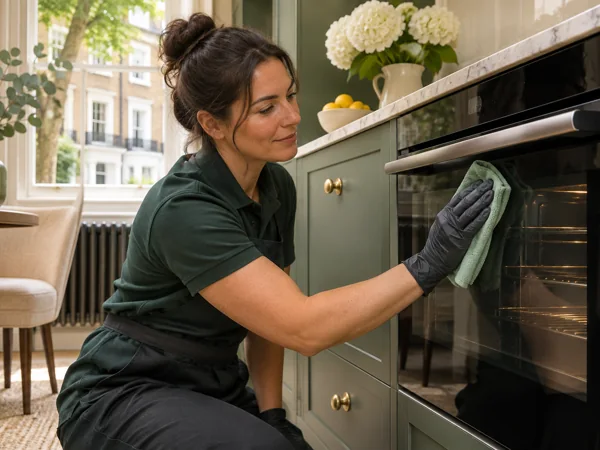
Report grease near the controls by the setting or knob it reaches. Painted markings or a printed fascia need to be identified separately from the glass window. Give any known materials and note existing wear. If the cooker has trim that looks like the film left by food, take a picture of the full door and nearest controls. That gives enough context to comment on which surface is affected. If the oven is near existing painted joinery, tell us which parts of the picture belong to the appliance.
For a mark on the glass, name the door and the face that seems affected. If it appears behind a pane, include the model and describe how the mark looks with the cool door open. Access to each face depends on the construction and condition. Note the position of a loose seal or a mark near the door edge without moving the part. The accessible window, handle and trim can be assessed with those details in mind. Discuss which faces should be on the quote before the visit.
- Name the window or fascia and its position.
- Distinguish existing finish wear from the residue you want looked at.
- Describe a seal or trim issue without handling it.
Trace a mark to the lining that needs assessment
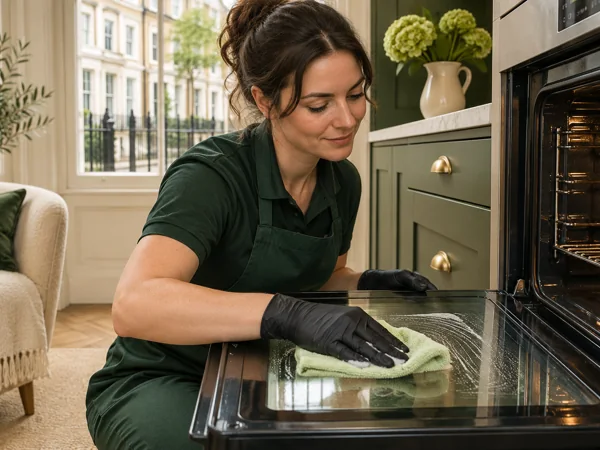
When the oven is cool, show the location of a patch of grease or baked-on residue. Use the back wall, tray guides and cavity entrance to indicate where it sits. If a spill collected at a seam between different materials, try to show the seam in the picture. Give the model or manual name for the liner if available. On a range, label each image by oven or grill. This makes it easy to find the deposit even when the doors and oven walls look alike.
Give the history of previous cleaning where you know it. A product or a built-in programme can have been used on one cavity without being used on the others. Mention any apparent change to the finish or original damage near the affected part. The technician can assess accessible residue in context and discuss treatment with the surface and condition in mind. An owner who is not at the property can share the description with the person opening up so they know which lining or patch to show.
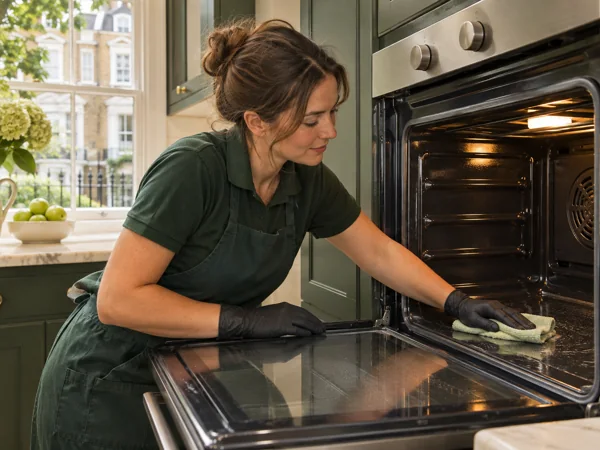
Give the position of each oven part
| Item | Where it normally goes | Include in description |
|---|---|---|
| Wide wire shelf | Main cavity | Count and visible wear |
| Small grill tray | Separate upper door | Insert and surface |
| Fixed rail | Side wall | Usual movement and model |
Confirm the door and the route by Clapton’s local landmarks
Hackney Council gives Clapton Pond’s address on Lower Clapton Road in E5. If your house or flat is nearby, use the full postcode and the exact place where someone can enter. A door around the corner or a route through a courtyard may be closer to the kitchen than the main address suggests. Give the flat number and any name visible at the communal entrance. Say where the cleaner should wait if a resident needs to meet them and how that person can be reached on arrival.
Describe the route from the doorway to the cooking area. An extension can be reached through a side gate once the main house is unlocked. A flat can be reached from a common stair or a separate lower-level door. Give any step or narrow bend along the agreed path. If a building has a visitor or loading arrangement, check it with the person who is able to arrange it. Share private entry information at the point when the visit is agreed and keep the appliance model with the quote details.
- Give the actual entrance rather than the nearest landmark alone.
- Describe any gate or stairs before the kitchen.
- Agree who can show the working area.
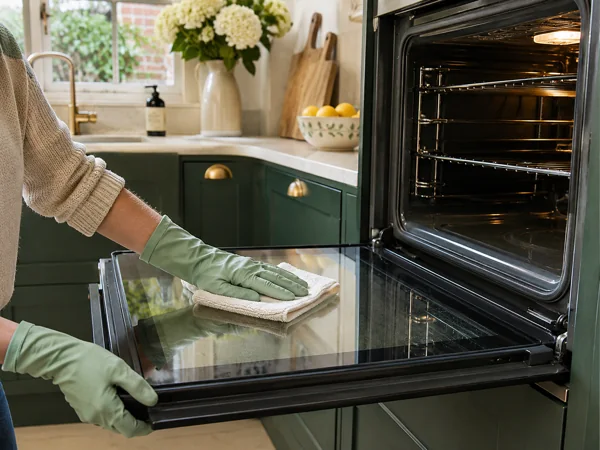
Keep unfamiliar fittings separate from ordinary loose parts
Some trays slide on rails while others rest on a wire shelf. List the original pieces you want considered, with the cavity they came from. If a range has a wider rack in the main cavity and smaller racks behind another door, count them separately. Give the same detail for a grill tray, wire insert or removable handle. Leave fixed supports and parts that are difficult to move in place. If an accessory looks as though it belongs to an older appliance, make that uncertainty clear before it is assessed.
Suitable removable items can be considered for dip-tank soaking after inspection. Report coatings and visible condition of those loose parts. A tray with a worn edge or a handle that moves deserves a note. Take personal dishes and pans out of the oven and keep them apart from the requested items. Leave the appliance cool for the visit. If a person other than the one making the request is at the property, give them the list and tell them where any loose pieces are kept.
- Count racks and trays in each cavity.
- Identify coated parts or a loose handle.
- Leave fitted guides where they are for inspection.
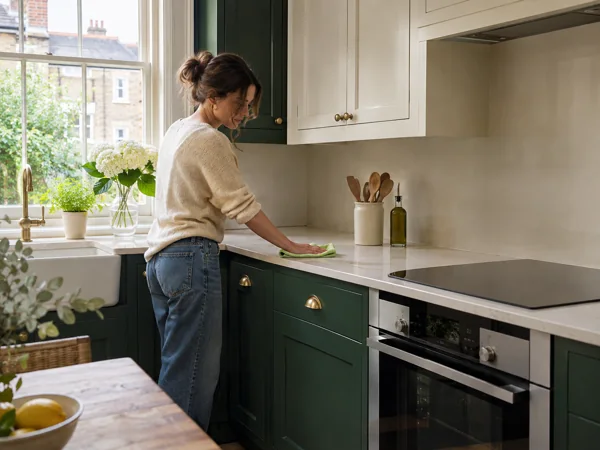
Add the cooking top and any wall-mounted hood by part
For a gas hob, show the burners and any supports you want considered. On a glass top, describe the cooking zones and identify a mark beside a control or outer edge. If a range includes a griddle, tell us its type and finish and list it as a separate item. A photograph can show whether the hob meets a wooden counter, tiles or metal trim. Give the surface name if you know it, including any splashback that is a distinct part of the request.
An extractor might sit inside a canopy, between cupboards or directly over an island. Explain the height and describe the external finish and any filter you can identify. If the model is known, give it instead of taking a part out to read it. Ask about the visible hood or individually named filter as an extra. Check the quote to see which oven, hob and extractor items you have agreed before passing the list on to a resident, neighbour or key-holder. Each part can then be reviewed at the correct appliance.
Set out access from an E5 street
| Stage | What to send | Who can confirm |
|---|---|---|
| Pavement | Postcode and exact door | Resident |
| Inside | Passage, steps or lift | Building contact or key-holder |
| Kitchen | Clear working room and requested oven | Person meeting cleaner |
Give the next person one account of each agreed appliance
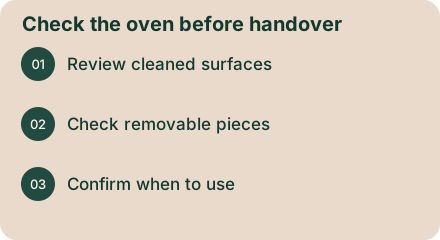
At the end, identify the oven cavities and loose pieces that were part of the visit. Ask which items were removed or treated separately and review the area you reported by its original position. A description of the surrounding finish can be useful when checking a glass edge or spot beside a cabinet. Ask when the appliance can be used again and tell the person who will cook next. Keep the list of accepted extras beside the oven if someone else is checking the kitchen for a handover.
If the owner or agent will come later, say what was checked at the appliance and distinguish any work you only asked about. The original manufacturer’s booklet and a list of standard accessories can go with the property’s appliance information. Keep another model or extractor description separate if it may have a future appointment. Confirm who can access the kitchen before keys go back. The same note can identify the oven and agreed parts without requiring the next person to read a label behind a fitting.
Get an oven cleaning quote in Clapton
Request a quote with the oven type, number of cavities and any extra appliances.
Get a QuoteOther Cleaning Services in Clapton
Local references · Hackney Council, Clapton Pond
Clapton oven cleaning questions
Can I show marks on the tiled edge next to a range?
Yes. Show the cooker and tiles together and describe the edge as a separate surface to discuss.
Should I list an oven compartment that looks like a drawer?
Give its function if known and say if you want to discuss it. Name the working oven cavities separately.
How do I show two racks of different widths?
List the width or position that identifies each one and state the cavity it belongs to.
What if the address is easier to find from the direction of Clapton Pond?
Use the full door address and postcode, then add the pond or Lower Clapton Road if it helps orient the approach.
Can I ask about an extractor built into a decorative casing?
Describe the visible underside and material, with the model or filter type if known. Leave the casing in place.
Can my neighbour point out grease on the window while I am away?
Give them the door position and a photo showing where the mark is visible. Share the agreed list with the person opening up.