 Housekeeper
Plan the equipment route before arrival
Carpet Cleaning in Canary Wharf
For a carpet cleaning visit in Canary Wharf, the journey from the drop-off point to your flat matters almost as much as the rooms on the list. Send your full E14 postcode, building name and approved equipment route. We can then discuss the treatment, access and how you will use the flat while the carpet dries.
Is a block name enough for a Canary Wharf quote?
Send the full postcode, flat number and entrance your building permits for cleaning equipment. Include any lift booking or reception requirements.
Can one bedroom be quoted on its own?
Yes. Give its approximate dimensions, carpet construction if known and anything that could affect access or treatment.
Trace the route from street level to your flat
Canary Wharf Group’s step-free access map marks entrances, level changes and lifts around sites including Westferry Circus, Jubilee Park and Water Street. It is a useful point of reference if you are describing which part of the estate your building occupies. The private route to a flat is a separate matter. Give your own address, the name displayed at the correct entrance and any distinction between a pedestrian lobby and the place authorised for equipment. A person directed to the nearest station exit may still be on the wrong side or level for access.
Put the equipment route into the booking enquiry before discussing a date. Tell us whether the site has a staffed desk, where someone will meet the technician and which lift serves your level. If an outer gate or a loading area has to be booked, check with the building manager before agreeing the visit. Where unloading and waiting are handled separately, give both instructions. The detail matters for a tall building particularly when the postcode marks the main frontage, but the authorised access is elsewhere.
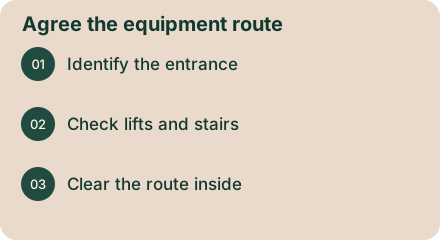
- Use the full postcode and name displayed at the entrance.
- Identify the approved unloading point and lift.
- Check if access must be reserved rather than relying on a public route.
Separate private rooms from the approach through the building
Start the list at the door of your own flat. Note each room with fitted carpet, the approximate dimensions and any internal steps or carpeted cupboards you want considered. The building corridor, lobby and lift approaches are beyond the flat and should only be added after discussing who has authority for them. If the route passes over flooring with building protection requirements, ask management to describe those before the visit. Tell us where the carpet begins and where the nearest clear space for equipment would be.
For an apartment with hard flooring in the main area and carpet only in the bedrooms, identify which door leads to each bedroom and whether any strip at the entrance is part of the job. You might want the open edge, the centre of the room or the carpet beside a window included. Explain anything that could restrict access, such as a narrow opening past a bed with drawers or a hinged wardrobe door covering part of the floor. If a slot must be confirmed by building staff, leave room in the plan for that decision. If the lift serves multiple cores, give the letter or number shown on the panel.
Translate a site address into an equipment route
| Detail | What to provide | Why it helps |
|---|---|---|
| Approach | Exterior door name and permitted drop-off point | Distinguishes public access from private entry |
| Lift | Location, floors served and booking requirement | Shows how equipment can reach the flat |
| Reception | Agreed contact and meeting location | Prevents confusion between the lobby and service entrance |
Establish what was fitted under the pile
If you have a specification from the landlord, developer or original fitter, send the part that identifies the carpet and any care restrictions. A brochure for a development may only describe the finish in a show flat. Make sure the information applies to the room you want treated. If a carpet has been replaced independently, identify it on its own. Someone inspecting the textile may need to consider the backing, fibre, colour stability, seams and condition before selecting a treatment.
Consider where the carpet meets a hard threshold or sits next to fitted storage. If you notice a loose edge or movement around that join, mention it in the enquiry. For a flat with underfloor heating, give any floor care instructions you have available and tell the technician if you cannot change the room conditions. Appearance is not enough to determine what a textile can tolerate. Some alterations are hard to see from above, and a previous treatment can affect the way the surface responds even when the backing appears sound.
- Send the actual room’s fitting information if it is available.
- Identify a repaired seam, lifted door edge or other weak point.
- Mention restrictions that apply to the installed surface or finished floor.

Explain what the proposed treatment can reach
Some fitted carpets tolerate water-based extraction. A technician can assess the fibre, construction and any problem areas first. With a suitable carpet, an extraction machine delivers solution to the area and recovers it by suction. A different level of moisture or specialist approach might be needed when the fitting, fibre or colour is uncertain. The proposed treatment also depends on the part of the carpet available to reach, so there is little value in settling a method from a photograph alone.
Give us the room and approximate location of each surface issue. A worn edge across a wide doorway needs a different expectation from embedded soil near a desk. Similarly, furniture dents and fading may predate anything you spilled. Compare the condition of the pile in the affected area with a nearby protected part of the same carpet where possible. This helps an assessment focus on what can realistically improve. Ask the technician to confirm the approach and the parts of the room that will be left alone before work is agreed.
Describe the mark, including any product already used
A ring beside a desk chair might have started as a drink spill and then picked up soil from shoes. A patch from a plant pot can have both moisture marks and discolouration. Tell us what happened, where it happened and what changed after the first attempt to remove it. If you used detergent or a domestic cleaner, send the name when available. That information helps distinguish the original material from residues that affect how the pile appears now.
Where your concern is lingering odour, explain whether it is obvious when the room warms up or when the carpet is damp. A repeated accident or a spill absorbed below the pile can be different from a small surface mark. Make the concern clear before booking because it may change what can be agreed. Add an approximate outline of the affected area and mention if it touches a wall, threshold or skirting board. Avoid applying additional products before the assessment if you are unsure how they might react.
- Identify the room, position and approximate size of the mark.
- Share the spill history and any earlier treatment.
- Tell us if odour, appearance or both are the priority.

Assess the flat by carpet area
| Area | Quote information | What may change the treatment |
|---|---|---|
| Bedroom | Room dimensions and under-bed clearance | Fibre, backing and what can be reached around the bed |
| Study or desk nook | Carpet edges, cable positions and marks | Restricted space and concentrated traffic wear |
| Internal hall | Length, door thresholds and through routes | Loose joins and need to keep the passage available |
Decide which furniture stays where it is
Fitted wardrobes and heavy desks can restrict the carpet area a technician can reach. Measure the room as a whole, then tell us which furniture takes up floor space and which pieces you can clear before the visit. This distinction helps when a carpet is accessible along the sides of a bed but not under its base. If there are cables clipped low to the skirting or a monitor arm fixed near the floor, explain what should stay untouched and which route is still clear.
If the flat is between occupiers, confirm when keys and lift access become available and when the next person takes possession. An empty room may make it easier to reach the whole carpet, but work still depends on the construction and condition of the textile. In an occupied flat, agree which surfaces are within reach so the quote reflects that layout. Leave heavy movement for a separate discussion. A piece of furniture can be too bulky for the lift as well as awkward to reposition on a recently treated floor.
Make a drying plan for a room with limited airflow
A bedroom with a restricted window opening and one door can dry differently from a room with airflow at two sides. Tell us about window limits, doors that must stay closed and any building rules that affect ventilation. Time depends on the carpet, the treatment used, how much moisture is recovered and room conditions. Ask the technician what to expect in that specific room, especially if the bed or main passage must be used later in the day.
The best place to wait is a room whose entrance does not take you back through wet carpet. If the only route from the front door to the main living space goes past a room being treated, explain that during the booking. Ask about the order of work and how long to keep pets, shoes or furniture off the treated areas. Even if one area feels drier than another, ask about putting back a heavy item or a mat because the carpet and the part of the object touching it both matter.
Quote the flat as a list of rooms and separate items
A useful quote request names every fitted carpet area, gives approximate measurements and flags spots that need individual assessment. Add the floor, lift and reception instructions to the room list. If only the room around the bed needs work, say that clearly before an estimate is prepared. A phrase such as bedroom carpet can cover very different proportions of the room depending on where the bed, cupboards or desks sit. Tell us if you expect vacant possession at the appointment rather than assuming the furniture will have gone.
A chair, sofa, loose rug or mattress is a separate textile from a fitted carpet. List those items individually and send a useful care label image where possible. If a broader checkout or housekeeping visit is under consideration, say which cleaning service you want priced along with the carpet and which is already arranged. Get a Quote starts the discussion with the address and relevant details. Confirm the treatment, areas, price and entry arrangements with the office before planning the visit around deliveries or a building reservation.
Quotation information by item
| Request | Details to send | Price |
|---|---|---|
| Fitted carpet | Each room, size and material if known | Get a Quote |
| Spot assessment | Age, source, size and previous work on the mark | Get a Quote |
| Separate upholstered item | Type, seating count and available fabric label | Get a Quote |
Get a carpet cleaning quote in Canary Wharf
List the carpeted rooms and stairs separately, along with the carpet sizes and any loose rugs.
Get a QuoteOther Cleaning Services in Canary Wharf
Local references · Canary Wharf Group: step-free access map
Canary Wharf carpet cleaning questions
Will a public step-free route work for bringing in the machine?
Check the access permitted by your building. A public lift or route on the estate may serve a different entrance from your private flat.
Should I reserve a lift before getting a quote?
Find out whether a reservation is needed and give us its conditions. Confirm the appointment and the building’s requirements before reserving a slot.
Do I need to name separate carpet areas on an open-plan floor?
Yes. Give the measurements and describe how the carpet edges meet. Distinguish carpet from hard flooring and loose rugs.
What if the developer’s specification refers only to the show flat?
Let us know that it may not apply to your carpet. The technician can discuss identification and whether the construction needs a closer check.
Can the carpets be treated before the lift is booked for a move?
Tell us the times for access, removals and handover. The carpet method and drying conditions affect whether that sequence is suitable.
Can the wardrobe stay in place when the rest of the room is treated?
Tell us the size and position of the wardrobe. The quote can identify the floor that can be reached around it, and any extra movement can be discussed separately.