 Housekeeper
Plan your kitchen visit
Oven Cleaning in Canary Wharf
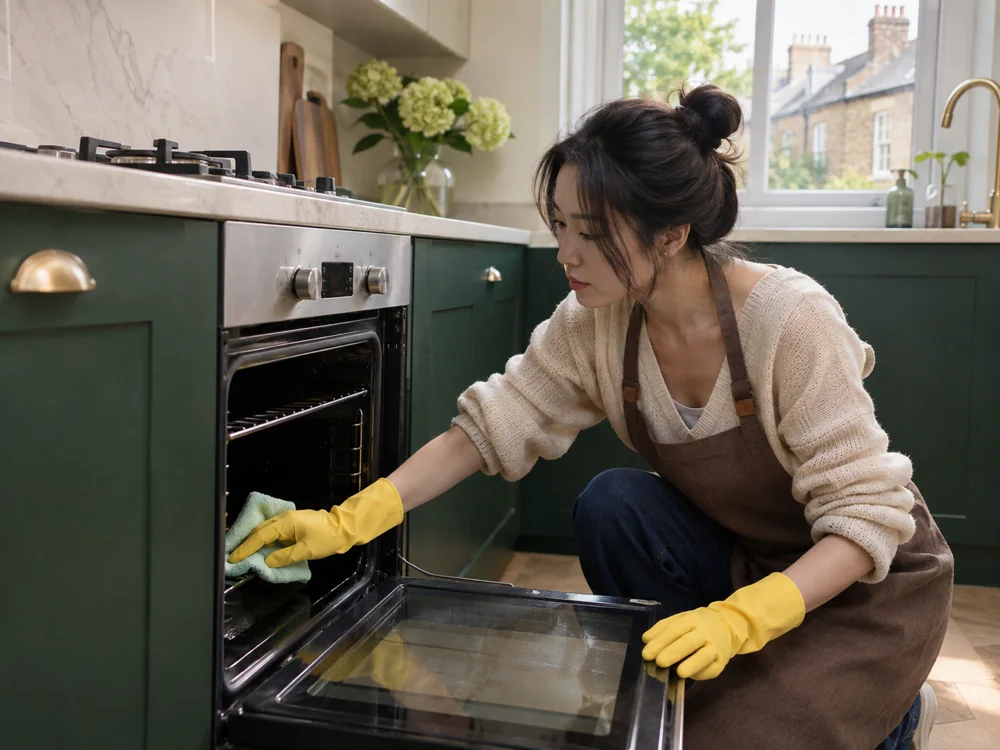
Tell us which oven is fitted in your Canary Wharf flat and how to reach it from the building entrance. A clear photo and a short arrival note can resolve two common questions before a quote: which compartments need cleaning and where the technician can bring equipment into the building.
What address should I send for an E14 flat?
Give the full postcode, building and flat number, plus the entrance visitors should use.
Can I request the built-in oven alone?
Yes. Specify the compartments and leave the hob and extractor off the enquiry if they are outside the job.
Identify the residential door from street level
Canary Wharf Group’s estate map shows named streets and spaces around South Dock, among them Park Drive, Charter Street and Harbour Quay Gardens. Use the names to orient an arrival note when they genuinely help, then give the full postal address and the entrance your building authorises for visitors carrying equipment. If the building name is displayed on one side and the entrance faces another street, say which sign to follow. A flat number alone will rarely answer what to do after reaching the block.
Ask reception which door opens at the time you want to book and how a visitor should announce their arrival. A public route on the map may lead to a different part of the block from the residential lobby. Explain where the technician should wait if someone has to come down. Note any address where the same flat number might appear in two cores, and give a mobile number so the technician can check the approach before trying an alternative.
- Give the written name of the residential entrance.
- Identify the lobby or core serving the flat.
- Tell us whether a resident needs to meet the technician.
Work out the route beyond reception
Confirm the route with the building before agreeing a slot. A lift from reception may serve the flat but still have rules about equipment, while an entrance nearer the approved loading point may open on a lower level. Ask which lift visitors should use, which button or level leads to your home and whether access needs an escort. A small unmarked flight of internal steps matters when equipment must be carried, particularly if the usable door is at the other end of a passage.
When a service lift needs a reservation, tell us when it opens and closes and who can extend it if reception is delayed. Check whether the rules apply on exit as well as on arrival. If there is a loading bay, confirm any separate procedure with the building and write down where the technician should stop first. We can then discuss how the route and window fit the job. Include a working contact who can answer if the usual lift or entry door is temporarily unavailable. If reception issues a temporary pass, check where it should be returned and allow for that stop when estimating how long access will take after the clean is complete.
Arrival instructions for a Canary Wharf flat
| Route detail | Check with the building | Share with the technician |
|---|---|---|
| Lobby | Which entrance admits visitors with equipment | Door sign and name of the lobby |
| Lift | Whether the service lift needs a booking | Reserved times and contact for access |
| Parking or unloading | Where a vehicle may stop for unloading | Approved address and approach |
Tell us which built-in appliance is yours
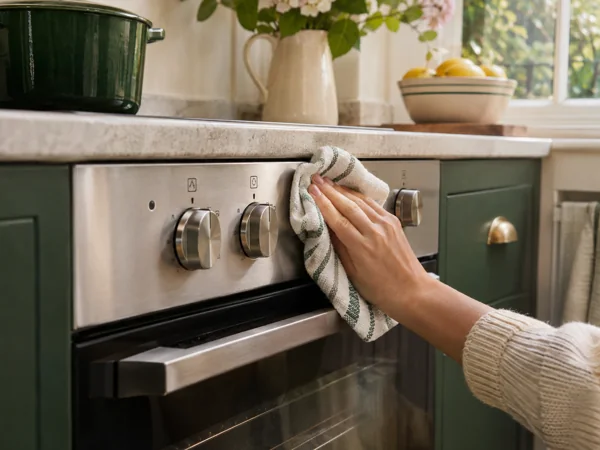
The visible front can be deceptive in a fitted kitchen. A shorter unit above the oven could be a grill or a microwave combination, and a narrow door below might open to storage. Send an image showing the fronts and controls together, plus a model reference from an accessible label or manual when possible. Write the items in their vertical order and tell us which doors lead to the cavities you want cleaned. Keep the appliance in position while identifying it.
Let us know if you only use one cavity or if one has a particular history, such as a self-clean cycle applied shortly before the enquiry. Describe any special liner mentioned in the handbook. A factory coating may limit cleaning choices, even when the neighbouring cavity has a finish that looks similar. Keep images of surfaces and ratings distinct so we can tell which oven a particular mark belongs to. If the instructions are available digitally, share the relevant pages instead of asking someone to move the appliance for another photo.
- Photograph the arrangement of doors and controls.
- Identify each cavity you want on the quote.
- Send any manufacturer instructions that apply to its surfaces.
Set up a compact work area
In an open-plan flat, the nearest table may also be a desk or the only surface for meals. Decide which space can be left clear while the technician inspects the oven and handles the parts. Move notebooks, washing up and any crumb trays or loose personal items out of the way. Leave enough room for the appliance door to open and for someone to stand directly in front of the cavity. If you regularly slide a kitchen island or trolley into that spot, put it elsewhere before arrival.
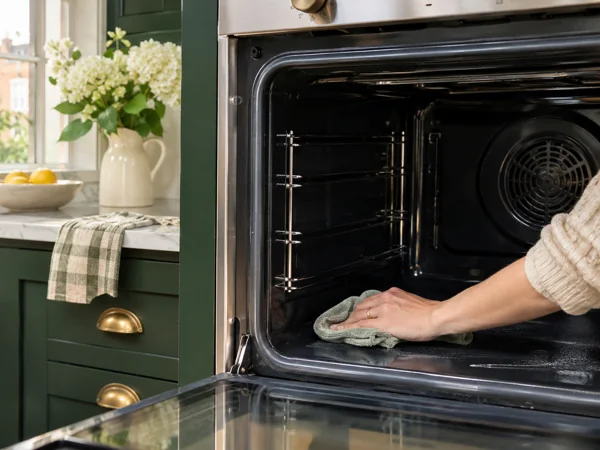
Leave the oven cool and remove loose dishes and food. If a coffee machine or charging cable sits above the oven, clear it from the immediate work area. Keep pets and children outside the kitchen while equipment and oven parts are being handled. Tell us about any restrictions on where equipment can be set down or where water or power can be used. We can discuss these details beforehand, especially if another person will be at the flat throughout the visit and needs a route between the main rooms.
Assess the removable pieces and the cavity
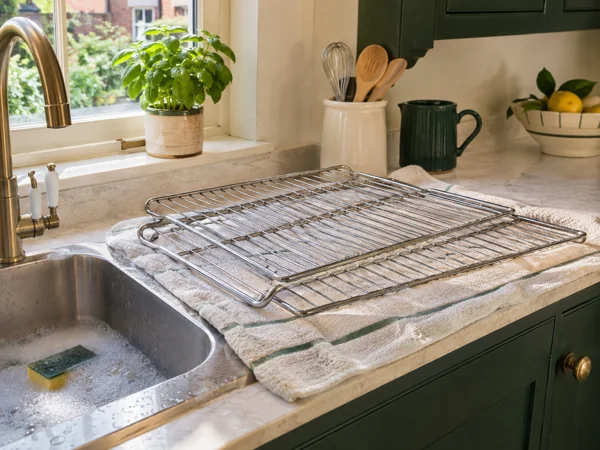
At the initial check, point out where you have seen baked-on residue, which runners feel hard to slide and any tray or shelf that belongs to a different appliance. The technician can assess which parts are designed to be removed and which can be handled safely in their current condition. Suitable pieces may be soaked in a dip tank. Parts with special coatings or uncertain construction need their own decision. Let the technician check the fittings rather than trying to free them before the visit.
For the cavity, describe a drip on the base separately from marks near the grill or liner. Older marks may include discolouration or changes to the finish. Tell us if an oven cleaner has already been applied and where it went. A clear account helps the technician discuss what can be cleaned and what may remain visible. If white residue appeared after a household product, mention the product and send an image where possible. An inspection gives the technician the context to choose a suitable treatment for the accessible surfaces.
- Point to the cavity where each mark sits.
- List removable accessories separately.
- Report earlier treatments and any parts that feel stuck.
Match the visible appliance to the work
| Kitchen feature | Helpful evidence | Decision before cleaning |
|---|---|---|
| Stacked appliances | Photograph of all fronts | Which doors and cavities form the job |
| Coated interior | Care information for the exact model | Which surfaces need specific treatment |
| Streak on door | Photo and position relative to panes | Whether the affected face is accessible |
Treat the glass question separately
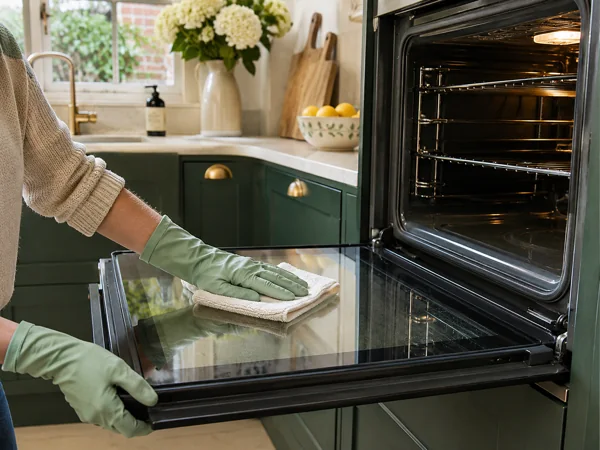
When the oven is cool, look at the door from the front and from the inside. A line that seems to move behind a reflection might be between the panes, while a smear you can plainly see from the cavity side may be on an accessible face. Explain where it appears and if that is the main reason for the enquiry. It helps to raise this before agreeing the work because safe access inside a door varies with its design and condition.
If the previous occupier removed components, tell us what you know and provide the handbook if it is available. Report any damaged edge, loose trim or door that behaves unexpectedly, so access can be discussed before handling the appliance. Ask which surfaces are reachable and what the technician expects to be able to clean that day. A cooked deposit on accessible glass and a permanent blemish may look similar in a photograph. The initial check matters when you are using an image to describe the concern.
Select optional appliances by finish and access
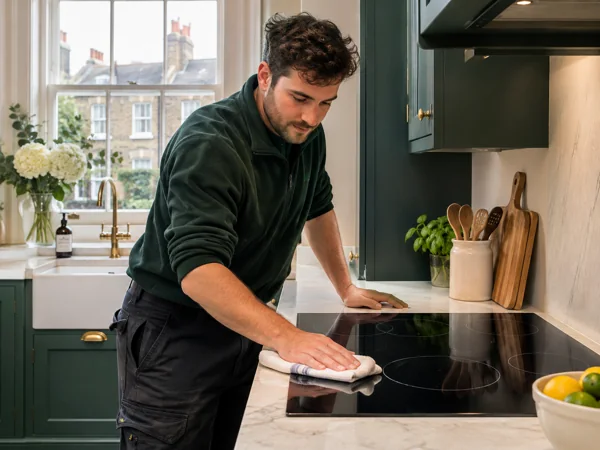
Write a separate line if you want the hob included. The relevant details for a flat glass hob include the type and position, while a gas model can have individual supports and burners to discuss. A narrow recess behind the hob or a splashback finished in a different material may need a separate decision. Use photos to explain what belongs on the list and describe any surface for which the kitchen installer supplied specific instructions. Avoid listing the whole fitted counter when you mean a single item.
An extractor can sit behind a cupboard front or inside a tall island hood. Describe what is visible, how high it is and what type of filter it uses if you know. A recessed cover, removable metal filter and disposable insert can require separate handling. If you rent, ask what the agent expects to see on an inventory check, then confirm which parts are relevant for your appliance and acceptable to the owner. The oven, hob and extractor should each be identifiable on the quote.
- Name the hob surface and any removable supports.
- Describe the extractor position and filter.
- Check that optional items are listed in writing.
Confirm the handover and the return to use
Use the postcode form to begin your enquiry and have the appliance and building notes ready for the quote. Confirm which person can authorise work after the initial check and how to reach them if the person in the flat has only been asked to admit the technician. If the building requires arrival registration, check the details reception needs and make sure the handover also covers signing out. Share any narrow lift reservation or planned building work that changes the route before the appointment.
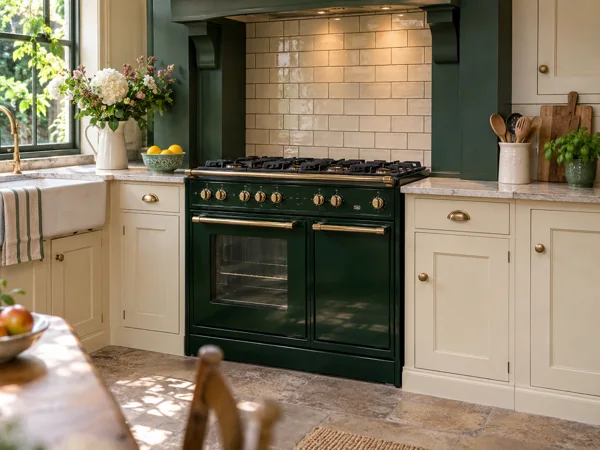
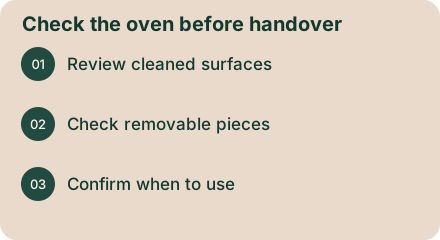
Ask the technician which shelves, runners and trays were handled and confirm when you can use the oven again. If you have a meal delivery or expect someone to cook later, pass on the advice. Keep a note of any surface the technician left alone after inspecting it. For a rental handover, give the flat contact the list of completed items along with the date and the appliance involved. If an agent wants to use an inventory reference, include the reference where the oven or extractor is already listed.
Make the agreed work easy to check
| Item | Confirm before booking | Check after cleaning |
|---|---|---|
| Oven shelves | Number and types to include | Which were handled and where they sit |
| Hob | Finish and any pan supports | Which components were included |
| Extractor | Approximate height and filter type | Which reachable surfaces were cleaned |
Get an oven cleaning quote in Canary Wharf
Tell us the oven type, number of cavities and whether the hob or extractor also needs cleaning.
Get a QuoteOther Cleaning Services in Canary Wharf
Local references · Canary Wharf Group, estate accessibility map
Canary Wharf oven cleaning questions
Does my postcode tell you which tower entrance to use?
Please add the building name and approved visitor door. Give the lobby or core if more than one lift serves the address.
What if reception asks visitors to use an equipment entrance?
Confirm its opening hours and provide the approach, lift instructions and someone who can admit the technician.
Do you need me to pull out a fitted oven to find its label?
Leave the unit in place. A visible label, the manual or a front photo can help identify it.
How should I report a telescopic runner that sticks?
Leave the runner in position and describe where it catches. It can be assessed before any parts are removed.
Can you include an oven that is used as a microwave as well?
Identify the exact model and share the appliance instructions. The finish and construction determine what can be agreed.
Can an agent ask for a quote before they arrange access?
Yes. Send the appliance details and full address, then confirm the agreed building access before scheduling.