 Housekeeper
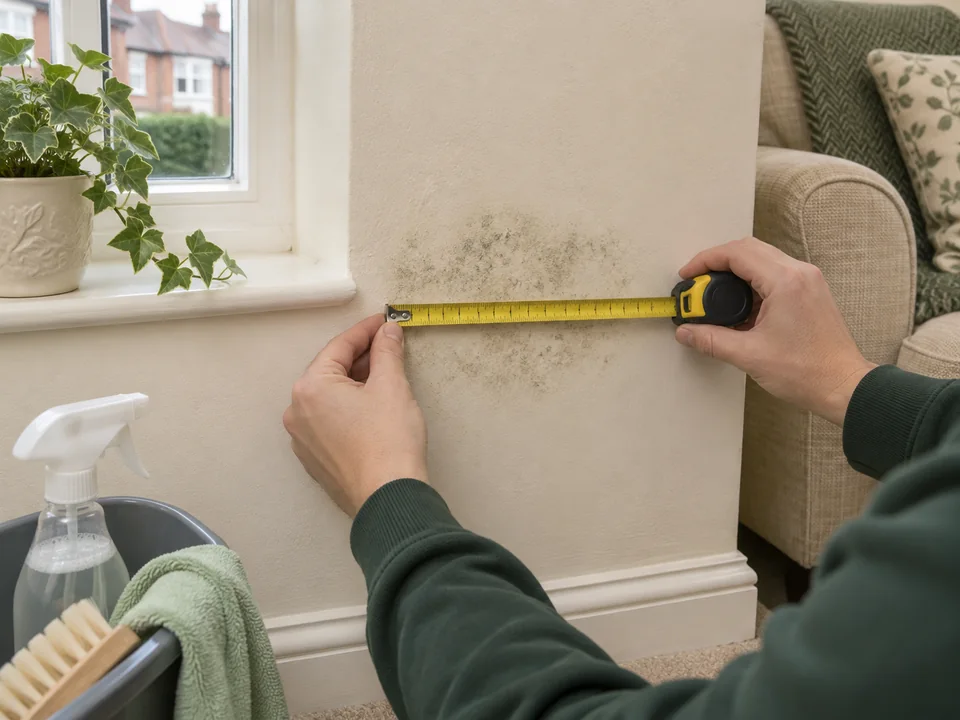
Mould Removal in Cockfosters
We assess what can be seen and reached before agreeing mould removal in Cockfosters. We prepare the working position, physically remove visible mould from suitable accessible hard surfaces agreed for cleaning and review what was completed.
Can I enquire for a home near the Trent Park entrance?
Yes. Give us the full EN4 postcode and the door or gate for your property.
Can you assess marks near a garden door?
We check the exposed finish and the working reach on the side you show us.

Inspect the exposed growth next to the fitting
Enfield's Cockfosters ward street schedule distinguishes the stretch of Cockfosters Road near the Trent Park entrance from several approaches off Chalk Lane. If you mention one of those points to orient us, add the full address, postcode and entrance you want us to use. Tell us whether someone will meet us at the front door or direct us to a side or lower entrance. We ask about the actual route to the room, which may differ from where a visitor would normally arrive.
We examine where the growth sits on the exposed finish and what it touches nearby. An affected area beside a door or sill can pass from a firm hard face onto a narrow return or joint that is not in normal reach. We inspect the available material and agree how far it is suitable to clean with fixed items in place. A part that remains concealed or has a fragile finish is identified separately. We then prepare and clean the included hard surface and use the nearby fitting to show where the work ended.
We check the face from the working position before preparing it. A mark can be visible around a sill or door line even though a fixed piece blocks access to the full patch. We look at the adjoining material and define the suitable area separately. After removing visible mould from the compatible face agreed, we review the same edge and point out any part still beyond the work.
If the person making the enquiry is different from the person who will show us the room, give us both roles. A resident can show the visible mark while a property owner can approve the work. Somebody else might open a gate if the room is easiest to reach from the side. We discuss the likely route and confirm who can clarify the affected area once it is visible.
- Identify the EN4 entrance that will be open.
- Name the feature closest to the mark.
- Confirm who can show us and agree the work.
| Visit detail | How we use it |
|---|---|
| Door or gate | Agree the actual arrival route. |
| Room and nearest feature | Identify the visible surface. |
| Person with access | Confirm the assessment can take place. |
Compare the exposed hard section with the surrounding material
At the assessment we look at the visible material and its condition. A hard frame at the edge of the mark may meet a thinner strip or a painted part of the wall. We check where the exposed hard section ends and how far the visible area extends across another finish. If an adjoining part is loose, damaged or concealed, we describe it separately while agreeing which suitable hard surface can be reached for cleaning.
The viewing angle may not be the same as the workable approach. For instance, a mark beside a garden opening could be visible from the outside but lie against a fixed fitting when approached indoors. Show us how you first saw the position and what needs to stay in place. We consider which part is in reach from the available area. If the finish continues behind a permanent piece, we identify where it passes out of view.
When we look at two positions in the same home, we make a separate assessment of each. A hard surface beside a lobby door may be exposed, while a rear-room patch lies under a fixed sill where access comes from one angle. We check whether each is suitable for the agreed physical removal. If a second affected position was not included in the description, give us the contact who can decide about it.
Where the mark looks different from a photograph, tell us whether the visible change happened after moving an item or after a change to the room itself. We assess the exposed finish as it appears during the visit and discuss the area that can be included. A newly visible edge is considered for its condition and reach, even if the rest of the finish looks similar.
If marks occur near similar doors, identify which one leads directly outside and which one opens to another part of the home. We use the difference to find each visible position during the assessment. It also helps us discuss where the working reach changes around a frame.
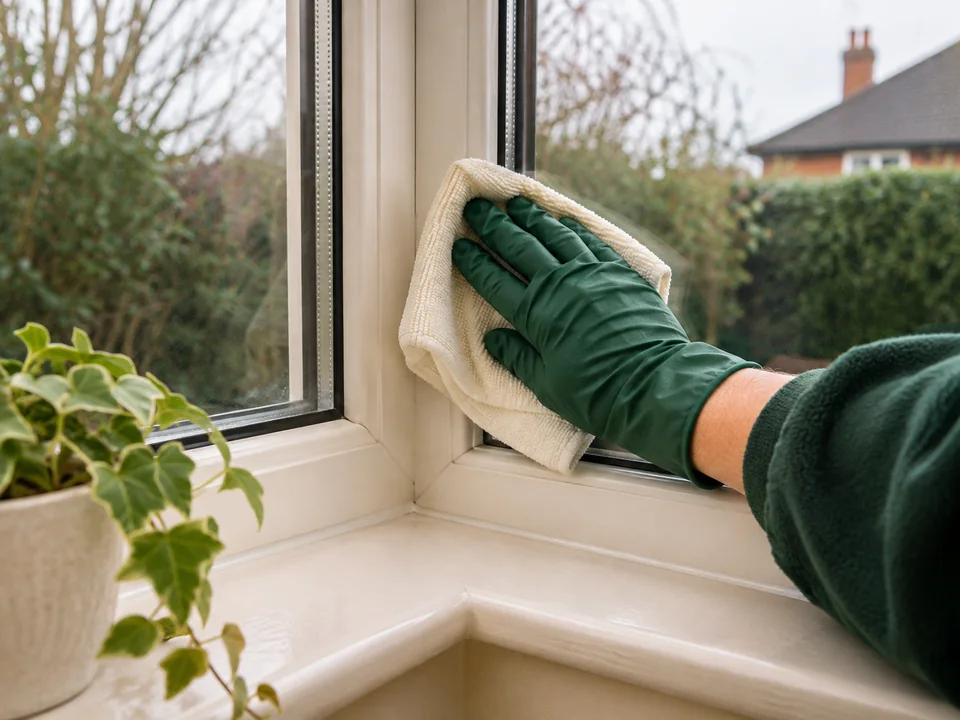
| Visible part | What we check |
|---|---|
| Hard frame or sill | Where the exposed material ends. |
| Door return | Whether the viewing angle gives workable access. |
| Second affected area | What its own finish and condition allow. |
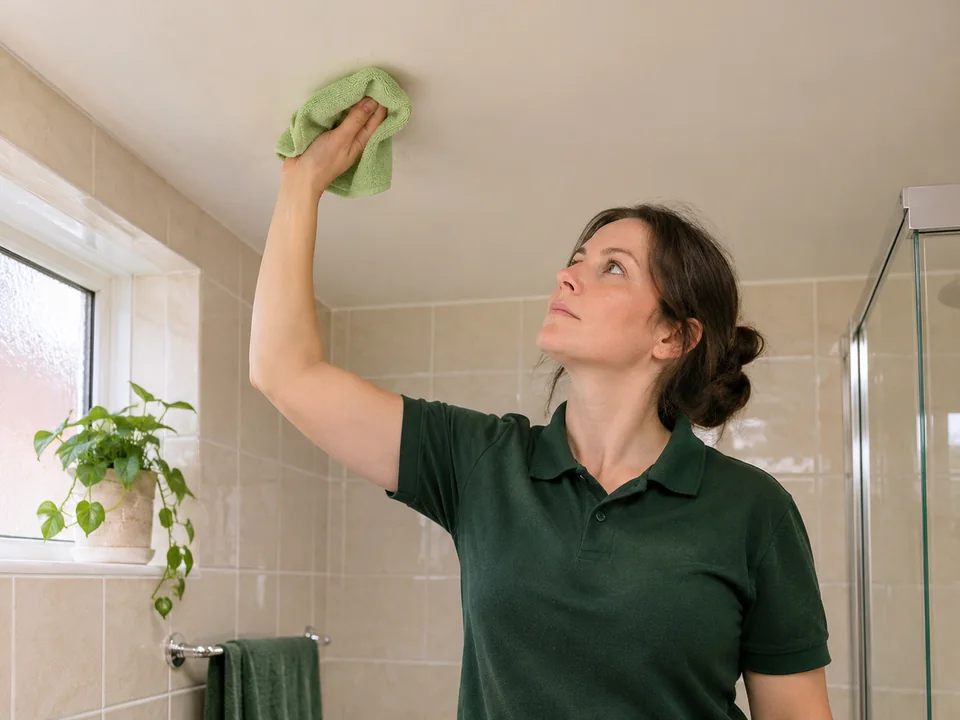
Prepare the working area as the household uses it
After agreement, we establish what has to be clear to reach the surface and which door or passage can be used. If the working position lies between a room and the garden, someone may normally need to pass it. Tell us how that route is used and when it can stay clear. We discuss another way around if one is available and agree how to reach the affected section before work begins.
If an exposed hard sill has personal belongings on it, agree who will move those items and where they can wait. Some parts may be permanently fitted. We ask you to identify them so the planned work follows the exposed surface we can approach. If clearing an item reveals a patch on a different material, we assess it separately and discuss what can be agreed before working there.
Sometimes the affected area can be reached easily from one direction while another access route has poor clearance. We use the route available on the day and explain how it affects which part we can work on. If you need to keep one room in use, tell us when the other position can be prepared. We can agree an order once we know what is visible and how each space is used.
- Establish when an approach can be kept clear.
- Agree who moves everyday belongings.
- Identify any fixed items that affect reach.
Physically remove visible mould from the agreed accessible part
We physically remove visible mould from suitable accessible hard surfaces after confirming the working position. We work within the identified area, taking account of the nearest change of material or fixed obstruction. If you show us a stable hard section at the side of a door and an adjoining edge visibly affected in another way, we clean the suitable agreed section and explain where that work stops.
We use a fixed point to explain any change in reach along the accessible surface. An opening may remain clear along most of its edge but end behind a permanent casing or furniture that needs to stay in place. We identify the place where the agreed section ends and show whether the visible mark reaches another material. We consider newly visible areas on their own merits if they appear during preparation or work.
We review each agreed surface after cleaning. We describe what was worked on and any adjoining visible condition or obstruction that limited the work. If the hard section we cleaned ends at a clearly different finish, we use the same reference we discussed during assessment so you can find it later. If a separate concern affects the property, the relevant contact can use that location when they decide what to do next.
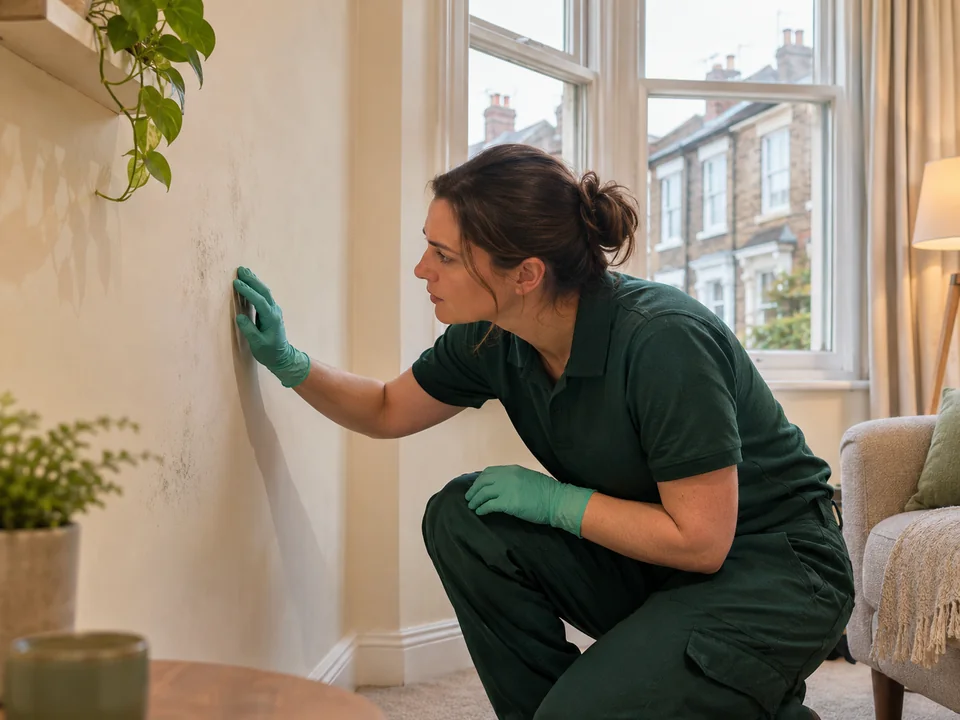
| Outcome | What we explain |
|---|---|
| Cleaned hard section | The agreed visible area that was worked on. |
| End of access | The join or object that marked the boundary. |
| Separate issue | A position for the property contact to consider. |
Walk through the result before handing the room back
We show the person available for handover the section we assessed and cleaned. If an owner needs the details but the resident is there on the day, confirm how the result should reach each of them. A small reference such as the side of the hard frame nearest the garden door gives a clearer location than a statement about the whole room. It also helps somebody who later needs to inspect the neighbouring finish.
If there is already a building enquiry about the same area, tell us who handles it and what position it concerns. Our review gives you the visible condition and the work that we carried out. Investigation of a moisture source or repairs to a damaged surface remains a separate arrangement for the relevant property contact. When sharing the result, tell them whether the issue you are reporting sits on the same finish or just beyond it.
At the review we show the treated part next to the surrounding finish. If a second face was visible but stayed out of reach or unsuitable for cleaning, we identify the exact edge that limited the work. The resident and property contact can then discuss any underlying or concealed issue independently of the result achieved on the accessible surface.
To enquire for Cockfosters, give the complete property postcode, the nearest fixture and the visible surface you want us to see. Tell us whether the floor approach is clear and who can approve the requested work. If you are also planning a wider home clean, give the tasks and access needs separately. We can discuss which appointment is appropriate for each and when the area can be made available.
If people enter through another door after we finish, show the person receiving the result where the cleaned section is in relation to that route. They should be able to recognise the same frame or sill from either direction. We can identify the nearer end during the handover.
- Name the person who needs to check the room.
- Mention any related open building enquiry.
- Confirm who closes the property and receives keys.
Questions about arranging mould removal
Can I ask you to use the path at the side of the house?
Yes. Tell us how to identify it and who will open the gate and show us the room.
What if the surface is easiest to see from outside?
Show us the position you used. We check which exposed section can be approached from the available working area.
Can I ask about two marks on different floors?
Yes. Tell us who can show each room and describe the nearest fixed feature.
Should I move everything near the door before you arrive?
Tell us which items can be moved and whether you need the route clear for ordinary use. We can agree what preparation the position needs.
Can you work on a hard section next to a damaged part?
We assess the materials separately and explain where the agreed accessible hard section ends.
Can you give the result to the owner after reviewing it with me?
Yes. Tell us who should review the room on site and which property contact needs the account.
Other Cleaning Services in Cockfosters
Start a Cockfosters mould removal enquiry, Discuss a separate wider clean
Discuss your mould removal enquiry
Mould Removal Prices in Cockfosters
Tell us which rooms are affected, the approximate size of the visible patch and what surface it is on.
Get a Quote