 Housekeeper
Mould Removal in Barnet
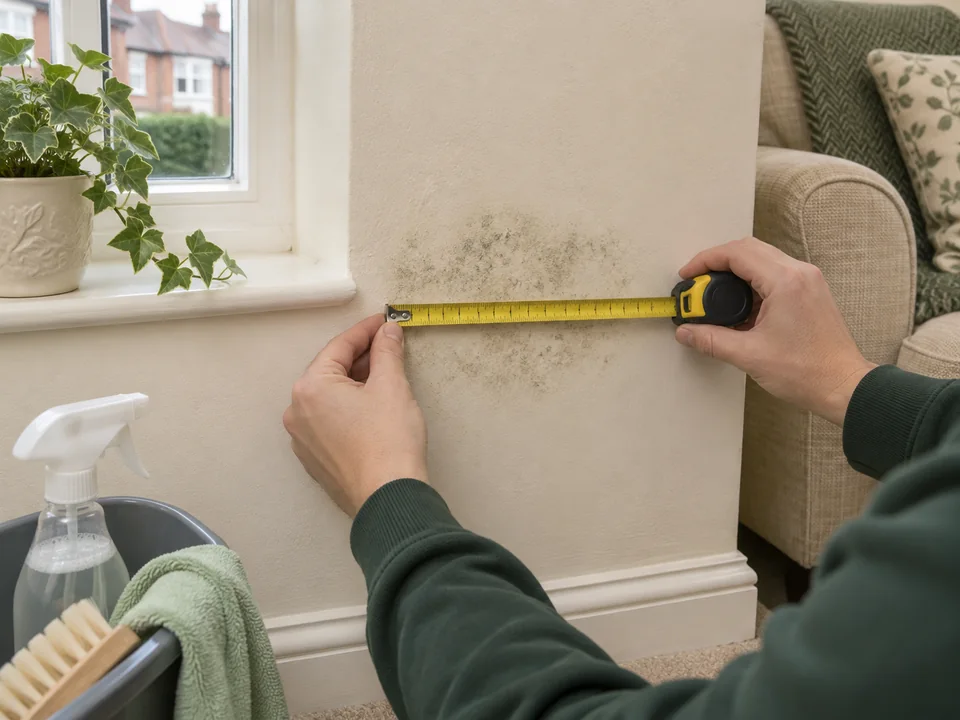
For mould removal in Barnet, we look at what is visible, which materials are involved and how the rooms can be accessed. Tell us about any area that was added, redecorated or repaired before the marks appeared. We can discuss assessment, preparation and removal of visible mould from suitable exposed surfaces once the work is agreed.
Which address should I give for a property near High Barnet?
Use the full EN5 postcode and tell us which entrance leads to the room. Mention any stairs or passage beside the property.
Can I enquire about marks near an extension?
Yes. Say which parts are affected and identify any change of finish, access or reported moisture history at the join.
Our first discussion identifies the building and the change you have noticed
We start by asking where you want us to look and how that part of the property is reached. Barnet Council describes the Wood Street conservation area as running from the top of Barnet Hill towards Arkley. That is useful local context, but a landmark at the top of the hill cannot identify your particular entrance. For an EN5 address, give the full postcode, house or flat number and visitor door. If a room is reached through a side passage or by steps from a garden, say which entrance you are able to offer.
Tell us which rooms are affected and how they relate to each other. A mark beside a ground-floor extension may lie at a join between old and new finishes. Another area could sit above an adjoining room or next to a separate fixture. Give each position its own note and say whether there has been related building work. We take those details into the assessment discussion because one group of marks might involve several materials and access decisions. Describe what is visible even if the reason for the problem has not been established.
Clarify what you would like the first visit to cover. A household may want a visible room assessed while a separate part of the property is being checked by a builder. Identify which rooms are open, what is in their way and where there are limits on access. Give the name of the person who can show us the affected places as well as anyone who needs to authorise work. When a relative or agent is making the initial enquiry, ask the occupant to identify the rooms using names that can be recognised on arrival.
Put the room descriptions in the order a visitor would encounter them. For a house with a rear addition, describe the route from the entrance to the original room and then through to the addition. If a door between them must stay shut or another resident controls access to one side, make that clear. The entry plan helps us discuss whether one appointment can cover the accessible locations and which part would need another arrangement. A clear arrival note also helps a keyholder direct a visit without interpreting technical information.
- Give the full address and entrance appropriate to the work area.
- Explain which rooms or building alterations are relevant.
- Identify the contact who can show the areas and agree next steps.
What we assess where an older surface meets a newer finish
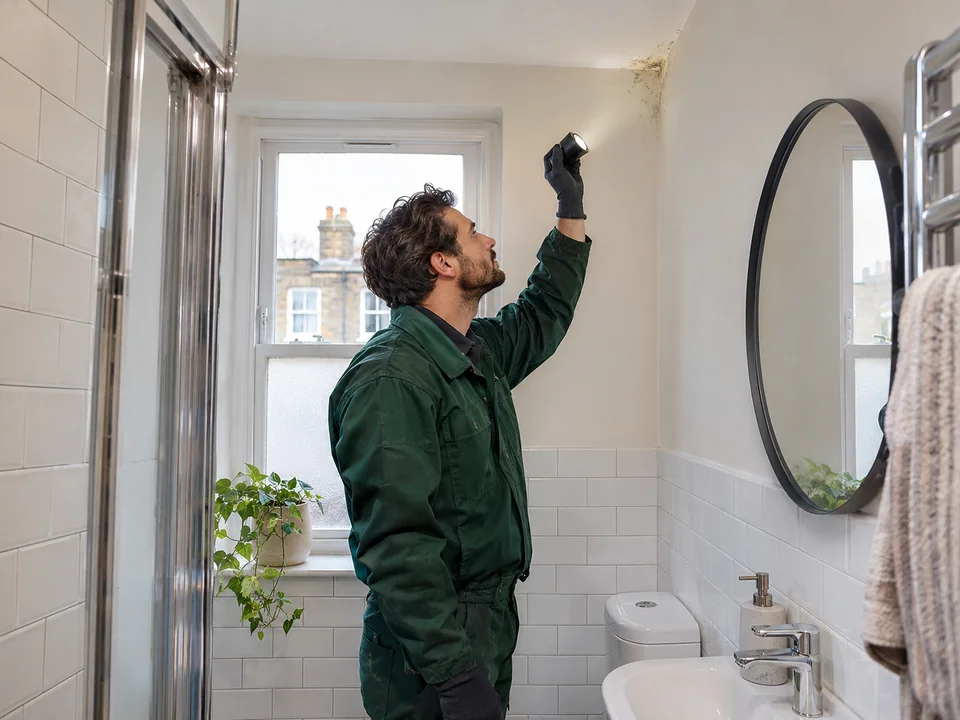
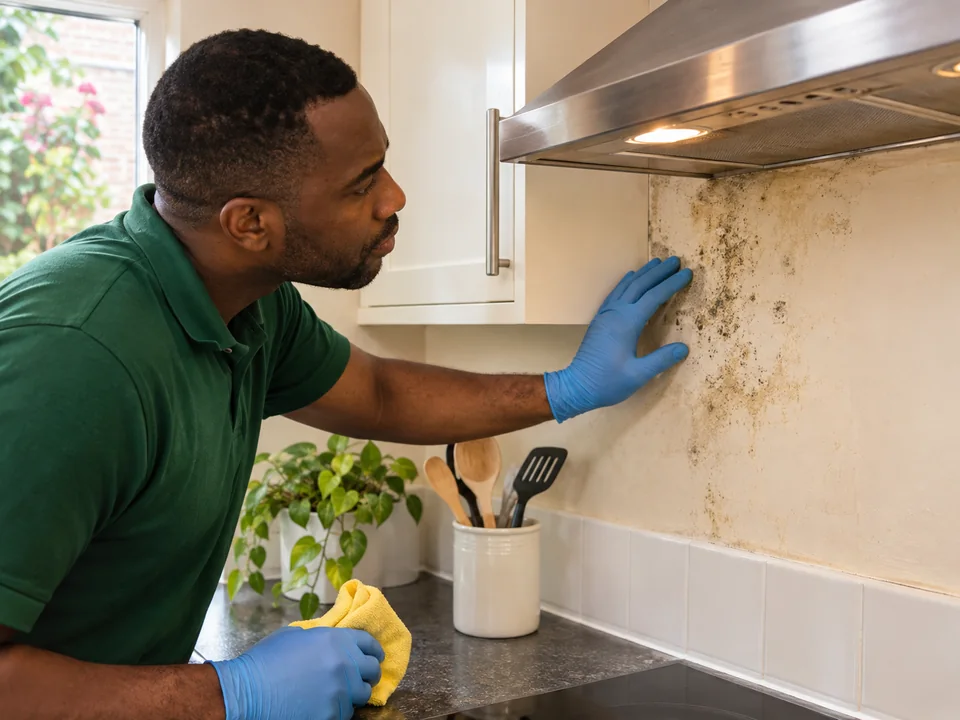
We consider the visible area, its boundaries and the materials it touches. If a patch crosses a painted surface near the join to an extension, tell us whether the finish is the same on both sides. A visible edge might meet trim, a cupboard, a covering or a part of the room that was decorated at a different time. We discuss the suitability of the exposed hard surface and whether any other material needs separate assessment. This distinction matters even if the visible marks appear similar from one side of the join to the other.
Where a coating has lifted or the material looks damaged, describe that condition separately from the marks. Give rough dimensions and indicate where you cannot see further without moving furniture or opening a panel. An older photograph can illustrate the condition before a recent repair. Label it and add a current view if it can safely be taken. We use the current description to consider the accessible surface and the earlier information to understand what has changed. If a finish or hidden section needs another person's review, we identify it in the assessment discussion.
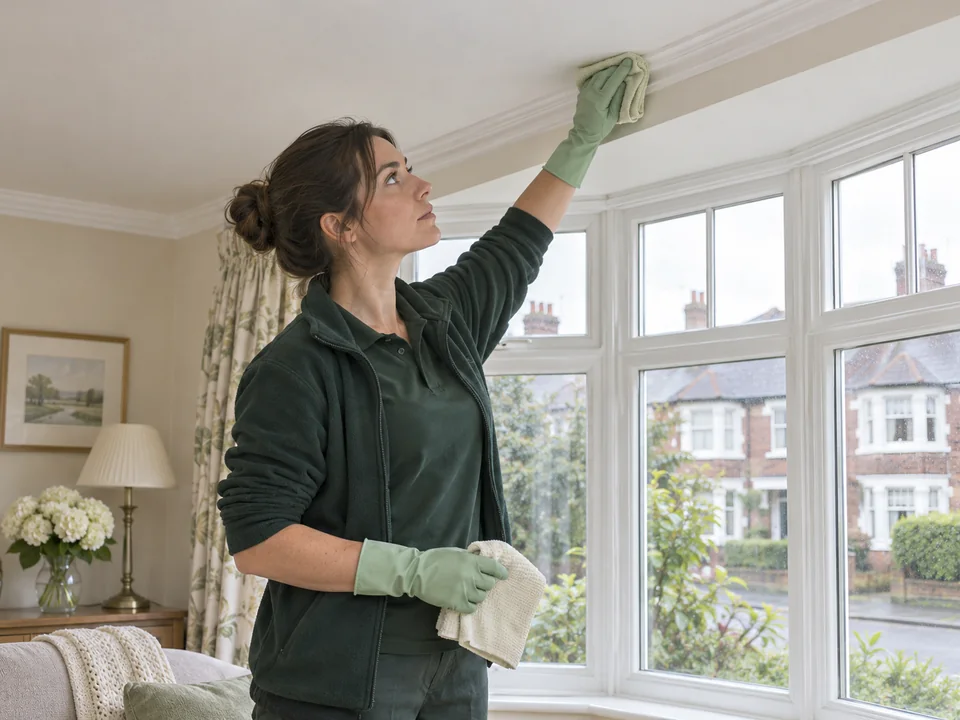
If marks are beside a window or external door, a wide view can show which edges and surfaces they touch. Describe the position from inside the room and explain if the glazing, frame or wall has been changed. A fitting at the rear of a room may have a different approach from a surface reached through the main living area. Tell us what can be reached safely from the floor. If it is high, concealed or behind a fixed item, we consider what access would be needed before agreeing it as an area for work.
If the original room was recently decorated to match an extension, the two walls may look alike in a photograph. Explain where the older section ends and how you know, if that information is available. Point out any difference in finish near the affected patch. We consider the area we can see and ask about further assessment where its condition is uncertain. If the marks are confined to a window surround or another limited finish, identify that boundary so the office can discuss an estimate for the actual work you want reviewed.
| Reported surface | What we assess | What may call for a separate decision |
|---|---|---|
| Mark across two painted finishes | Boundary and condition of each surface | Whether both finishes are suitable |
| Lifting material next to a hard face | Visible damage and accessible edge | Condition below the finish |
| Window junction near a fixed item | Approach, visible area and adjacent materials | Access to concealed parts of the room |
Fit surface work around any investigation or repair already in motion
Tell us if you have reported a leak, a ventilation issue or possible moisture at a building junction. Give the date and what you were told. If building work has already been carried out, mention which part it involved and whether material condition or drying was checked afterwards. We use this history to discuss when surface work might be considered. It does not establish the source by itself. If the room is still getting wet or a concealed part needs to be examined, the property contact may need to organise a different assessment first.
If a builder, landlord or other professional needs to make a decision, give us the stage they have reached. A repair discussed in principle may not have been done. A repair described as complete may have addressed a different room. Specify the location and source of each piece of information. Where two areas have different histories, record them separately. We can then consider which visible surface is appropriate to discuss in its own right and which requires another result before a cleaning proposal can be agreed.
If another appointment is booked, explain how it affects access to the rooms. For example, a room already cleared after a repair might be available for assessment, while a different area stays inaccessible until a fitted item can be reviewed. Ask the person arranging repairs to confirm when access changes. We discuss the sequence of assessment, any agreed surface work and the later visit so one activity does not assume the other has happened. Tell us who can communicate an update when the occupant and property contact are different people.
Where an affected place has been seen on both sides of a window or wall, keep the observations separate. Give the external information to the property contact and describe the accessible area inside for the surface discussion. We use the room record to clarify which part of a repair may be relevant. If an earlier report only concerns a different part of the property, tell us so. This keeps a repair reference with its own location and helps everyone identify the question that is still open.
- Keep related repair dates tied to the correct rooms.
- Identify who can confirm the condition after building work.
- Distinguish areas ready to assess from areas awaiting a separate review.
| Current situation | What we ask | Next decision |
|---|---|---|
| Earlier work reported complete | Date, room and any findings about material condition | Can the visible surface be considered now? |
| Unresolved issue at a building join | Known observations and current access | Does the property need a separate investigation? |
| Another visit planned | Who is coming, which room and when | When can the agreed area be assessed or prepared? |
We prepare around the chosen surfaces and review the work with you
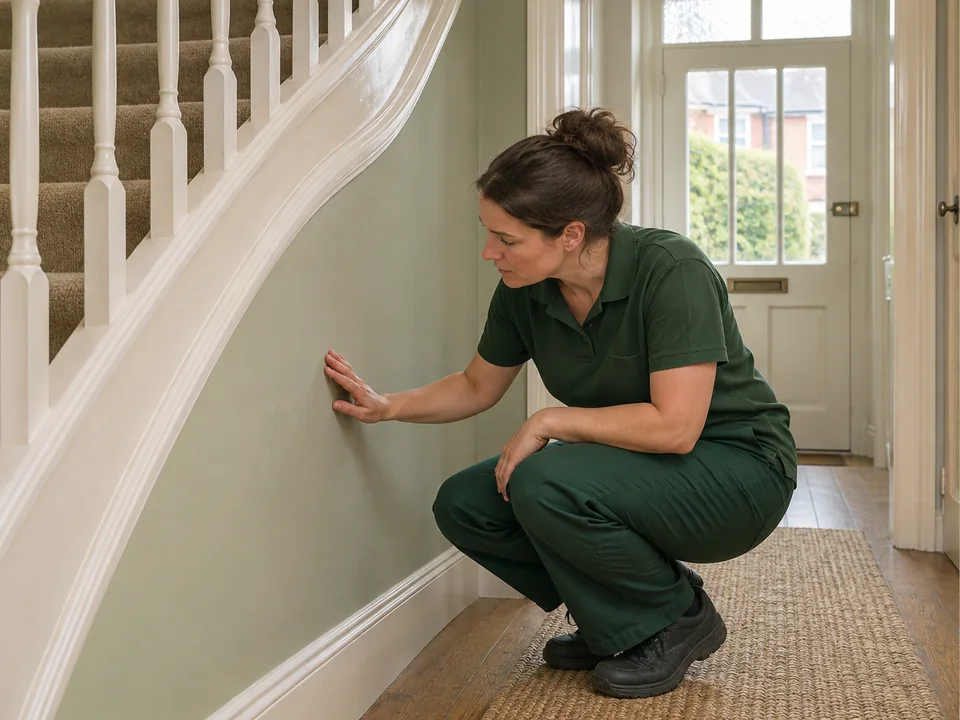
We define the immediate work area with the person arranging the visit. If furniture affects the route, we discuss what should be cleared, what must remain and what nearby items need protection. A room opening onto a garden or side passage can be prepared differently from a room reached through the main part of the house. Give any restrictions that affect how it can be approached. If one part of a wall is suitable and an adjoining material needs further review, we identify the boundary before work begins.
We remove visible mould from the suitable accessible hard surfaces agreed for the visit. If the condition changes when we view the area, we discuss whether it can still be included before extending any work. We keep porous materials, concealed sections and property repairs outside the agreed treatment unless the relevant assessment and arrangements have been made. At the final review we discuss the surfaces covered and the areas that remain open for another decision. Ask who will receive that information if somebody else manages the property or is arranging the next visit.
Give the office the full postcode, rough dimensions, surface description and useful access times for a quote discussion. The price depends on the areas and work agreed for that property. If a second service is being considered for unrelated rooms, give those tasks separately. For an upcoming handover, identify who must receive the visit information and when keys are due to change hands. We can discuss what can be arranged and what would need to be left for follow-up if the property is not ready.
Keep the first assessment notes for the handover. If only the exposed side of a junction was included, the final review should retain that distinction. We discuss what was available when the area was seen and whether any separate question remains about the adjoining part. If the person receiving the outcome is a landlord or an occupier who could not attend, give them the same room labels. For a follow-up, take note of the date and visible changes so we can identify which part of the original request needs another look.
- Agree the preparation, surfaces and limits before starting.
- Review any changed condition before adding work.
- Confirm who will receive the handover and unresolved points.
| Step | What we confirm |
|---|---|
| Preparation | Immediate work area, access and items to protect or leave |
| Agreed cleaning | Which suitable exposed hard surfaces are included |
| Handover | What was covered and who can address separate questions |
Questions about arranging mould removal
The room is easier to reach through the side passage. Which address do I give?
Give the full postal address and describe the authorised side approach separately. Explain any steps, gates or key arrangements.
Can I ask about a painted extension wall and a covered original wall in one call?
Yes. Identify each finish and explain where the marks appear. We discuss the materials and their visible condition separately.
A builder has opened only one part of the area. Is that enough to discuss the visit?
Describe what can safely be seen and which part remains inaccessible. Share what the builder has established and ask what still requires assessment.
Will replacing an adjoining material be included in surface work?
We discuss removing visible mould from suitable agreed hard surfaces. A question about damaged or porous material, including possible replacement, may need a separate decision.
The area looks different from the first photographs. What should I share now?
Send the room description with the dates of the earlier and current views. Explain any repair or change to access between those observations.
May I book cleaning in another room while an affected area waits for inspection?
List the other room and tasks independently and tell us which parts of the property must wait. We can discuss the appropriate timing for the separate request.
Other Cleaning Services in Barnet
Regular housekeeping in Barnet, Carpet and upholstery cleaning in Barnet