 Housekeeper
Mould Removal in Hendon
In a Hendon kitchen or bathroom the same mark can cross from a hard tile onto trim or paint. We look at the materials separately, agree where we can clean and review the work on each exposed face.
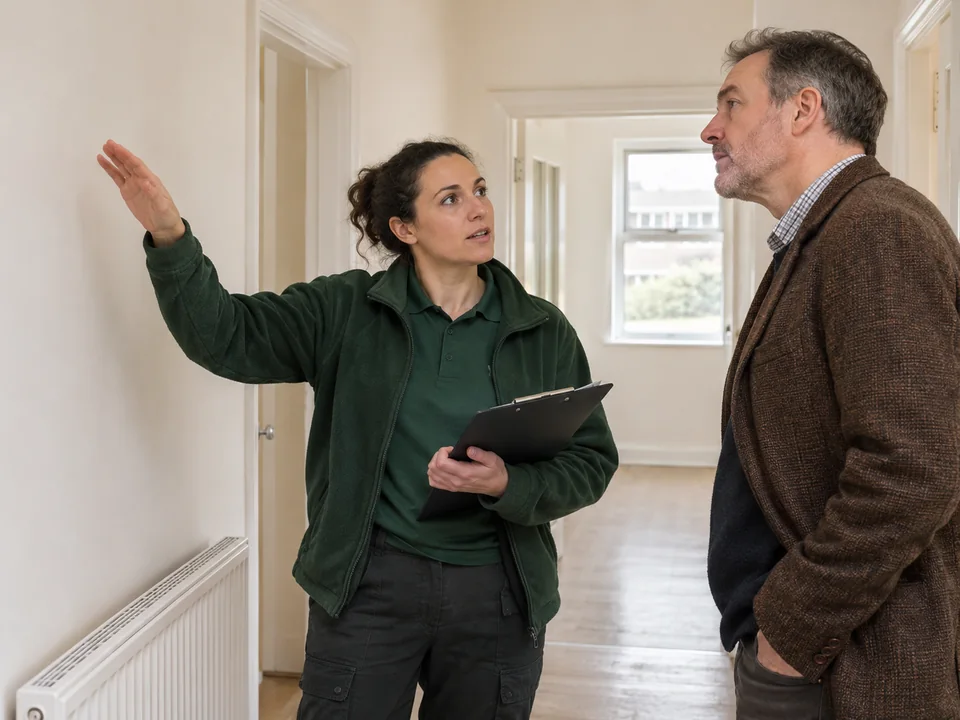
Can I enquire about a home in NW4?
Send the full postcode, room, and nearest fixture to the visible patch.
What if the dwelling is reached from a rear lane?
Give the front address as well as the rear access details, and confirm the key holder.
Identify the affected tile band or boxed fitting
When enquiring about mould removal in Hendon, describe the first place you see the mark. In a room tiled to shoulder height, it may sit along the upper trim or continue onto the wall above. A boxed fitting may have a hard front face and a painted side, even when photographs show only one corner. Tell us which part you can see and how it meets the nearest fixture. We use that description to discuss the visit and check where we should start during the assessment.
Barnet Council’s Church End appraisal describes the conservation area as running chiefly along Church End, with Church Terrace forming a rear access road near St Mary’s churchyard. For your own property, tell us which numbered entrance or named gate gives access to the right dwelling. Front frontage and the route to a rear entrance can differ. If there is a stair or a second bell partway to the room, mention it with the complete postcode. This lets us plan how to reach the affected room.
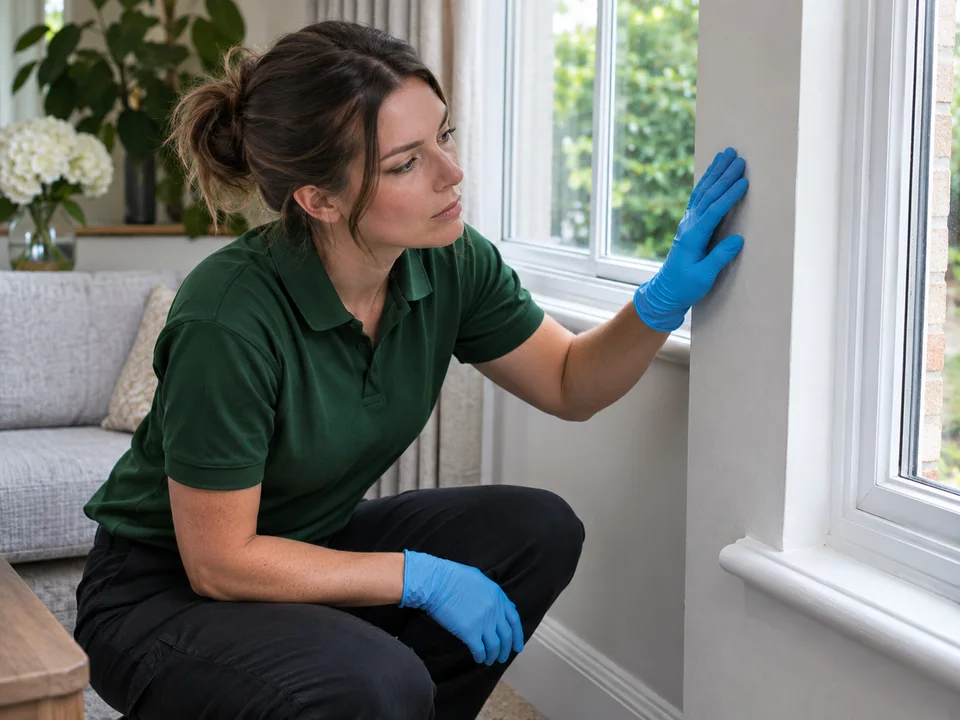
A full view is helpful when the mark is visible beside pipe boxing, a small tiled wall or the corner of a cabinet. Take the photograph from a normal standing position, if possible. A closer view can then show whether the visible line runs above the trim or inside the grout along the surface. If you can only see a narrow strip below a fixed basin, tell us which direction you looked from and do not try to pull anything forward.
If the property has recently changed hands, describe how the room is arranged now instead of relying on an old inventory photo. A removable basket and a boxed-in fitting both hide part of the wall, but the basket can sometimes be set aside for assessment. Tell us what still occupies the space and identify the mark by the current fitting or closest tile edge. We can use the updated description when discussing what you want us to review.
| Describe | A useful reference |
|---|---|
| Tile band | Which edge of the tiled area is marked |
| Boxing | Which exposed face and finish you can see |
| Access | House or flat number plus the route used by visitors |
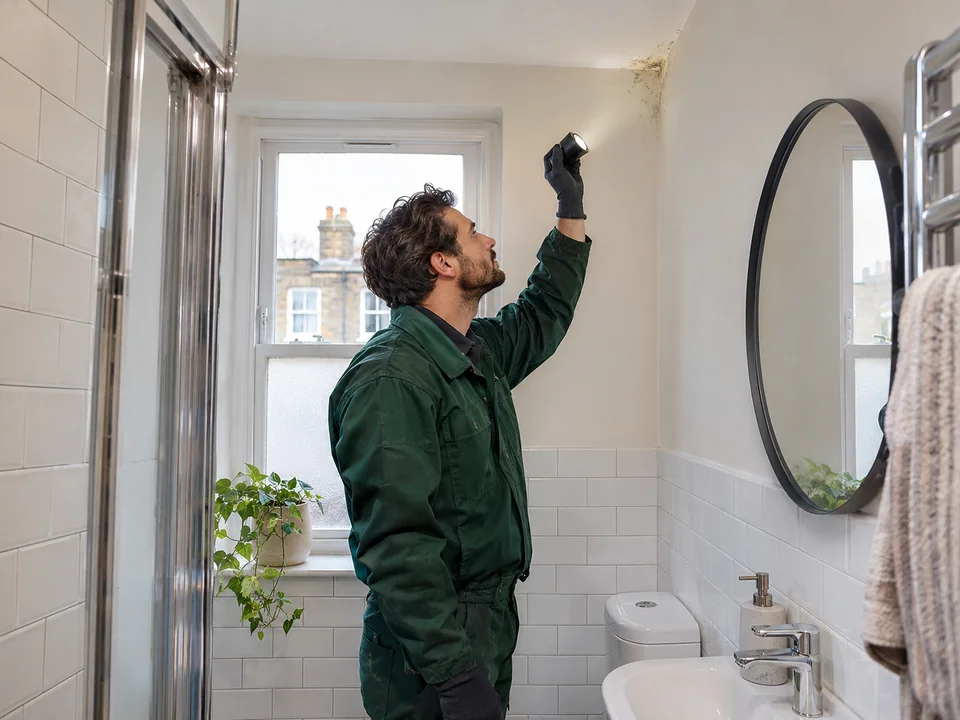
Prepare space near the cabinet and its exposed edges
We discuss how to make the area you want assessed available. Small items can be moved off a basin shelf or out of the direct approach to the wall. Where a cupboard has two opening doors, tell us whether both can open fully or if one is stopped by a pipe, appliance or wall. Leave fittings in their usual positions. We work out which visible faces can be considered without taking doors, coverings or service panels apart.
If a wall cabinet hangs above a worktop, clear the loose items directly in front of the affected area when you can. A deep counter can look open in a picture while still leaving little room to reach the corner below the cabinet. Tell us whether the mark is higher up, low in the wall recess or inside a gap. We check the approach in the room after the agreed preparations have been made.
When the affected room belongs to another resident, confirm they know when we need it and that they can identify the items to leave in place. Tell us if the main door is opened by the building manager and a resident opens the flat separately. We can then speak to the person who knows the room once we get to the work area. If the resident needs their belongings back at a set time, mention that when we discuss the order.
- Keep the exposed tile or cabinet edge clear of loose items.
- Leave access panels and pipe boxing in their normal position.
- Confirm who will open the room and point out the mark.
Look at the glazing, trim and coating separately
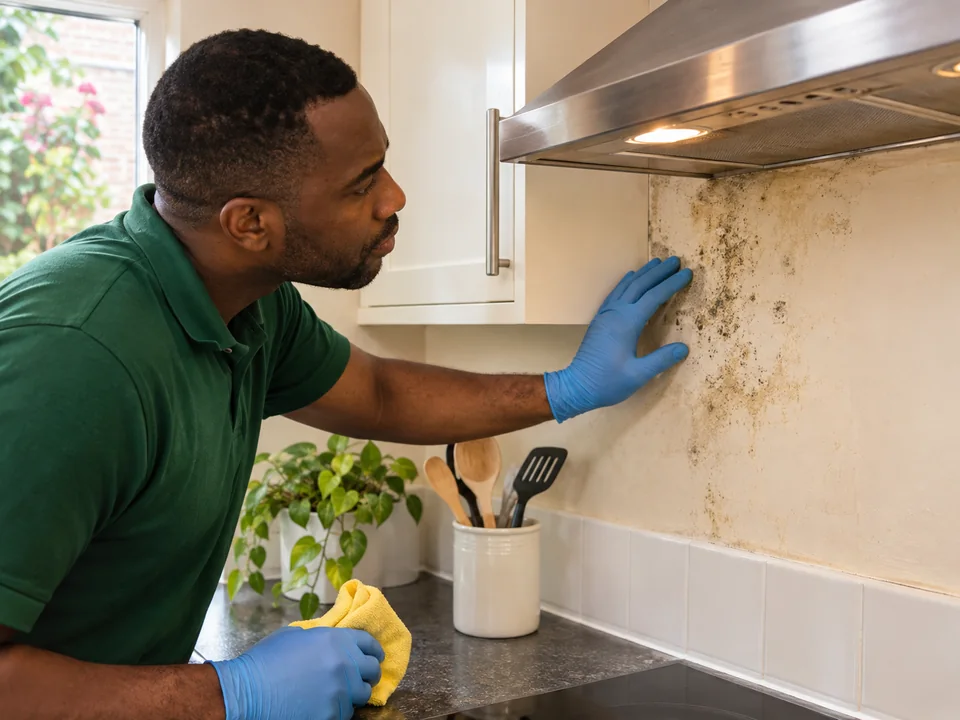
On arrival we look at the part of the finish from which the mark is visible. At the upper edge of a tiled wall, the glazed face could be firm while its trim is scratched or has a loose end. We identify which faces are sound, which parts are exposed and whether the approach lets us reach them. Show us the place where you see a difference in colour or texture across the edge. That detail helps us decide what is suitable for the cleaning.
In a bathroom, the mark may be immediately beside the corner of a pipe enclosure or below a shelf over the basin. We check what material is actually exposed. A wipeable hard face and a blistered painted panel call for different decisions, even where the mark looks the same. If the side of the enclosure is hidden from the room, leave it in place. We explain the limit of our view and assess the faces that can be reached.
If a leak or plumbing issue has already been investigated, tell us what was looked at and whether the mark has since changed. An opening previously covered during service work may have been put back, leaving the area visible only at one edge. We take that account into consideration during the exposed assessment. A new inspection inside the enclosure or behind the wall needs to be discussed separately with the person responsible for the property.
If a capped strip runs over the top of the tile, look from where you normally stand and tell us which side has the visible mark. A narrow joint may follow the cap behind a wall cabinet without being visible at the end. We assess the exposed shape and condition first. This gives us a way to discuss whether the work could extend across the whole tile face or stop at the last clearly reachable edge. Tell us if one section has been replaced separately, because a matching colour can hide a difference in the finish.
| Observed face | What we consider |
|---|---|
| Glazed tile | Its exposed condition and position |
| Trim or corner bead | Whether it is firm and within reach |
| Boxed fitting | Where the visible surface ends at the closed area |
Work on the hard sections specified in the agreement
We remove visible mould on suitable accessible hard surfaces agreed at the appointment. On a wall finished partly in glazed tile, the work may concern the exposed face up to the trim. If the mark extends above it, we assess that area on its own and explain any different condition. In a fitted bathroom, we may be able to clean a hard basin surround and visible wall tiles while a worn section of boxing remains outside the work.
When another section becomes visible once loose items are put away, we look at its condition and ask whether you want us to include it. At a recess this can happen when a contents tray goes out of a cupboard or the space beneath a shelf is left clear. Some newly visible areas are hard and reachable, while others show a damaged edge or do not leave space to reach. We explain the difference before seeking approval for a change to what was agreed.
We also keep a clear record of the boundary of the visible work as we go. For example, an accessible row of tile can continue under the lip of a cabinet, where the finish is no longer fully visible from the room. We can work up to the accessible section we established with you and identify where we stopped. If you see a remaining stain at the adjoining grout or damaged trim, ask us to describe which parts we were able to address. When reviewing the result, we can refer to a particular tile or corner rather than relying on a broad description of the wall.
- Agree the exact row or face that is included.
- Confirm who can authorise any newly visible section.
- Ask which parts stay outside the work where tiles meet a fitting.
Review any remaining marks by the nearest fixed feature
At the end, we show which hard surfaces we worked on and explain any marks still visible in an adjoining finish. If a sealed trim or damaged area affected the approach, we show you the point where it happened. If you also asked us to assess another room, we distinguish the work done in each. This is particularly helpful if your booking contact knew the room only from photographs or plans made before the current resident moved in. Keep those references to hand.
Use a clear position when reporting any recurring mark. A patch on the third tile beside the corner of the enclosure is easier for a property contact to find than a concern about tiles in general. We can describe what was visible on the exposed area and which edge lay beyond our agreed cleaning. If someone needs to assess the enclosure or an internal wall, arrange that through whoever manages the building or fitting.
Ask for a quote with the full postcode, the particular faces you want us to assess and the amount of room to reach them. A broad hard wall beside an open floor offers a different approach from a short tile band above a deep worktop. Let us know whether the key holder will stay for the appointment and who should receive the review. We discuss the work based on what is exposed and on the room arrangements you can confirm.
- Refer to the tile row or fitted item when reviewing the result.
- Arrange for a named person to receive the handover.
- Identify the exact face if a mark later returns.
| Review point | How we describe it |
|---|---|
| Cleaned surface | Agreed faces and their position |
| Limit reached | Condition, height or fitting that restricted access |
| Ongoing concern | Room and nearest fixed detail for follow-up |
Questions about arranging mould removal
Can you assess marks along the top of a half-tiled bathroom wall?
Yes, tell us which parts of the tiles, trim and wall are affected. We look at the exposed faces before agreeing work.
Do I need to open the pipe boxing before the visit?
Leave it closed. Tell us which exposed side has marks and where they are in relation to the nearest fitting.
What if the basin unit is fitted tightly against the wall?
Describe the part you can see. We review the exposed hard surface that can be reached with the unit in place.
Can I describe a room using photographs from when it was empty?
You can share them, but tell us what is there now and whether the same faces are still visible.
Can the resident arrange access through a rear entrance?
Yes, confirm who can grant access and give us the correct door and route with the full postal address.
Will you show me which grout or trim remains dark?
At handover, we explain the location and condition of visible marks along the material next to the cleaned face.
Other Cleaning Services in Hendon
Regular housekeeping in Hendon, End of tenancy cleaning in Hendon
Discuss your mould removal enquiry
Mould Removal Prices in Hendon
Tell us which rooms are affected, the approximate size of the visible patch and what surface it is on.
Get a Quote