 Housekeeper
Mould Removal in Brockley
If you can see a patch near a radiator, beneath a bay window or on another hard face in your Brockley home, tell us exactly what is affected. We look at surface condition and access before confirming which exposed areas we can clean. We then physically remove the visible mould from the agreed suitable hard faces.
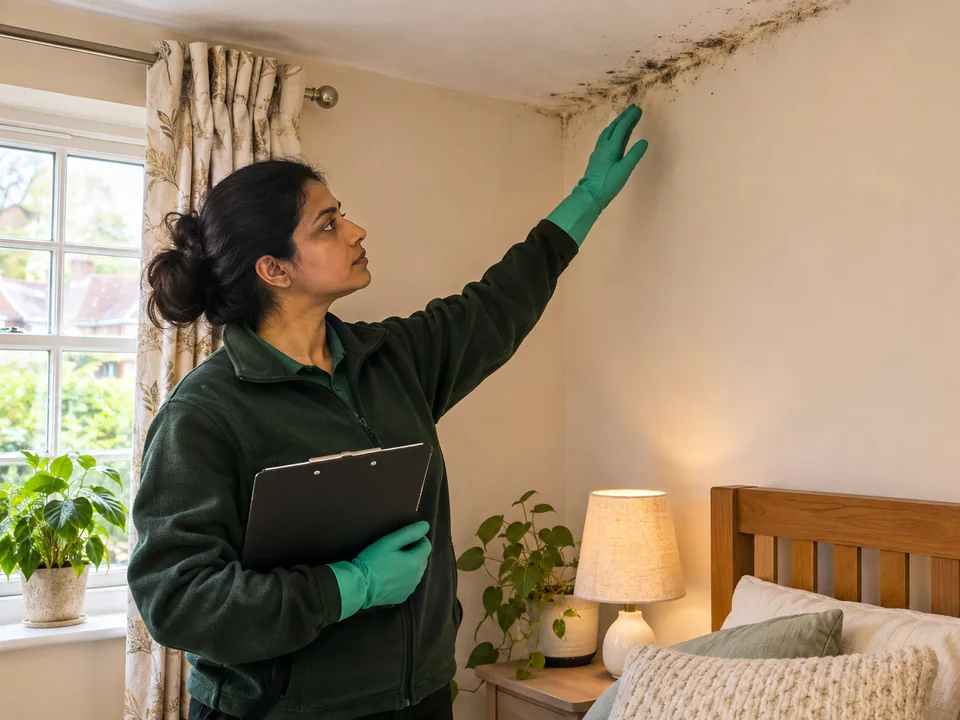
Can you look at a home near Hilly Fields?
Yes. Give the complete SE4 address and tell us how you reach the affected room.
Do I need to move a radiator cover first?
Tell us whether it is fixed and show where the marking is visible.
Check the exposed patch around the radiator or bay
A radiator cover can make an area look as if it has one flat front, but there may be three or four exposed faces around it. From a particular side of the bay you might be able to see the top of the casing, a shallow ledge and part of the wall beyond. Tell us the angle that shows the actual marking. A short note about which parts are solid, which are open and which are attached helps us establish what is within everyday reach. If you have a photograph of the whole opening, share it with the closer view.
Lewisham's conservation area appraisal discusses Hilly Fields and the surrounding streets as a distinct part of the Brockley Conservation Area. It also makes specific reference to sections of Brockley Road and Adelaide Avenue. If you live around one of these streets, tell us the floor and actual entrance of the home. A ground-floor window seen from the street may belong to another flat or to a room reached from a rear entrance. For our visit, the relevant detail is how you reach the affected face with normal residential access.
Window alcoves around an older opening sometimes have a wide sill above a newer heater or storage unit. Let us know which parts have been added and whether hooks, curtain poles or furniture change the approach. A short piece of curtain that hangs across the surface can hide the point where the mark runs into a join. Show us where it falls in normal use, with another picture from the side if you can take one. We check accessible materials separately, including the surface that looks like the main affected area at first glance.
We identify the affected face by its position beside the bay or radiator and check ordinary access with the nearby equipment in place. A visible line on the outer face of a fixed cover can be assessed independently from a mark visible through an opening in it. With the exposed surface and finish confirmed, we agree which compatible part can be prepared and cleaned. At handover we show which section was treated and identify any area that remained inaccessible.
- Show where the cover ends and the wall begins.
- Tell us whether the cover has a normal hinged opening.
- Name the side where the mark can be seen.
| What you see | Detail to include |
|---|---|
| Marks on the cover top | Material and whether it is attached |
| Patch below a deep sill | Space between the sill and fixture |
| Narrow strip near a pipe | View from the ordinary standing position |
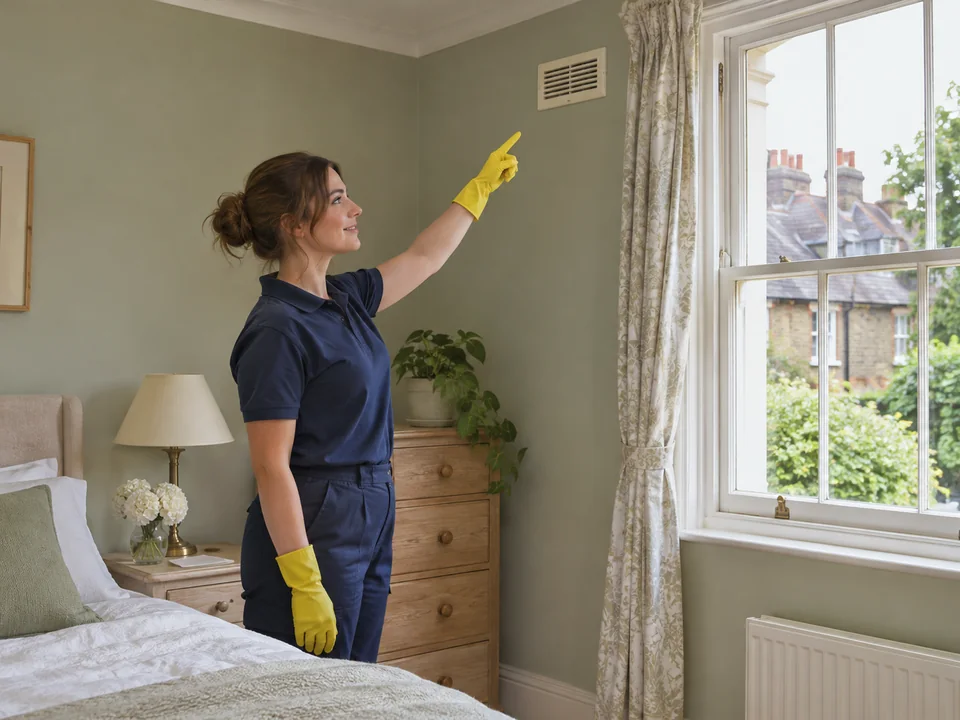
Prepare the reachable areas around the heater
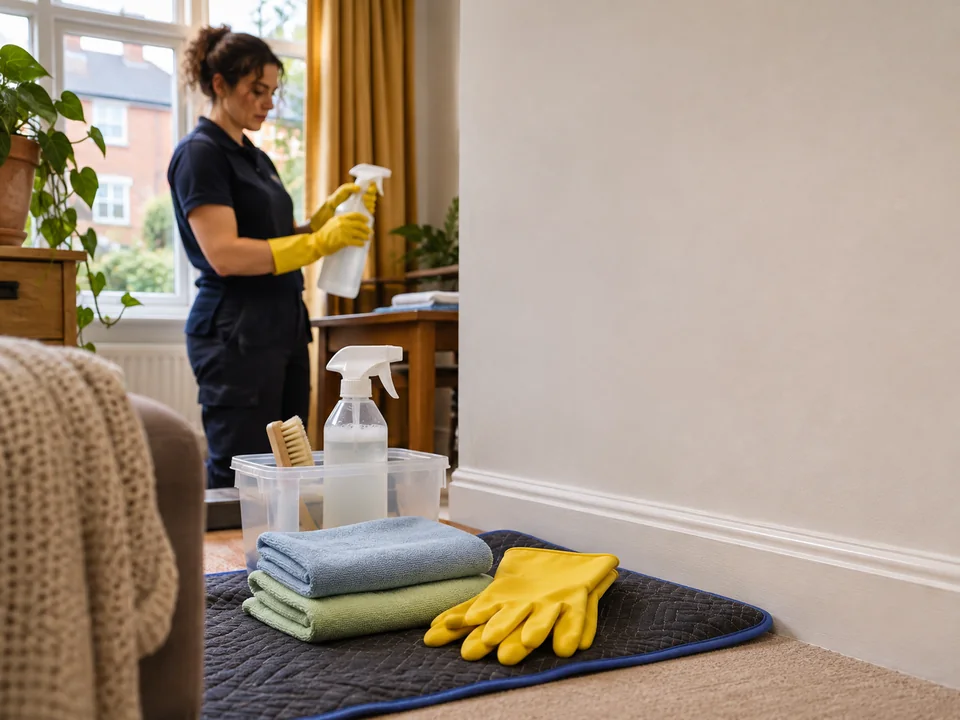
We assess the material and working position around the heater as found. A painted cover, exposed sill and adjoining section of wall may differ in condition even when the growth appears to cross between them. We agree which hard surfaces are suitable and reachable without moving or altering the radiator or cover. We then prepare the exposed faces and remove visible mould from the areas agreed. A part concealed behind the heater or a loose coating remains a separate issue. During the review we identify that boundary against the visible fitting.
We establish in advance how much of the working area can be made clear without disturbing fixed fittings or sensitive nearby materials. Around a bay, a curtain or seat may conceal the edge of the patch, while the sill and room-facing cover remain exposed. We consider compatible hard surfaces independently from nearby fabric or a loose coating. The included face is prepared and cleaned where suitable and we review it from the actual working side. This lets the resident see the area addressed and distinguish it from a part still behind a cover, blind or fitted item.
In a flat where the bay is part of a work area or nursery, tell us which time will leave the room free for an assessment. We can discuss what can be done with the items and fittings in their usual positions and how people can use another part of the home while we work. Tell us about a narrow landing or a stair with a turn if it is on the route. We consider the full path into the room as well as the working position beside the fixture.
If you already have a plumber or decorator planned, tell us what will happen first. Where they are responsible for removing a fitting, ask when the area will be ready for us to assess. The visible finish may change substantially once the work has exposed another side. It is useful to see the room when the next working face is accessible and there is room to examine its condition.
- Tell us if the heater is normally switched on.
- Give the route past any large furniture.
- Confirm when the affected room and its approach will be clear.
| Access situation | What we can discuss |
|---|---|
| Radiator fixed against the wall | Reach from the side and any exposed wall return |
| Freestanding chair in the bay | Whether ordinary clearance improves the approach |
| Decorator attending first | When the relevant surface will be exposed for assessment |
Work within the edges we agree on site
We look at the condition of the surfaces at the location you show us. A coated face around a radiator may be sound in one place and lifted around a screw or at an edge. We explain how that changes the part we can clean. Check the marked area with us before we begin, particularly where it meets the wall, sill or skirting. Finding the correct side of a join can be more important than measuring the whole alcove. It allows us to name exactly which visible face is included and which remains a separate condition concern.
Once we agree the suitable hard faces and prepare the immediate working area, we physically remove visible mould from the exposed surfaces we can reach. When the mould is visible on a continuous face, we can address the agreed exposed section. At a point where the material becomes damaged or obscured by a fixed part, we work up to the safe agreed edge. We pause if a loose coating or concealed section changes the assessment. We show you where that occurs and confirm how to proceed on the remaining suitable area.
Some covers have small open sections with a second finish visible through the gaps. Seeing through a slot does not establish good access to that surface. We look at how the opening is intended to be used and what reach it gives in practice. If it opens as part of normal use, show us before we decide on the working position. We can then confirm the surfaces visible when open and any further access you would need to arrange separately.
- Agree the exact side and finish before we start.
- Point to any loose coating around a fixing.
- Keep the person who can confirm changes available.
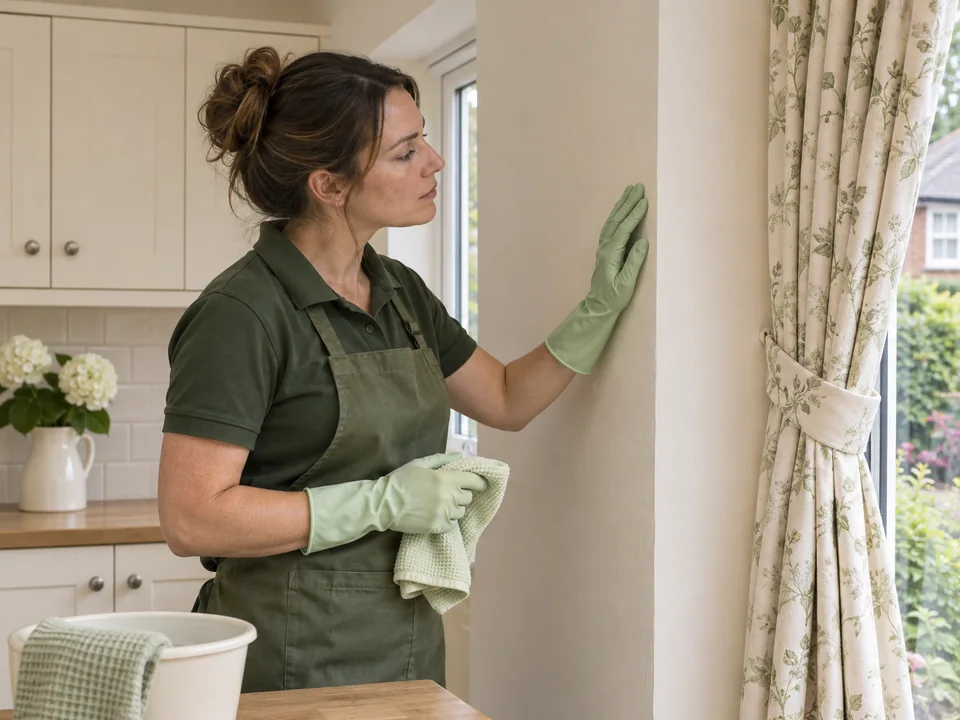
Review what you can see from the same angle after the work
We finish by reviewing the area with you. If your first view was from the sitting room doorway or beside a chair, stand there again so we can distinguish the face we worked on from another one nearby. Check the exposed edge between the sill and cover and ask about marks that are still visible. We can explain where surface discolouration remains and indicate a point that needed to be left because of its condition or position. If a fitting was in the way, we identify the location precisely enough for you to discuss it with the person responsible.
For a rented property, take note of who will pass on observations to the owner or agent. If moisture or marking appears again, describe the nearest fixed reference and the date you saw it. An image from the same angle at a later time can help that person look into the change. If another concern is behind the heating fixture or under a fixed lining, identify that position in the message. We can discuss cleaning the visible hard area again if a separate inspection makes different access available.
Before the rest of the room returns to normal use, clarify what happened at each spot you raised. Sometimes a second short strip is visible only behind a piece of loose furniture, and the household member taking over might believe we dealt with both. We can identify individual positions and discuss what should happen next. If the person responsible is elsewhere, agree how you will describe the surface and its accessible edge. That keeps later enquiries focused on the correct area.
When there are several similar fixtures on the same floor, identify the room from the landing or another reference the next person will recognise. You might call one the front sitting room and the other the room overlooking the garden. On the finished face itself, note a readily visible feature such as a grille corner or the point beside a valve. This gives us a useful order for the final walk-through and avoids mixing up smaller areas. Keep any mention of a different fitting to a separate line in your notes, so that the next person can tell whether it had marks, whether we could reach it and whether it needs more attention.
| Handover reference | What it can describe |
|---|---|
| Cover side and height | Which visible face was worked on |
| Pipe or other fixed obstruction | Why we stopped at a point |
| Later mark at the same opening | Location and fresh date of observation |
Questions about arranging mould removal
Can you look behind a slotted cover that is screwed to the wall?
Show us what is visible and reachable with it fitted. We discuss any additional access separately.
Should I tell you about an electric heater?
Yes. Tell us the type of heater and who can operate it normally before we assess nearby surfaces.
What if my bay and radiator span more than one room partition?
Show us each accessible face and how it connects to the adjacent finish.
Can I ask about a bedroom behind the same shared entrance too?
Yes. Confirm permission to enter both locations and describe each mark separately.
Do you assess marks underneath the wooden ledge?
We check which hard faces can be reached from a normal working position and whether the finish is suitable.
Will an agent understand which patch has remained?
We can describe its position beside the nearest fitting during the handover and explain why it remains visible.
Other Cleaning Services in Brockley
See how our mould removal visits work, Book a separate one-off clean
Discuss your mould removal enquiry
Mould Removal Prices in Brockley
Tell us which rooms are affected, the approximate size of the visible patch and what surface it is on.
Get a Quote