 Housekeeper
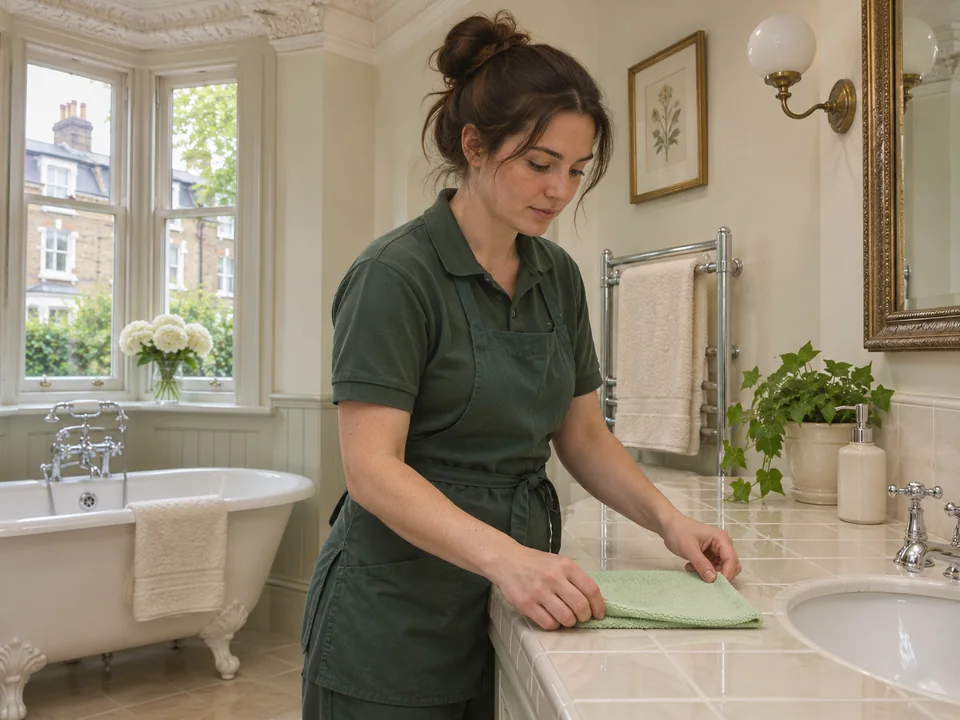
Mould Removal in Catford
If visible mould has appeared beside a sink, on a kitchen panel or at the end of a tiled bathroom run in Catford, tell us which face is affected. We inspect exposed hard surfaces and check where the finish changes. We agree what can be reached and physically remove visible mould from the suitable hard areas.
Can I enquire from near Catford Broadway?
Yes. Give your complete SE6 address and the best entrance for the home.
Can you look at the chip beside a bathroom patch?
Yes. Show us both the mark and the chipped part so we can assess them together.

Assess sound exposed surfaces beside chips and previous repairs
A small chip in a kitchen or bathroom finish can be easy to miss in a photograph. When reporting visible mould, tell us which part of the mark is on a sound hard face and where you can see damage beside it. If the surface has already been repaired, say which piece was replaced and where it joins the original finish. We look at both areas before deciding which exposed faces are suitable. A whole-room photograph provides a useful location, while a closer view shows how the damaged point relates to the marked area.
Lewisham Council's Catford town centre material identifies the junction of Catford Broadway and Rushey Green as central to the town. If you use the junction as a local reference, send the full residential address and route as well. For a home reached through a side passage or above another premises, explain which door visitors should use. If the bathroom is on a different level from the kitchen, tell us which route leads to each. We can then discuss the order in which we see things and which room should be available first.
We inspect the point where the visible growth reaches the end of a tiled run and whether it continues onto a cut edge, adjoining seal or painted area. A firm glazed face can be considered for cleaning separately from an exposed chip or fragile edge. We discuss where the clean can finish and prepare the compatible part without moving the fitting. After removing visible mould from the agreed hard surface, we review the result beside the existing damage. We show the point where treatment stopped so the property contact can distinguish the cleaned face from the chip or repair needing a separate decision.
If there is a hard insert beside a softer joint, try to include both in the same view. Tell us if the chip has created a rough edge that was already present when the patch appeared. We check the condition during the visit to establish how that edge affects the hard face it borders.
- Name the material you see on each side of the damage.
- Show any change between original and replacement pieces.
- Give the room and nearest fixed fixture in your message.
| What you see | What to show us |
|---|---|
| Chip near the end of a ceramic run | Full edge and the next visible surface |
| Replacement panel beside the sink | Join between the two faces |
| Patch next to an old repair | Condition of the finish and exact location of the marking |
Agree ordinary access around the sink, basin or bath
A sound hard face may be reachable from beside a sink but obstructed from the front by an appliance or fitted handle. Tell us which side you use to see it and where someone can stand to work. You can move loose items out of the clear working position when it is safe. Leave items fixed to the wall or checked by another trade in their usual place. We assess how much exposed surface can be approached without altering an installation. If a room has a step or narrow door, show where the working position begins once we are inside.
We agree the working position within the bathroom or kitchen around the surface that is ready. At a basin, the affected hard face may sit beside a repaired area or under an edge of the fitting that is not in normal reach. We inspect both positions without moving installed pieces. We then prepare and clean compatible exposed hard surfaces agreed. During the review we identify the work completed and explain where the damaged material or concealed edge remained outside the agreement.
A replacement fitting can cover the tile line seen in an earlier photograph but leave a narrow band of hard material exposed above it. We inspect that band in its current condition and consider it independently of the enclosed area. If the accessible face is firm and suitable to clean, we agree where work ends before starting. We check the lip of the replacement basin and the exposed wall alongside it separately. A line that continues under the rim does not become part of the clean just because the upper section is in view. At handover we show the treated area and distinguish the concealed or damaged section that may need another contractor’s attention before newly exposed surfaces can be considered.
If the kitchen route crosses a shared corridor, check who should be available to let us through and whether there is a particular visitor entrance. Room access also needs to be agreed with the person who normally uses the units. We can ask them which face they want us to check and what cannot be moved.
- Explain which side gives a clear approach.
- Tell us when each room will be available.
- Mention imminent property work that could change what is exposed.
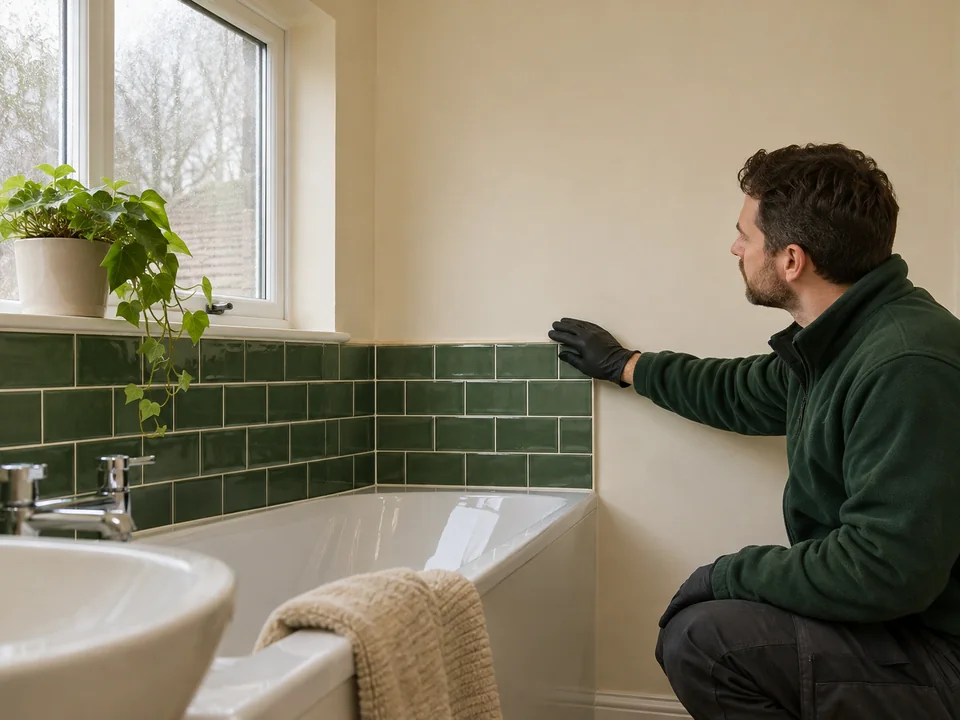
| Access detail | Question to agree |
|---|---|
| Side of vanity near a fixed radiator | Where we can stand and reach |
| Only bathroom needed at a set time | Which room should be seen first |
| Fitting will be removed by another person | When access and the exposed finish can be checked |
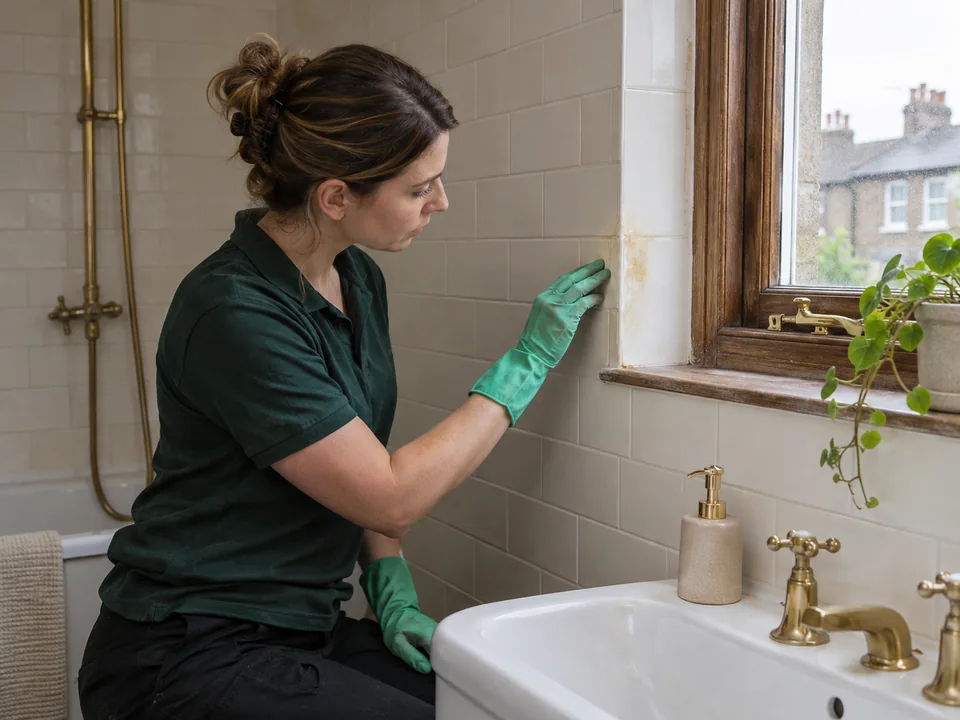
Check the material and remove visible mould from sound exposed faces
We look directly at the hard face and the point where it meets any defect. A chip may leave a different material exposed. We assess that part independently from the hard surface beside it. If a previous repair ends at the patch, we explain how far the practical work can go before it reaches an unsuitable finish. We identify the boundaries from a fitting or join you can see. Before starting, we confirm which area meets the conditions for the work and what can be addressed alongside it.
After preparing the immediate work position, we physically remove visible mould from the agreed suitable exposed hard faces. We pay attention to the limits identified in the assessment. If an edge is loose or a patch continues under a fixed strip, we pause and explain what we can reach without removing the fitting. We can proceed on a suitable adjoining face after we confirm the extent with you. If a coating turns out to be in a different condition from what it looked like initially, we review the position before deciding whether to continue there.
There can be more than one relevant area around a basin or worktop. Sometimes an original surface runs beneath a new backsplash, and the exposed strip sits apart from the intended work surface. Show where each one begins while we are in the room. We can check whether the isolated strip is suitable without assuming that the work should extend behind the new fitting. If the person who raised the original report is unavailable, a clear picture with the relevant boundaries indicated can help us confirm we are looking at the right spot.
If there has been more than one patch repair, tell us which one sits beside the current marking. The repair closest to a cooker or sink may look the same as a second one farther down the wall. At the assessment we can identify which part appears sound, whether the marked hard face runs to the edge of the repair and where the finish needs separate attention. If reaching the second point requires another working position, we discuss it on its own before adding it to the list. A suitable first face can still be addressed while a different issue is left for the responsible person to review.
- Check the sound hard faces with us before work begins.
- Point out a chip or loose material beside the visible mould.
- Ask us to show where the agreed section ends.
Check the result alongside the existing damage
We review the worked-on areas with you and explain what remains visible. Discolouration, existing holes and old repair lines can still be noticeable even when visible mould on the agreed hard face has been addressed. We show the difference in position, especially if a chip was right at the edge of the work. If one end of a suitable hard face was hidden by a fixed item, we point to the last accessible part. Use the room and the fixture position if someone else will look at the room later.
If you notice moisture or fresh marks after the appointment, record when and where you see them. A wider view can show whether the mark is beside the existing chip or on the neighbouring face. Share the exact position with the person responsible for the property or the relevant trade. If they later expose another suitable hard face, tell us where it is relative to the area we already assessed. We can discuss a new visit based on the current condition and access.
Before the bathroom or kitchen returns to normal use, tell the person taking over which area another contractor may need to see. Keep the nearest fitting in the description. An edge with two materials can appear different from the doorway, and a handover photograph from the ordinary standing point helps them locate the place our work ended.
During the review, compare the exact spot with the location you originally sent. If an adjacent edge could only be seen from the side, keep that view with your notes so the next visitor can find it without moving a fitting.
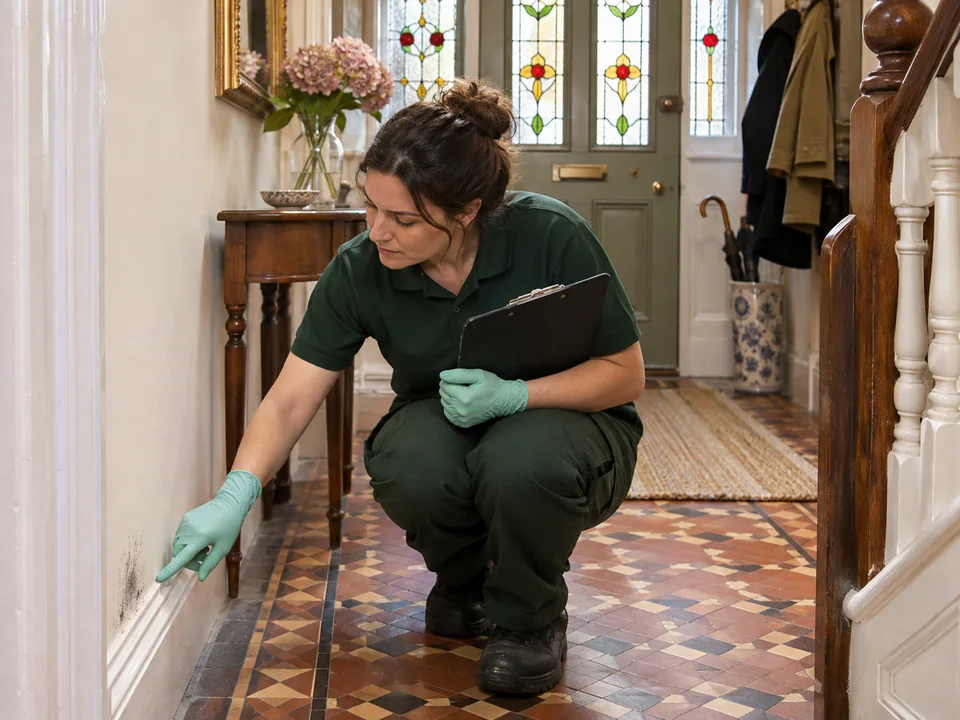
| Point in the review | What to note |
|---|---|
| Sound hard face cleaned | Nearest fixture and limits of work |
| Damage at the boundary | Which finish or edge still needs review |
| Another mark noticed later | Date and relationship to the earlier position |
Questions about arranging mould removal
Can I ask you to ignore a chipped tile and assess the rest?
Yes. Point out the chip before we check the surrounding faces. We can agree a specific limit for the suitable hard surface.
A splashback has a replacement tile. Should I mention it?
Yes. Show the join and explain which parts have visible mould.
Can you visit after a property contractor opens the area?
Tell us when the surfaces will be available and at what stage the fixtures will be left. We can discuss a suitable assessment.
What if I can only see the mark from beside an appliance?
Show the usual approach and tell us whether the appliance is fixed. We assess ordinary reach and the exposed finish.
Can a resident let you in while the owner is away?
Tell us who can provide entry and who is authorised to agree the work during the visit.
Does a remaining chip mean the surface was missed?
We show the agreed areas during the review and point out existing damage separately.
Other Cleaning Services in Catford
Mould removal visit and surface assessment, Ask about a separate oven clean
Discuss your mould removal enquiry
Mould Removal Prices in Catford
Tell us which rooms are affected, the approximate size of the visible patch and what surface it is on.
Get a Quote