 Housekeeper
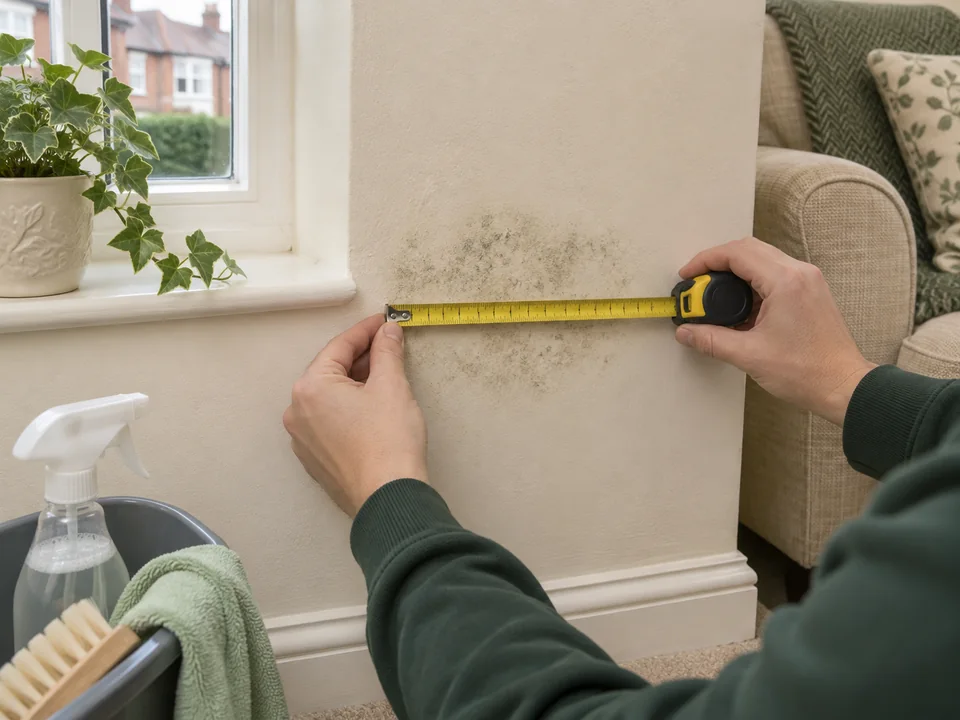
Mould Removal in Golders Green
Tell us where you can see mould in your Golders Green home and what is near it. We assess the exposed finishes, agree which suitable hard surfaces we can clean and explain what we reached at the end.
Can I enquire about an NW11 flat?
Yes, send the full address, the floor and the affected room.
Which entrance details are useful above a parade?
Tell us which residential door to use, the label on the bell and who will be available to open it.
Give the address and affected location as two separate details
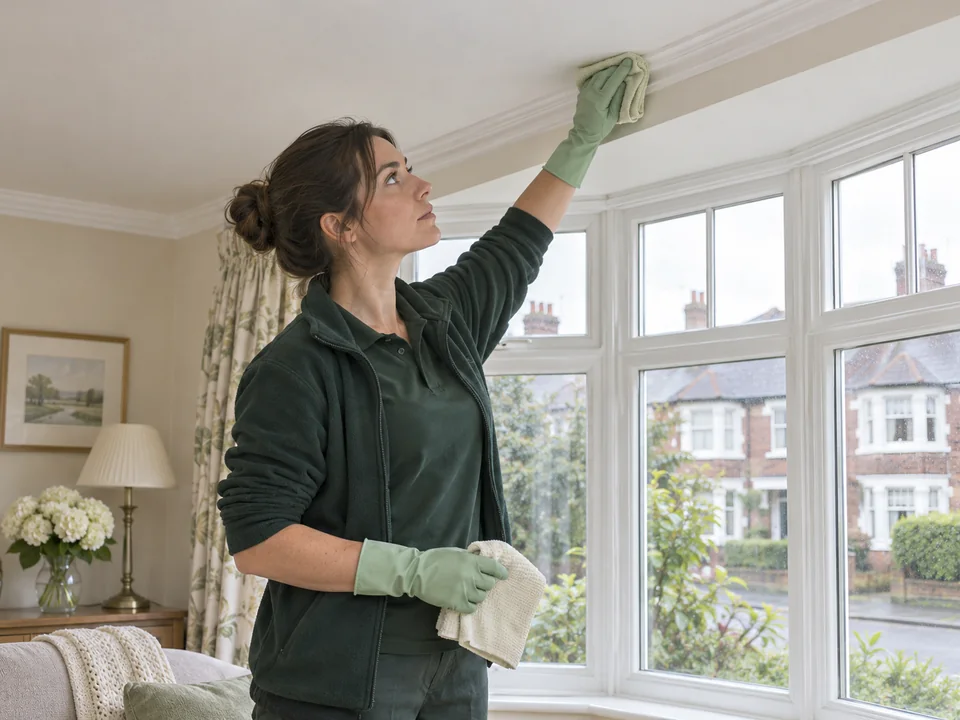
When you enquire about mould removal in Golders Green, give us the postal address and the first room you want us to consider. Specify the location as you would to a person who has never been inside before. If you see a mark on the window side of a kitchen unit, say whether it is on the rigid sill, the panel or the painted area beside them. Tell us where you can see the mark and what prevents you seeing any further. We use this to understand the exposed work and check the access on arrival.
Barnet Council’s Golders Green town centre conservation area profile describes shopping parades straddling Finchley Road, Golders Green Road and North End Road. If your flat is above or beside a parade, give the entrance as well as the flat number. The door may sit between two shop fronts or on a side street rather than under the sign nearest your windows. A clear instruction about the residential entrance lets us identify where to meet you without asking occupants or businesses at another door.
Where an affected area is at the back of a room, give us a wide view from the general direction of entry if that is possible. For a patch beside the kitchen window, we want to know if there is a deep worktop, a table or a fixed unit between the doorway and the affected opening. A close image is useful for the edge of the material. Tell us if you are unable to get a second view without reaching behind a fixture. We can assess the available view once the room is prepared.
If more than one resident is arranging the visit, agree which room names to use. A small cloakroom off the landing and a shower room reached through a bedroom can both be described casually as the bathroom. Keep the approximate positions separate in the enquiry, particularly when the surfaces differ. We can work through the visible areas in an order that matches the arranged access and confirm that order with whoever meets us.
| What to send | Useful example |
|---|---|
| Dwelling | Full address and separate residential entrance |
| Affected location | Left side of the hard sill in the kitchen |
| Restriction | Deep worktop or item occupying the approach |
Agree what residents can clear and when
We talk through how the area can be made ready. If the job concerns the hard surround of a basin, put aside loose toiletries and tell us if a shelf or mirror covers an area you still want reviewed. In a kitchen, put away food and loose equipment near the visible marks. Tell us if you need to keep a particular stretch of worktop available. A cupboard or cabinet should stay fitted while we look at which sections can be seen and reached from the room.
In a flat with a shared route through the hallway, check that the entrance we discussed is available for the slot. You may be arranging work for someone who spends much of the day outside the property or who gets home after a key holder has left. Confirm who will grant entry and whether the person knows which rooms have been agreed. If one room will be occupied during part of the visit, we can discuss which surface to consider before the other becomes available.
An open route can still leave little room next to the affected face. Tell us about inward-opening doors, tucked-away cupboards or an appliance that cannot be moved. If you would like books, ornaments or equipment left untouched, arrange a place for those items or tell us where they will stay. We consider the clear space at the appointment so we can discuss what is reachable with the room arranged that way.
- Agree a time when each affected room is free.
- Put aside loose household items if they can be moved safely.
- Explain which fixed items or door positions limit access.
Check the finish on each exposed side of the mark
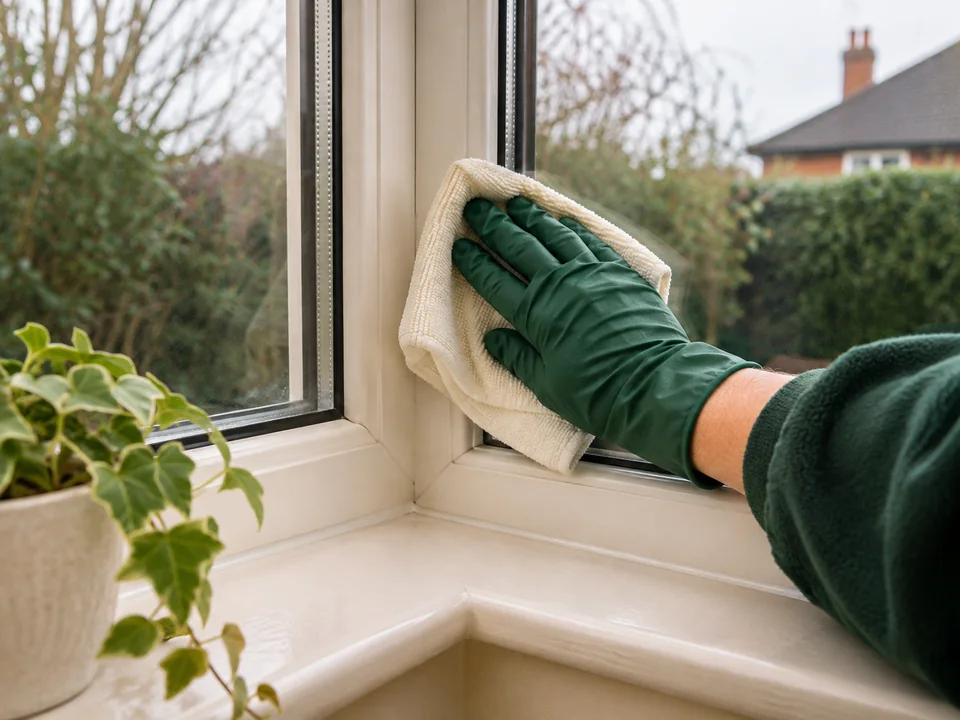
We inspect the surface we can see and assess how it meets neighbouring materials. A dark patch at the end of a hard sill can run down into a cracked painted line without the same material continuing underneath. We explain which exposed parts we can consider and where another finish or its condition changes the decision. Tell us if you know about any earlier repairs or surface care instructions for the items directly beside the mark.
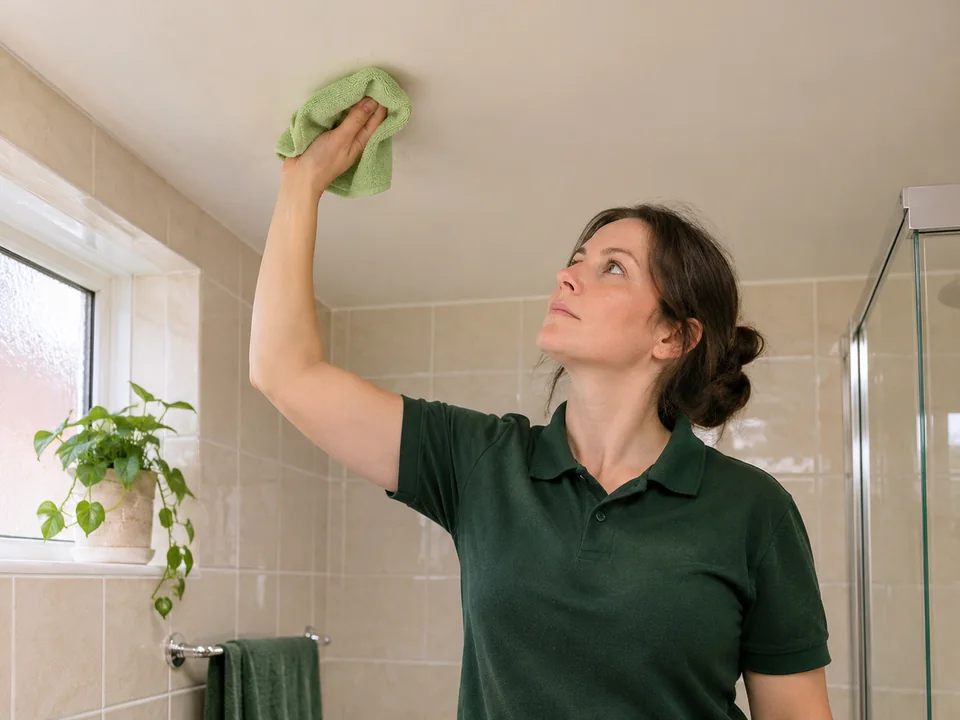
In a bathroom, the face next to a basin and the join against the surrounding wall can each show a darkened edge. We assess the hard surface and separate it from worn or stained material along the join. If a cupboard under the basin also appears affected, tell us whether the lining is swollen and which parts are exposed with the doors normally open. We can identify the difference between a surface we can assess and one that remains behind pipes or a fixed panel.
Repeated marks help us understand what the household expects from the visit. Tell us when the same area last appeared or if the visible mark changed after you had a leak investigated. We can report how the exposed material looks and agree cleaning of suitable hard surfaces. If the problem seems to continue out of sight, the property contact can arrange an inspection of the affected building element. That requires a different type of access from the cleaning visit.
| Visible area | What we consider |
|---|---|
| Hard sill or tile | State of the exposed finish and space to reach it |
| Damaged coating | Where the adjacent work needs to stop |
| Obscured surface | The view available without moving a fitting |
Clean the suitable hard faces agreed during assessment
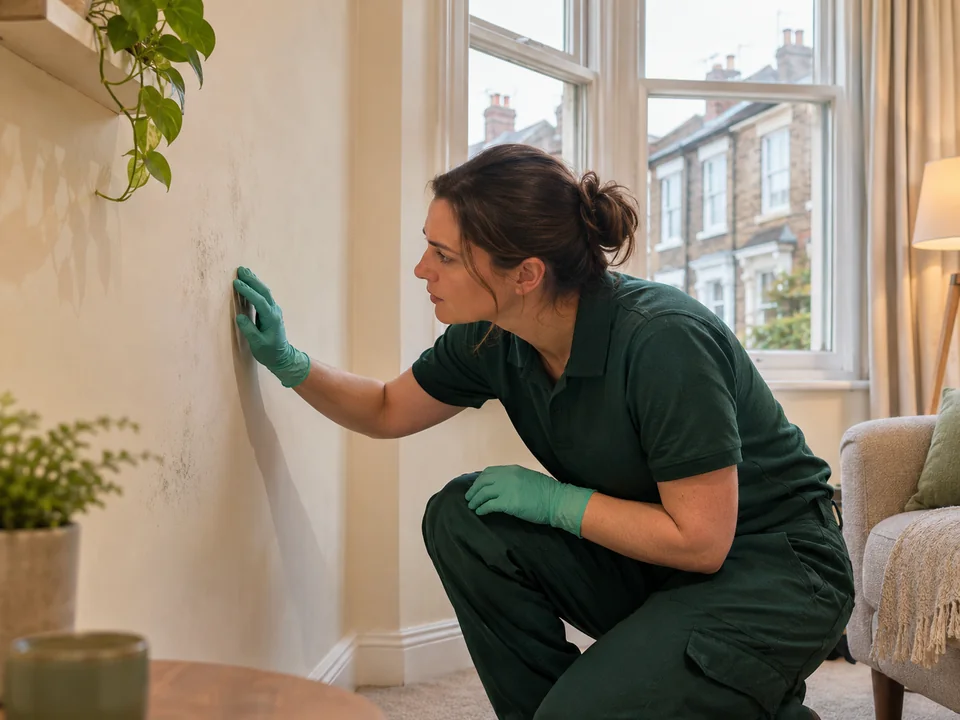
We remove visible mould from the suitable reachable hard surfaces that you agree with us. The work can be a particular face or a group of separate faces in one room. In a bathroom, we might agree a stretch of sound tile where it is clear of a fixed cabinet. In the kitchen, a hard splashback around a window may have a distinct boundary at the adjacent painted return. We make the start and end of the cleaning clear before moving on.
If clearing the room reveals more exposed material, we check its condition and whether it belongs in the agreed visit. A separate hard ledge might be easy to reach but still need your approval. If the newly visible part changes from a rigid finish to a soft or visibly damaged edge, we discuss what that means before working nearby. Where someone else booked the cleaning, tell us who can decide if we should include any additional face.
We keep track of where reach ends because the result can look different along the same join. For instance, we may be able to clean one side of an exposed hard edge while a fixed panel shields a second side. An old discolouration can also remain visible within a joint. During assessment, ask us about the areas that may still look marked afterwards. We can revisit those locations with you before the end of the appointment.
- Confirm what was agreed for each face of a join.
- Arrange who can approve work on a newly visible area.
- Ask us about any stain or condition that may remain.
Review the work with whoever looks after the rooms
At the end, we show you the areas worked on and give a clear description of the visible edges we did not reach. If parts of a room had different finishes, we say which ones were included in the cleaning. If the job covered separate rooms, we check them against the original enquiry so there is no confusion about which surfaces were assessed. Where a booking contact is away, agree who can receive the handover before work begins.
For a mark that later appears again, identify it by its closest fitting, which side it is on and the point at which it meets another material. A property manager may need to recognise the location without having seen the first mark. We can explain the exposed area we cleaned and where a worn or restricted section remained. The person responsible for the property can take those observations into their own follow-up if a separate inspection is needed.
To request a quote, give the full postcode, named rooms and approximate extent of the exposed work, along with the entry arrangements. A low hard ledge along a clear passage needs different preparation from a recess behind a fitted unit. If a key holder must arrive before we can enter, tell us when they will be there and whether they can approve anything beyond the first description. This gives us the details needed to discuss the visit and individual price.
Some people arrange this work from a tenancy inventory and already use a numbering system for rooms or fixtures. If that is how the booking contact knows the flat, pair their reference with a description we can verify at the address. A named bathroom might have a recorded shelf number, or a kitchen inventory might distinguish two windows. We can describe the accessible face we worked on using both the room name and the agreed reference. For any obstruction, ask us to explain where it sat in relation to that same feature so the outcome is clear to an off-site reader. This is useful where several tenants use similar names for different rooms on the same floor.
- Use the same room names at booking and handover.
- Ask us to identify the point where cleaning ended.
- Give any later concern the position and nearest fitting.
| What we cover in the review | Useful description |
|---|---|
| Work completed | The hard faces and room we agreed |
| Limit reached | The fitting or material that set a boundary |
| Contact for follow-up | The person who should receive the result |
Questions about arranging mould removal
What if the building has one postal address and two residential doors?
Give us the flat number and describe the door a visitor should use, including its label or the name shown at the bell.
Can you assess a mark beside cupboard hinges?
Tell us what the face is made of and whether it is exposed with the door open. We consider the visible area without dismantling the fitting.
Can I include the hard window sill and bathroom tiles?
Yes, describe both rooms when you enquire. We check the exposed materials and agree which areas can be cleaned.
Will you work around a tenant’s desk?
Tell us whether the desk is fixed or can stay where it is. We can discuss the work based on the available approach.
What if the surface was damaged before I moved in?
Explain what you can see, and give any information you already have. We consider the current exposed condition before agreeing work.
Who should receive the review if a flat is managed remotely?
Arrange a contact who can receive the details and who knows which rooms you wanted to be assessed and cleaned.
Other Cleaning Services in Golders Green
Regular housekeeping in Golders Green, End of tenancy cleaning in Golders Green
Discuss your mould removal enquiry
Mould Removal Prices in Golders Green
Tell us which rooms are affected, the approximate size of the visible patch and what surface it is on.
Get a Quote