 Housekeeper
Mould Removal in Cricklewood
We start a Cricklewood mould removal enquiry by identifying each affected finish and how we can reach it. We consider the need for assessment, agree preparation and discuss treatment for suitable exposed hard surfaces.
What details should I give for a flat off Cricklewood Broadway?
Use the full NW2 postcode, flat number and correct residential entrance. Tell us whether an internal stair is involved.
Can you consider marks beyond a window frame?
Describe the frame, reveal and adjacent finishes separately so we can discuss each surface.
Give us the situation as it stands today
Before discussing a visit, we take the room, approximate area and finish involved. We ask what you can see now, which parts are concealed and how people currently use the room. A photo of a mark before work was carried out may explain what first prompted the enquiry. A later view tells us what an attendee could examine now. Identify both if they are available, and give us the approximate dates. Where a mark covers the frame and nearby wall, describe the surfaces independently before asking for a proposal. That lets us identify the finishes and practical limits for the first conversation.
If another resident made the first report, say what they noticed and which person can show us the room on the day. We can work from information supplied in writing or a description by phone, as long as the location can be identified. If a second appointment is due to expose a hidden face, let us know before the proposed date. A visit to see what remains visible has a different purpose from a later visit after work has changed the room. We agree what needs to be established before discussing the appropriate arrangement.
Some reports cover an area close to a different room or shared landing. Say where the visible part lies and who controls access beyond it. We confirm the person who can discuss the area with us and who would be responsible for any further decision. Details of a previous fault or repair can be included without assuming it explains every observation in the home.
- Share the current finish, position and visible size.
- Label any earlier pictures and repairs separately.
- Identify available and unavailable parts of the room.
Set up an arrival that matches your NW2 property
Brent Council lists addresses on Cricklewood Broadway in NW2, including buildings with named units. Give us the full residential address and the entrance rather than pointing to the Broadway in general. If the entrance is beside another premises or behind the building, explain how it should be found. Give the floor, flat or dwelling number and the route from the front door. If you need to meet us outside before a visitor can reach the room, arrange an appropriate time and provide a contact who can confirm any change.
Tell us whether there is a shared passage, an internal stair or a separate entry to a lower floor. We consider routes and timings when they affect access to the reported surfaces. Where there is a keyholder away from the property, give the collection arrangement and check when the keys can be returned. At a managed building, confirm whether the person meeting us can open the flat, shared area or both. The details we record for access should distinguish which areas of the property can be entered from which finishes can be reached once inside.
| Arrival detail | What we ask | What it establishes |
|---|---|---|
| Dwelling address | Complete postcode and flat or house number | Correct property |
| Residential entrance | Doorway and route to the room | Access arrangements for the visit |
| Key or appointment contact | Who admits us and when | Who can confirm any practical change |
Examine the finishes in the area described
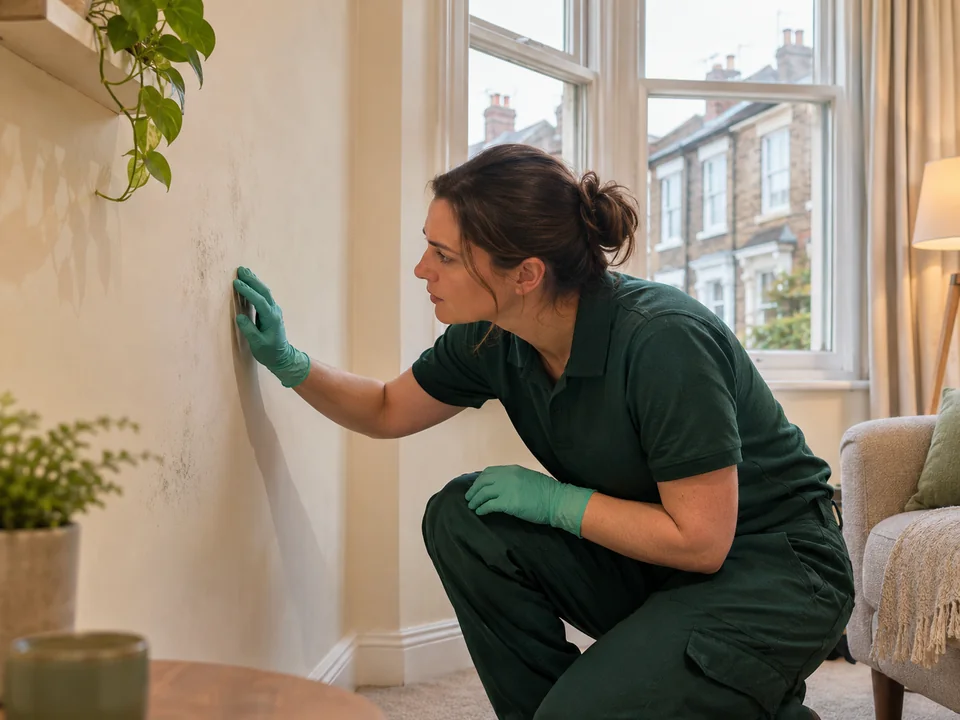
We use the location and visible condition to discuss assessment. If a mark is next to a bay or window, name the frame, the painted reveal, sill and adjoining wall independently. When the frame has a fitted blind or the wall is partly covered by a sitting area, explain what can be seen around those items. An assessment can consider the exposed finishes and note what remains hidden. We establish the material and condition as far as the accessible view allows before confirming any proposed surface treatment.
An adjoining material might have started to lift or might feel different from the rest of the wall. Describe what is visible rather than trying to uncover it. Tell us where one finish stops and another begins, particularly if a pattern covers more than one plane. A photo from the doorway can orient the visitor if the close-up only shows the material. If some parts are already painted, patched or repaired, use labels or a simple sketch to distinguish them. We use that information to discuss the limits of the existing visible assessment without assuming that uninspected areas will be treated.
Where a material needs a different decision because it is porous, damaged or concealed, we explain that separately before agreeing work. A hard finish on one face can be named for the proposal even when the neighbouring backing is still under consideration. Making the transition clear at the assessment helps the person present for the visit understand why a surface on the room list may have more than one outcome.
| Finish or feature | Visible detail | What we discuss before treatment |
|---|---|---|
| Painted window reveal | Extent and condition of the surface | Whether suitable exposed work can be agreed |
| Glazing surround | Where the mark sits relative to joints and seal | Which parts of the frame and nearby area can be reached |
| Damaged or hidden lining | Visible edge and materials nearby | Whether it needs a separate decision |
Agree preparation around the actual room layout
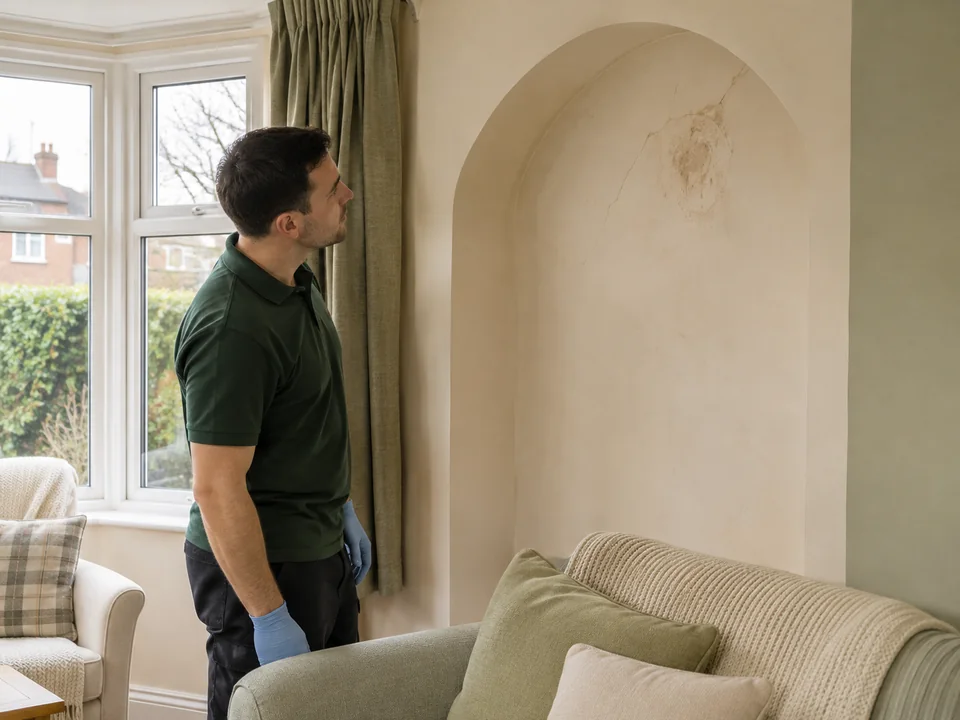
Once we understand the area, we discuss what needs to happen before a visit can go ahead. Tell us if furniture, fitted shelves or other contents restrict the route to the affected surface. We discuss how the visible finish can be reached and what should stay in place. If a change to the room would need the owner or resident to give permission, say who can make that decision. We do not need you to disturb a fixed item simply to describe the part you can see.
If the room is in everyday use, tell us which other spaces must remain available and how long the access arrangement is likely to hold. At an occupied home, the person who will admit us should understand the agreed preparation and which room we expect to reach. If a second contractor is due to attend beforehand, confirm what they will do and whether their work might expose a new surface. We review the arrangement if the room or current condition no longer matches the details originally supplied.
We discuss the room as it will be at the start of the appointment. If an accessible route depends on opening a door for more than one occupant or on moving a free-standing item, give the contact able to confirm that arrangement. A wide room photograph can show where the person attending may stand without disturbing the surrounding contents. Let us know if anything in that view is temporary so the access note describes the arrangement on the day.
- Name fixtures restricting access before moving anything.
- Explain which rooms remain occupied around the visit.
- Tell us when other work changes the finish or access.
Remove visible mould where the hard surface is suitable
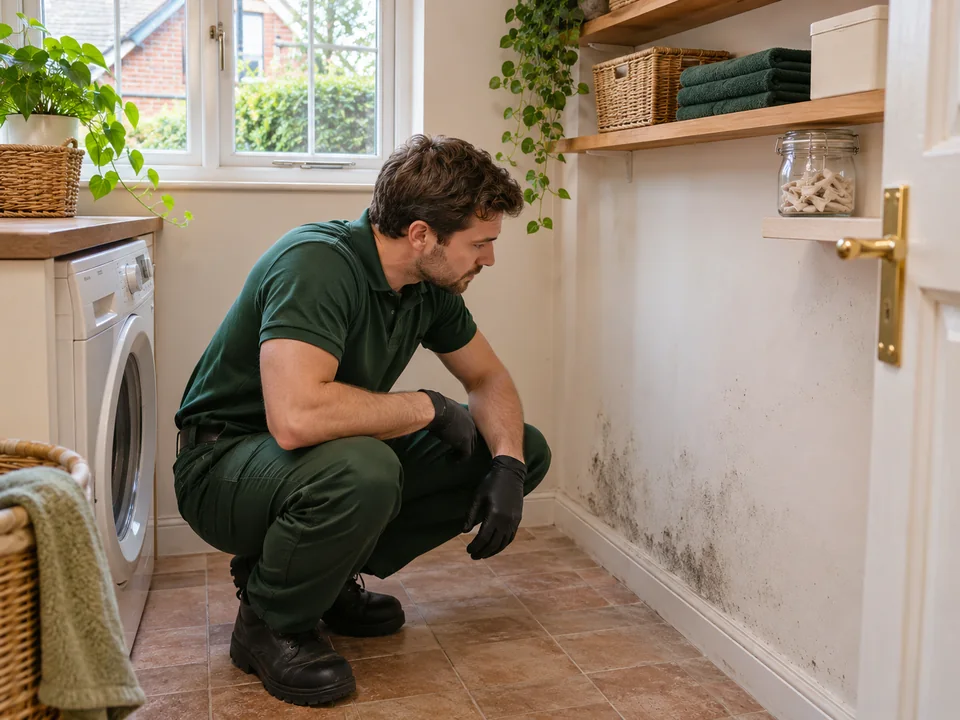
We physically remove visible mould from the agreed suitable accessible hard surfaces. We confirm the location and finish before starting so the person present understands exactly which areas the work covers. If the mark extends to a damaged or inaccessible finish, we establish the boundary instead of assuming the new area is included. This allows the agreed work to remain specific to the surface viewed and prepared. If there is a separate question about moisture or the building, we keep it identifiable for the person responsible.
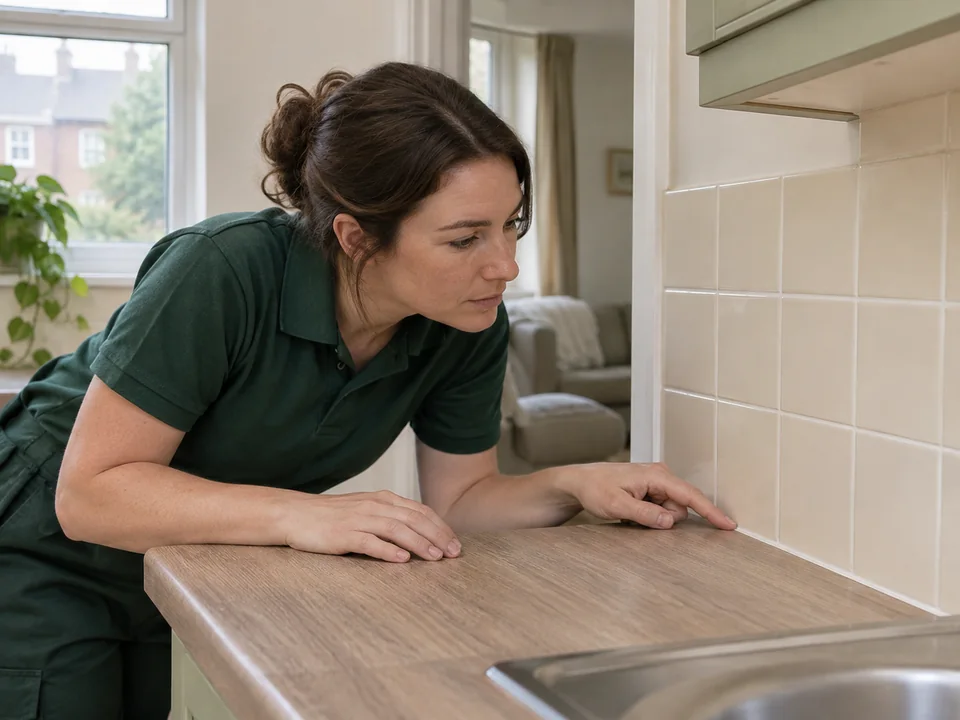
The final review covers the accessible areas cleaned. We check the named locations against the agreement and discuss aftercare in relation to those surfaces. We explain any area left outside the work because it could not be viewed, because another decision was needed or because it belonged to a different enquiry. If a finish meets a cabinet or frame, name the position in the record so a later visitor can distinguish the treated section from the adjoining material.
If a separate person is following up on a repair, we discuss which location information they need. Keep the record of the surface work alongside the original room description, particularly if the finish is later decorated or part of the room is altered. This lets you give the office a useful update if the appearance changes. A mark in a different position should be recorded in its own right.
| Stage | Our approach | Record after the visit |
|---|---|---|
| Assessment and preparation | Identify the named finishes and agree access | Accessible areas and agreed preparation |
| Surface work | Physically remove visible mould from suitable agreed hard surfaces | Which surfaces were cleaned |
| Handover | Review accessible work and discuss aftercare | Any limitation and separate point for follow-up |
Ask for a quote with the other work listed separately
When we discuss a quote, we ask what you need on this visit and about any existing dates that affect it. A short consultation may establish the need for an assessment before suitable surface work is agreed. Tell us who will receive the price and who can accept it. If any part of the area cannot be reached under the current arrangement, ask for that to be stated separately. The property address is one part of the enquiry, and the surface condition and access also affect what can be proposed.
If you are also arranging housekeeping or a handback clean, give us a separate room and task list. Tell us which places are currently available and which ones depend on another visit or approval. We can discuss the timing of additional cleaning against the agreed mould removal work. If a new patch becomes visible or the approach to a room changes before the date, let us know exactly what has changed so the proposal can be discussed against the present condition.
If another person will meet us for you, share a concise list of the agreed rooms and marked positions with them. Have them tell the office if the arrangement changes. We can explain which areas are included and which ones need further information before we can discuss them. That is particularly useful where the person arranging the price has seen photographs but the person providing access is more familiar with the room itself.
- Check which visible finishes the proposal names.
- Record the contacts for access and acceptance separately.
- Give separate dates and room requirements for additional cleaning.
Questions about arranging mould removal
Which entrance detail matters for a Broadway flat?
Give the full address, doorway and flat number. Say if someone needs to meet us outside or open a separate door.
Can you deal with markings on both sides of a window reveal?
We assess the exposed surfaces and discuss suitability and access separately for each side.
What if the new picture shows a larger affected area than the first one?
Tell us when the pictures were taken and where the larger area now ends. We review the proposed visit against the current description.
Do you physically remove visible mould during the agreed work?
Yes, from the suitable exposed hard surfaces we have agreed and prepared. We review the results and identify anything outside that work.
Could a cabinet stay fitted during an assessment?
We assess what can be reached with the cabinet in place. Tell us which part it hides and discuss any separate question about access.
How do you handle a shared area reported alongside my living room?
Identify who manages access to that area. We discuss the living room and the shared area independently.
Other Cleaning Services in Cricklewood
Mould removal service in London, Regular housekeeping enquiries, End of tenancy cleaning service