 Housekeeper
Mould Removal in Belsize Park
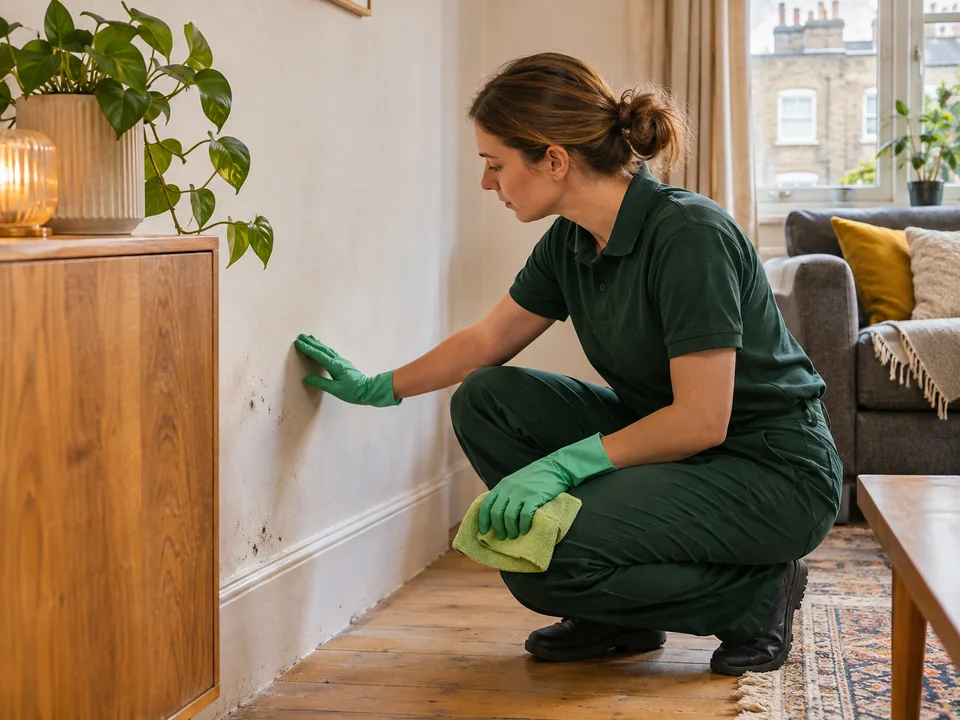
For mould removal enquiries in Belsize Park, we first separate work inside a flat from any shared hallway or stair. After confirming who can provide access and authorise work, we discuss the visible mark, the surrounding finish and whether a visit to assess it is needed. We agree which surfaces are suitable for cleaning, prepare the accessible working area and review the result with the contact responsible for the property.
Should I give the flat's floor as well as NW3?
Yes. Give the full postcode, flat number, floor and the entrance visitors use.
What if the patch is in a common hallway?
Tell us who manages the shared area and who can approve access and any work.
Identify the part of the building where the work is requested
Begin with the location in the building: the room in which the mould can be seen, the level of that room and where the marks sit in relation to the floor or ceiling. Distinguish an entrance hall inside your own flat from a communal staircase. If the area can only be viewed from the landing outside the flat, identify who has authority there before assuming it can be included. A description such as the inside face of the bedroom wall beside the top stair is much more useful than saying the stair end of the property.
Think about who will receive the quote and who can arrange entry. The freeholder, a managing agent and the occupier may handle different decisions. If a resident can let someone in but only an agent can approve a further visit, say so when you make contact. A room left closed until a tenant returns cannot be included in the same way as one available throughout the appointment. Give a name or role for the relevant contact if known and agree how details should be passed on.
- Give each affected room a clear label and floor.
- Separate shared parts of the building from areas inside the property.
- Say who can provide access and who can approve work.
How we approach finishes in converted flats
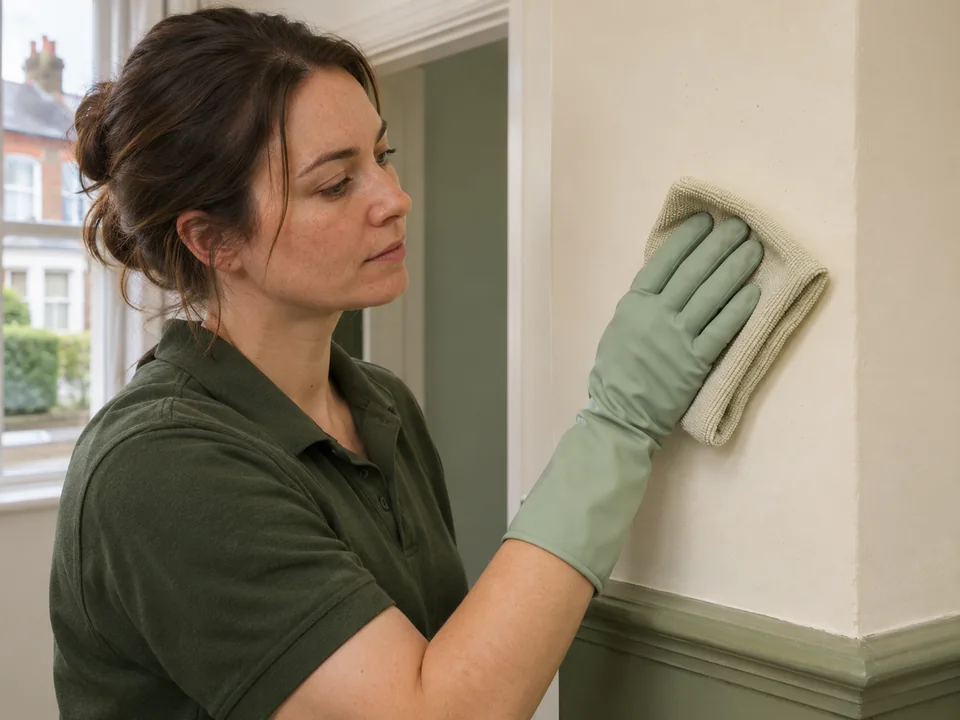
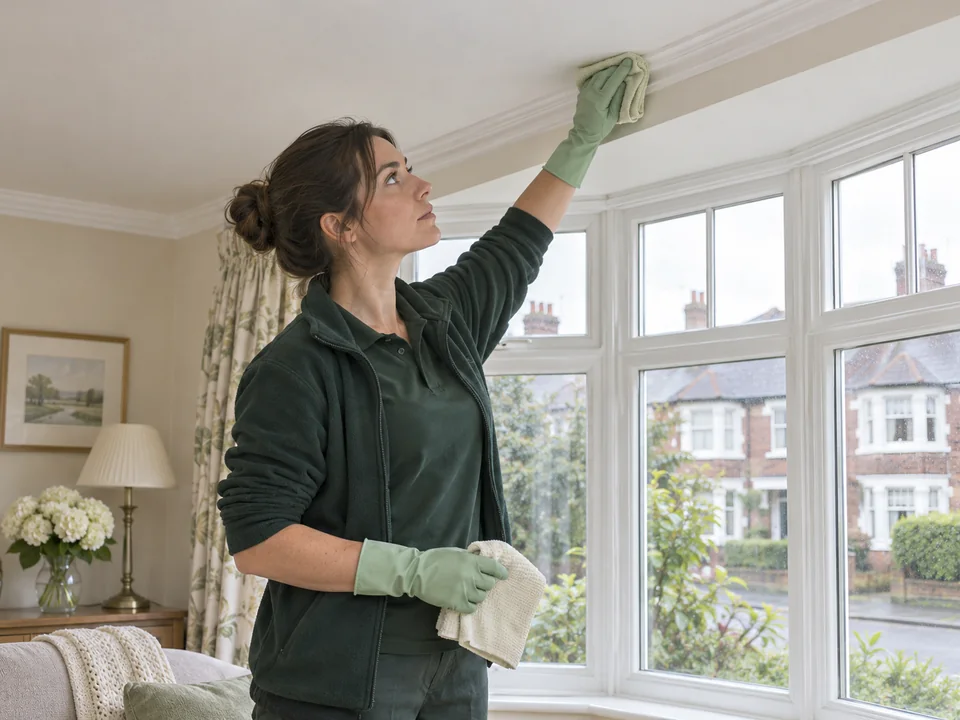
When we can assess a window area, we consider the visible trim, reveal and adjoining wall as separate finishes. We agree which can be cleaned and prepare around the accessible surface, keeping work within the part of the flat we have permission to use. After physically removing visible mould from the agreed hard surfaces, we discuss the visible result and flag any finish that needs attention from the building contact. Shared areas and concealed surfaces require their own access and assessment arrangements.
Camden's Parkhill and Upper Park appraisal locates that conservation area north-east of Haverstock Hill and adjacent to Belsize Park's conservation area. This is a useful local reference when describing where a visit is needed, particularly when the named road is the postal address but a side route is used for entry. Give the full address and say exactly which door is used, whether the visitor comes straight into the home or into a common hall, and how the flat can be identified once inside.
When a building has steps down to one entrance and a separate flight up to another, explain which route leads to the room. A ground-level doorway on the street does not necessarily tell someone where they will work. State if the affected area is below an internal stair, behind a door that cannot be opened fully, or at the far end of a room used throughout the day. Mention floors where a lift cannot stop. These details are especially useful when the person describing the property is not the person who meets the visitor.
| Part of the visit | Confirm in advance |
|---|---|
| Address | Complete postcode, flat number, road and level |
| Arrival | Door actually used and any step-free route that is available |
| Access inside | Common stairs, lift access and doors that must remain locked |
| Authorisation | Who can approve assessment of shared or private parts |
Explain what changed beside the window or built-in unit
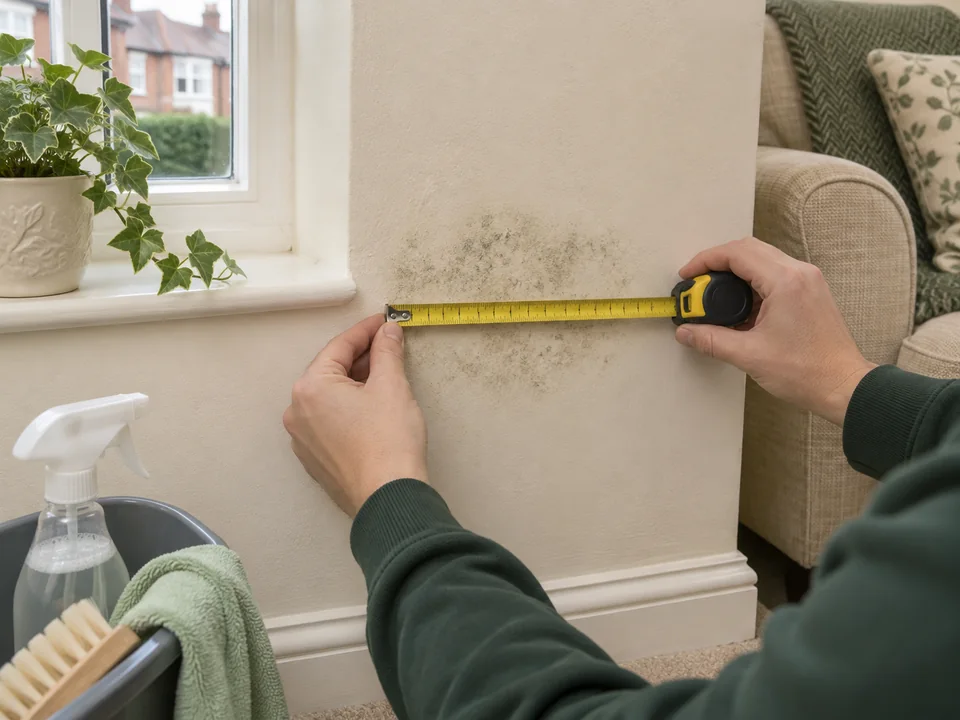
A window opening can include several finishes within a small area. If the marks start near the glazing and continue onto a nearby wall, describe the painted trim, the reveal and the wall face separately. Tell us if you know that a finish has recently been repainted or a strip of sealant replaced. A dated photograph from before the change may help the person considering the enquiry understand what you mean. Give the date of a repair when you can and mention if the same area began to change again after the work.
The same approach helps with a built-in wardrobe or bookcase. Describe how much of the wall is visible, whether the fixture can be opened normally and who would approve any work involving it. Speak to the office before moving a heavy item or assuming the surface behind it is included. If you have only noticed a mark at one end, explain exactly where it can be seen. A visit arranged to look at that exposed strip should not be treated as an agreement to inspect the whole cavity.
If photographs reveal several marks, place them in order rather than sending a collection with no context. Add the room name and note which images show the same position. For a window, a single wider view may establish whether the first image was of a sill and the second was of a wall above it, or whether they are two different windows. If you cannot reach a position to take a closer picture, say so at the outset. A room description is still useful.
If you are enquiring about an area in a room occupied by someone else, use their description with permission and avoid sharing unnecessary personal details. A room label and an approximate measurement normally help more than a photograph that shows the entire contents of a home.
- Label each window or item separately.
- Note when any sealant, paint or adjacent finish was changed.
- Bring a wider reference image if you have one.
Compare the finishes that could affect the treatment decision
An enquiry about a small patch on a sound painted surface can be discussed in terms of what is visible and reachable. A patch across damaged wallpaper or a finish that has started to lift brings a different question, because the material itself needs to be considered. Describe the surface without guessing what the original substrate was. Say if there are visible cracks, soft areas or an earlier repair. If the area cannot properly be assessed without looking at concealed material, ask who should do that assessment.
For a furnished room, the owner may want a decision about an adjacent item as well as the building surface. List it separately. Tell us if the item is fixed, valuable or made from a material you cannot identify. Ask whether that item and the wall can be considered in the same visit and whether the work would need separate approval. Avoid making assumptions about which surfaces are included just because two of them are physically close together.
| Surface or item | What to describe | Decision to discuss |
|---|---|---|
| Painted timber near a window | Whether it is sound, where marks start and previous changes | Whether the accessible surface can be considered |
| Wallpaper at an outside wall | Where lifting starts and if the moisture history is known | Whether material needs a separate assessment |
| Fixed furniture beside a wall | What is visible and who can authorise access | How to arrange an inspection without moving it prematurely |
| Shared wall beyond a flat entrance | Location and building contact | Which party can arrange any work to it |
Take the next step after moisture or building work is discussed
If a recent leak or change to the room prompted the enquiry, give the most reliable date you have. If a resident reported water but you have not been told the outcome, the office can work with that uncertainty when discussing which questions remain open. A cleaner's enquiry about visible surfaces is distinct from identifying where water entered a building. The owner or managing agent may require a specialist moisture assessment before any decision is made about a concealed or recurring problem.
Ask how the results of any visit should be passed on. A short note can record which surfaces were accessible, which required a separate decision and who is following up. Keep photographs and the agreed work description with the note. This is helpful if an upstairs resident reports a change later or a replacement occupier needs to know which issue was considered. Where a quote concerns visible treatment alone, make sure the person comparing it with a repair estimate understands the different purpose.
You can prepare the key details on the booking page before calling. Bring a room list and describe any timing restriction at the building. If you are arranging regular cleaning as well, ask about housekeeping visits separately so the ordinary task list remains clear. Mention any rooms that must be left out while a building matter is unresolved.
| Timing | What to record |
|---|---|
| Before calling | Room, surface, access and any known recent building work |
| When agreeing next steps | What needs assessment and who authorises it |
| After discussion | Which items were agreed and who is dealing with outstanding work |
Agree how to use the room and who can answer questions on the day
For a bedroom or home office, availability can change during the day. Tell us if a resident needs the room for a fixed period, if keys only cover certain doors or if a management office restricts when a visitor can arrive. If someone other than the person who first saw the problem will meet the assessor, give them the location notes and tell them where the affected finish starts. This will help them distinguish the relevant mark from old paint, a repaired patch or a nearby area of the same colour.
Before you accept any quote, check how the visit is described and whether any follow-up is included. A quotation based on one visible surface may need revisiting if a new room is added or entry changes. If the person who can agree changes will be away, identify who should be contacted before extra work can be considered. Where the issue involves a common area, let the residents who use that route know who is managing access and which questions are still being discussed.
When an appointment is being discussed for more than one part of a building, the access arrangements can shape the order in which those areas are considered. If one resident is available in the morning and another only in the afternoon, explain that early. Give each resident the room labels used in the original enquiry so everyone is talking about the same marks. A drawing or simple list by floor can help where two flats have similar layouts or the room named in a previous email has since changed use. The point is to make sure the right surface can actually be seen at the time agreed.
Before the day, make a note of any recent changes to windows, heating or furniture positions that are relevant to the affected surface. Describe the change and when it occurred instead of drawing a conclusion about its effect. If a previous owner or contractor holds the repair record, tell the office which details you have and where the uncertainty begins. Where you need to compare a surface quote against a separate building visit, keep the two work descriptions alongside the same room list. You can then see whether a quotation answers the question you originally asked or whether a separate assessment still needs to be arranged.
- Confirm any limits on when rooms can be entered.
- Name the person who can answer access questions.
- Ask who needs the outcome of any assessment.
Questions about arranging mould removal
Who should ask about marks between two flat entrances on one landing?
Ask the managing agent or the person who looks after the shared landing. They can confirm who can authorise access and receive any quote for the common part.
What do I report if the only marks I can see are at the top of a fixed bookcase?
Give the distance from the floor, the position of the unit and what can be seen from the room. Ask if a decision requires a separate inspection of the surface behind it.
Can I include just one window in a larger bay?
Yes. Say which opening is affected and whether you want the surrounding sill, trim or wall considered. A wider image can identify the part of the bay you mean.
Do you need to know that the floor has a separate entrance from the rest of the building?
Yes. Give the route used to reach your door and the floor of the room itself. Include information about shared access if there is a second door along that route.
Will a quote for an accessible wall answer a question about the party wall itself?
The quote can cover whatever surface work is agreed. A question about moisture within the building or across a property boundary may need a separate assessment arranged by the responsible person.
How should I explain marks that appeared on a newly decorated window reveal?
Say when the work was done, where the marks first showed and whether the finish looks different in adjoining areas. Mention any known repair from before the decoration.