 Housekeeper
Detail-led care for your oven
Oven Cleaning in Hackney Wick
We clean fitted ovens in Hackney Wick with the appliance in place. We check the booked cavity and its lining, then work on the suitable exposed surfaces, removable accessories and reachable glass agreed for the visit. A grill or oven in the same cabinet can be covered as a separate item.
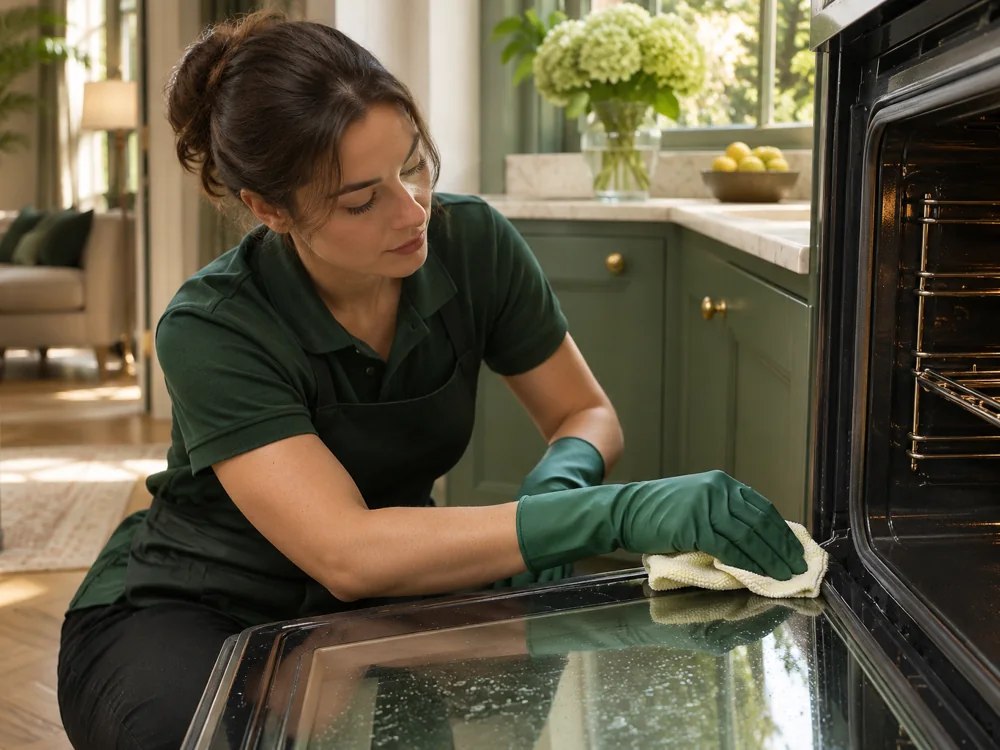
What can you clean in an open-plan kitchen?
We arrange the work around the fitted oven, making room for the door and compatible loose parts without disturbing neighbouring units.
Can you assess a specialist liner as well as the enamel floor?
Share the model and any instructions. The technician can review the surfaces separately.
Identify the cooking cavity within a run of units
A built-in oven in an open kitchen may share a line of fronts with a grill and a storage drawer. We use the opening and its controls to identify the booked cavity, then assess the exposed enamel, glass and shelf positions.
We leave the fixed appliance in place and agree where the door can open and loose parts can be handled. That gives us access to the reachable surfaces without treating adjacent fitted units as part of the oven.
- Photograph the complete appliance and cooking area.
- Distinguish the oven from other matching fronts.
- Identify replacements or added accessories.
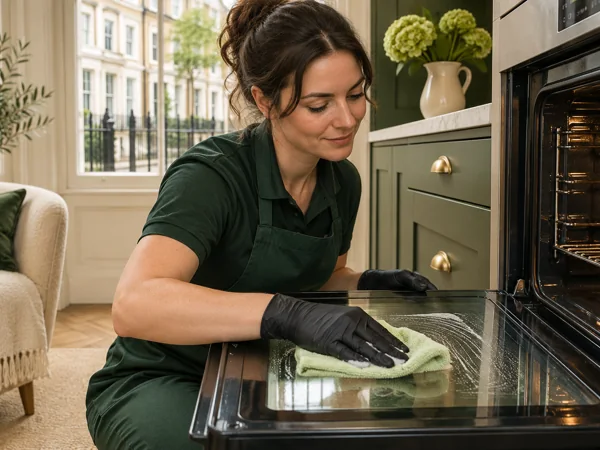
Organise the work around the fitted kitchen
National Rail lists Hackney Wick station on White Post Lane. If you use the station to describe the area locally, begin the enquiry with the actual postcode, building and entrance to your home. A building can face a canal path or a shared yard while residents reach their flats from another side. Give the approved visitor arrival point and the door where the technician can enter with equipment. Include the sign or intercom label. Check if the postal building name differs from the one at the entrance.
Once at the property, we set aside room for the trays and shelves so they stay with the correct cavity. We can then assess the oven interior while keeping the adjoining cooking area outside the booking.
- Use the actual address and approved visitor entrance.
- Explain the route from unloading.
- Name the person who can open shared doors.
Identify the appliance in an open kitchen
| Part | What to show | What to discuss |
|---|---|---|
| Fitted oven | Controls and correct cabinet door | Affected cavity and accessories |
| Separate grill | Door and tray position | Coating and removable components |
| Nearby island | Door clearance and wall approach | Working space for assessment |
Assess a spill at the boundary of two finishes
Grease and drips can run beneath a tray and onto the lower ledge of a side liner. We inspect the affected finish and whether the deposit can be reached from the open cavity, then confirm the surfaces we can treat.
Specialist liners can need different care from exposed enamel. We consider them independently and explain if damage or a permanent colour change is likely to remain after cleaning.
- Give care information for specialist coatings.
- Show the position and extent of the mark.
- Report existing wear and known faults.
Remove and clean compatible shelves and trays
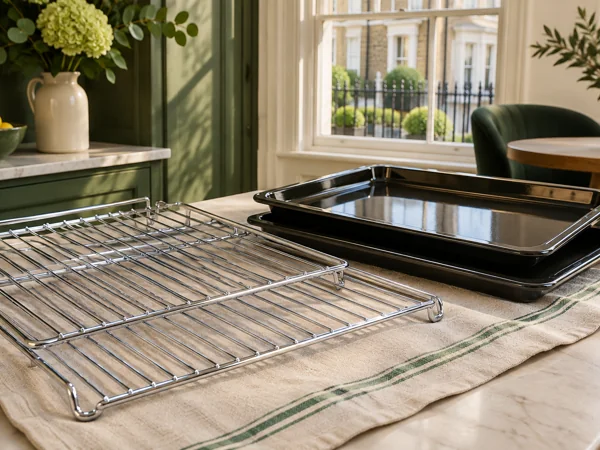
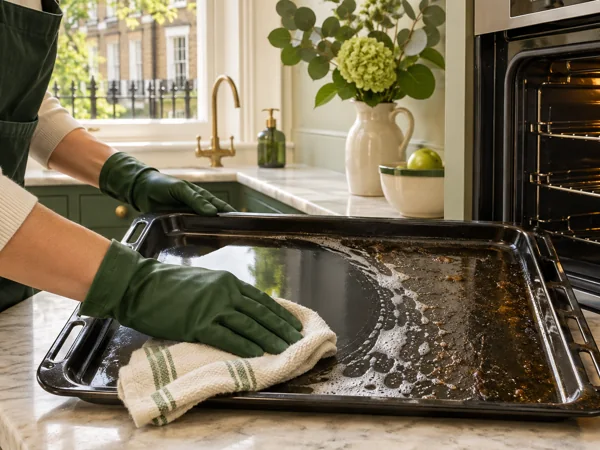
We take suitable loose accessories out so their edges and undersides can be assessed. A grill insert or tray that has held repeated drips is checked separately from a wire shelf.
Fitted runners that do not move normally stay in place. We clean the exposed areas around them and check that the accessories we handled return to the agreed cavity.
- Group each shelf and tray by appliance.
- Mention wear or changed coatings.
- Leave a fitted runner installed when its release is unfamiliar.
Describe visible conditions before choosing treatment
| Finish | Helpful detail | Assessment point |
|---|---|---|
| Specialist liner | Manufacturer guidance and mark position | Treatment suitable for the coating |
| Wire shelf | Fit and any bent corner | Separate treatment if suitable |
| Outer glass | Streak visible only at an angle | Reachable pane |
Check where a door film can be reached
We look at the inner glass and exposed borders of the door. If grease is on an accessible face, we assess it for cleaning; if haze is behind the pane, we explain what can be safely reached on that appliance.
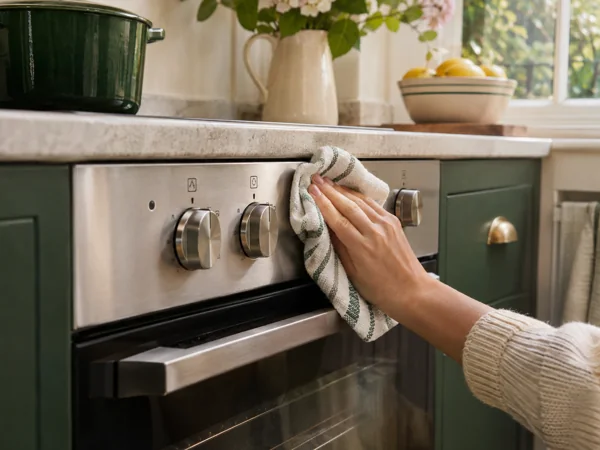
A mark at the control panel or handle is assessed on that finish rather than as part of the glass. Loose trim or worn lettering can limit the work on those exposed surfaces.
Identify extra surfaces using their own appliance details
If you want the hob assessed, state whether it is gas, induction, ceramic or another type. A gas hob can have multiple removable stands, caps or a griddle. A glass plate may need attention in a particular zone or around the controls. Include the finish and any pre-existing scratches. Show how the controls are arranged if they are shared with the oven. Ask for the hob or individual removable pieces to be listed on their own line so the quote reflects what was discussed.
An extractor can sit above an island or be concealed beneath a cabinet. Give the visible finish, approximate height and type of filter if known. Separate the external cover from any removable mesh or disposable insert. Show cabinets or shelves that affect the approach and explain which part has the most visible grease. Ask which components can be assessed and check that any separate work on the extractor is listed along with the agreed oven cleaning. Mention if another cooker needs to remain usable during the appointment.
Review the finished cavity before the kitchen returns to use
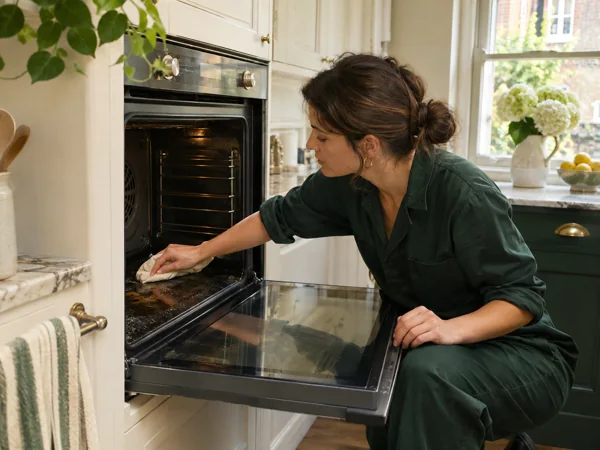
We review the cavity, accessories and glass against the agreed visit while the appliance is out of use. Any fixed area we could not reach is pointed out.
At handover we explain when the oven can be used again and keep any quoted hood, hob or second compartment distinct so you can see what was done.
- Leave the cooker cool and the immediate area clear.
- Tell us when the kitchen needs to become available.
- Have someone available to receive and pass on the handover.
Confirm the approved entrance in Hackney Wick
| Where | Detail to provide | Check with |
|---|---|---|
| Street | Full postcode and entrance label | Resident |
| Shared yard | Unloading and doors | Building contact |
| Kitchen floor | Lift or stairs and final door | Person providing access |
Check the named parts and access notes before you confirm
Use the postcode enquiry with your own address and the route from unloading to the kitchen. Identify the model, priority mark and affected cavity, then list each tray, shelf and additional appliance you hope to include. Give the agreed contact and next cooking time. If somebody else will be home, send them the photos and item list. Make sure they know which marks are older and which residue concerns the household, so they can show both before the assessment starts.
For a move, check that the inventory cooker and accessories match the ones in the kitchen. Arrange handover and key return separately and discuss how other work affects the oven. Check the quote for the exact cavities and agreed items. If a spare rack, known fault or changed approach appears after initial arrangements, update the enquiry. Give the final description to the person meeting the technician so they can confirm what was treated and hear the relevant advice about returning the oven to use.
Get an oven cleaning quote in Hackney Wick
Tell us the oven type, number of cavities and whether the hob or extractor also needs cleaning.
Get a QuoteOther Cleaning Services in Hackney Wick
Local references · National Rail – Hackney Wick station
Hackney Wick oven cleaning questions
Can you enter from a shared yard if the main door faces the canal?
Check the approved route for equipment and give the door label, unloading point and person who can provide entry.
Should I remove a fitted grill support?
Leave it in position if the release is unfamiliar and show how it moves during assessment.
How can I check if the liner is catalytic?
Look at the model and manufacturer’s instructions. Send what you find to the technician instead of identifying it by colour alone.
Can you inspect wear to the control area?
Point to the existing wear and tell us whether the panel is a separate part from the glass and cavity.
Can I ask about a hood over a kitchen island?
Describe the mounting position, height, cover and filter. Explain how the hood can be approached.
What if I need the kitchen again for guests?
Share the time before the appointment and confirm when the oven can be used at handover.